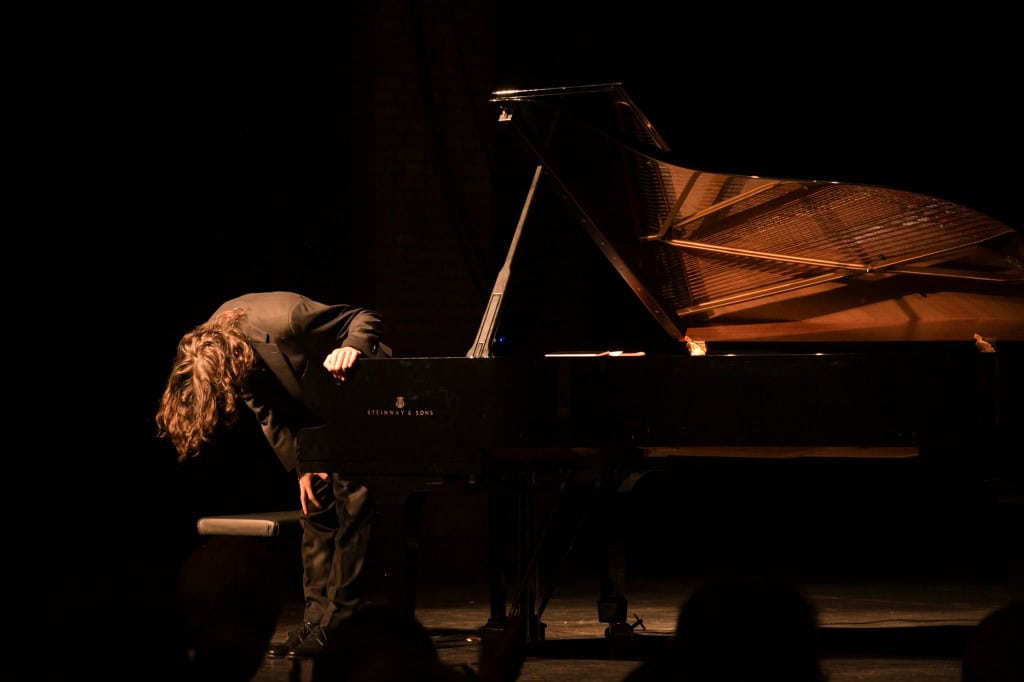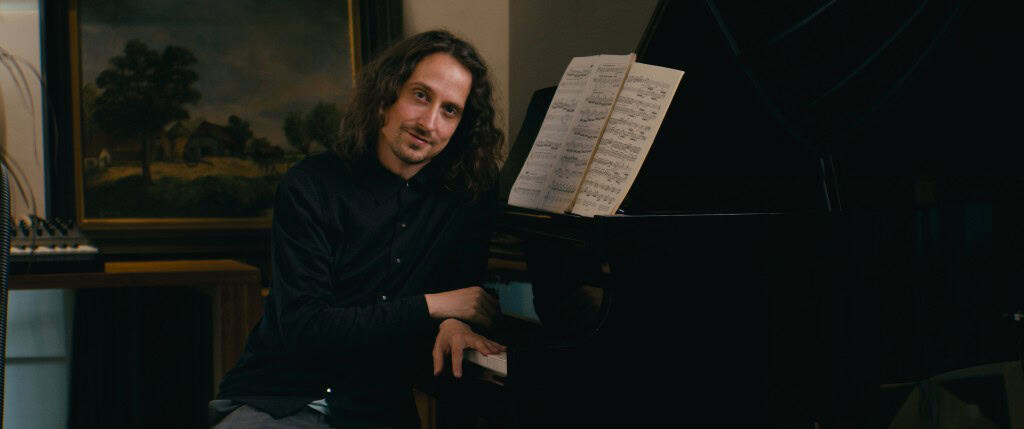
It was once again a pleasure to enjoy a meandering, shimmering matinee. For classical pianist Lester Van Loock in this edition of BelLISSAma 'Belcanto & bella musica', this time not a supporting role, but standing in the spotlight and shining himself.
Van Loock lets the audience read along in his emotional portfolio in intimate encounters between pianist and composer. Van Loock is a dynamic musician who constantly reinvents himself. An instrumentalist who excels not only technically. He has a solid background, knows where the music comes from and enriches it with his own emotion. He turns inward, breaks out, lets the music shimmer, explode in a splinter bomb of sound.
Van Loock makes the audience participants in his musical universe ranging from playful, explosive to hushed and intimate. A turbulent soundscape unfolds for two hours. With emotional turbulence, he brings all these feelings to life. Spring manifests itself in scents and colours. A kind of lightness and playfulness sets in. Also found in W.A. Mozart's '12 Variations on "Ah, vous dirai je maman" K.265/300'. When he heard this children's tune in Paris in 1778, generally known as 'Altijd is Kortjakje ziek, midden in de week, maar zondag niet!', creativity bubbled up within him. Spielerei of the highest order. An inventive handling of notes and rhythms. The variation and intensity is genius. You simply become happy from it. An amusing detail: Lester Van Loock breathes music from head to toe. The pattern of his socks is a piano keyboard.
From the playful to a composition with substance
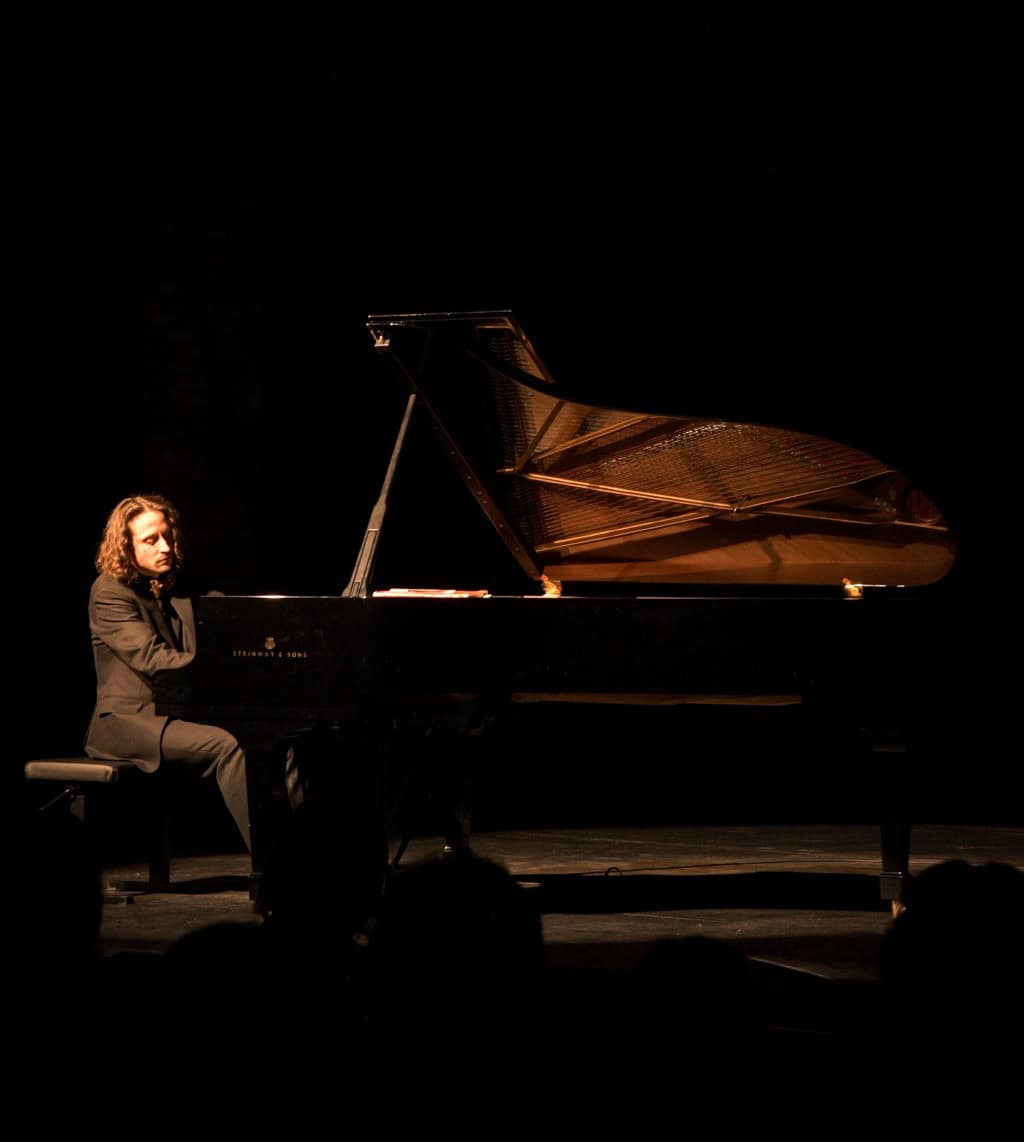
'Gaspard de la nuit M.55' by Maurice Ravel. A very special work composed in 1908. Ravel wanted to test how many timbres could be produced from a piano. He found inspiration in the macabre prose ballads of Aloysius Bertrand. It comprises three fierce, atmospheric pieces 'Ondine', 'Le Gibet' and 'Scarbo' that make extremely high technical and interpretive demands on the pianist. In the first part 'Ondine', the water nymph, you constantly hear the dripping and splashing of water, characterized by rapid arpeggios. In 'Le Gibet' (the gallows) a more static piece that depicts a desert landscape with a hanged man. A sustained B-flat note imitates the tolling of a bell in the distance. Music evokes associations. I involuntarily made the connection with Ernest Hemingway's book 'For Whom the Bell Tolls'. The third and final part 'Scarbo' is a devilishly difficult work, a top sport for a pianist's hands. What suppleness in the fingers. Between keystrokes, Lester Van Loock's hands hover gracefully above the keyboard as if wanting to generate energy from space.
After the intermission, Lester Van Loock chose a selection from 'Gyermekeknek' by Béla Bartók. Like Mozart, he was charmed by popular children's songs. But the comparison ends there. He employs a completely different dynamic in which the folk character shines through. Bartók was completely captivated by folk music, which he managed to capture in its purity. Lester Van Loock enjoys playing Hungarian repertoire. The cycle comprises 85 pieces, of which Van Loock plays 8. The first seven are playful and spicy, the last is a lament. With a sixth sense, Lester Van Loock attempts to share the composer's intentions.
While 'Gaspard de la nuit' by Ravel was already known as an extremely difficult work, Sergei Rachmaninov added serious weight to it with his 'Sonata No. 2, op. 36'. A work of far-reaching complexity. He was not only a great composer but also an excellent pianist. It was something of a challenge to himself. He loved accelerandos and rubatos but applied such techniques with finesse. He was, so to speak, able to translate spontaneously what came into his mind directly into his playing. You don't need to be a musicologist to simply feel that something is happening that is impressive, moving and astounding. With emotional and musical intelligence, Van Loock navigates the borderline between melancholy and pathos. As a listener, you enter another world and an instrumentally brilliant euphoria. The structure in 3 parts, starting with the 'allegro agitato', is a formidable opener, violent and virtuosic, which immediately demands all attention. Part 2 'Lento' is the lyrical centre of the sonata, often seen as a moment of deep reflection; part 3 'Allegro molto' is the energetic triumphant finale in which the notes slow down, accelerate, tumble over each other. Lester Van Loock is completely absorbed in the music and forgets everything around him. There are only sounds, rhythms, melodies left. You remain impressed.