
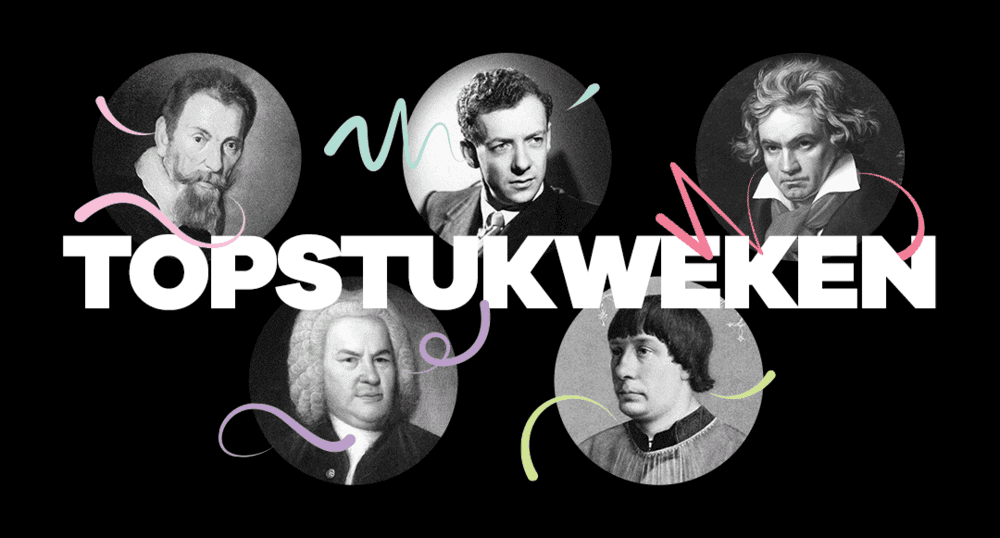
During the last week of February, Concertgebouw Brugge organized a "masterpieces week" devoted to Ludwig Van Beethoven. This event coincided with the re-release in a cd-box on the label Alpha Classics of the nine symphonies of Ludwig Van Beethoven recorded by Jos van Immerseel and Anima Eterna Brugge between 2005 and 2007.
These performances are naturally characterized by authentic historical performance practice, the established hallmark of Jos van Immerseel for years now. For this recording, he conducted thorough research in the library of the Gesellschaft der Musikfreunde in Vienna so that he – without claiming to have a monopoly on truth or to offer the ultimate solution – could make well-considered and well-motivated choices regarding instrument selection, tempo, pitch, and so on. In his justification of these choices in the cd booklet, he clearly states the conditions he considers necessary: "The first duty is a correct performance of the musical text, the use of the instruments prescribed by the composer, the application of the conventions of the time such as pitch, balance within the orchestra, respect for the prescribed tempo etc. Freedom then means being a person of today with (always personal) erudition and sensibilities, being able to balance all available elements and being allowed to communicate all this."
Sharp detailing
The orchestra naturally uses historical instruments (e.g. woodwind instruments of Viennese make and string instruments with thick gut strings) and plays at 440 Hz pitch. Van Immerseel also adheres to the orchestra's composition as Beethoven generally prescribes it. The result we hear on the cds is impressive and exciting. No exaggerated swelling romanticism in the strings, but detailed precision, sharp and beautifully defined tempo changes, woodwind instruments that neatly come to the fore and seductively accentuate the themes. The performances are, as Jos van Immerseel rightly calls it, characterized by "chamber music mentality". An absolute plus point of the complete cycle.
It is not the intention here to examine each symphony individually, but we do like to point out some (almost randomly chosen) individual passages. The sharp opening in the Allegro con brio of the third symphony, nicely alternated with the lovely oboe. The contrasts are sharp, the symphony is energetic and indeed "heroic", with a solid arc of tension in the marcia funebre with shrill brass and threatening strings and a rousing finale. Van Immerseel achieves something of the "compositional heroic deed" here, as Jan Caeyers calls this symphony in his Beethoven biography. Also in the fifth symphony (also called the fate symphony) the rhythmic motif enters accentuated and becomes a driving force in the repetitions. The Allegretto from the seventh symphony also gets punch and power in what is sometimes overly sweet-melodic, while the following Presto still comes in with surprisingly fierce tempos. In the pastoral, the motif of the "heitere Empfindungen" is presented in fine instrumental delineations that then flow into cheerful interplay. The Szene am Bach from part two comes across somewhat flat and a bit characterless, but the Sturm and Gewitter naturally get plenty of panache and the timpani are given free rein. Incidentally: why are those parts not named with their German designation in the cd booklet, but with an English translation?
The ninth symphony was the supreme moment of the "masterpieces week" at Concertgebouw Brugge. The soloists in the final part differ from those at the live concert, except for the tenor Markus Schäfer. My preference goes to the soloists on the recording and the balance between orchestra and soloist is certainly in their favor.
In general I dare say that Jos van Immerseel feels more at home in the fierce passages where he can let himself go and spur the orchestra to spiritedness. The brass blares and the timpani go to work. In the soft or Andante parts, sometimes a slight sluggishness (or flatness) occurs. Thus the Andante part in the sixth symphony (Pastoral) sounds almost flat, while part four with the storm provides spectacle. But the overall listening experience is a fascinating journey through the symphonic oeuvre of the genius Beethoven with a fantastic orchestra and a brilliant conductor.
Beethoven with Anima Eterna Brugge in residence
At Concertgebouw Brugge, Jos van Immerseel enjoys a long-standing residency with his orchestra Anima Eterna. With Anima Next Generation he also wants to prepare the future of his orchestra and therefore hands over the baton for the prestigious final concert of the "masterpieces week" to Korneel Bernolet, who has also worked as his assistant. On the programme – as mentioned – Beethoven's grandiose ninth symphony.
The most special thing about the concert was definitely the "lecture" that accompanied the performance. I can't describe it better than as being "paired" with it, because it was not a dry introduction beforehand, which then hopefully would stick with you during the listening that followed. It was indeed a lecture-performance with the orchestra together on stage so that whenever Pieter Bergé explained an aspect of the symphony we also heard it immediately. However short the motif, ranging from the "utterly boring triad" - as Bergé said - at the beginning, to a la-mi motif or a scherzo in the timpani, a march of the Janissaries or a fugue, each time the orchestra chimed in with the striking illustration of the theory. The symphony was not analyzed drily, but vividly unraveled into a meaningful context for the listener. At the same time, a reflection was given on what the composition meant for Beethoven and his time and how we can interpret that until now. Thus, in the conclusion, the symphony was also placed in a (possible) moral interpretation of brotherhood, fear and joy and a note was added about "the most misused musical work in the world" (again Bergé).
An extremely fascinating prelude preceding the complete performance of Beethoven's Ninth by Anima Eterna Brugge conducted by Korneel Bernolet. That of course fit in with the conscientious interpretation of a nineteenth-century symphony by an orchestra that plays with a Viennese instrument collection and is known for performances that are historically as responsible as possible. The symphony was therefore not so much brought as a monumental orchestral work, but as a refined interpretation with much attention to detail in the orchestration. Indeed, the utterly boring triad at the beginning was beautifully countered by the wild timpani, which also shone in the clever Scherzo. In the Adagio, the strings caressed peacefully and the horns sounded restrained and warm. Korneel Bernolet maintained close contact with his musicians who followed his directions with concentration. The final part set in with thundering force and full tension, a force that also alternated with intense restraint. As expected, the final part was brought beautifully and intensely by the excellent Collegium Vocale Gent. The soloists were perfectly cast with especially a strikingly beautiful baritone part by Daniel Ochoa. Perhaps the orchestra could have sounded somewhat more restrained under the soloists' passages. A detail criticism that detracts little from the clever performance as conductor by Korneel Bernolet. A concert evening that not only made the trip to Brugge, the residence city of Anima Eterna, definitely worthwhile, but also whets the appetite for listening to the box with symphonies and orchestral works by Beethoven with Jos van Immerseel.
- WHAT: Ludwig Van Beethoven (1770-1827) | Symphonies and Ouvertures
- WHO: Anima Eterna Brugge conducted by Jos van Immerseel and Korneel Bernolet
- RELEASE: Alpha Classics 380 (6 cd's)
- WHERE: Concertgebouw Brugge as part of the top pieces week 22-25 February 2018
- PHOTO CREDITS: © Philippe Van Ootegem, Paul Willaert