
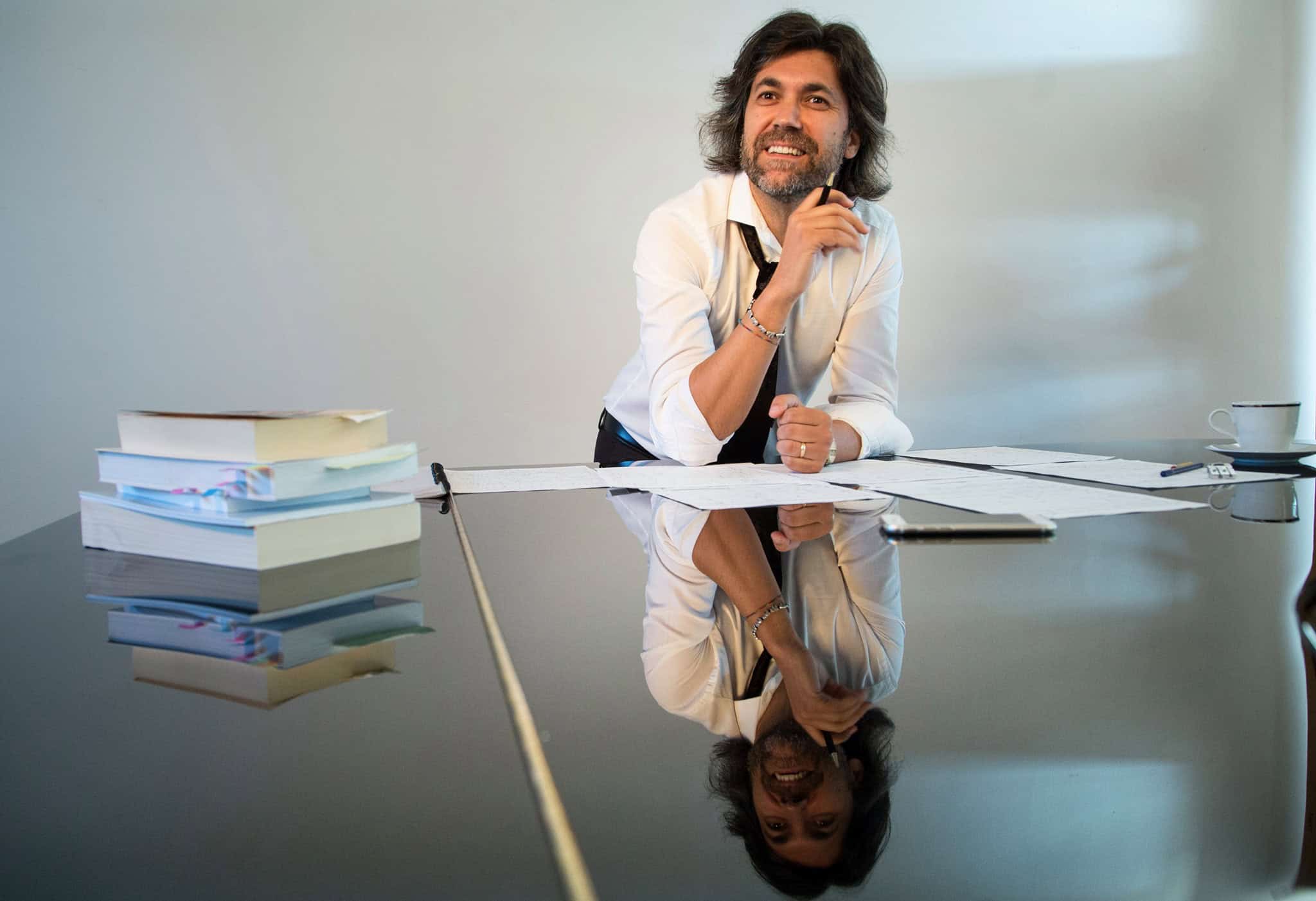
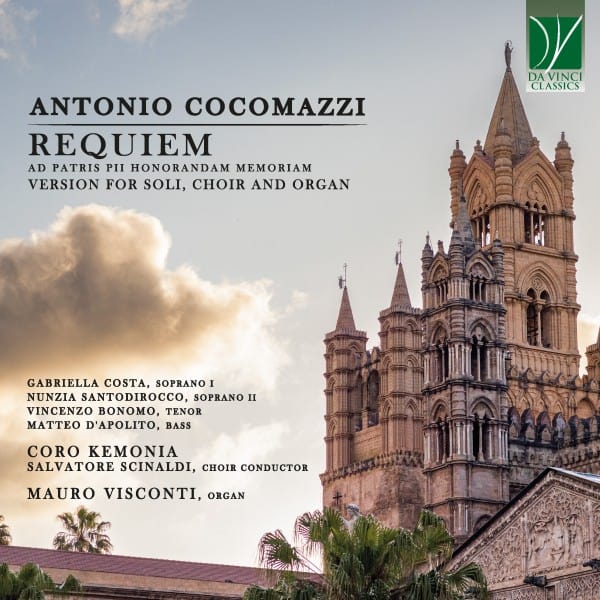
The young Antonio Cocomazzi (°1973) received the commission in 1998 at the age of 25 to compose a requiem mass in honor of Padre Pio, a friar in the monastery of San Giovanni Rotondo. The original version was for four vocal soloists, choir and symphonic orchestra. In 2021 Cocomazzi reworked the instrumental parts into a version with organ. This new version is presented by Coro Kemonia under the direction of Salvatore Scinaldi on their latest cd.
[caption id="attachment_44655" align="alignleft" width="300"]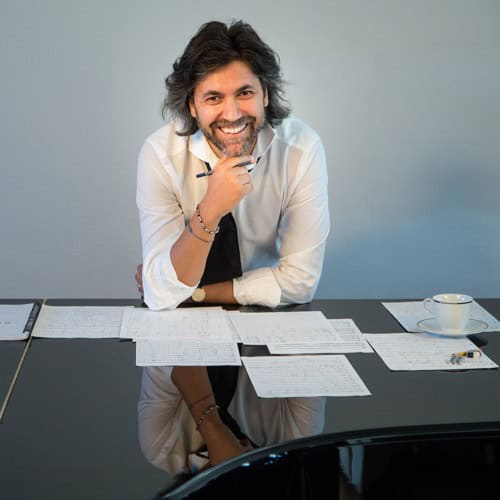 © Paolo Cardone Fotografo[/caption]
For this reworking Cocomazzi found inspiration in the oeuvre of his French colleague Maurice Duruflé (1902-1986). Duruflé too composed his Requiem op. 9 (1947) originally for soloists, orchestra, organ and choir but reworked it into a version for voice and organ. Cocomazzi transformed his requiem in a similar manner. Awe and admiration for the Divine power are central. These dramatic passages are alternated with tempered moments of comfort. This comes to the fore remarkably well in the various sequentia. The "Dies irae" [track 03] is hectic and frightening while the subsequent "Tuba mirum" [track 04] sounds heavenly and serene.
In the penultimate sequentia "Confutatis" [track 07] this contrast is less successful. This section consists of two strophes in which the first reflects the power of God and the second expresses the humility of man. Based on what we have heard so far, the musical setting of the second strophe follows our pattern of expectation. However, the first strophe is not frightening like the "Domine, Jesu Christe" [track 09] but instead has an almost positive undertone. A breach of the expected pattern can intrigue but this feels like an odd choice given the text.
Confutatis maledictis
Flammis acribus addictis,
Voca me cum benedictis.
Oro supplex et acclinis,
Cor contritum quasi cinis,
Gere curam mei finis.
When the ashamed damned
are delivered to intense flames,
call me then among the blessed.
I pray, begging and kneeling,
my heart crushed as ash:
will you care for my end.
Alongside Duruflé, Cocomazzi also drew inspiration from works by other composers. One of these composers is Igor Stravinsky (1882-1971). The multimeters for which Le Sacre is so well known and where virtually every measure of music has a different time signature, also appear in Cocomazzi's work. Particularly striking in the "Kyrie" [track 02] and in the third sequentia "Rex tremendae" [track 05] is this technique used frequently. The art for the performers is to interpret these demanding and complex rhythms as an organic whole that is effortless to listen to. The soloists and Coro Kemonia give the impression that this is child's play. With rhythmic precision and appropriate intensity they bring these sections to life.
With these technical challenges the performers show what they are capable of. But also in the lyrical sections such as the "Benedictus" [track 12] and the "Lux aeterna" [track 14] they succeed in integrating a similar intensity. Their refined and nuanced interpretation holds the listener's attention from beginning to end.
4/5
- WHO: Gabriella Costa [soprano I], Matteo D'Apolito [bass], Nunzia Santodirocco [soprano II], Vincenzo Bonomo [tenor], Mauro Visconti [organ], Coro Kemonia conducted by Salvatore Scinaldi
- WHAT: Cocomazzi: Requiem
- LABEL: Da Vinci (C00634)
- ORDER: JPC