
Virtuoso passages and vocal acrobatics are a few thoughts that come to mind when we hear the term "belcanto". The art of beautiful singing is central to the latest project of Anima Eterna Brugge. Together with conductor Giovanni Antonini and soprano Julia Lezhneva, they bring some gems from the repertoire.
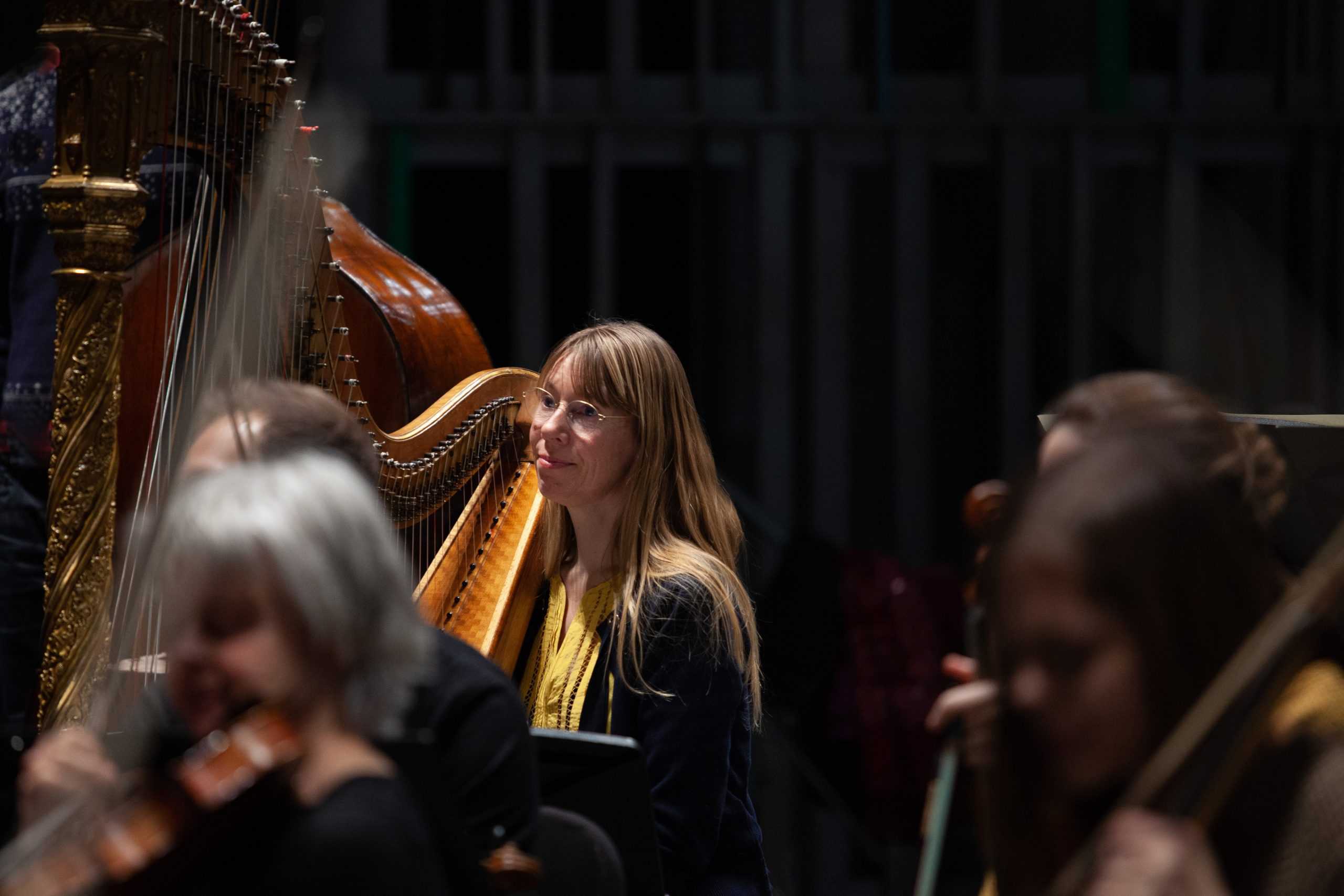
For the aria "Assisa a pie d'un salice" from Rossini's Otello, Lezhneva is accompanied by harpist Marjan de Haer. She plays the famous opening cadenza on a historical instrument. An artistic choice that proved not so simple… We spoke with Marjan from Anima Eterna to learn more about this new project and the instrument she specially chose.
For this project you are searching together with conductor Giovanni Antonini for the power of the belcanto period. It is a repertoire that Maestro Antonini says is close to his heart. Have you collaborated with Maestro Antonini before?
M: For me it's the first time. As a harpist I am not present at every production and am therefore incredibly happy to be part of Belcanto. Today I was able to work with Antonini for the first time and that was a very pleasant interaction. For the orchestra, Belcanto is the second project. The first project was still in full COVID times and took place in Belgium via livestream. The Belgian audience can now also see Anima Eterna and Giovanni Antonini at work live.
The term "belcanto" may refer to "beautiful singing" but this period, and especially Rossini's oeuvre, has some impressive harp passages. For this project you play on an English double pedal harp by Erard. But you first hesitated between that double and a single French Erard. Can you tell us how you made such a choice and what the chosen instrument has that makes it so suitable for this repertoire?
M: First of all, I look at the period and the place. With Rossini we are in 1816. For the harp this is a turning point. On the one hand there is the 18th-century harp where the soundboard was built like that of a lute. This harp consisted of different slices placed against each other. This model already had pedals by which the strings could be shortened. This happened via a system of hooks or clasps. With this you could already raise the strings by a semitone. These harps had a beautiful curved shape with rococo decorations. They are very delicate instruments with fine strings. This type of harp was mainly built in Paris and was still used at the conservatory until 1830 for teaching.
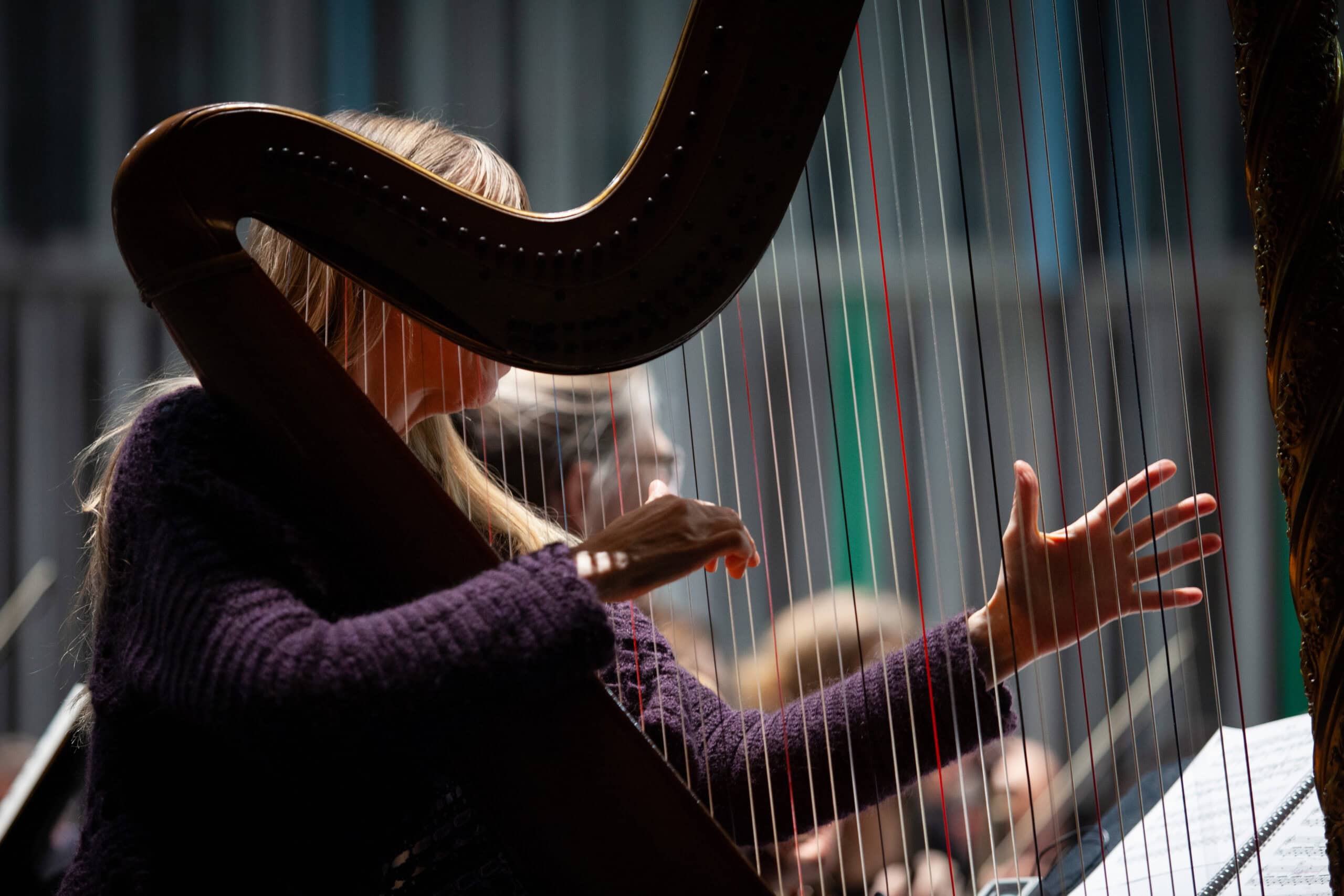
M: But at the end of the 18th century, Sébastien Erard (1752-1831) began to renew the harp. He made the instrument sturdier. For example, the soundboard was no longer like that of a lute but almost like half a tree trunk. Because of the sturdier soundboard, the string tension could also be greater. On the front of the instrument came a separate pillar and the mechanics in the neck changed. The system with hooks was replaced by forks to shorten a string in this way. In Erard's early harps this was initially a semitone higher but from 1810 even two semitones became possible. He then patented that double pedal harp. There were two harp factories: one in Paris and one in London. The double pedal harp was first built in London. That was an immediate success and all keys became possible on the harp.
M: So to come back to the question, what do you choose? We are in 1816 but we are not immediately in Paris or London. Instead we are in Naples. We have documentation that different Erard harps were present in the city at that time. This suggests that Rossini probably composed for an Erard harp. So then the question is, do you choose a double or a single? The double pedal harp I brought dates from 1812. So in terms of date it fits well. It has just a little more sound than the single French Erard. I then made a big equation and thought about it and ultimately chose the double pedal harp. The right choice because during rehearsals the instrument has sounded beautiful. The sound balance with the orchestra is in nice balance. This afternoon we rehearse with the soloist for the first time.
Exciting!
M: Yes, indeed. But of course, there is room for discussion. Some people will be of the opinion that it is quite possible to play this repertoire on an 18th-century harp. And that is true because there is documentation of orchestras where harps with the hook system were still used. But because Erard harps were present in Naples, I think I'm on the right track.
As a harpist, is the greatest challenge in the search for the right instrument? Does the acoustics of the hall also influence your choice?
M: No, I don't base myself on the hall. I look for the right instrument for the repertoire. I look at where and when the piece was created. In this case, that's Naples in 1816. I look at the country, what was common at that time, what documentation is available about the harps that played in the orchestra or what the composer wrote about certain instruments, and so on. I don't play a different harp in Antwerp than in Brugge. Fortunately!
That would be quite a logistical challenge.
M: Exactly! That would make it very difficult for myself.
Where are you allowed to sit as a harpist in the orchestra's seating arrangement?
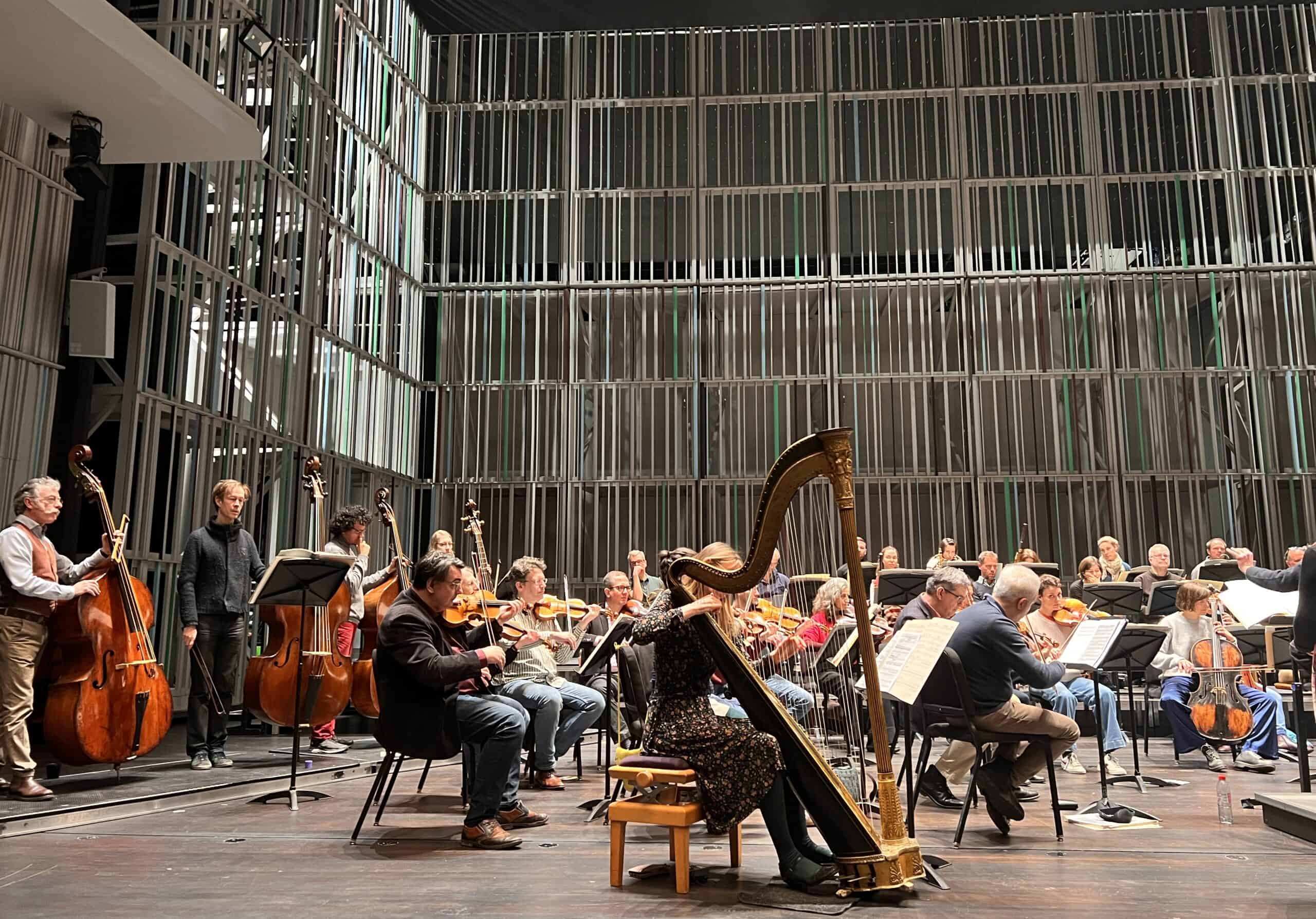
M: With Anima it's always special and I feel a bit like a star. (laughs) I'm allowed to sit right next to the concertmaster. That puts me in line with even the soloist and in direct contact with the conductor's hands. That's the seat where I also always get to sit with founding conductor Jos van Immerseel. An appropriate place because the sound of the harp is very direct. You pluck the string and the sound is gone. Totally different from brass instruments where the sound can be sustained. A harp has a direct attack and then it's good to be able to sit closer to the conductor.
M: Plus it's just nice not to be hidden away. If you sit between other people, the sound can get lost. Jos once said that if the harp sits next to the double basses or horns, the sound gets swallowed up. So having the harp sit next to the conductor certainly has musical added value. Besides, it's also in line with images of earlier orchestras where the harp sometimes even sits between the first and second violins. So actually I'm in my rightful place there. (laughs) But nowadays we're taught to have the harp in the back.
What a shame for such a beautiful instrument.
WHAT: Belcanto!
WHO: Julia Lezhneva [soprano], Anima Eterna cond. Giovanni Antonini
WHERE: AMUZ Antwerpen
WHEN: 13-01-'23
WHERE: Concertgebouw Brugge
WHEN: 14-01-'23