
If I were ever condemned to the loneliness of an uninhabited island, then Elias by Felix Mendelssohn (1809-1847) would undoubtedly belong to the small treasure I would take with me. This masterful oratorio fills two hours with every emptiness: musically, narratively and emotionally. From the very first note you are drawn into the inspired account of the prophet Elijah, carried by powerful choral tableaux and memorable arias that nestle deep in the memory.
Mendelssohn composed Elias in 1846 with the complete oratorio heritage in mind: the monumental power of Händel, the contrapuntal discipline of Bach, and on top of that the sensitivity and expressive colour of Romanticism. The result is a work that sounds both collective and personal, with an expressiveness that repeatedly brings the oratorio to the edge of opera.
Elias grabs you by the throat because Mendelssohn lets the full spectrum of human emotions resound, with a naturalness that only great masters are given. Whoever opens themselves to this inner journey will inevitably recognize something of themselves along the way. Even after repeated live experiences, the work continues to reveal new facets, as if this rich and layered score can never be fully comprehended.
Together with Paulus and the unfinished Christus, Elias forms the core of Mendelssohn's religious oeuvre, but above all it is a grandly conceived music drama in which faith is not approached dogmatically, but existentially and humanly.
The choir as the beating heart of the story
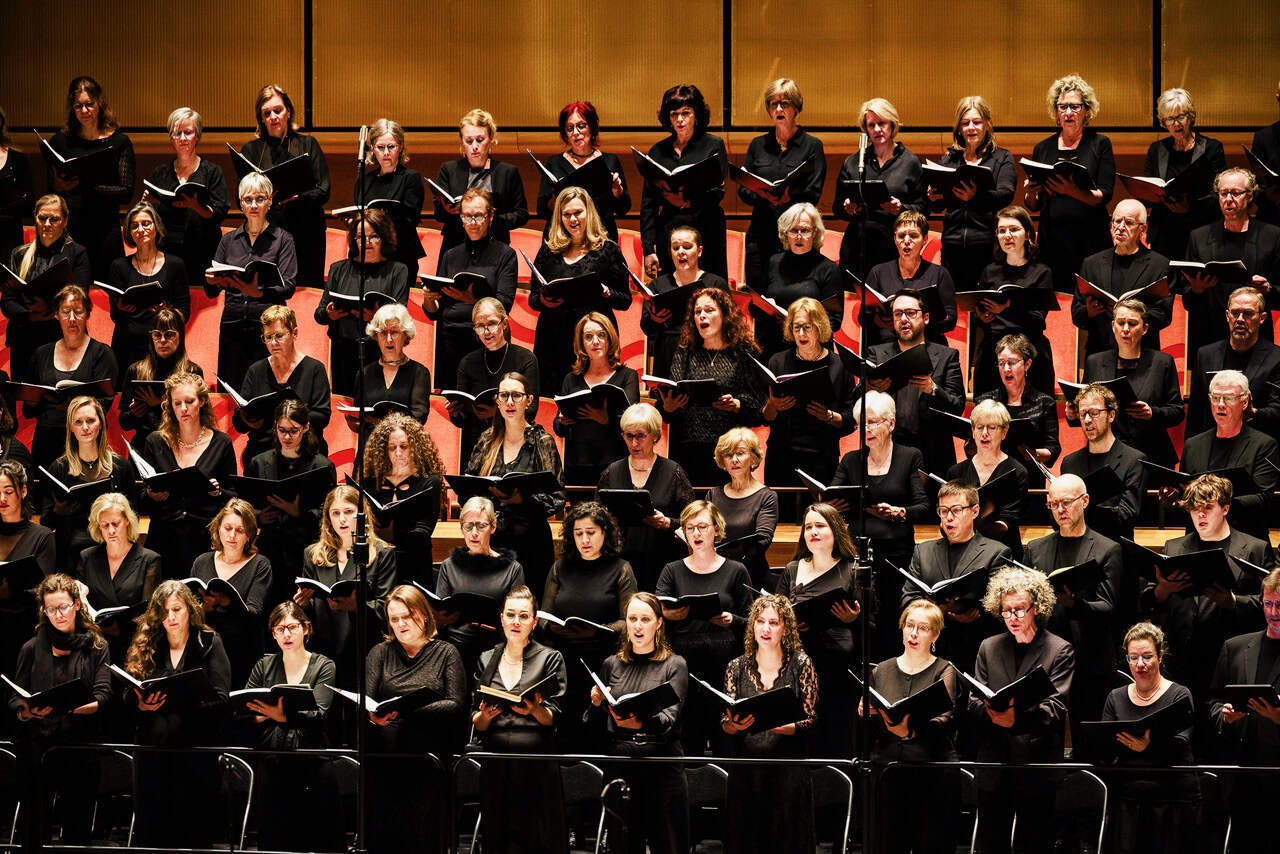
On Saturday, December 13, Octopus Symfonisch Koor under the direction of Bart Van Reyn in the Elisabethzaal performed Elias on the occasion of the choir's 25th anniversary – a performance that sharpened both senses and intellect. This jubilee gave extra weight and provided a festive framework, allowing the gala concert to develop into a performance that combined solemnity with the sharpness of a deeply felt interpretation. It was not a mere reproduction of a score. Van Reyn laid bare the structure of the work: you heard not only the music, but also felt its necessity and discerned the underlying build-up of tension.
In doing so, Van Reyn resolutely chose an approach that honoured the Baroque roots and at the same time fully utilised the Romantic expression. The tempi followed the natural line of the story, the phrasing brought the text powerfully to the fore, while subtle orchestral colours were retained. His approach balanced wonderfully on the narrow tightrope between historical awareness and Romantic breath. Van Reyn appeared as a shaper of the musical whole, with a keen sense of tension, structure and timing. His sensitive elaboration of the narrative layer – in which musical development and meaning were in constant dialogue – shows that the future of the Belgian oratorio repertoire is assured. At the same time, his approach made one curious about what he could achieve within the context of an opera house.
The musical precision that Van Reyn shaped dramatically, he also brought to fruition technically in every detail: each contrapuntal theme received its own space and resonance, so that the polyphonic structure not only sounded clear, but also convincing. Fugal passages aroused admiration, but demanded active attention and involvement. It was precisely this combination of intellectual clarity and emotional significance that gave the performance its special tension.
The choir showed impressive versatility. With more than a hundred singers, remarkable homogeneity was achieved, coupled with exceptional diction: even in massive passages, every German word remained intelligible. This attention to detail was maintained across the entire dynamic spectrum: fortissimos retained their core and pianissimos were sharply defined. The choir showed why choral singing is more than a collection of voices: it is a breathing collective ethos.
Casco Phil functioned as a breathing undercurrent, with every musical layer – from the lowest bass lines to the finest woodwinds – carefully balanced and consistently in service of the work's tension. Instrumental power and intimate colour kept each other in balance, so that both dramatic outbursts and moments of stillness received equal weight.
The voice of a prophet: Elijah brought to life
Werner Van Mechelen gave Elijah an impressively layered portrait. His bass-baritone combined prophetic authority with growing vulnerability. Weight in the lower registers, fluid middle registers, sharply profiled recitatives and subtle dynamics in heated scenes made his interpretation memorable. His Elijah convinced through the tension between moral authority and human doubt.
The aria Es ist genug! forms an inner universe. Here Mendelssohn strips away the rhetorical backdrop: the melody slides downward, the harmony seems slowly to fall apart. Van Mechelen sang this as a process of quiet, inner erosion: restrained, with a sensitive timing that made despair tangible. Subtle timbral changes and carefully administered vibrato reinforced this sense of existential exhaustion. The cello solo functioned not only as an accompaniment, but as a sonic mirror of Elijah's inner fracture, thus reinforcing the psychological depth of the moment.
Ilse Eerens (soprano) captivated with a bright tone and impressive breath control, Inez Carsauw (alto) shone with her warm, carrying voice, and Robert Murray gave the tenor parts a natural, narrative clarity. All soloists were convincingly cast and knew how to carry their characters musically and dramatically. The choir solos and boys' voices also deserve special mention: their pure, integrated contribution noticeably heightened the tension and expression.
Dramatic contours and natural forces
The dramatic arc of Elias opens unusually abruptly: drought and famine announce themselves even before a classical overture. Mendelssohn introduces three core motifs – threatening brass sounds, the rising vocal line of Elijah and a lamenting woodwind motif around the tritone – that recur throughout the work and subtly transform. Van Reyn let these motifs contrast sharply from the outset, making the contours of tension immediately palpable.
The first part culminates on Mount Carmel, where the Baal cult and faith in Yahweh stand musically in stark opposition. Rhythmically emphatic choral sections of the Baal priests remain unanswered; long silences make the emptiness tangible. Within this collective despair, So ihr mich von ganzem Herzen suchet functioned as a spiritual anchor of promise and turning point. The choir brought this passage with remarkable clarity and energy, with the balance between voices and orchestra sharpening the confrontation.
The rain and ultimate deliverance were worked out compellingly: pizzicato strings imitated the first drops, crescendos built tension, then the choir burst into collective joy. Van Reyn orchestrated this interplay masterfully; the hall breathed as one body with the music.
The second part shifts focus to Elijah's inner crises. Confrontations with Ahab and Jezebel and flight into the wilderness deepen the portrait into an existential struggle. Lyrical resting points offered moments of stillness and comfort. The soloists gave these passages an intimate significance that contrasted sharply with the monumental choir blocks.
The spiritual center lies in God's revelation on Mount Horeb: storm, earthquake and fire followed by the "still, soft whisper" of Yahweh. Under Van Reyn's restrained leadership, this became a stillness of exceptional power, in which restraint spoke more than volume ever could.
Elijah's ascension formed a monumental climax, but Mendelssohn does not end in mere triumph. The closing sections look ahead and culminate in an exultant, distinctly Handelian fugue, performed with carefully profiled voice-leading and energetic articulation. The Octopus choir brought this finale with impressive precision and élan, while the instrumental lines sparkled until the final applause.
A symphony of faith, humanity and emotion
The hall experience strengthened the whole: silences after the most moving passages, a collective sigh at Es ist genug! and the thunderous applause at the end made clear that this was more than a performance – this was no evening for quick impressions, but for concentrated listening. Werner Van Mechelen combined authority with vulnerability, the Octopus choir found an ideal balance between ritual weight and expressive significance, and Casco Phil delivered a nuanced, musically moving orchestral foundation. Bart Van Reyn held it all together with an interpretation that was clear, organic and deeply felt.
This Elias became a complete exegesis, in which music, spirituality and narrative form melted into a convincing whole. Music as theology – not as sermon, but as thinking space. In this gala performance, not only was a jubilee celebrated, but also Mendelssohn's enduring ability to unite faith, doubt and humanity in sound.