
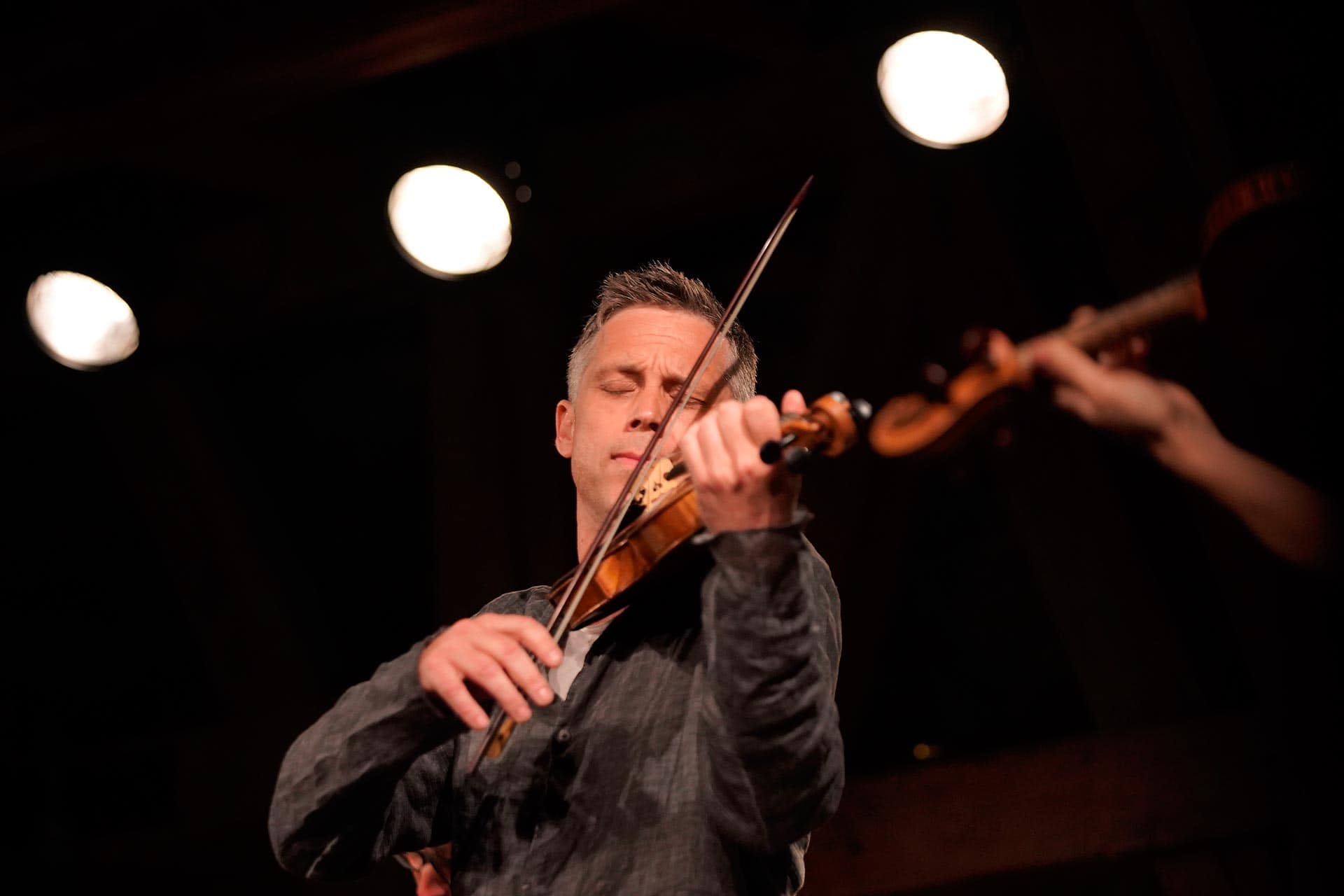
Baroque violinist Bjarte Eike pushes boundaries in classical music, continuously seeking new projects in the border area between genres and reaching new audiences with his infectious playing and style. As artistic director of Barokksolistene, he has created new and innovative concepts such as The Alehouse Sessions; exploring 17th century music from English pubs and alehouses. These sessions have now been adapted into the album The Playhouse Sessions. And later this month, Eike and Barokksolistene come to Hasselt where they will perform an adaptation of the program under the title The Nordic Sessions.
The combination of historically informed performance practice with stories and theatrical elements is a unique concept. How did you come up with this concept?
First of all, thank you. The Playhouse Sessions is a project that is rooted in the earlier project The Alehouse Sessions. I first created this project in 2007 for a festival in Norway where we had an English theme. We did various concerts with London around the year 1700 as a theme and I wanted to do something with the anchor point of British society, namely the pub. Pubs have a long history and even played an important role in music development in the 17th century. While doing my research I found this book The Complete Country Dance Tunes from Playford's Dancing Master (1651). It is a catalogue with only melodies, derived from dances. No arrangements or harmony written down, just a book full of popular melodies. And because I have a background in folk music - for example, I played in an Irish session band when I was studying - it seemed interesting to me to breathe new life into this tradition.
To construct a program around this concept, I started reading more. Not just musical research, but also historical and socio-economic. For example, I read The English Alehouse: A Social History, 1200-1830 by Peter Clark and contemporary accounts of how the public theaters closed under the rule of Oliver Cromwell (1599-1658). Incredible stories emerged, because when these theaters closed, musicians were forced to perform in these pubs to earn money to survive. Pubs became a meeting place for the high and low classes to listen to music. In that environment everyone was equal.
I wanted this complex but interesting history of the pub as a background story. It is an environment that places no restrictions on the kind of music you can perform. If you are in a church, you must perform music that has something to do with religion or the church itself. Or if you perform in a castle, you might need to do something that is appropriate in that context. But here, in the pubs, everyone is on equal footing and there is a free space to discuss, talk, drink, gossip and make music together. Everything flows together, which forms a beautiful setting for our informal experiments.
[caption id="attachment_39532" align="alignright" width="300"]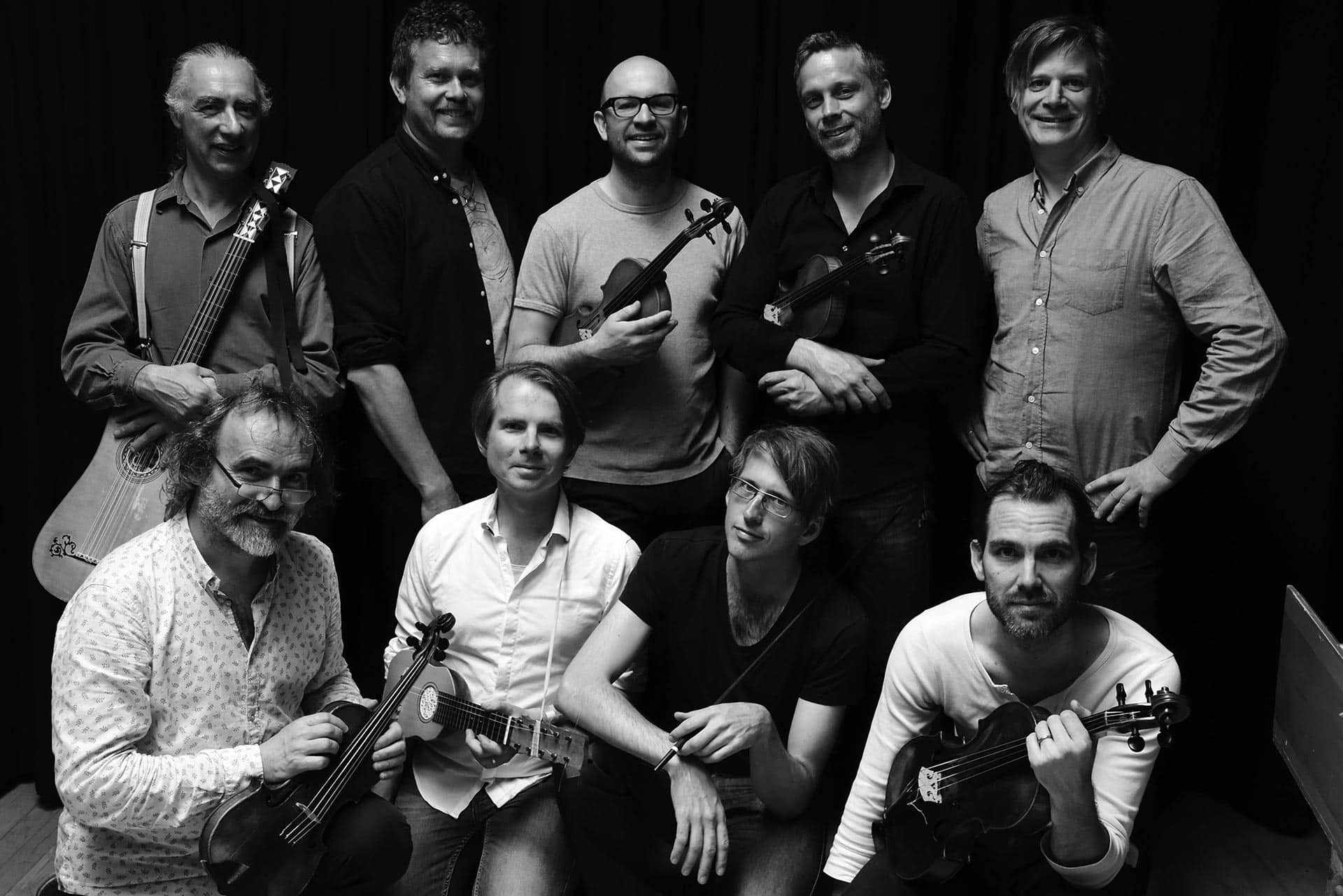 © Gorm Valentin[/caption]
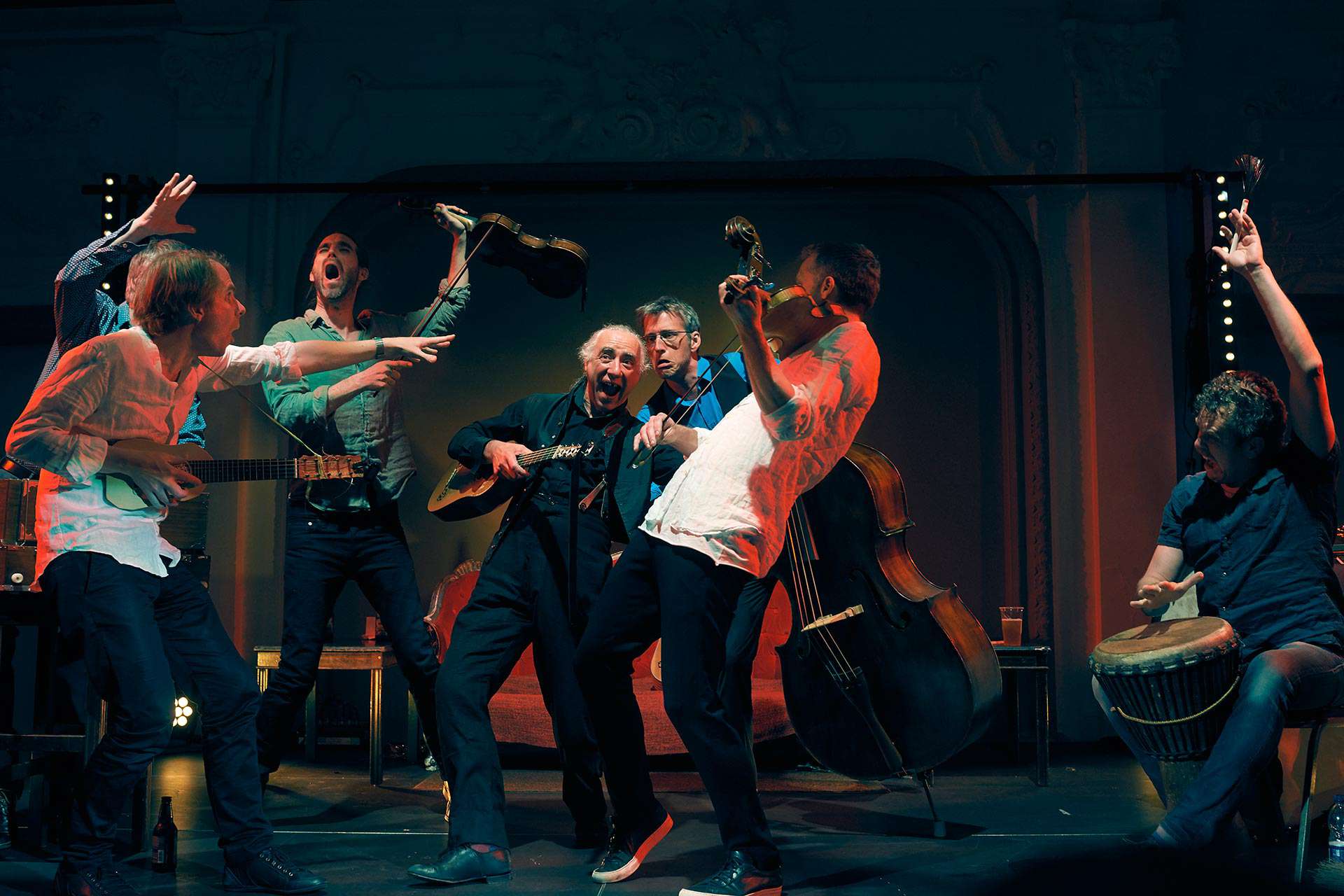
Because I have worked as a freelance musician in Europe for many years, I met all kinds of interesting people in different musical environments. What all the musicians I work with in the Alehouse, Playhouse and Nordic Sessions have in common is that they have interests and expertise that go beyond simply being an instrumentalist or singer. Steven Player, for example, plays guitar and dances with us - but he is also a great actor and storyteller, with a background in street theater. Tom Guthrie, one of our lead singers, is also a stage director. Per Buhre plays viola, sings lead vocals, makes apple cider and is a fantastic photographer. Helge A. Norbakken, percussion, is an accomplished steam locomotive driver... there are fun facts and beautiful stories attached to everyone in the band. My greatest challenge is how I can give them all time to shine on stage as they deserve.
Together we create workshops where, for example, we go into the mountains or the forest. We spend our time building personal connections and musically playing off each other. We cook together, drink together, dance together, have singing lessons and many creative workshops about improvisation.
It is a safe environment with a lot of creative input from everyone. We simply try new things. You really get to know each other well, get to know them privately, our families get to know each other and we have become like a family. My role in the band is that of initiator and general artistic creator, who gets to say at each concert what is in it and what is out. When we are on tour, we bring our family-like safe space to the stages, and keep our musical band alive - something that goes down well with most audiences.
When did the idea start to take shape to record this program?
I was initially very hesitant about recording The Alehouse Session. It is very much a live experience. We considered two different concepts. Either we would make a live recording, but then it would be the version of The Alehouse Session. That idea was shelved because I wanted to keep it alive and make each concert unique. After all, for each concert we gather half an hour before the performance and I give the players the setlist (which pieces to play and in what order), then I have all the different setlists that we have done around the world written down in small black notebooks, so that when we are invited back to a venue, I can make different setlists. That way we keep the performance alive and fresh. But we had to make some kind of recording, and I decided to choose the songs and arrangements that I thought would work best, and went into the studio. The Alehouse Sessions recording has been very successful with awards (opus prize in Germany 2018) and various nominations and rave reviews.
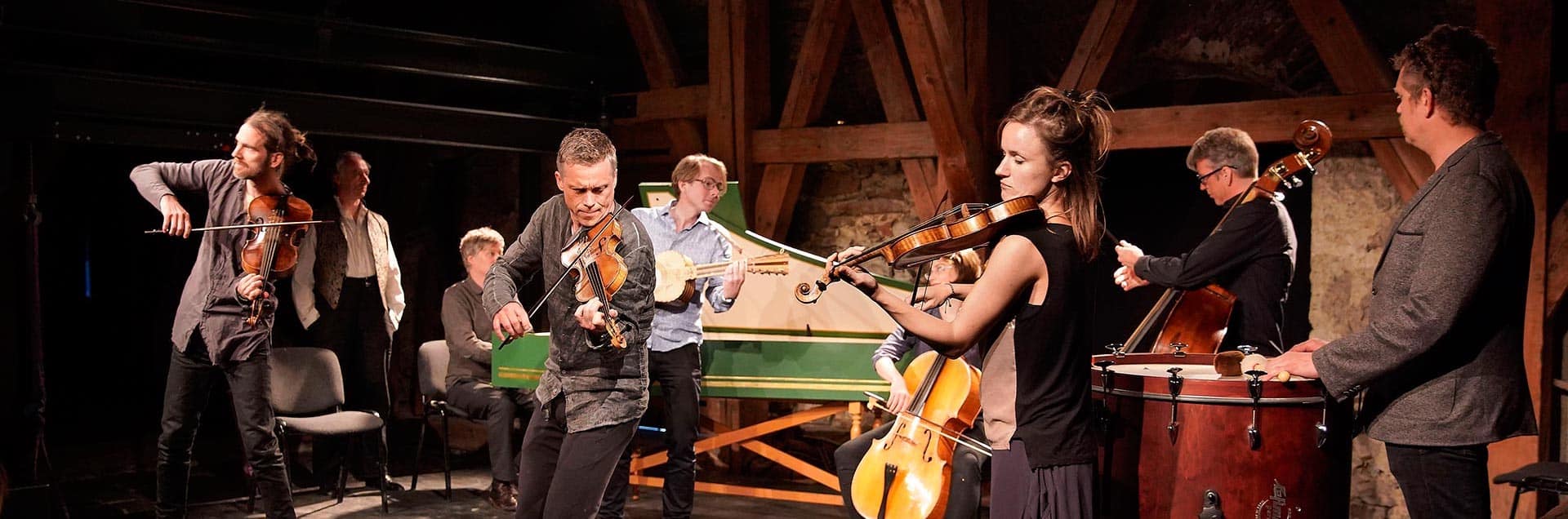
The big question from the audience, our record label, agents and promoters over the years has been: when is your next album? So I started thinking about what The Playhouse Sessions has now. I see The Alehouse as a space that I can keep refurbishing - or a tree with branches that keep growing. The Playhouse is one of those branches. This tree of course already had a few branches. For example, we did a theatrical production of The Alehouse, which we called "the opera pub" (for a company in Denmark); and together with a theatre company in Norway we did A midsummer night's dream where we adapted Shakespeare's script and integrated music from The Alehouse, Purcell, and original compositions. This way we also created other branches with different productions of Purcell's Dido and Aeneas. We performed Dido with puppets, as a ballet production (Norwegian National Ballet), etc. All these different projects have in common that we musicians stand on stage and take on roles, actively contributing to the action of each story, rather than sitting in the traditional orchestra pit.
With this recording we have thus created another branch. Instead of making the obvious The Alehouse Session 2, we also wanted to integrate elements from all the other projects we have done over the years. Moreover, we wanted to emphasize our love for Purcell. He is like the Shakespeare of music in that he combines music from the high and low classes of society. In my opinion, Purcell is often taken too seriously, some people try to make him sound more like Händel or Bach, so we wanted to explore his playful and folky side. These three elements - extra Alehouse material, original compositions from our theatrical dramas and the music of Purcell - all came together on this album.
With all these different elements, how did you structure the order of this programme?
That was my next challenge: finding an order to play them. Instead of alternating between the different musical sources, I decided to make one musical journey. It is a sort of more abstract version of A midsummer night's dream / Fairy Queen in which you meet the queen of the fairies, Titania, you meet her fairy servants, as they sing her to sleep, her dream, and the album ends with Puck's closing monologue. Without being too in-your-face, I tried to create this narrative thread. As a kind of inner storytelling.
You also integrated some of your own compositions. Were these pieces you wrote specifically to continue a line in the story or were these pieces you composed earlier and found that they fit the narrative?
They were written specially for this album. I used ideas from earlier productions. Like from the theatrical production of A midsummer night's dream. For example, You Spotted Snakes; Hush No More [track 08] is a combination of "You spotted snakes" where the fairies sing to Titania that when she falls asleep, it transitions into "Hush no more" where we all sing together.
That is something else we did for this album. I didn't want to hire a professional choir to sing these pieces. I wanted us to sing them, because that is what we do live. And we are getting better at it all the time. (laughs)
You mentioned live versus studio. How did the change of setting affect your music playing? Or did you adapt some of the music?
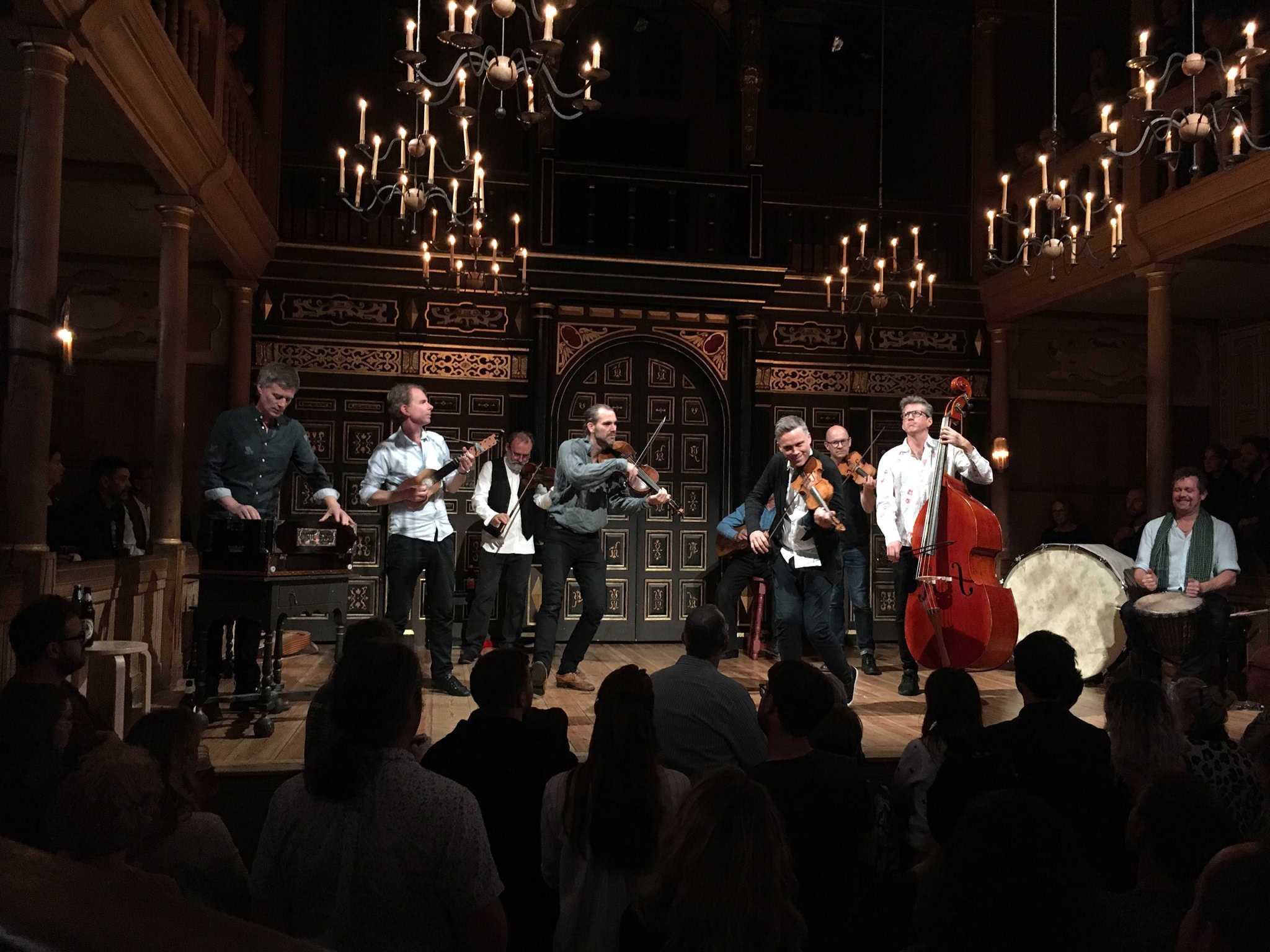
The live version and the recorded version both represent the same thing: who we are, what we say and how we want to be listened to. But you can't approach the music in the same way. When we play live, anything can happen. Depending on the setting and the mood, we can create long improvisations. Or when someone makes a mistake, we laugh about it on stage. Plus we have choreography about how we move and so on. Those are elements that are very meaningful for an audience to watch, but that have no place in a recording.
At the same time, for these recordings we try to find the essence and the most authentic aspect of the melody. The aim is to present recorded tracks that are so interesting that people will listen to them repeatedly. For that we might need to zoom in on one or two key features. How is the percussion section in this?; what if we focus on the rhythms that are peculiar?; let's skip this repetition and make it more condensed.... These kinds of adjustments were thought up during the recording process.
The album is now out on cd and soon also on vinyl. But I'm looking at whether I can make a Dolby Atmos version of it to recreate the sense of auditory space that a live performance offers. The arrangements of our music can be quite dense, with many different instruments playing relatively simple tunes. With this technology you can create more space in the music by, for example, digitally spreading the instruments around the room, creating an immersive sound experience at home or in people's headphones.
At Klassiek Centraal we have a playlist called Selectie van de redactie where we compile tracks from discussed cds for our readers. Each time we only choose one track. So my last question to you: if you had to choose one track to add to this playlist, which track would you choose and why?
Oh, that's very difficult. Especially when you've been working with a program for so long. I'm already getting tired of it. No, just kidding. (laughs) No, that's difficult because I think it should be representative of the project. It could be The Three Ravens [track 06], because it's an old, traditional, English melody with one of our characteristic arrangements. Plus it has Per Buhre as lead singer who will also be the lead singer for The Nordic Sessions in Hasselt. Or otherwise You Spotted Snakes; Hush No More [track 08] because it has the theatrical flair. Plus it makes the link with Shakespeare and Purcell. It has that beautiful flow of a more abstract intro in "You Spotted Snakes", and then transitions into the seductive refrain of "Hush No More".
On 26 October you play The Nordic Sessions at cultural centre Hasselt. I couldn't find any information about this programme. Is it correct that it's a version of Alehouse, but with Norwegian melodies? What can we expect during the performance?
The Nordic Sessions is a different branch of the Alehouse boom. A fairly new one, actually. That's why there hasn't been much information written about it yet. Officially we've only played it once or twice.
[caption id="attachment_39523" align="alignleft" width="200"]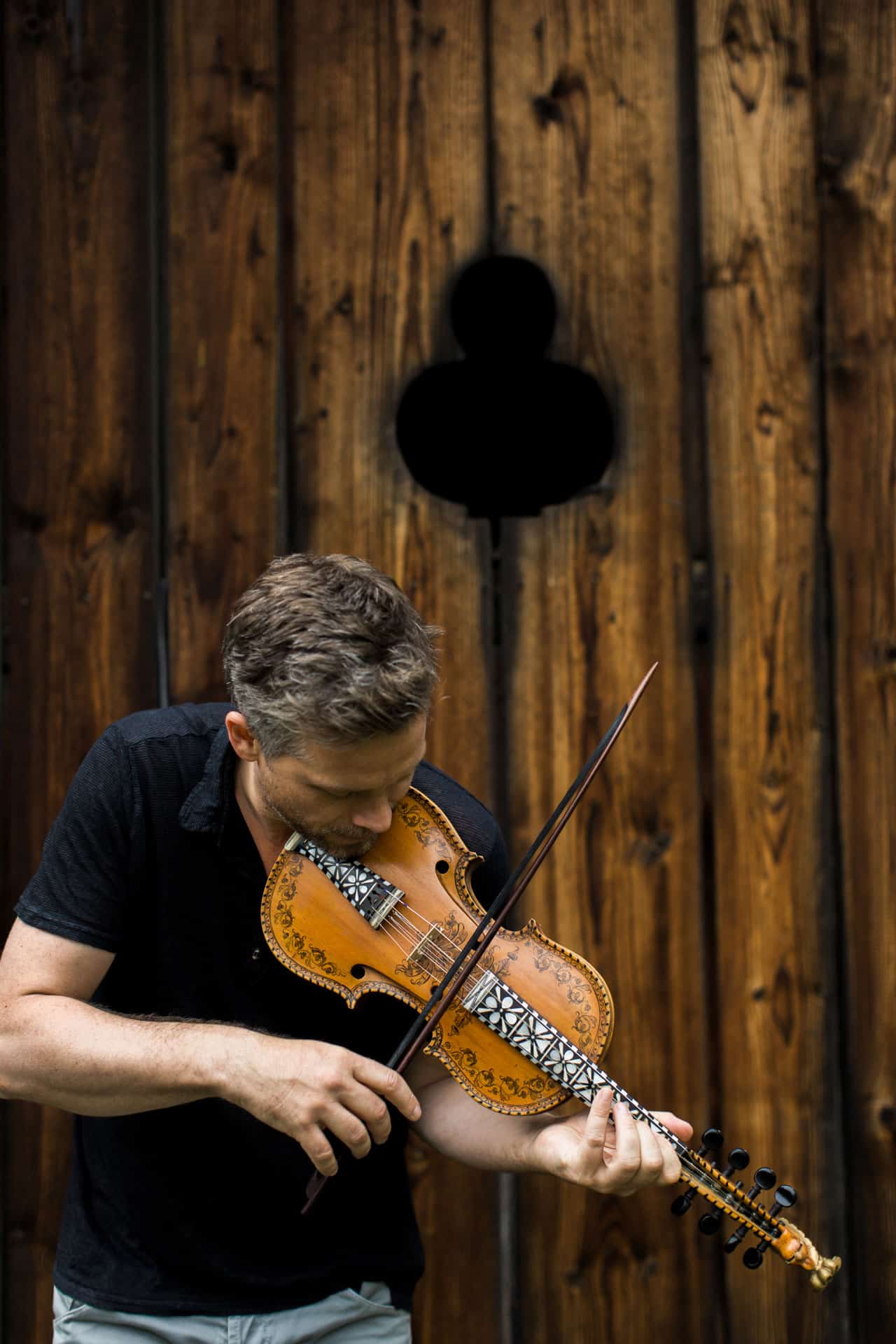 © Theresa Pewal[/caption]
It has the Alehouse elements in it. That is, it's some of the same players, but the emphasis is on the Scandinavian scene and melodies from the 17th and 18th centuries. When you create a Scandinavian folk programme in a historical context, the conflict between rural and urban music must be addressed. In the cities you have the bourgeoisie listening to good, German music. It's very chic and refined. On the other hand, you have music from the countryside where they play instruments like the Hardangervedel. So, alongside my normal violin, I will use this eight-string instrument in The Nordic Sessions. The melodies will be a mix between old, rural melodies and these urban melodies. Some of the texts and stories we use are from Swedish poet Carl Michael Bellman (1740-1795) who wrote incredibly funny texts about being drunk. His texts are combined with stories from Norway, Denmark and Sweden. So there will be a lot of singing and dancing - probably also a little drinking - and all of it with a focus on the Scandinavian scene.
video of The Nordic sessions, with Bellmann
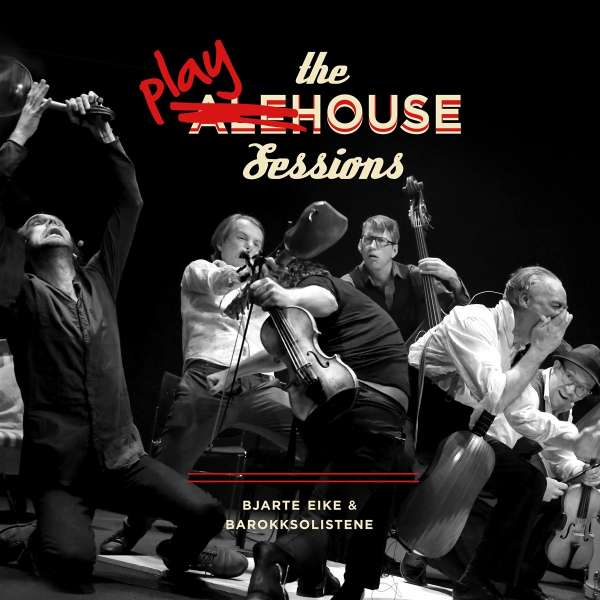
- WHO: Barokksolistene conducted by Bjarte Eike
- WHAT: The Playhouse Sessions
- EDITION: RUBICON RCD1096
- ORDER: JPC
The Nordic Sessions in Hasselt
- WHEN: 26 October 2022
- WHERE: Cultuurcentrum Hasselt