
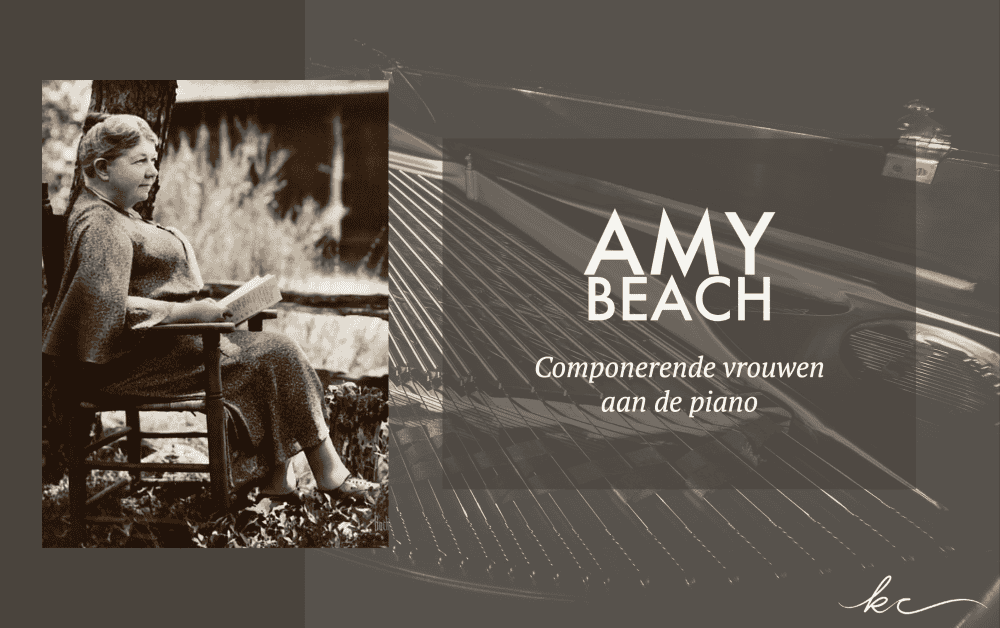
In the four-part series Female Composers at the Piano we highlight one female composer at a time. This third article focuses on American pianist and composer Amy Beach (1867-1944). In an era when women were considered too emotionally volatile for the "exact science" of composition, Beach took matters into her own hands. As a self-taught composer, she learned to compose and proved music critics wrong. She could do more than just interpret others' music; she could also create herself.
Musical education in America
During the Victorian era, the ideology for girls born in wealthy and middle-class families was that they should have knowledge of art, dancing, music and foreign languages. Amy Beach's musical education also began at a young age. Immediately she showed all the signs of a musical prodigy. In diaries of her mother it is said that Amy could accurately sing forty songs at the age of one, that she could play music by ear and that she (despite the absence of a piano) composed small pieces.
Beach began formal piano lessons with her mother at the age of six and soon gave public recitals with works by Händel, Beethoven and Chopin, but also with her own pieces. Again her talent was noticed and her parents were advised to enroll her in a European conservatory. This was common for American musicians and composers who showed talent. However, her parents rejected this and chose local education instead.
In 1883, at the age of sixteen, Beach made her concert debut with the Boston Symphony Orchestra performing Beethoven's Concerto No. 3, in which she performed a self-composed cadenza. But this concert career was short-lived. Two years later she married and it was no longer socially acceptable for a married woman to tour, give piano lessons or even take composition lessons. Each of these things, it was thought, would have a negative effect on her ability to care for her husband.
Her husband Dr. Beach, who was himself an amateur musician, painter and poet, encouraged his wife to continue making music and to extend her compositional boundaries. Not only to continue with smaller genres such as piano miniatures, but also to experiment with large-scale orchestral compositions. Dr. Beach called it: "pioneering work, at least for this country, for a woman to accomplish."
Imitation, assimilation and adaptation
Despite the lack of formal education, Amy Beach continued to compose. If no one wanted to teach her, she would teach herself. As a pianist she was familiar with Beethoven and his piano reductions. Counterpoint was therefore the first subject of her self-study. Manuscripts of J.S. Bach were perfect for this and she began with the Wohltemperierte Klavier.
After Beach mastered counterpoint and fugues, she moved on to orchestration. For this she used two techniques: the first an English translation of Berlioz Traite de l'instrumentation, the other (which was undoubtedly formative for her own musical voice) learning pieces by other composers by heart. Beach later compared this in an interview to "the dissection of a medical student". She memorized the part of each instrument, reconstructed it on paper and compared it with the original. She studied the scores beforehand, brought them to the concert and also afterward compared whether the written version matched what she mentally remembered. This way of studying made her familiar with different composers and their sound worlds, their structure and their genres.
Although her determination is clear from the effort she put into her study, building a career as a composer was a difficult struggle. Critic George Upton describes the mentality in his influential book Woman in Music (1880): women are too emotionally volatile for the "exact science" of composition. About Amy Beach he wrote: "She will always be the receiver and interpreter, but there is little hope that she will be the maker." Yet she persevered and her first major work Mass in E-flat major, op.5 premiered successfully in 1889. Her mass was described as "difficult to associate with a woman's hand".
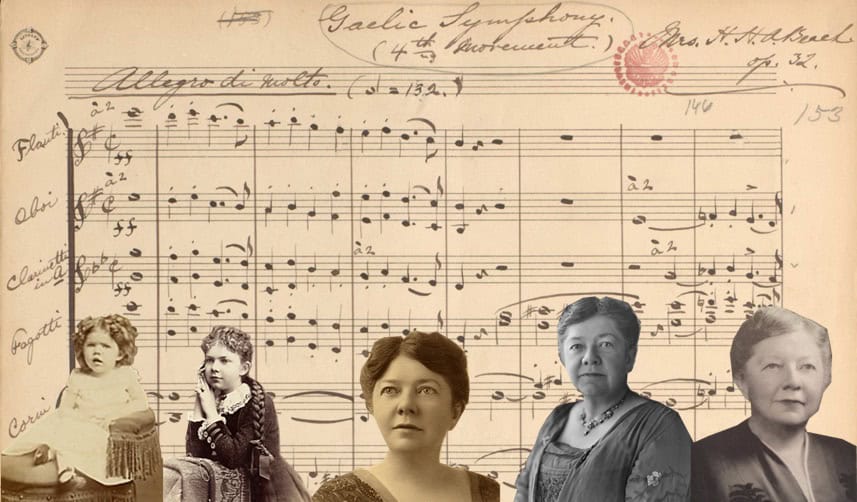
But this won battle did not mean victory. Women's music was still described as follows: "It is good. It is beautiful. But I'm afraid the ladies can't help us much. They have no creative power." With her "Gaelic" Symphony, op.32 (1896) she finally gained respect as a full-fledged composer when George Whitefield Chadwick wrote that it "has not the slightest trace of effeminacy, but has clear and thorough masculine execution." Chadwick welcomed her into the Boston Group and called her "one of the boys".
Different sound worlds on piano
Amy Beach gained recognition for her larger works but her smaller ones are equally ingenious. Her piano works show the evolution in her compositional style as they span her entire oeuvre. From the early Valse-Caprice, op.4 for solo piano (1889) to her Piano Trio, op.150 (1938).
Four Sketches, op.15 (1892) is an example of her early style. Written in the romantic idiom, lyrical and with a programmatic character, these short pieces align with compositions by Brahms and Schumann that she herself performed as a pianist. In later works such as 5 Improvisations, op.148 (1934) she experimented with a more modernistic language.
By learning from scores by other composers, Beach's oeuvre is permeated with references and quotations. This is also the case in her piano music. For example, in Eskimos, op.64 (1907) Beach goes against Dvořák's idea of American music and integrates Inuit themes from Franz Boas' book The central Eskimo (1877). Beach integrated these themes in a similar way as American composer Arthur Farwell, with the melody flirting with major-minor tonalities. Beach added her own taste by — as she herself liked to call it — "enriching the melodies with augmented sixth chords".
Besides literal quotations, Beach also references certain composers and movements with her music. In Les rêves de Colombine: Suite Française pour piano forte, op.65 (1907) she winks at Robert Schumann's Carnaval and with Hermit Thrush At Eve, op.92 (1921) she references ideas of French impressionists. She integrates transcriptions of bird songs and experiments with them in these piano miniatures.
Her piano oeuvre testifies to her flexible character as a composer. Like a chameleon, she knows how to master different styles and genres. They confirm her hard work and the obstacles she encountered. They are the result of her perseverance.
Listening tips
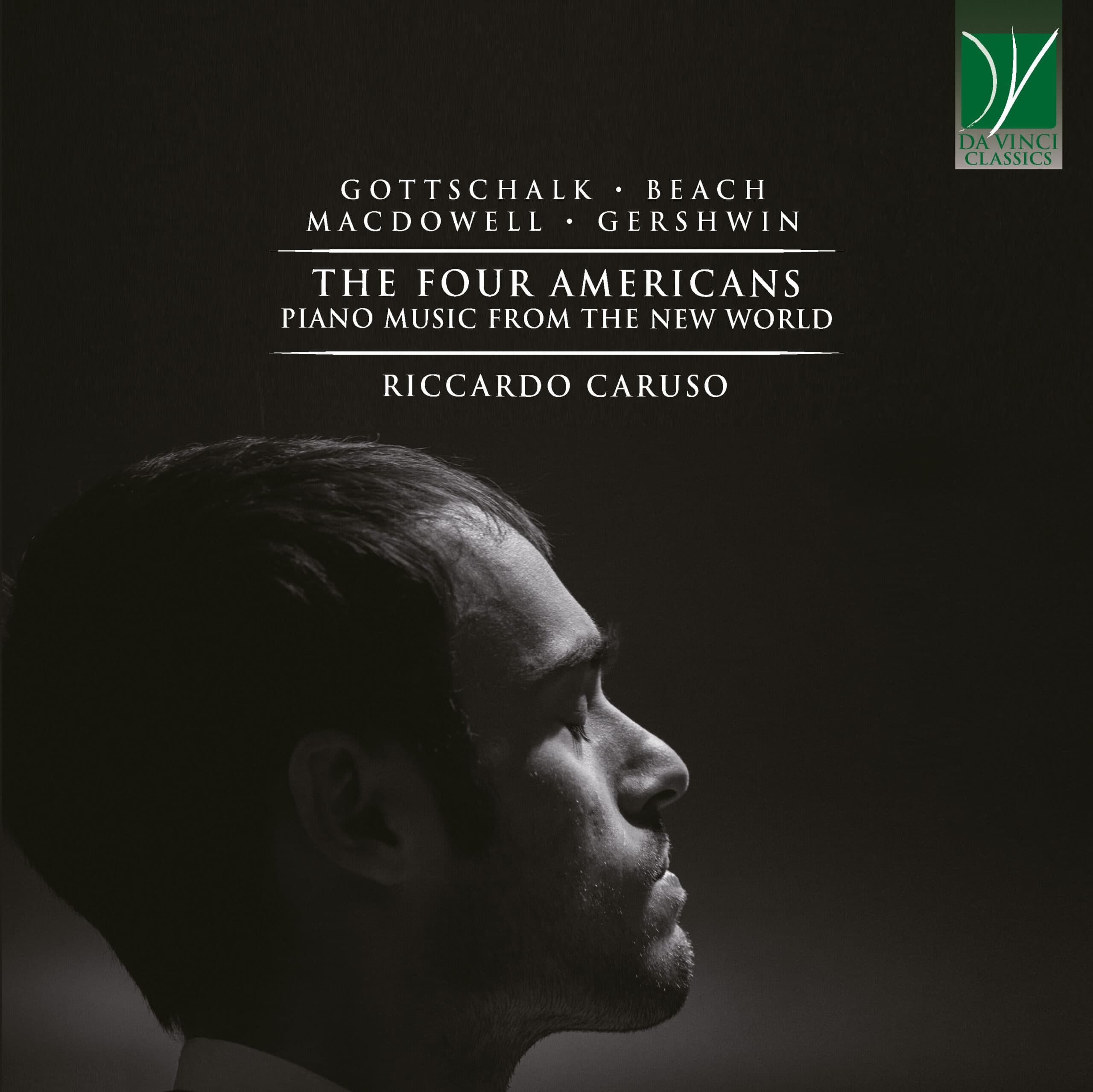
- WHO: Riccardo Caruso [piano]
- WHAT: The Four Americans: Piano Music from the New World
- LABEL: Da Vinci c00539
- ORDER: JPC
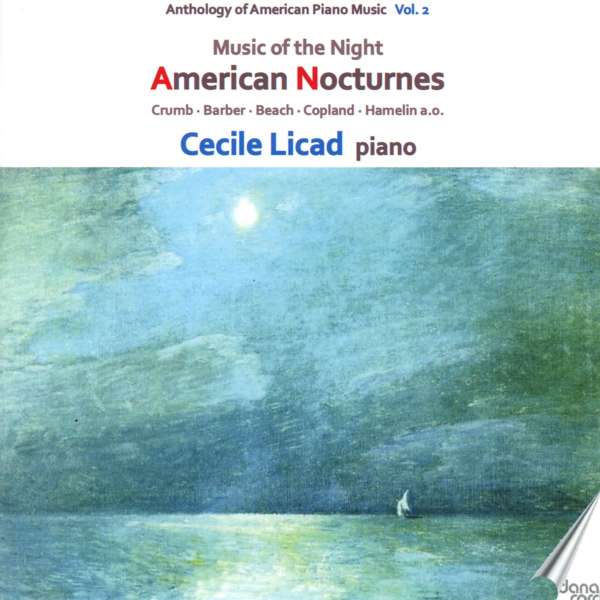
- WHO: Cecile Licad [piano]
- WHAT: Anthology of American Piano Music Vol.2 - American Nocturnes
- LABEL: Danacord 783&784
- ORDER: JPC
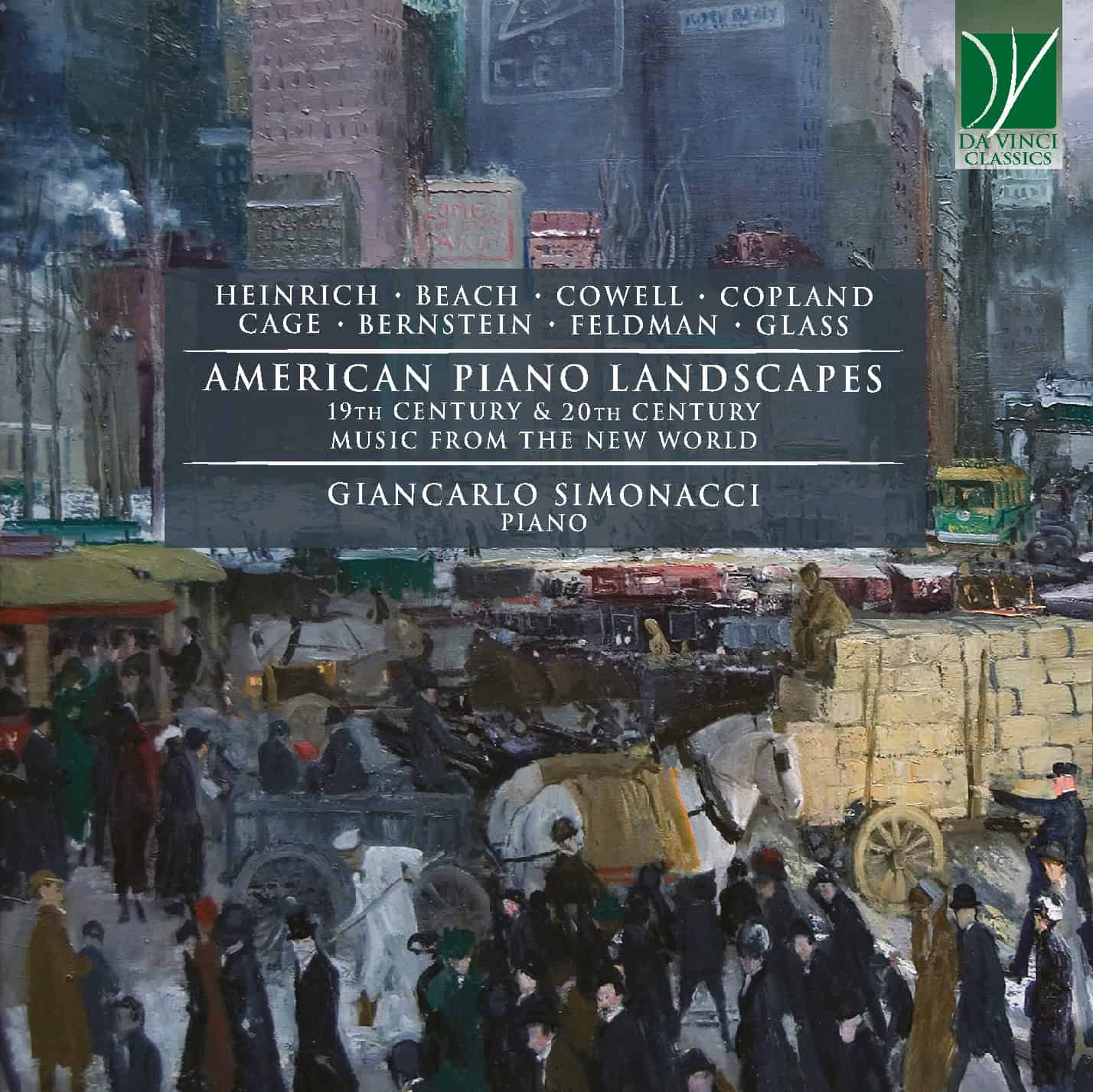
- WHO: Giancarlo Simonacci [piano]
- WHAT: American Piano Landscapes: 19th Century & 20th Century Music from the New World
- LABEL: Da Vinci c00588
- ORDER: JPC
 In focus
Composing women at the piano: Clara Schumann
20 January 2023 edit post
CD & DVD
Composing women at the piano: Hélène De Montgeroult
20 November 2022 edit post
New Releases