
February 11th is the national day of the guitar. We celebrate this on Klassiek Centraal with three new CDs by Belgian musicians. And when you celebrate something, the motto goes: "the more the merrier". That's why the guitar doesn't party alone. We present it in duos, accompanied by three other instruments… But first a short introduction about this new chamber music sensation.
The guitar had to fight for its place among classical instruments. In the 20th century, great guitarists, including the beloved Andrés Segovia, achieved a breakthrough for the instrument. Guitar works became known to a wider audience for the first time. Think of Concierto de Aranjuez by Joaquín Rodrigo. Increasingly, more and more contemporary composers began writing for the instrument. Most of these were solo works.
In recent years, a new trend has emerged: guitar in chamber music. It's not a new concept (which you'll learn more about below) but for the past five years it's been booming business. Every month at least one is introduced with music for guitar ensembles or guitar paired with other instruments. The repertoire is diverse. Sometimes old compositions reworked for this new instrumentation, others again new idiomatic compositions (works written for the body of the instrument and taking into account the possibilities of the specific instrument in question). To acquaint you with this emerging novelty, we would like to introduce three CDs to you.
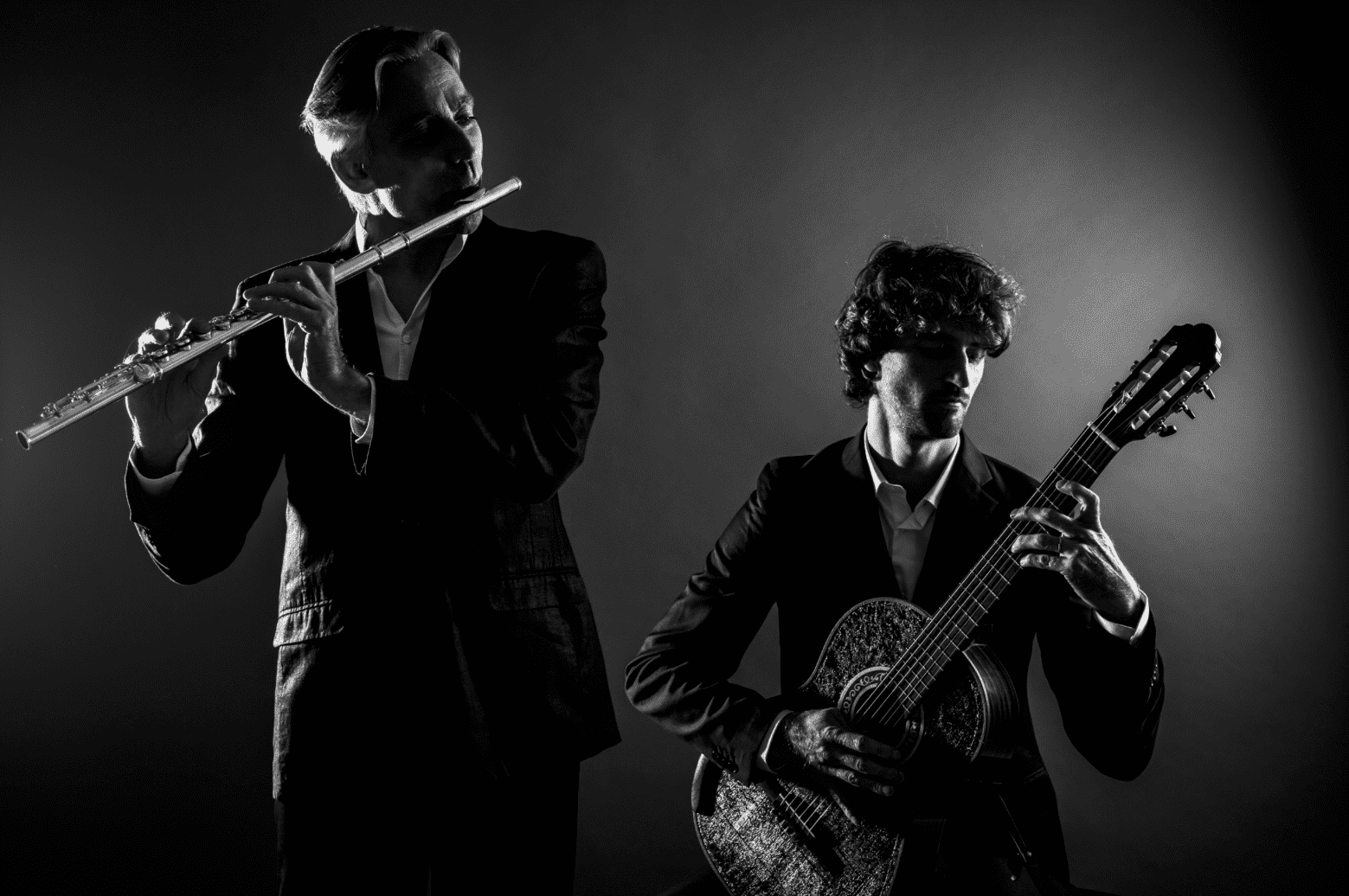
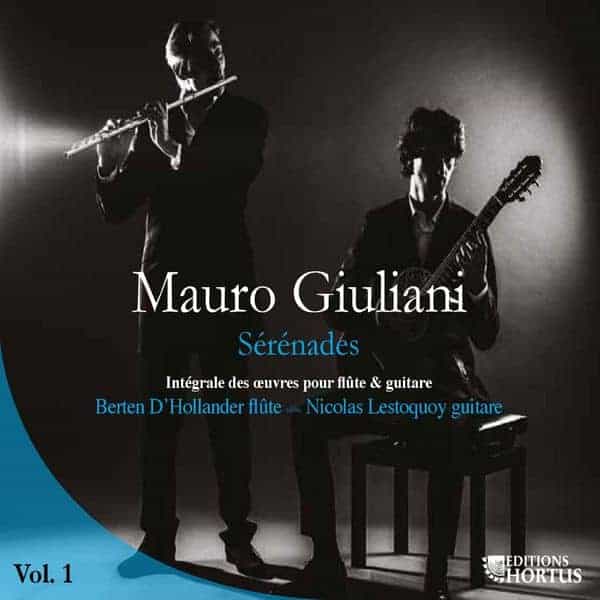
As briefly mentioned above, combining the guitar with other instruments is not a new concept. 18th-century guitar virtuosos were familiar with it. At recitals they were expected to play solo music but certainly not a complete evening. One or two solo works were alternated with ensemble works. One of the most popular combinations was guitar and flute. Mauro Giuliani (1781-1829) excelled at it. His examples are atypical for the chamber music of his time and of exceptional level. Duo Nicolas Lestoquoy & Berten D'Hollander dedicate themselves to his works. In 2015 they released a first album with his guitar duos and now volume 2 follows.
The CD opens with one of Giuliani's later works: Grand Potpourri Op.126 (ca.1828). The composition consists of five parts: an introduction followed by four sections based on famous operas (Zelmira and Semiramide by Rossini and Alfredo il grande by Donizetti) and a popular Neapolitan song. In this respect, this work is no different from chamber music by Giuliani's contemporaries. Viennese chamber music often brings tunes from larger works such as operas and symphonies into the living rooms of the aristocracy and the bourgeoisie. What does distinguish this work from his contemporaries is the technically demanding level required to perform it. Chamber music was a popular genre among amateur musicians to play together as a pastime. Giuliani's compositions, on the other hand, are far too difficult for an amateur guitarist. It raises the eternal question: for whom did he write his compositions?
We can only speculate on an answer. What is certain is that Duo Nicolas Lestoquoy & Berten D'Hollander knows how to interpret the works sublimely. The transverse flute bears the main responsibility for carrying the melody, but the guitar also receives several solos. This duo manages to keep the balance between the two instruments nicely in equilibrium. Now one comes forward and then the other. In Grand Duo Concertant Op.85 (track 8-11), perhaps one of Giuliani's best-known works, they truly excel. The work is brimming with infectious melodies and brilliant passages for both instruments. Listening to it is a joy for the ear.
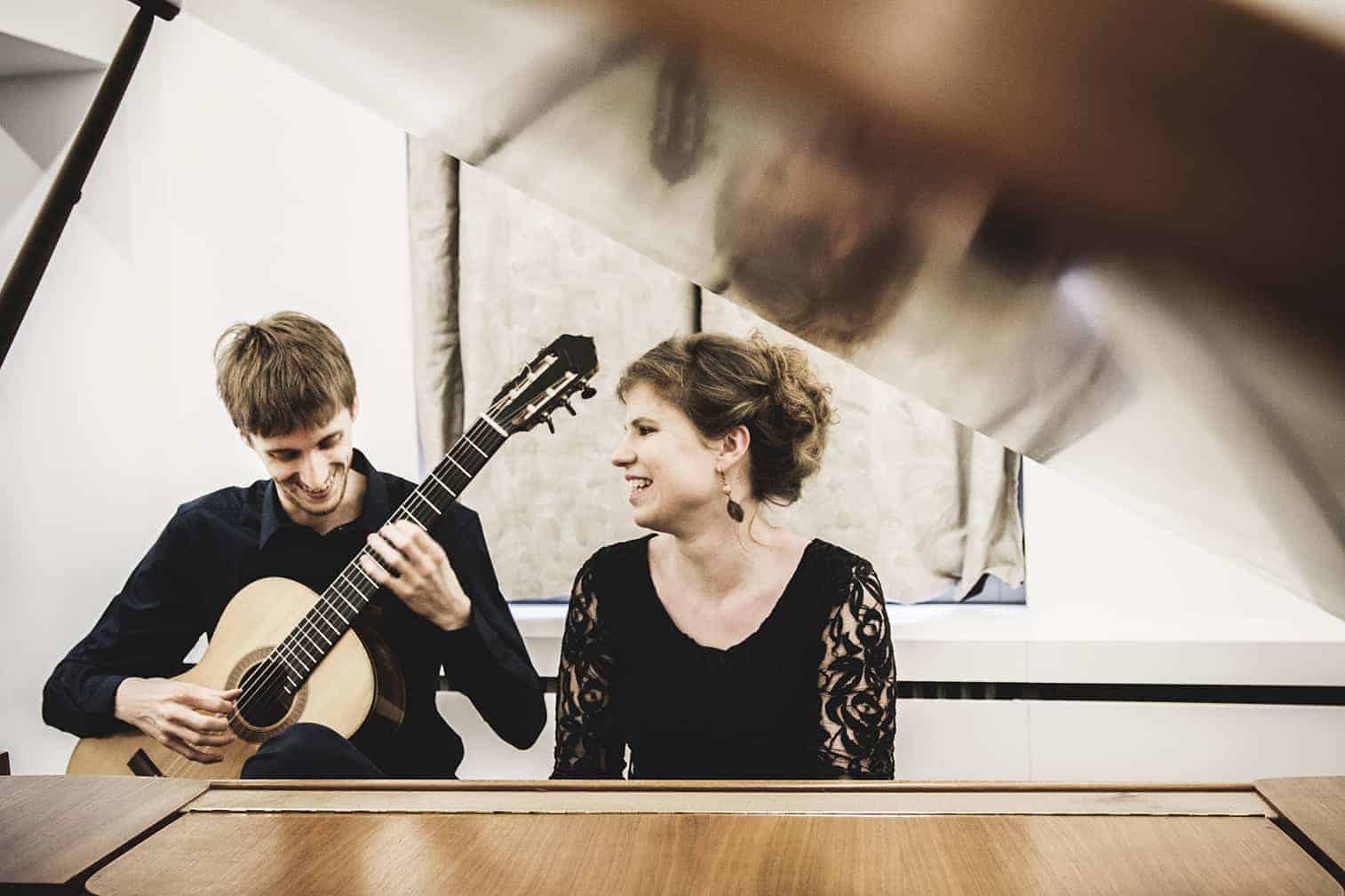
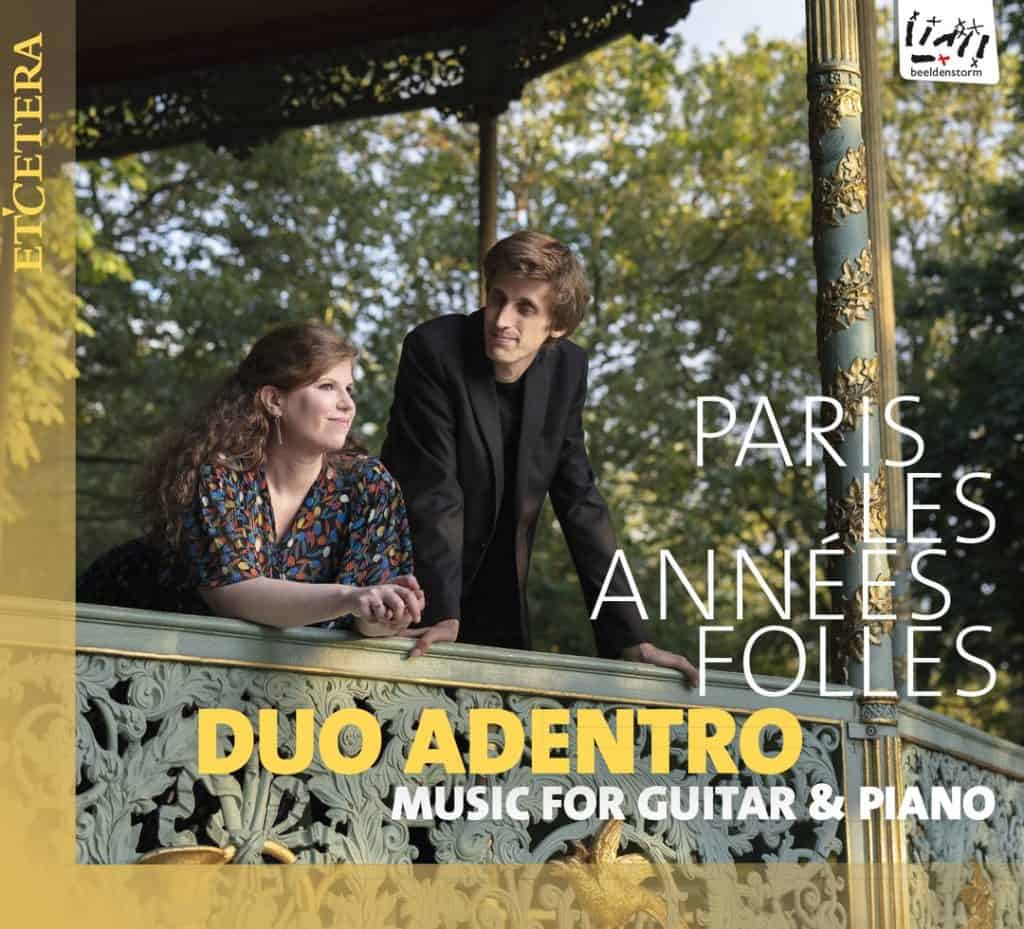
After Giuliani we jump in time. With the CD Paris, les années folles Duo Adentro brings the crazy twenties of the 20th century to life. Following the recovery from World War I and the Spanish flu, Paris experienced years of exuberant zest for life and desire for excess. Through compositions by various composers, Duo Adentro tells with guitar and piano about these turbulent years.
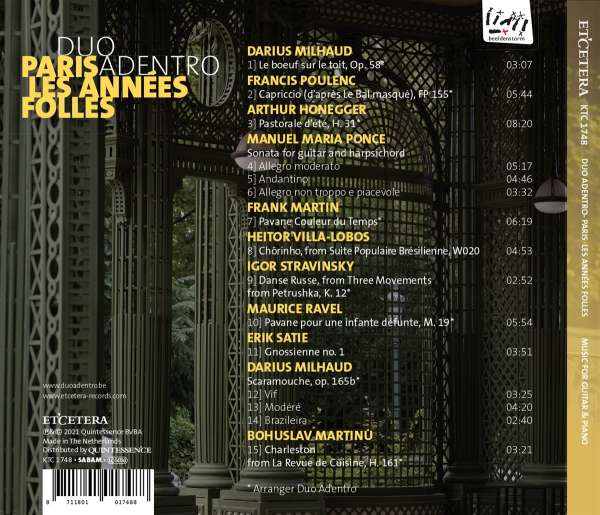
They open the CD with Le Bœuf sur le toit, Op. 58 (1920) by Darius Milhaud (1892-1974). The title comes from a Brazilian folk song and refers to the café of the same name on the Rue du Colisée. Originally it was composed for violin and piano as accompaniment for a silent film by Charlie Chaplin but it was eventually used for a surrealist ballet by Jean Cocteau. On this CD the work has been rewritten in a version for piano and guitar. Duo Adentro brings Milhaud's effervescent hodgepodge of music to life. Just as the café was a meeting place for artists from all corners of the world, various influences also come together in this composition. Tango and rumba rhythms give the work a lively character while the main theme (an adapted version of the Brazilian original) returns up to 14 times in rondo form.
Three other works by Milhaud appear on this CD. Two other composers, Poulenc and Honegger, from the group Les Six are also featured. Foreign composers who were active in Paris or whose music circulated there also find a place on this CD. They all fit into the story that Duo Adentro tells us musically. All except one work…
The choice of Eric Satie's work is, however, strange and twists somewhat in a story about the crazy twenties. One would expect that one of Satie's later works or one of his cabaret works would be a more appropriate choice because they date from the chosen period or because they fit the Parisian nightlife like Milhaud's Le Bœuf sur le toit. Instead, Gnossiennes Nos. 1 (1890, track 11) is included. Undoubtedly because of its popular character.
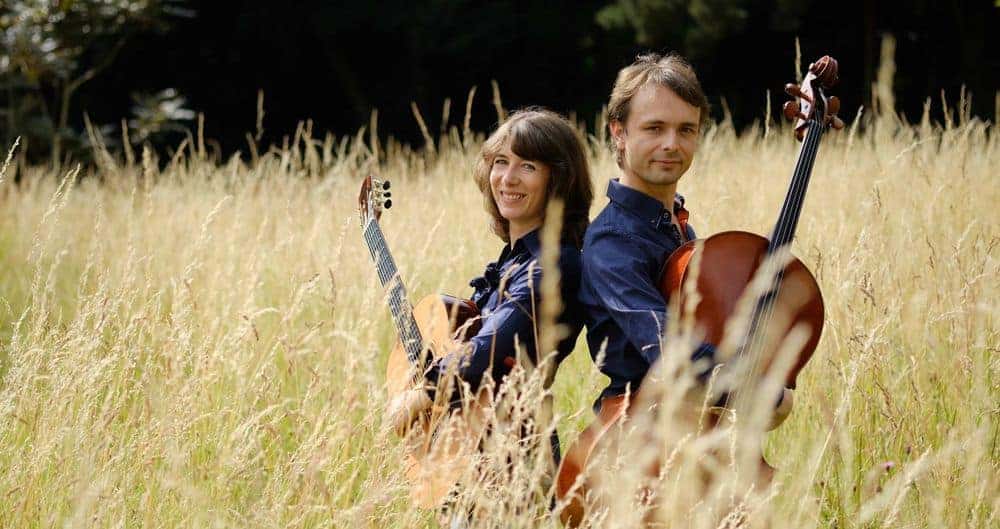
After the twenties we jump in time again, this time to contemporary repertoire. Because chamber music with guitar is becoming popular again, more composers are also starting to write music for it again. A favorite choice is guitar and cello; two instruments whose sound is close to the timbre of the human voice.
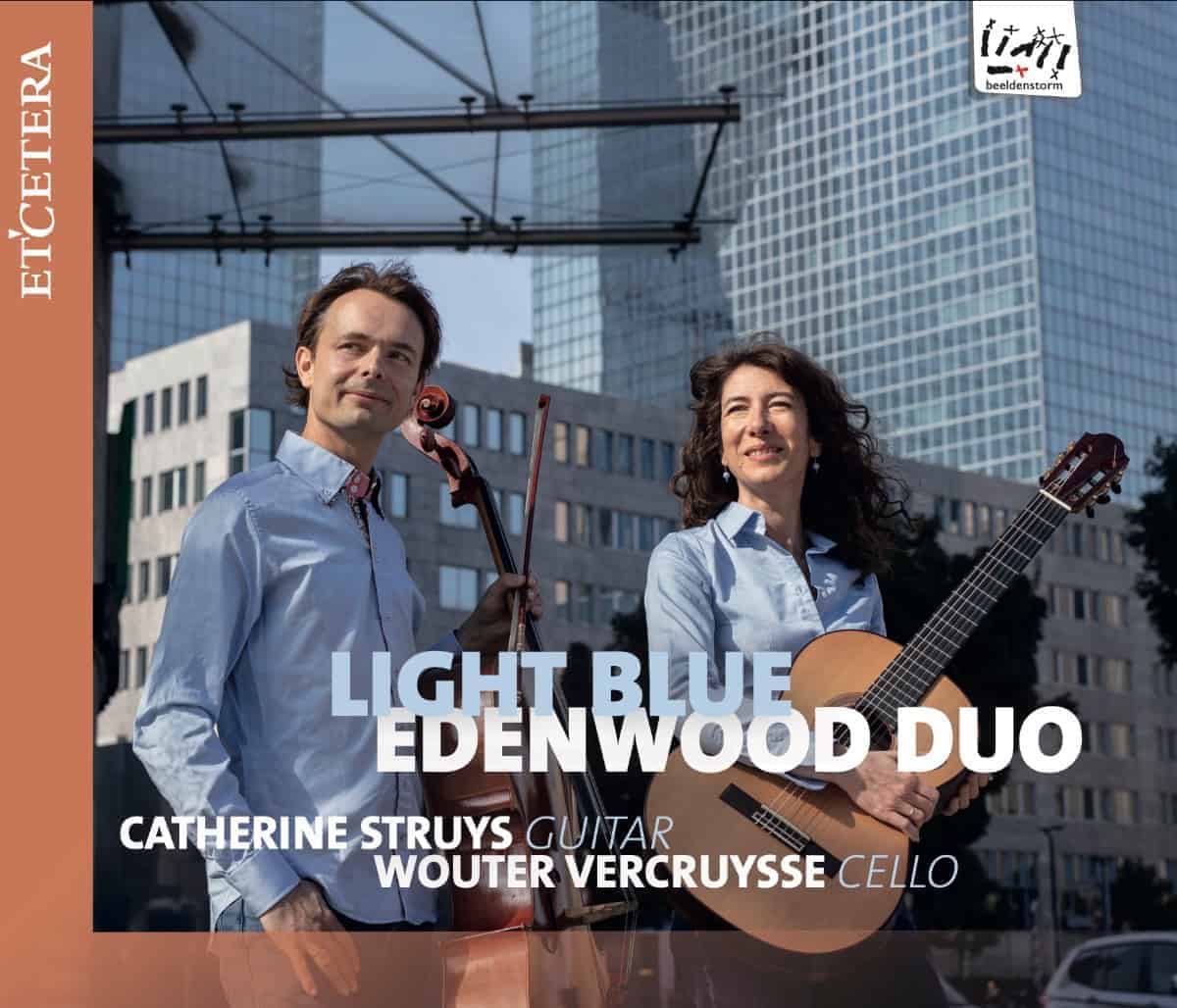
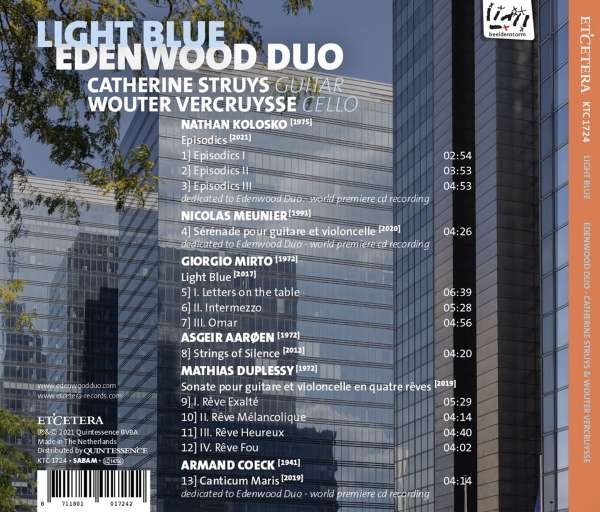
The Edenwood Duo released their cd Light Blue in October 2021. As a duo they are already known for bringing a varied program of contemporary music to life. On this new cd they remain true to their brand. They take the title from the eponymous work by Giorgio Mirto (°1972) which holds a central place. This Italian composer dedicates this three-part work to his favorite color, light blue. Mirto translates this color into a lively work in which timbre (or tone color) seems to be central.
The exploration of tone color is therefore the common thread throughout this cd. Thus the Norwegian composer Asgeir Aarøens (°1972) lets you embark on a quest for silence with Strings of Silence (2012), daydreaming on the warm sounds of both instruments. Armand Coeck (°1941) explores the singing character in his Canticum Martis (2019), a composition dedicated to this duo which receives its world premiere via this cd. The cello functions here as a singing voice that sings a story through a mysterious melody. The music thrives quietly, like the waves of the sea in calm weather. The timbre of the guitar and the cello form a meditative whole. Like a serene ode to the tone color of both instruments.
4/5
GIULIANI: Flute and Guitar Duets Vol.2
WHO: Duo Nicolas Lestoquoy [guitar] & Berten D'Hollander [flute]
WHAT: Giuliani: Flute and Guitar Duets Vol.2
ORDER: Volume 1 | Volume 2
Paris, les années folles
WHO: Duo Adentro (Saskia Van Herzeele [piano], Maarten Vandenbemden [guitar])
WHAT: Paris, les années folles
LABEL: Et'Cetera KTC1748
ORDER: JPC
3.6/5
3.8/5
Light Blue
WHO: Edenwood Duo (Wouter Vercruysse [cello], Catherine Struys [guitar])
WHAT: Light Blue
LABEL: Et'Cetera KTC1724
ORDER: at the artist | JPC