
Enchanting is the word that best describes the recital by Russian pianist Sergeï Redkin in the Beckett Hall of Ghent's Tinnenpot theater on December 8. We know Redkin from his performance at the celebration of 10 years of Klassiek Centraal in 2016 and from the corona edition of the Elizabeth Competition for piano in 2021, an edition without the large audience.He came second.
The program is assembled around the year 1917, the year of the Russian revolution. Two figures are central: Rachmaninov and Prokofiev. Rachmaninov looked back at the magnificent imperial past with his Etudes-Tableuax op.39, while Prokofiev already looks toward the future. Not his war sonatas (sixth and seventh), but his third and fourth sonatas are on the program. These still contain much Russian romanticism, but you already hear the tragic and frenetic aspects of the revolution and of the later Prokofiev. Between the antipodes Prokofiev and Rachmaninov, he plays two shorter pieces by lesser-known Russians, Medtner and Majakovsky. From Medtner "the magic fiddle," one of his fairy tales for piano. From Majakovsky he plays "whimsies," sketches or rather, caprices. Caprices of the inscrutable Russian soul.
Introvert
[caption id="attachment_39292" align="alignleft" width="281"]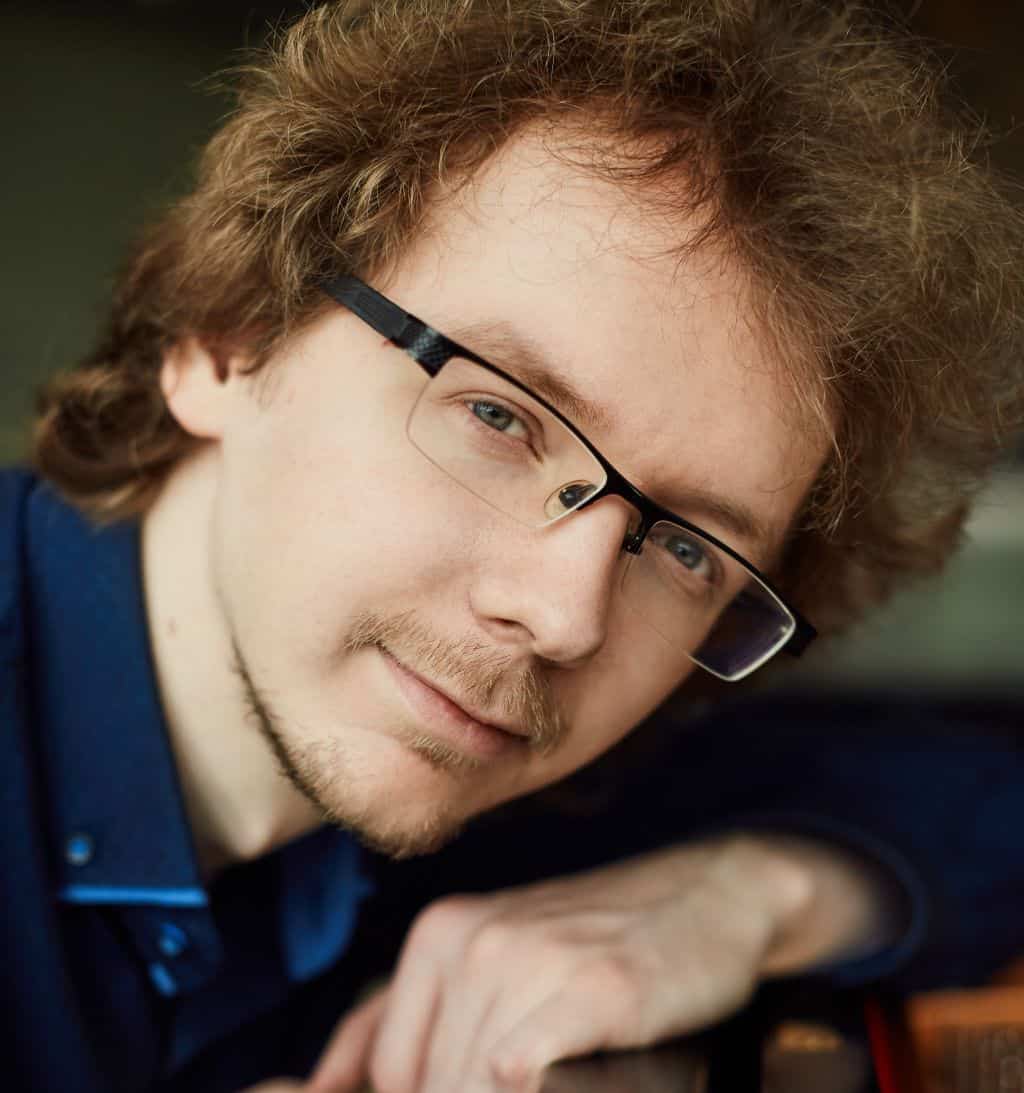 Sergei Redkin (photo: Sofia Philharmonic)[/caption]
Redkin is an introverted pianist with a somewhat childlike face. He sits in total concentration. He is calmness itself in this hectic world. He lives with, behind, beside, thanks to, for his piano. He comes to greet the audience in the foyer after his recital, only then does one notice how tall he is. A giant with an angel's face, blonde locks that bounce around his head during rousing passages. An otherworldly being, descended to earth. He plays humbly and with integrity, without star airs. He is only 33, l'âge du Christ.
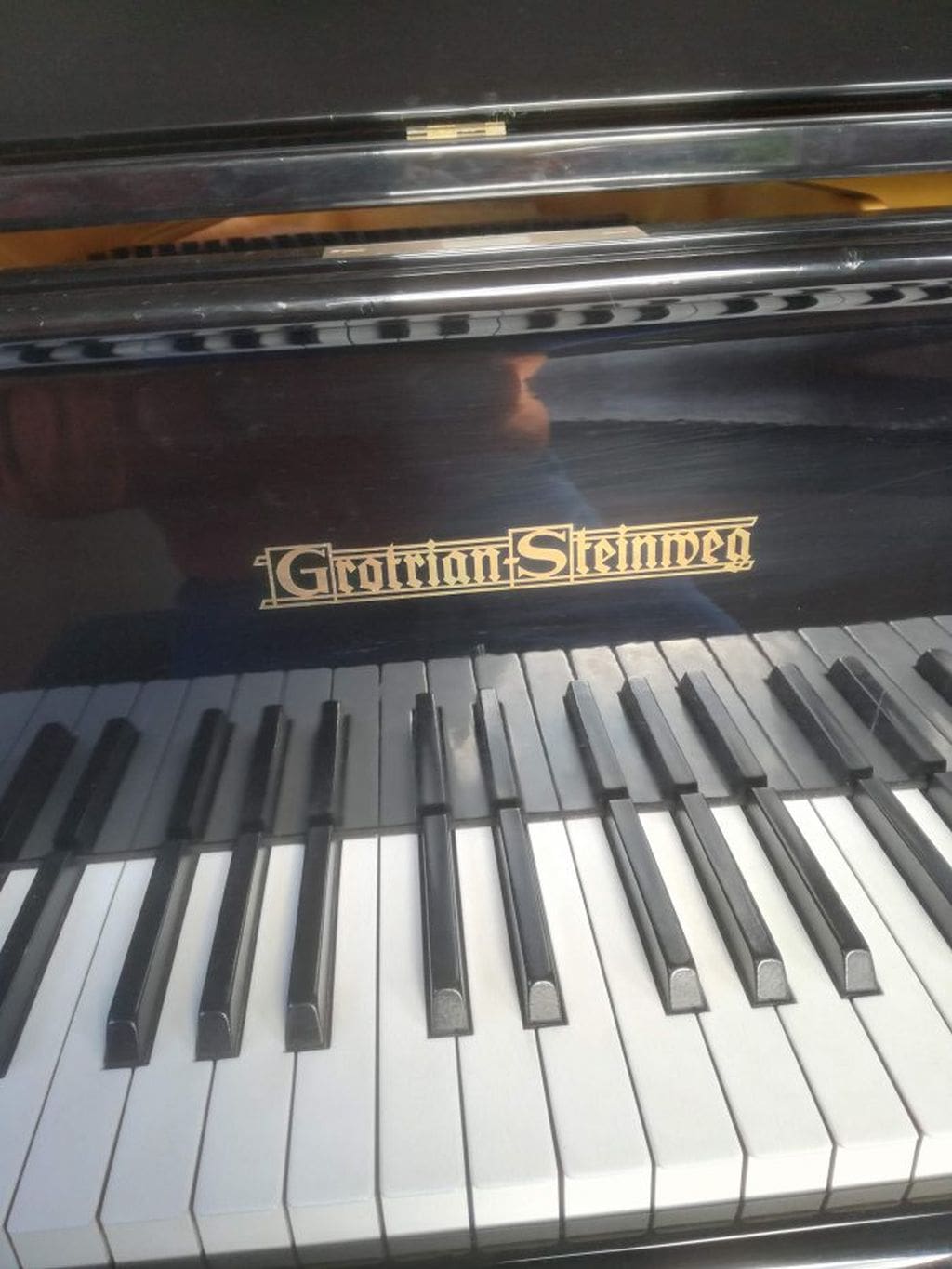
The grand piano in the Beckett Hall of theater Tinnenpot is not a Steinway concert grand, but a smaller Steinweg from 1925, the branch of the Steinwegs that remained in Germany. Redkin would have preferred to play Chopin on it, because on the smaller grand piano he cannot extract all the brilliance from Rachmaninov and Prokofiev. It once again demonstrates how masterfully he managed it with limited means.
The entire program and masterful performance by Sergei Redkin reminds us how rich and fascinating the Russian canon is, without connecting it to the geopolitical situation then or now.
Beethoven's Early Sonatas
Pianist Boris Giltburg is the opposite of Redkin. With his blocky face he smiles at the audience and life. In 2013 he won the Elizabeth Competition. Born in Moscow in 1984, he migrated to Israel at age ten. After hearing the second laureate of 2021, we listen on December 13 to the first, the winner of the Elizabeth Competition of 2013. While this may not matter musically, Giltburg will always carry the shine and prestige of winner with him.
[caption id="attachment_39293" align="alignleft" width="300"]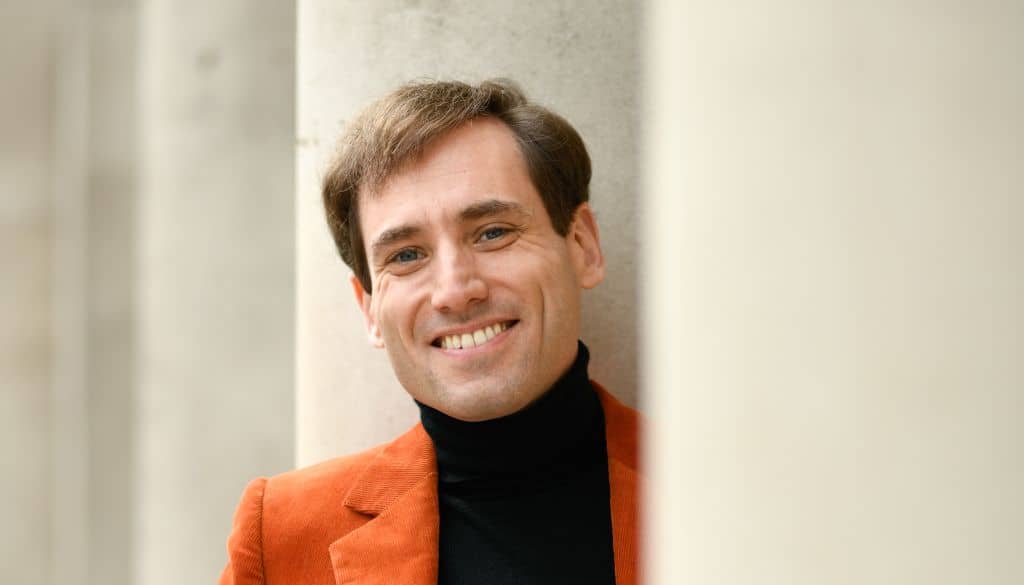 Boris Giltburg (photo: Sasha Gusov)[/caption]
The program is entirely devoted to young Beethoven. None of the legendary late sonatas, but sonatas with early opus numbers that are still classical in style, inspired by his teacher Haydn. He begins with the sixth in F. Immediately striking is how smoothly, almost elastically he handles the tempo. He plays as if he is improvising. Also notable is that he does not play from memory; there is an iPad in front of his nose. Is it a safety net, or simply a sign that Beethoven's notes and not Giltburg's virtuosity are central here? In the eleventh sonata too, he surprises with his rhetorical play, full of minute tempo changes.
During the first part of the well-known Moonlight Sonata, he lets his audience drift away in dreams. In the last sonata, opus 2 no. 3, he pulls out all the stops. It immediately becomes clear why he saved this earliest sonata of the program for this evening's finale and thus did not build the program chronologically. Often Beethoven's oeuvre is divided into three: the classical, the heroic, and the late period. Here we could once again hear how innovative and heroic Beethoven was even in the classical period, in the first opus numbers.
Bonn am Rhein
Giltburg's recital took place on Friday, December 13. My wife accompanied me to this magnificent recital. Our relationship also began on a Friday the thirteenth of December, in 1996, exactly 28 years ago in Germany. Beethoven brought us together in his city Bonn. This recital was not only a feast for the music lover and Beethoven fans, but for us personally it was of special significance.