
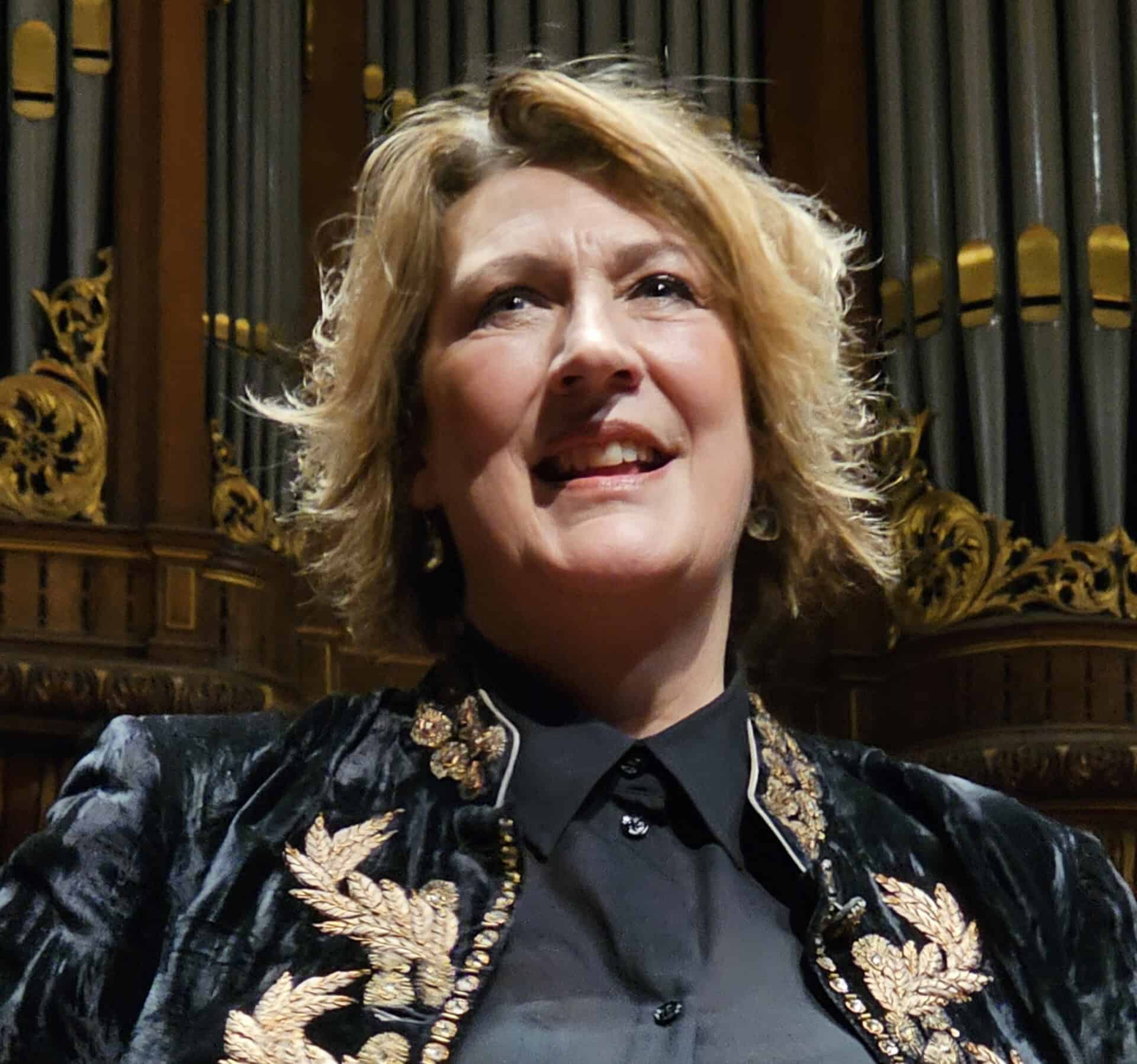
Nowadays, mezzo-soprano Sarah Connolly is regarded as one of the most famous classical singers in the world. But her path to the top was one that took special routes. Born in the British Durham, she was quickly captivated by classical music. Her parents were not musical, but classical music was listened to a great deal.
She started with piano lessons, but was advised to sing. She joined a BBC choir. After that, she was active as a jazz singer, regularly performing her own compositions. Age was not on her side – she was already 31 – when she moved more towards opera. Through her enormous talent and perseverance, she was first asked for smaller roles, but soon she was given lead roles in various operas. On 15 June next, she will be heard and seen at Het Concertgebouw in Amsterdam as Dido in the opera Dido & Aeneas by Purcell.
'Trouser roles'
She has sung in operas from various periods, but for many she is especially famous for her so-called 'trouser roles' (women who perform male roles) in operas by G.F. Händel. Legendary are her lead roles in the operas Giulio Cesare and Ariodante. For her exceptional performances, she was knighted as a Dame in 2017 (the female equivalent of Sir), but what she is equally proud of is that at the end of 2023 she received the King's Medal for Music. She received Britain's highest honour particularly because, apart from her musical qualities, she has been actively promoting new talent and reaching new audiences for some time.
Dido & Aeneas: universal emotions
Apart from her famous 'trouser roles', Dame Sarah has also become famous for her role as Dido in the opera Dido & Aeneas by Henry Purcell. For many, she is the Dido of the last decades. Her interpretation of the emotional Lamento ('When I am laid in earth') is unmatched. Why is it that Dido & Aeneas is the highest-rated opera and the Lamento is considered one of the most beautiful opera arias? The plot is simple in itself (but has deeper layers): Queen Dido falls in love with the Trojan Aeneas (who is on his way to found Rome, a descendant of Aeneas, Romulus, is said by tradition to have founded Rome). Love blossoms, but at some point Aeneas wants to obey Jupiter (in the guise of an elf) to depart. Dido feels betrayed, but is also intensely sad and commits suicide. However, behind this simple plot lie many universal and recognisable emotions and values, such as happiness, sadness, pain, strength and weakness. The famous Flemish psychiatrist Dirk De Wachter (a great baroque enthusiast) has made an interesting podcast about this, entitled 'Dido and the fatality of existence'. In that podcast, he calls Dido & Aeneas one of the first emancipated operas, full of powerful women. And that is of course entirely in line with Dame Sarah Connolly.
Discount for Klassiek Centraal readers
Readers of Klassiek-Centraal can attend this unique, one-off performance of Dido & Aeneas on 15 June next at Het Concertgebouw in Amsterdam with a discount of € 15,-! Click here to reserve and for more information.