
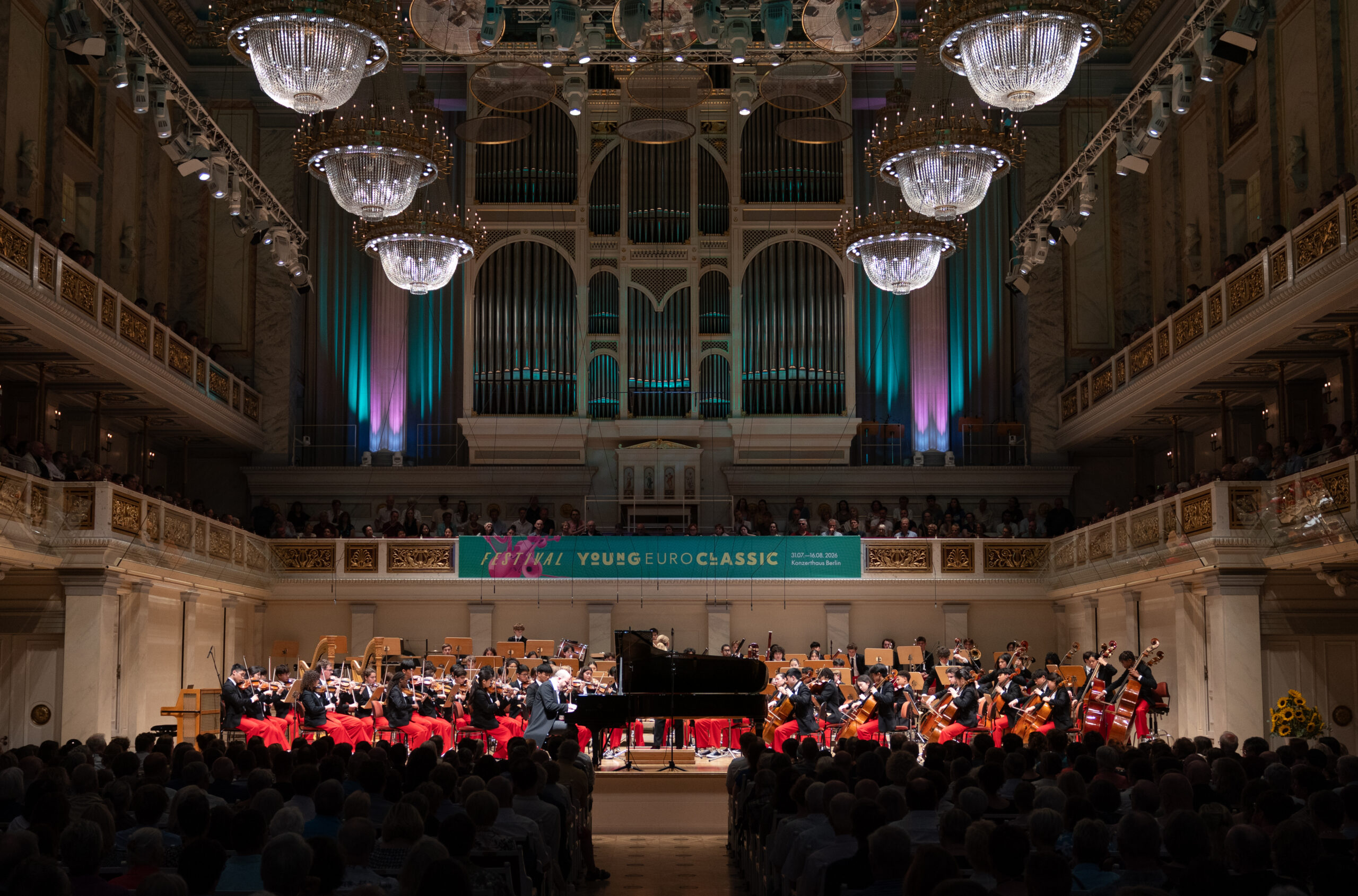
That Young Euro Classic has been one of the most important international meeting places for youth orchestras for more than a quarter century was once again demonstrated by the performance of the National Youth Orchestra of the United States of America. The ensemble, composed of the greatest American talents between sixteen and nineteen years old, presented on Tuesday, August 4 in Berlin's Konzerthaus a program that not only highlighted American musical heritage, but also encompassed one of the greatest orchestral masterworks of the twentieth century. Samuel Barber (1910-1981), George Gershwin (1898-1937) and Béla Bartók (1881-1945) together formed a program in which virtuosity, color, humor and collective musicality continually engaged in dialogue with one another. Under the direction of Karina Canellakis and with Kirill Gerstein as soloist, the concert grew into one of those rare evenings when the qualification 'youth orchestra' hardly does justice to what is being heard.
Even before the music began, a violist from the orchestra charmed the audience in a particularly delightful way. He began his introduction in German and thus immediately won over the hall. A small moment, but indicative of the atmosphere that followed: young, uninhibited, visibly enjoying itself.
Already remarkably homogeneous
From the first measures of Barber's sparkling overture The School for Scandal, it was striking how the humorous lightness of the music was coupled with an astonishing homogeneity of sound, especially when you consider how young these musicians are. Not a single orchestra section was inferior to the others: the strings sounded warm and supple, the woodwinds brought their solo moments with character and elegance, the brass combined power with refinement and the percussion provided the necessary sharpness. At the same time, Canellakis kept the orchestra tightly organized without removing the spontaneity from the music. Her continuous interaction with the musicians gave room for individual expression: Barber sounded as if the music simply ran through the blood of these young musicians.
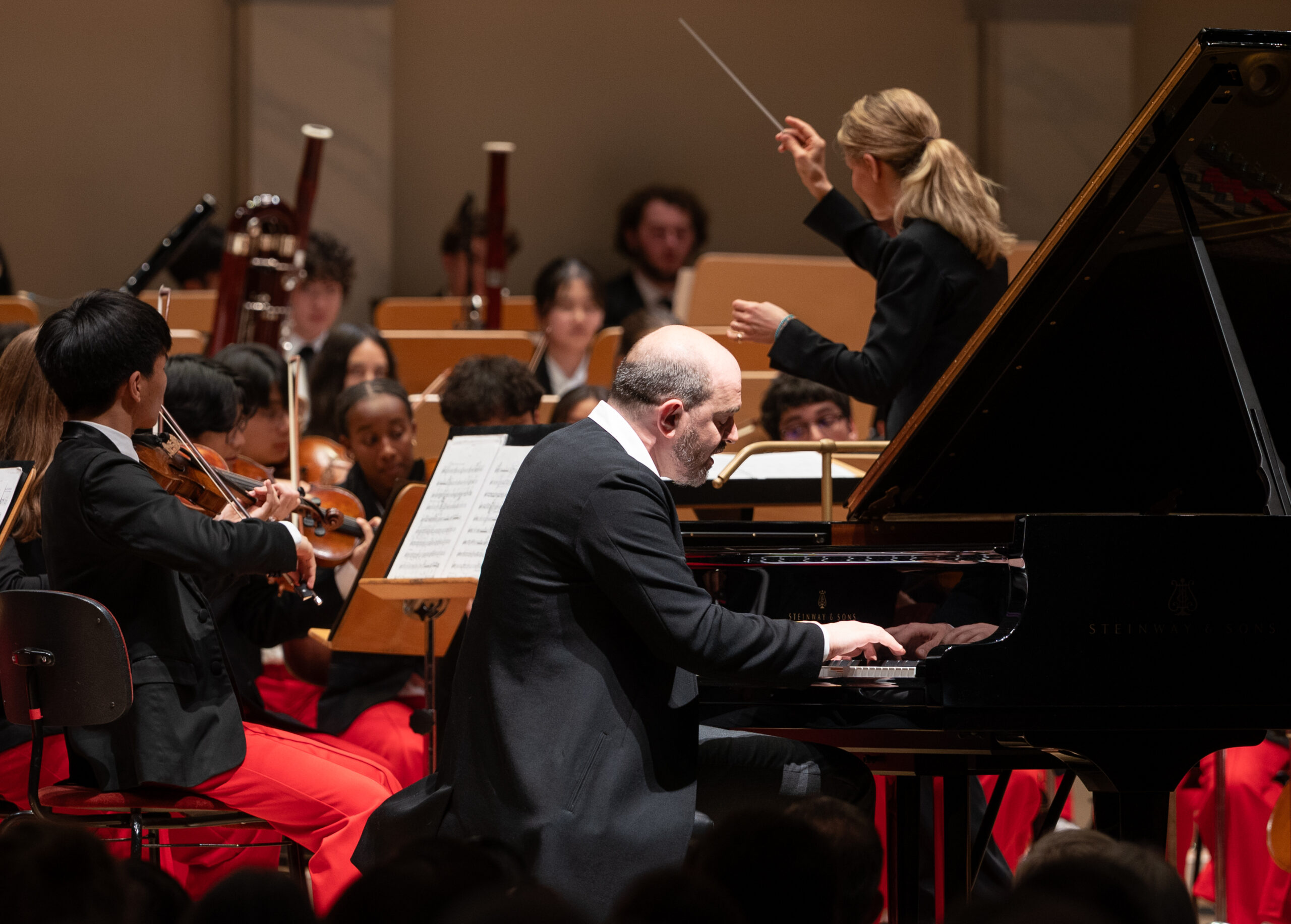
After the witty lightness of Barber, the focus shifted to Gershwin's Piano Concerto, in which Kirill Gerstein as soloist brought out a completely different side of the orchestra. Gerstein has been among the most versatile pianists of his generation for years and moved with ease here too between classical tradition and jazz idiom. His playing combined clarity and rhythmic precision with a freedom that sometimes seemed almost improvisatory, yet never descended into mere effect-seeking. Even more striking was his attitude toward the orchestra. Gerstein never presented himself as the soloist standing above the ensemble, but made himself visibly part of it: he enjoyed the young musicians, sought interaction with the concertmaster and continually responded to Canellakis. The fact that he never positioned himself as a star in the foreground throughout the entire concert, but repeatedly yielded to the collective, is precisely what distinguishes a great musician.
The first movement was genuinely astonishing. The energy and rhythmic vitality of Gerstein and the orchestra were so contagious that it was hardly possible to resist applauding after this first section alone. The middle section then received a completely different atmosphere. Canellakis shaped the slow introduction with a feeling for sonority and tension, followed by a beautiful trumpet solo and refined woodwind playing that further colored the music. The transition to the faster section proceeded smoothly and culminated in a third movement full of fire and energy. In the louder passages, the piano was occasionally somewhat drowned out – the only moment in the evening when the balance went astray – but this was hardly a drawback compared to the flamboyant abandon with which music was made here.
Visually, too, the young character of the orchestra remained present: sneakers, a red pair of pants and other youthful accents naturally suited the age of the musicians. The fact that Gerstein visibly aligned himself with them through his footwear was a small but telling detail.
After so much youthful energy, Gerstein played as an encore the restrained Blame It on My Youth by Oscar Levant (1906-1972) – the ideal conclusion to the first half, a symbolic moment of rest to return to earth after Gershwin's exuberance.
An orchestra as one organism
After the intermission, the atmosphere changed completely. With Bartók's Concerto for Orchestra, the ensemble faced the ultimate test. It is one of those scores in which virtually everything a symphonic orchestra must be able to do technically and musically comes together: rhythmic complexity, polyphony, extreme dynamic contrasts, solo passages, chamber music interaction and a virtuosity that must constantly remain under control. That a youth orchestra dares tackle this music speaks to ambition. That this National Youth Orchestra then dealt with it so convincingly was phenomenal.
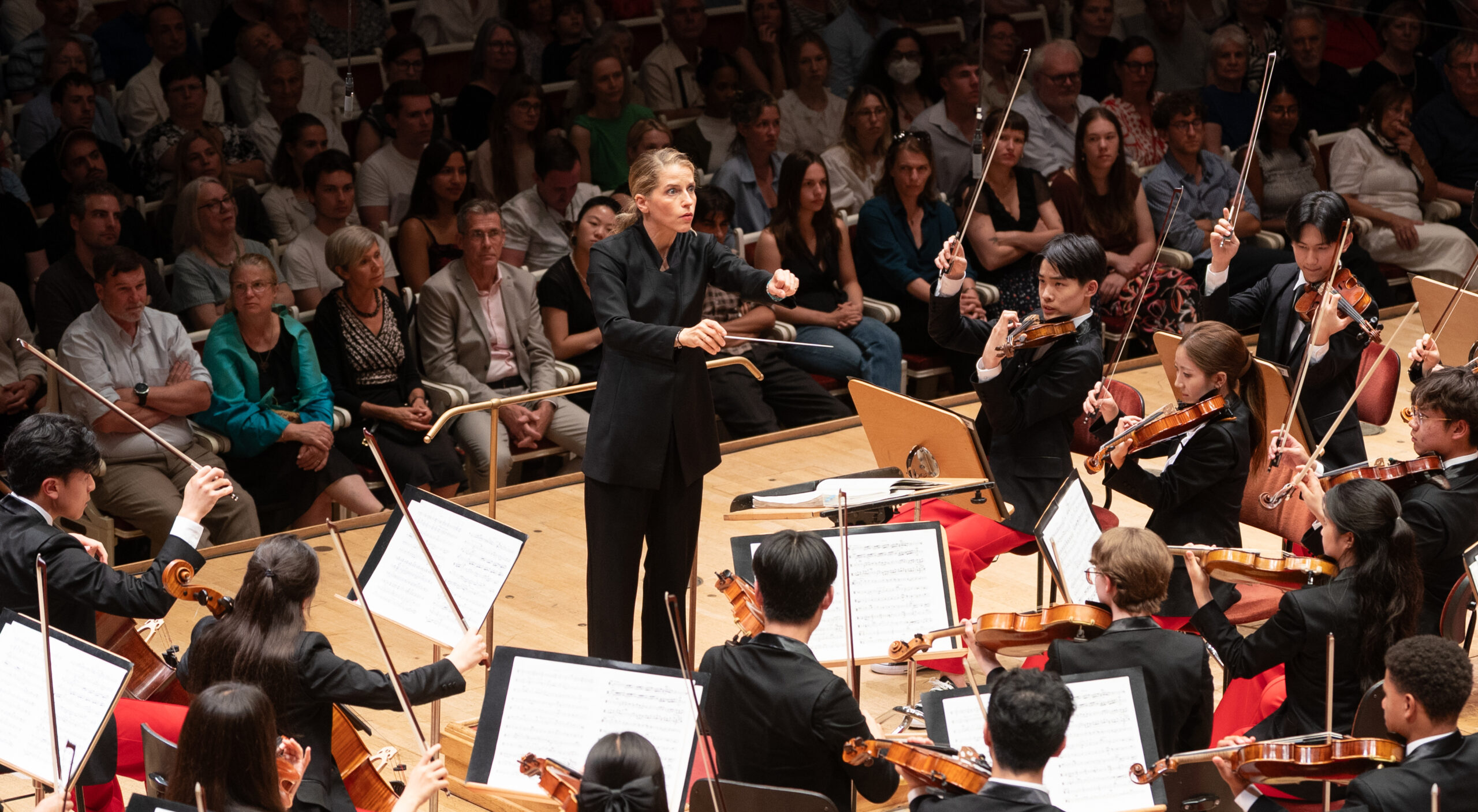
To a large extent, it is the credit of Karina Canellakis that this diversity of characters ultimately grew into such a homogeneous whole. She has not only built this devilishly difficult music with her young orchestra technically, but has also taught her musicians how to listen to each other and how individual parts gain their meaning within the larger whole. Whoever looked at this orchestra also saw the enormous diversity of backgrounds from which these young musicians come – a reflection of the many colors that the United States possesses, brought together here in one sound. This sounded not like an orchestra trying as best as it could to perform a difficult work, but like an ensemble that experiences Bartók's music from within. Every instrumental group had its moment, but every musician remained at the same time part of the larger whole. This was truly a concerto for orchestra: not one soloist against the rest, but a composition in which every player becomes indispensable at the right moment.
The dark, deep sound of the strings gave the building tension an almost threatening intensity, after which the woodwinds came forward with suppleness and personality. Brass and percussion added power and precision without the individual lines getting lost in the whole. Even in the most complex and loud passages, the orchestra remained remarkably transparent.
Particularly strong was the fourth movement, Intermezzo interrotto, in which Bartók's humor also came fully to life. The ironic winks were made with visible pleasure and timed so well that laughter even came from the audience. The music gained something mischievous without ever becoming caricatural. And then the finale. It began with a speed I have rarely heard – breathtakingly fast, but never reckless – and even in that dizzying pace every instrument remained audible within the complex whole.
The future is on the stage
After Barber and Gershwin, expectations were high, but Bartók fulfilled them completely. Perhaps therein lies the greatest strength of this orchestra: the astonishing technical mastery is entirely in service of the music, while the pleasure of playing together remains continuously palpable. These young instrumentalists do not make music as if they might perhaps reach the level of a professional orchestra later; they are already there now. And yet they have retained something that is sometimes lost in professional ensembles: the pure joy of making music together. Anyone who now thinks this assessment is too mild or too enthusiastic should simply hear this orchestra live.
That pleasure received an appropriate finale after Bartók with Gershwin's Girl Crazy Overture. After the enormous rhythmic power of Bartók, this was the ideal conclusion: light, swinging and irresistible. The audience responded with minutes of standing ovation. Canellakis eventually had to take the concertmaster off the stage himself to bring it to an end. More really needed to be said.