
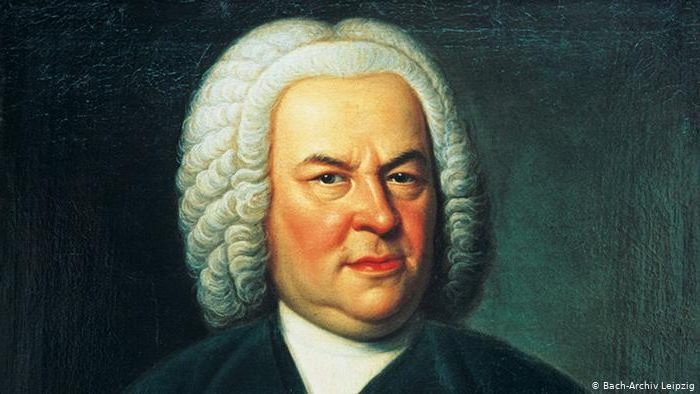
The Dutch have something with Bach. And I didn't get it from them but from a Japanese person. It is Masaaki Suzuki, from the Bach Collegium Japan, who writes it in his foreword to this new Bach booklet. He writes about the Matthew fever that surprised him so much when he arrived in the Netherlands as a young man in his twenties. Such long lines of Bach lovers gathering at the 'Groote Kerk' in Naarden, including the Dutch premier, for the performances of the Matthew Passion, annually organized since 1922 by the Dutch Bach Society. He found it unbelievable.
The booklet "Not a Day Without Bach" is actually the result of fifteen conversations that Rinke van der Valle recorded with a number of well-known and lesser-known and especially Dutch Bach fanatics: conductors (Tom Koopman), musicians, singers (Peter Kooij), musicologists (Bach biographer Christoph Wolff), authors (Maarten 't Hart). He confronted them with the question: why does this composer appeal to so many people, what is his secret? Not a Day Without Bach is not only the title of this work but also the life motto of this retired mathematics teacher.
Writer Maarten 't Hart comes first and gets straight to the point: "When everyone was following the Beatles, I was always busy with the cantatas". Erudite as no other, 't Hart quotes extensively from Bach's cantata oeuvre, helped by his booklet that he wrote in 2000 for Bach's 250th death anniversary. It was then published by Kruidvat, and it sold like hot cakes: 120,000 copies….!
The conversation with conductor Tom Koopman takes place in his library. And what a library it must be: he has an assistant in his employ who manages things. And the conversation continues about Gustav Leonhardt (whom he likes: he got one lesson from him that taught him tremendously) and about Nikolaus Harnoncourt (whom he doesn't like: always wanted to be right), about his core business "conducting" and of course about his life's work, the Amsterdam Baroque Orchestra & Choir with which he recorded all the cantatas.
The author also found a therapist Govert Jan Bach, a distant descendant by the way, who could give his depressive patients a "powershot" with music. Mozart was the favorite with them, such sunny music. But with the closing choir of the Matthew, Wir setzen uns mit Tränen nieder" a patient who had not been able to cry for ten years burst into tears. Healing music. Govert Jan Bach also programs a radio program for the Concertzender with the name Not a Day Without Bach. His favorite Bach is the Weihnachtsoratorium, there is also cheerfulness in it, which you miss in the passions.
Jos van Veldhoven, who was for many years artistic director of the Dutch Bach Society, could not be missing. It is a renowned society founded in 1921, which honors a precious tradition, and each year is responsible for that Bach festival in Naarden.
Wim Faas, author of several Bach books, also takes a seat. He tells, among other things, how he started his book "Dancing with Bach". He read at Simon Vestdijk about a beautiful sarabande by Bach, didn't know what it was and started reading about it and then writing. Faas is known for weaving a whole story based on small factual anecdotes around Bach's life. For him, with Bach "nothing is the same: it never bores." And he admits that he dreams of writing a novel or novella about the Matthew Passion.
In the ranks of the Dutch Bach in-crowd, Rinke van der Valle also reaches organist and pianist Leo Van Doeselaar, who is also a teacher at the Berlin Universität der Künste. And they go through Bach's organ repertoire together and praise the sound of the many beautiful organs he played in the Netherlands.
The interview with the German Bach authority Christoph Wolff seems more interesting to me, professor at Harvard and for many years head of the Bach Archive in Leipzig. There he was also the programmer of the city's annual Bach Festival. And not to be forgotten, he is the author of the most impressive biography of Bach. It is fascinating to read how Wolff came across the Altbachisches Archiv, all the musical pieces that Bach had collected and archived from his family members. Son Carl Philipp inherited that collection, which remained in Berlin until the end of World War II and later first moved to Poland and subsequently ended up in Kiev. For music historian Wolff, that discovery or rediscovery of that complete library was an overwhelming event.
Conversations with organist Jan Luth follow, and especially also hymnologist (yes: expert in Bach's hymn books and chorales), with Euwe and Sybolt de Jong, two organ-playing brothers who perform four-handed works by Bach, with organist Tymen Jan Bronda, violinist Harm Sterenberg, all living or working in the high Dutch north. In the vicinity of Groningen, our author also finds Swiss Martin Stadler, for a long time first oboist of the Dutch Bach Society. Another organist comes up, but then an odd one out: Kees van Houten. He is especially known for his relentless interest in what lies behind the notes and then he sees a lot of numbers. He has summarized this in his controversial book Bach and the Number. When he talks about it, a whole story unfolds about translating note values into numbers. Numerical symbolism in music, it is a field of its own…
Let us finally dwell on the conversation with the longtime Bach fixture, bass Peter Kooij. He has been singing with Philippe Herreweghe for 45 years and enjoys doing it. He is a spirit that never rests, always seeking depth, he puts his soul into it and you don't find that everywhere. Kooij summarizes Bach's message with his cantatas in two sentences: "Of the hundred arias, ninety-nine of them are about the path we walk in this world. We rejoice in death because we are going to paradise."
Following is an interview with artist Marte Röling who, commissioned by the Dutch Bach Society, created a "new" portrait of a less serious-looking Bach: "The great Johann at home", without that ostentatious wig. The book concludes with an overview of Bach's life and work
All in all, an entertaining little book, full of anecdotes especially about the interviewees themselves but also with their incisive and often also instructive remarks about how they experience the composer's oeuvre. Admittedly a very Dutch selection of Bach experts. But I always enjoy reading what Maarten 't Hart has to say and big names like Ton Koopman and bass Peter Kooij. It's quite special also that the story of Christoph Wollf.
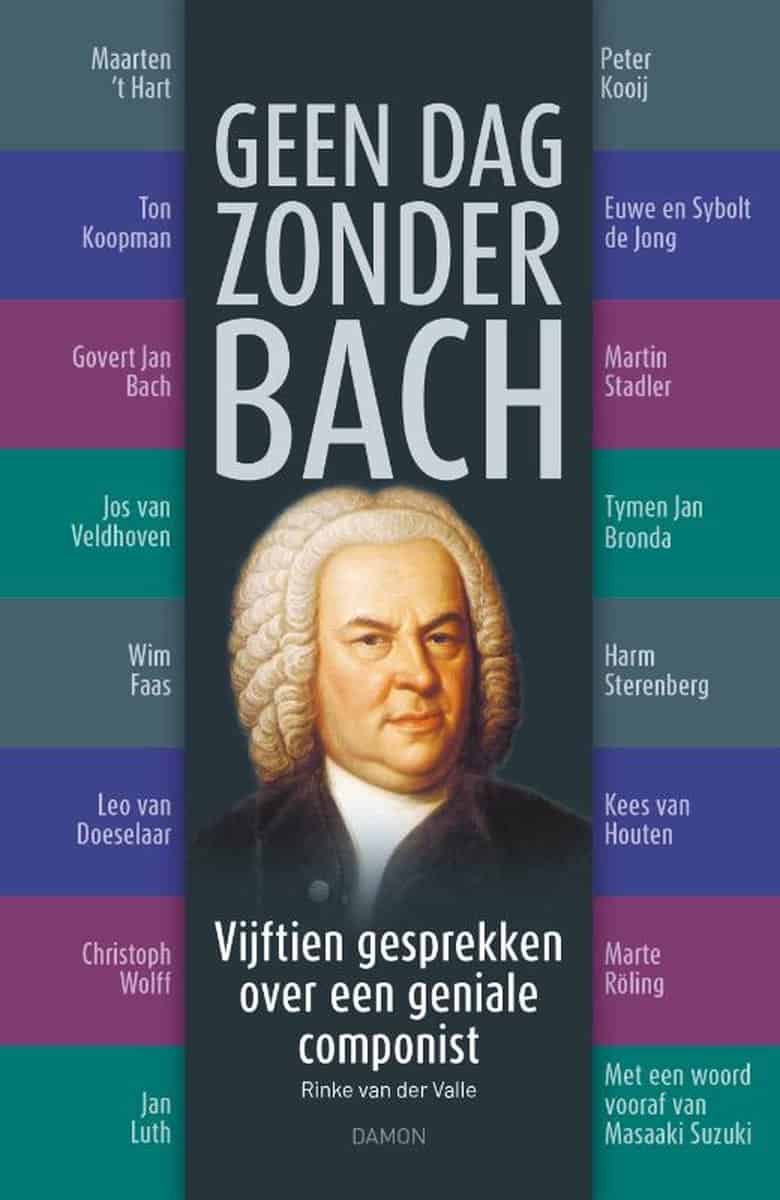
- TITLE: No Day Without Bach - Fifteen Conversations About a Brilliant Composer
- AUTHOR: Rinke van der Valle
- PUBLISHER: Uitgeverij Damon, Eindhoven 2022
- DETAILS: 243 pp., paperback, illustrated.