
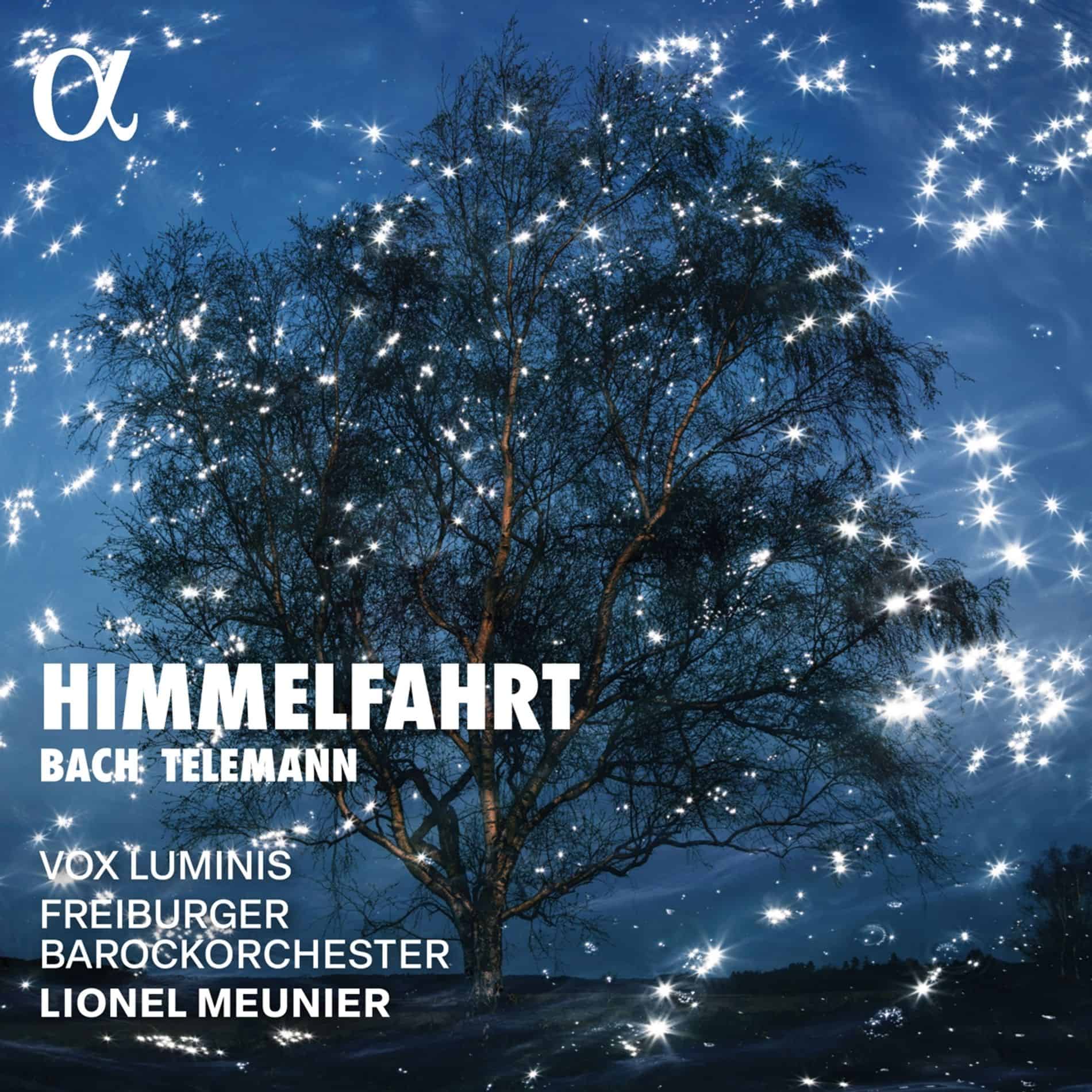
Ascension - Bach | Telemann
Bach: Cantata 'Lobet Gott in seinen Reichen' (Ascension Oratorio) BWV 11 - Cantata 'Auf Christi Himmelfahrt allein' BWV 128
Telemann: Cantata 'Ich fahre auf zu meinem Vater' TWV 1:825
Vox Luminis, Freiburger Barockorchester conducted by Lionel Meunier
Alpha 1032 • 65' •
Recording: May 2022, Evangelische Kirche Peter und Paul, Gönningen (D)
Heavenly music for the Ascension, as the heading of the highly worthwhile commentary by Michael Maul, musicologist, author and Bach expert, associated with the Bach-Archiv in Leipzig and in that capacity also artistic director of the Bachfest held annually in this 'Bach city', states.
Heavenly music then, but - befitting the subject - also distinctly festive and colorful, perfectly suited to this text fragment from Bach's cantata Auf Christi Himmelfahrt allein (BWV 128): 'Is er von mir genommen, ich werd einst dahin kommen, wo mein Erlöser lebt'. The concertante trumpet part in the phenomenal bass aria speaks volumes in this regard as well.
The work originated towards the end of Bach's second year in Leipzig and is part of the nine cantatas he composed between Easter and the first Sunday after Trinity in 1725. The texts came without exception from the then well-known poet Christiana Mariana von Ziegler, who also lived in Leipzig. Maul notes with subtle irony that unlike most of Bach's cantatas on Ziegler's texts, BWV 128 is introduced with a splendid chorale arrangement. The soundscape that the Thomascantor unfolds here is even of a glittering allure, with no more than two horns, oboes and strings. The chorale 'Auf Christi Himmelfahrt allein' from 1661 by Ernst Sonnemann is woven through with a master hand. The spiced harmonic foundation and the accompanying transitions are no less artful and must certainly not have pleased everyone in the university city dominated by tradition and convention at the time.
If BWV 128 is conceived entirely afresh from beginning to end, this is different with BWV 11, the grandly conceived, almost monumental Ascension Oratorio that must have been heard for the first time in Leipzig on May 15, 1738. The prehistory of the opening chorus begins six years earlier, as festive music at the inauguration of the new extension of the Thomasschool in 1732. The two arias that the oratorio possessed already had a place in a wedding cantata in 1725. Thus we make acquaintance - and certainly not for the first time - with Bach as an eminent parodist. Another eloquent example of this is the sublime alto aria 'Ach, bleibe doch, mein liebstes Leben', which returns a decade later in the Agnus Dei of the Hohe Messe.
The Ascension Oratorio hovers musically, in a sense, between heaven and earth, as reflected in the chorale 'Nun liegt alles unter dir', but also in the aria 'Jesu, deine Gnadenblicke'. After which we find ourselves back on earth in the splendid final chorus.
Bach's contemporary Telemann (they regarded each other more as friends than as rivals) composed as many as thirty cantatas dedicated to the Ascension feast. Only two of them have an instrumentation like that of Bach's BWV 128. Among them also the Ich fahre auf zu meinem Vater TWV 1:825 recorded on this album, intended for performance during the Ascension feast of 1721, when Telemann in Frankfurt am Main was still working as music director just before his departure to Hamburg. Telemann had chosen for his cantata a text by the poet Gottfried Simonis.
Like Bach in Leipzig, Telemann chose a colorful, often surprising layout designed to underscore the festive character of Jesus' ascension doubly and triply. But at the same time it was the musical confirmation of yet another belief: that anyone who believed could be assured of a place in heaven. Even today this work makes a strong impression.
The performances under Lionel Meunier, like Vox Luminis and the Freiburger Barockorchester seasoned in historically informed performance practice, are immersed from beginning to end in strong imagination and festive brilliance, doing full justice to this splendid music. Jubilant trumpets and sparkling timpani contribute not a little to this, but the soloists (who are part of Vox Luminis, a procedure also tested by, among others, Eliot Gardiner and Philippe Herreweghe) and choir also move at great heights in these three cantatas: indeed, it sounds heavenly, while the fine recording also makes an important contribution to this.