
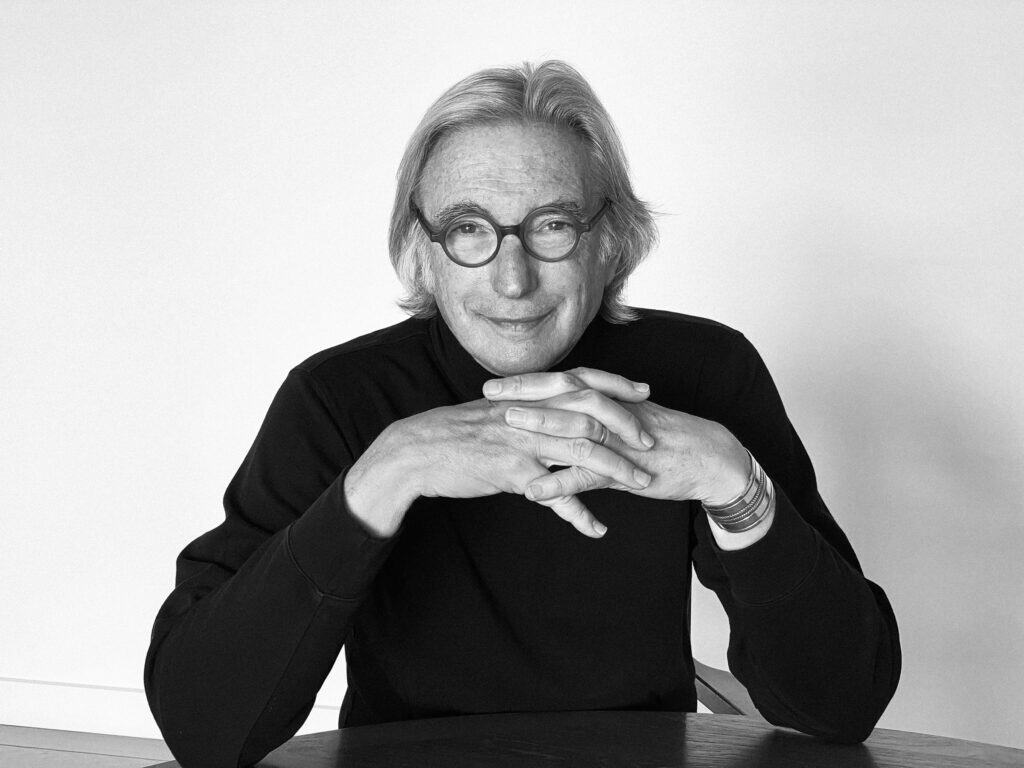
There are conductors who serve the repertoire, and there are those who make it speak as if it were being heard for the first time. Michael Tilson Thomas unmistakably belonged to the latter category. His musicality was no façade, no pose of authority, but an open invitation: to listen, to discover, and above all to feel.
Anyone who ever saw him at work remembers not only the precision of his gestures, but also the warmth that emanated from them. A rare combination was embedded in his artistry: intellectual clarity and an almost childlike sense of wonder. He approached music not as a monument that must be respected from a distance, but as a living language that could take on new meaning time and again. In his hands, even the familiar repertoire became an adventure. Formed early on by figures such as Leonard Bernstein and influenced by teachers such as Igor Markevitch, he carried within him a musical thinking that was both analytical and communicative.
His career unfolded along some of the most leading institutions of his time. As music director of the San Francisco Symphony Orchestra, he left an indelible mark on the orchestra for more than two decades, not only through his interpretations, but also through his programming and his commitment to new music. His bond with San Francisco was more than professional: it became an artistic home that he helped shape. Before that, he was associated with, among others, the Boston Symphony Orchestra, where he stood out as a young conductor through his acuity and natural authority, and the London Symphony Orchestra, where he further built his international profile.
Then there was the New World Symphony in Miami, his brainchild: a training orchestra that he founded in 1987 and in which his belief in the future of music became tangible. It was a place where talent could develop not only technically, but also artistically and socially – entirely in line with his conviction that music is a living, shared practice. His work unfolded not in separate domains, but in one continuous movement: from conducting to teaching, from analyzing to sharing.
His affinity with the American repertoire – from Ives to Copland and beyond – was more than a programmatic choice. It was a conviction, a plea for a musical identity that is as rich and layered as the European tradition. But he found his way equally effortlessly in Mahler, Beethoven, or Debussy, without ever falling into routine. In particular, his Mahler interpretations grew into points of reference, not through effect, but through their transparency and human measure. At the same time, he remained a tireless advocate for contemporary composers, for whom he created space and visibility. Every score seemed to breathe anew with him. The fact that he himself also composed was not a sideline, but an extension of the same listening he asked of others.
What perhaps distinguished him most was his ability to share. He was a bridge-builder: between generations, between styles, between audience and stage. His television series and educational projects testify to a rare talent for making complex music accessible without oversimplifying it. With projects such as Keeping Score, he brought music beyond the concert hall without sacrificing its complexity. He spoke with the same seriousness and dedication to seasoned listeners as to newcomers. He believed in the power of music as something that brings people together, and he acted accordingly.
It is tempting to speak of loss at his passing – and it is. But something essential remains: a way of listening that he has passed on, a sensitivity that he has refined. His legacy is not only heard in many recordings or memories, but also in the ears of those who have learned to listen differently through him.