
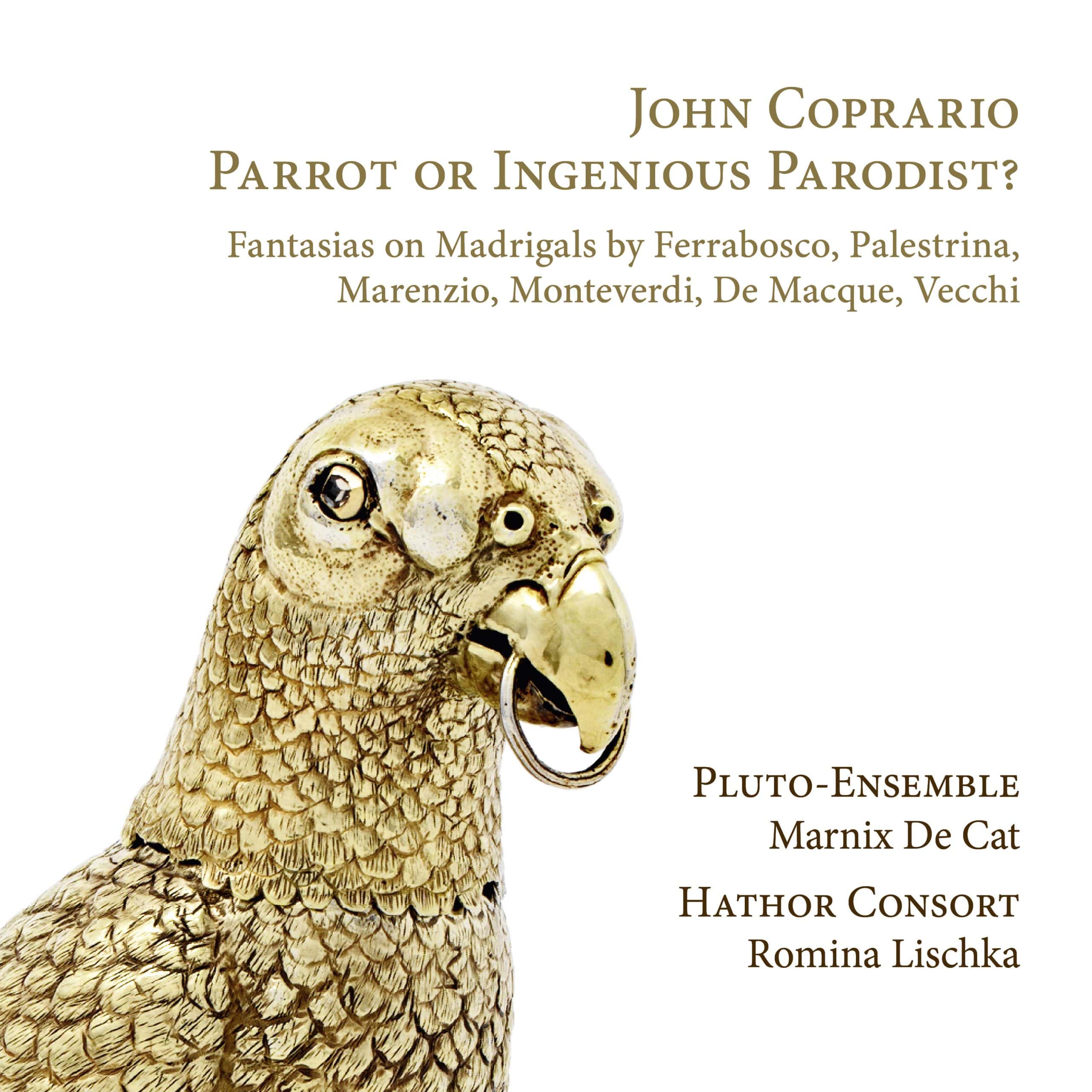
Did John Coprario take the credit for someone else's work when he, under his own name, made transcriptions of more than fifty Italian madrigals for a viol consort? Such an accusation would be based on incorrect premises, because something resembling copyright was unknown in the early seventeenth century and for long after; the use of musical material from someone else was rather considered as a respectful examination of ideas that were so promising that one wished to think further about them.
In transcribing these Italian madrigals, Coprario not only extended an established tradition, but also transcended it. In his madrigal fantasies, he did not simply omit the text, as was customary in the 16th century, but went even further in the polyphonic setting and enriched it with instrumental possibilities that the voices alone could not match. He also rearranged certain sections, so that the original vocal work is not always immediately recognizable. Coprario was not only one of the first to give ensemble music an instrumental identity, he was also no musical parrot, but a brilliant parodist.


*If you make a purchase via the link above, we receive a small commission. This allows us to continue providing you with reviews and articles. By purchasing something through our link, you support us in writing new articles. Products will never be more expensive for you if you use our links.