
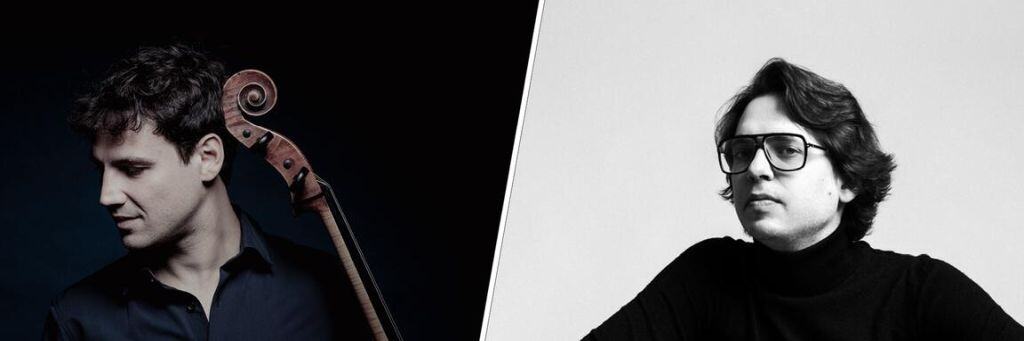
Not all musical encounters are planned in advance – some simply happen because the music demands it. Such a rare moment occurred on Sunday, September 28 in Studio 4 of Flagey: cellist Victor Julien-Laferrière and pianist Lucas Debargue found each other in a chamber music dialogue that was anything but self-evident.
Both musicians belong to the most distinctive voices of their generation. Julien-Laferrière, winner of the Queen Elisabeth Competition for cello in 2017, is known for his deep, sonorous tone and literary approach to music. His repertoire ranges from Bach to Dutilleux, and he is a sought-after soloist and chamber musician. Debargue made his breakthrough in 2015 with a remarkable fourth-place finish at the Tchaikovsky Competition in Moscow, and has since developed into a phenomenon: self-taught, composer, musical thinker – and above all a pianist with a distinctive, personal sound. His playing is never conventional, but always thoughtful and daring – free from effect and superficial display.
The programme offered a subtle arc of tension from late Romanticism to early modernism, with works by Fauré, Vierne, Nadia Boulanger and Grieg. Each piece received a unique approach, with attention to its specific sound world and historical context. What made this evening special was not the spectacle, but the honesty and depth with which the music was played.
Whispering farewell, without pathos
The evening began with the Sonata for cello and piano no. 1 in D minor, op. 109 by Gabriel Fauré (1845-1924) – a late work from 1917, written when the composer was gradually going deaf. That deafness seems to have influenced his composition, possibly because he focused more on the inner, invisible sound of the music.
The form is classical, but the content introspective and measured. In the first movement (Allegro) the melody is restrained, sometimes almost stammering, with harmonies that continually seem to slip from their centre. No rhetoric, but serenity. Debargue immediately found the right tone: his touch was soft and controlled, his phrasing clear and precise. Julien-Laferrière responded with a warm, singing tone – restrained, but full of inner resonance. The cello did not speak loudly, but affirmed, like a voice that regained its meaning in silence.
The slow second movement (Andante) breathed a hushed calm, in which time became almost tangible. The music undulated – flowing, without posture. The finale (Allegro commodo) was rhythmically tense, but remained always controlled. No dramatic farewell, but a quiet, convincing final breath – honest, unaffected, and deeply felt.
Brooding depth and combative intensity
[caption id="" align="alignleft" width="225"]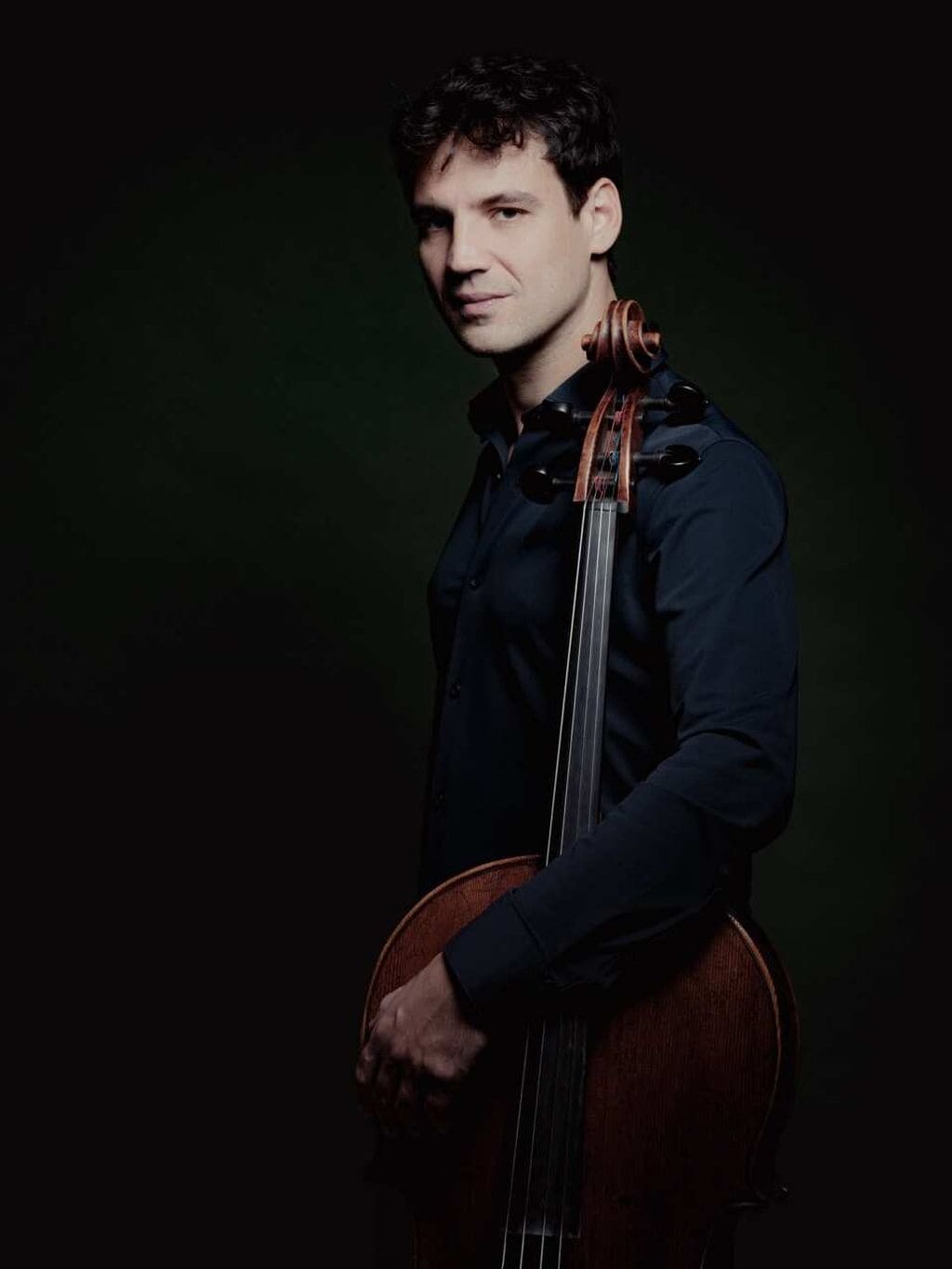 cellist Victor Julien-Laferrière[/caption]
With the Cello Sonata in B minor, op. 27 by Louis Vierne (1870-1937), the duo entered a world of sonority steeped in dark intensity and dramatic layering. This sonata, written in 1910 during a period of personal struggle for Vierne, came to life in an interpretation that was both brooding and tense. The internal tension of the work was unmistakable, and the musicians ventured deep into the unexplored corners of the musical landscape.
The first movement (Poco lento – Allegro moderato) opened with a careful, almost sultry retardation in the poco lento. It became a moment of reflection, in which the cello and piano approached each other cautiously, like two simultaneously ripening storms. In the following Allegro moderato a dramatic conflict unfolded: the music surged upward in power and emotion, with a lively, almost desperate élan. Julien-Laferrière and Debargue delivered a dynamic interplay here, with sharp contrasts that reflected the layering of Vierne's composition. The tension between cello and piano was electric, not an obvious harmony, but a continuous dialogue of opposites.
The second movement, Molto largamente, brought a welcome rest, but not without a certain gravity. The slow tempo, almost majestic in its expression, gave the music space to slowly unfold in space. Here the long lines of the cello sounded like a suffering, yet unshakeable force, while the piano supported the rich harmony with deceptive simplicity. It was a moment of contemplation, in which the melancholy of the music slowly nestled into consciousness.
In the closing movement (Risoluto – Allegro molto) the struggle in the music continued, but with renewed strength and combativeness. The risoluto had the appearance of a battle scene, with each note placed with determination, like a declaration of willpower. This led to a dizzying Allegro molto, in which speed and energy were built up to an overwhelming climax. The cello and piano intertwined their voices in a final sprint that fully expressed the power and tragic heroism of the sonata. In this finale there was no room for sentiment; the music ended in a fierce outburst, fighting and full of conviction, without any inclination toward overdramatization.
With this performance, which fully embraced the drama of Vierne's sonata, the audience was taken on a journey of inner struggle and combativeness. Julien-Laferrière and Debargue found in their collaboration a perfect balance between expression and control, with the charged tension between the two instruments laying bare the soul of the work. A performance that not only brought Vierne's music to life, but also the soul of the composer himself.
Three miniatures, three worlds
The Trois pièces by Nadia Boulanger (1887-1979) functioned as a poetic intermezzo and were the discovery of the evening. These short works from around 1911 breathe the atmosphere of Debussy, but speak above all with a clear, tense voice of their own. Not programme music, but subtle mood portraits.
The first movement (Modéré) sounded like a restrained conversation, with a subtle sound texture between piano and cello. Harmonies glided softly, like light on water. Debargue's impressionistic colours found balance in Julien-Laferrière's clear articulation.
The second part (Sans vitesse et à l'aise), almost a musical haiku, was performed with breathless concentration. Only a few notes, but laden with an emotional richness that never sounded forced. Quiet, but extraordinarily expressive.
The last movement (Vite et nerveusement rythmé) sounded playful and rhythmically refined, with a sparkling piano part and a light-footed cello. Light as a smile at the end of a letter – sophisticated and intimate.
Lyricism and northern distance
The Cello Sonata in A minor, op. 36 by Edvard Grieg (1843-1907) concluded the programme in an enchanting way. This work, which the Norwegian composer wrote in 1883, masterfully balances between romantic pathos and folk music simplicity. The classical form is clearly present, but the harmonic language and melodies are infused with Grieg's Norwegian roots – melancholic, but never heavy-handed.
In this sonata, the spirit of the North resonates, with its extended fjords, stormy skies and the sober, yet profound landscape. It is music that, despite its sometimes melancholic tone, does not sink into the mud of sentimentality, but rather breathes a serene beauty that holds the listener in its grip.
The first movement (Allegro agitato) opened with a heroic theme, strong and energetic, but it soon unfolded into a lyrical dialogue between cello and piano. Grieg's use of contrasts was at its best in this movement: the initial impetuousness gave way to delicate, melodious lines that glided back and forth between the instruments like a breath. Julien-Laferrière sang with a warm, deep tone that radiated both strength and fragility. His phrasing was broad and layered, making every note feel both dramatic and poetic, without ever falling into exaggeration. Debargue supported this with a rhythmically firm accompaniment, his playing rooted in the dance and folk music of Grieg's homeland. It was an interaction between two musical voices that fell into each other's arms, as it were, but without any excess.
In the second movement (Andante molto tranquillo) the atmosphere changed radically. This nocturne, with its deeply Norwegian soul, breathed silence and space. The musicians took their time to let every melody breathe; the notes sounded like drops falling into a quiet mountain pond. This section was infused with a hushed poetry that never descended into sentimentality, despite the melodic melancholy that so characterises the work. Julien-Laferrière's playing here was extremely subtle, with a restrained sound that perfectly translated the contemplative nature of the piece. Debargue followed him in poetic repose, his hands caressing the keys, which made the musical silence all the deeper. It was as if the music reflected the unspoiled nature of Norway: quiet, mysterious, yet at the same time full of undiscovered depths.
In the finale (Allegro molto e marcato) the duo opened itself completely. The music burst with energy, full of colour and liveliness, but without exaggeration. Here the folk music influences sounded most clearly: rhythmic, danceable, but never forced. The piano formed a firm foundation with its driving rhythms, while the cello stood out above everything, casting its lines into space. Yet there was no sense of triumph in the performance; the sonata did not end with a bravura striving towards victory, but with an open, inviting breath – a musical horizon that invited the listener to listen further, to discover, and to surrender to the unspoiled beauty of the music.
An art of listening and speaking
[caption id="" align="alignleft" width="240"]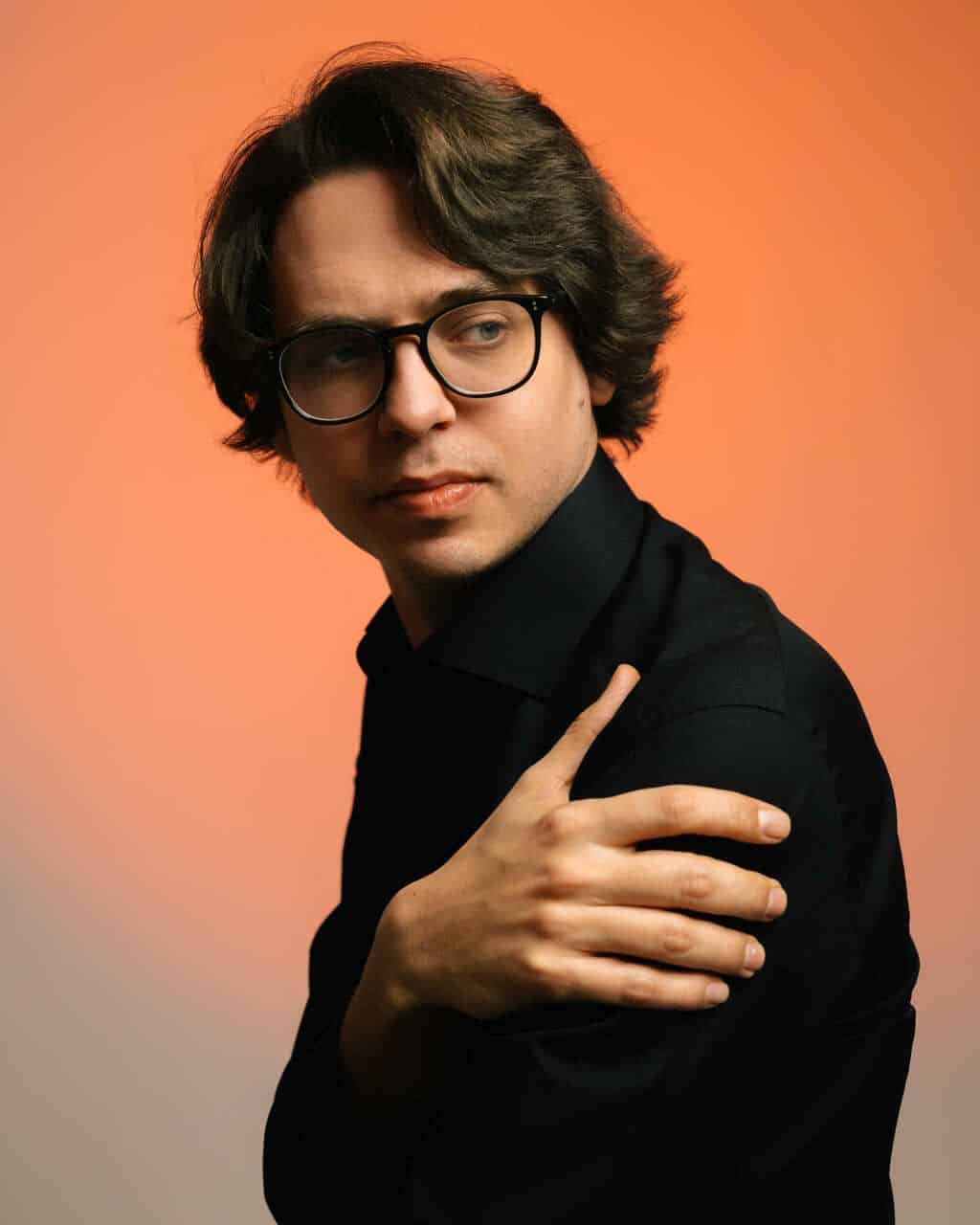 pianist Lucas Debargue[/caption]
What made this evening at Flagey so special was not only the repertoire, but especially the way Julien-Laferrière and Debargue tackled it together: not as soloists, but as equal conversation partners. It was their first performance together, and that gave the music an extra layer of tension and vulnerability. The encore – the enchanting Andante from the Sonata for Cello and Piano by Sergei Rachmaninov (1873-1943) – was the perfect conclusion and leaves us yearning for another concert by these authentic classical musicians, who have clearly found each other.
Their interpretations were not end points, but open processes: exploratory and free from the pursuit of effect. The way they worked together was a continuous conversation, in which no decision was final, which made the musical experience all the more intense. In the intimate acoustics of Studio 4 – an architectural and acoustic gem – this approach came perfectly into its own.
Flagey confirmed once again her reputation as a meeting place of quality and diversity, where young talent and experienced artists meet. This concert reflected that mission in its purest form: a dialogue between styles, times and voices.
Here it was not the grand gesture that took centre stage, but great artistry. Between the notes sounded something rare: authenticity.