
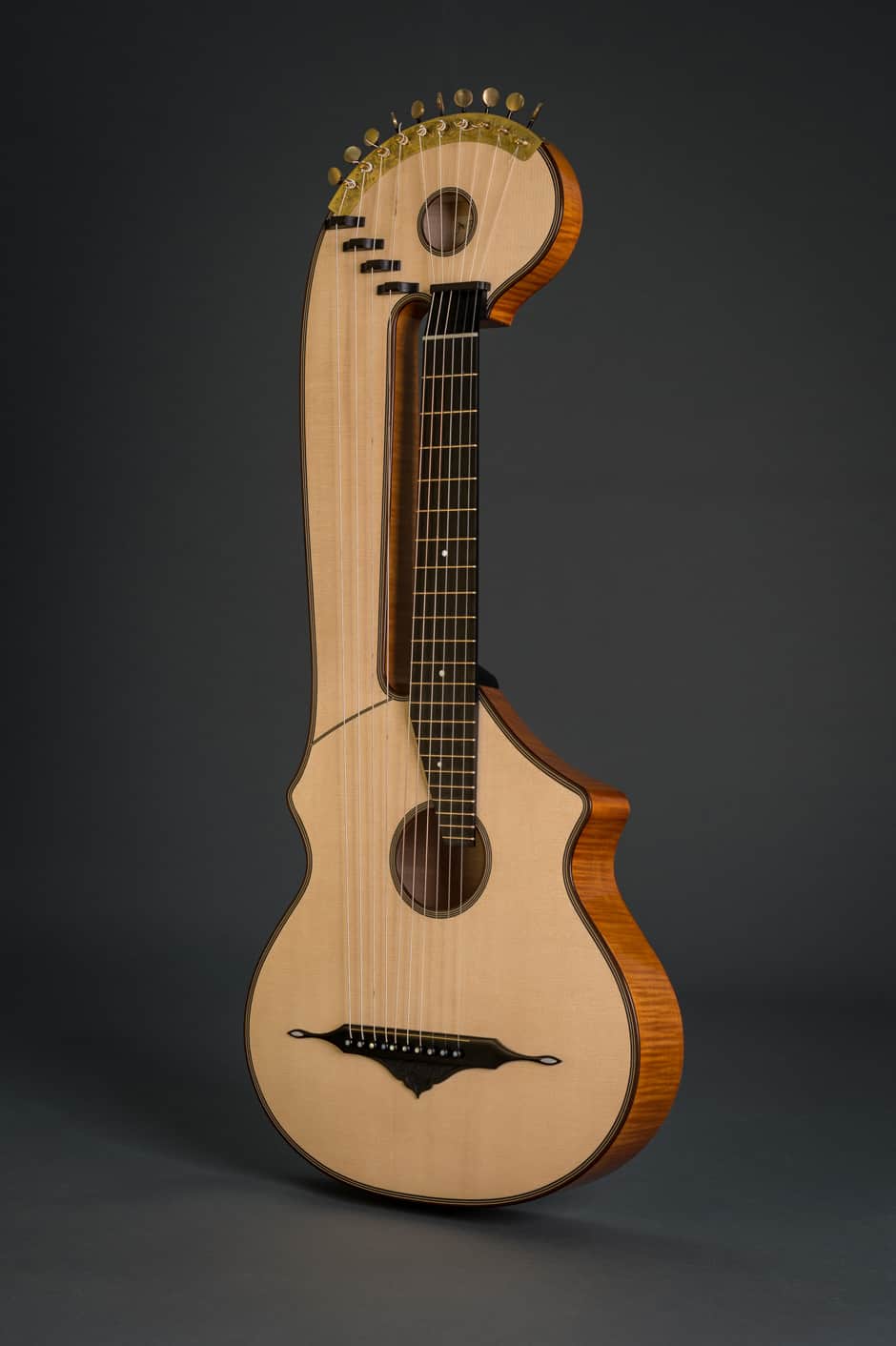
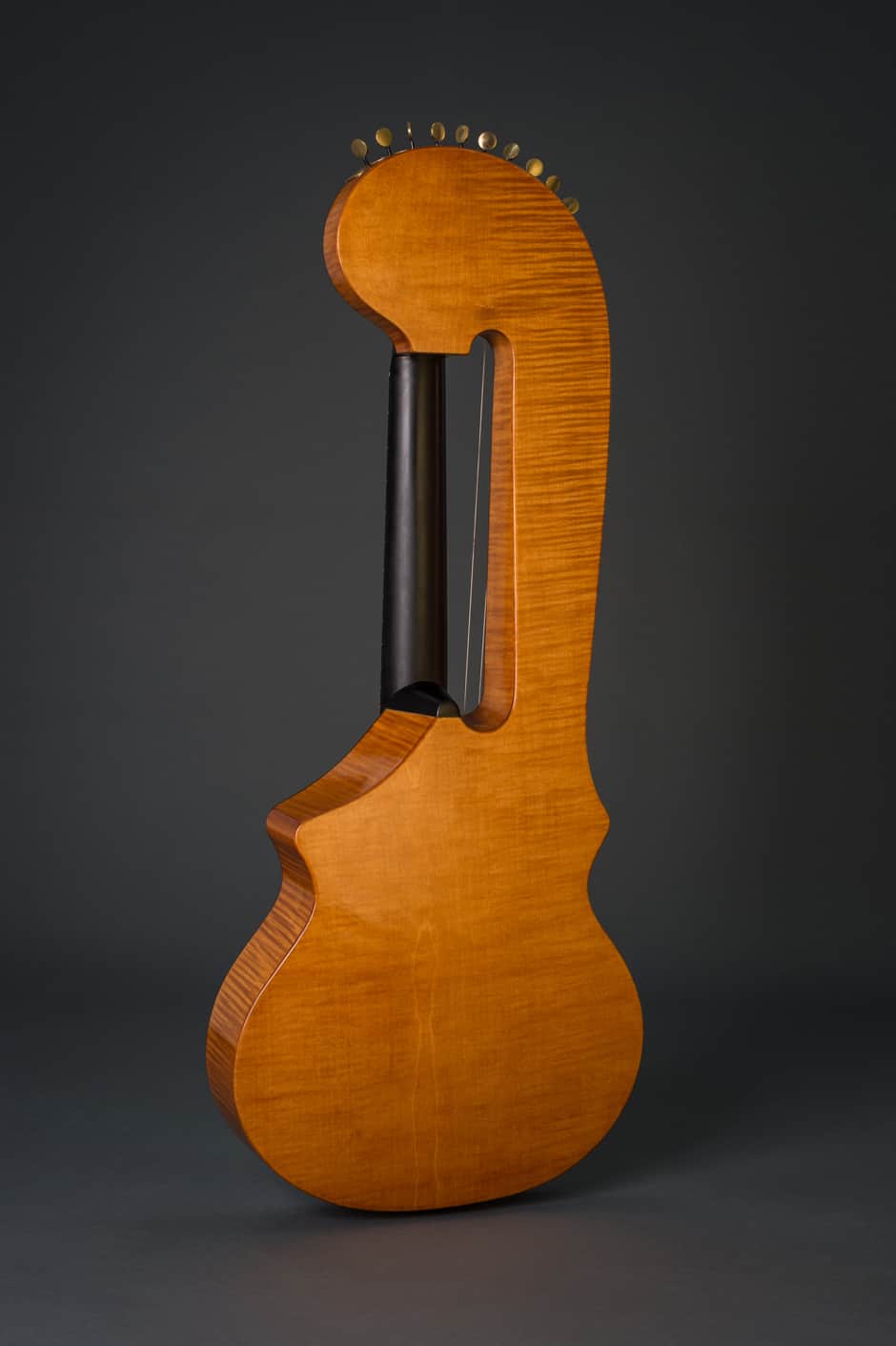
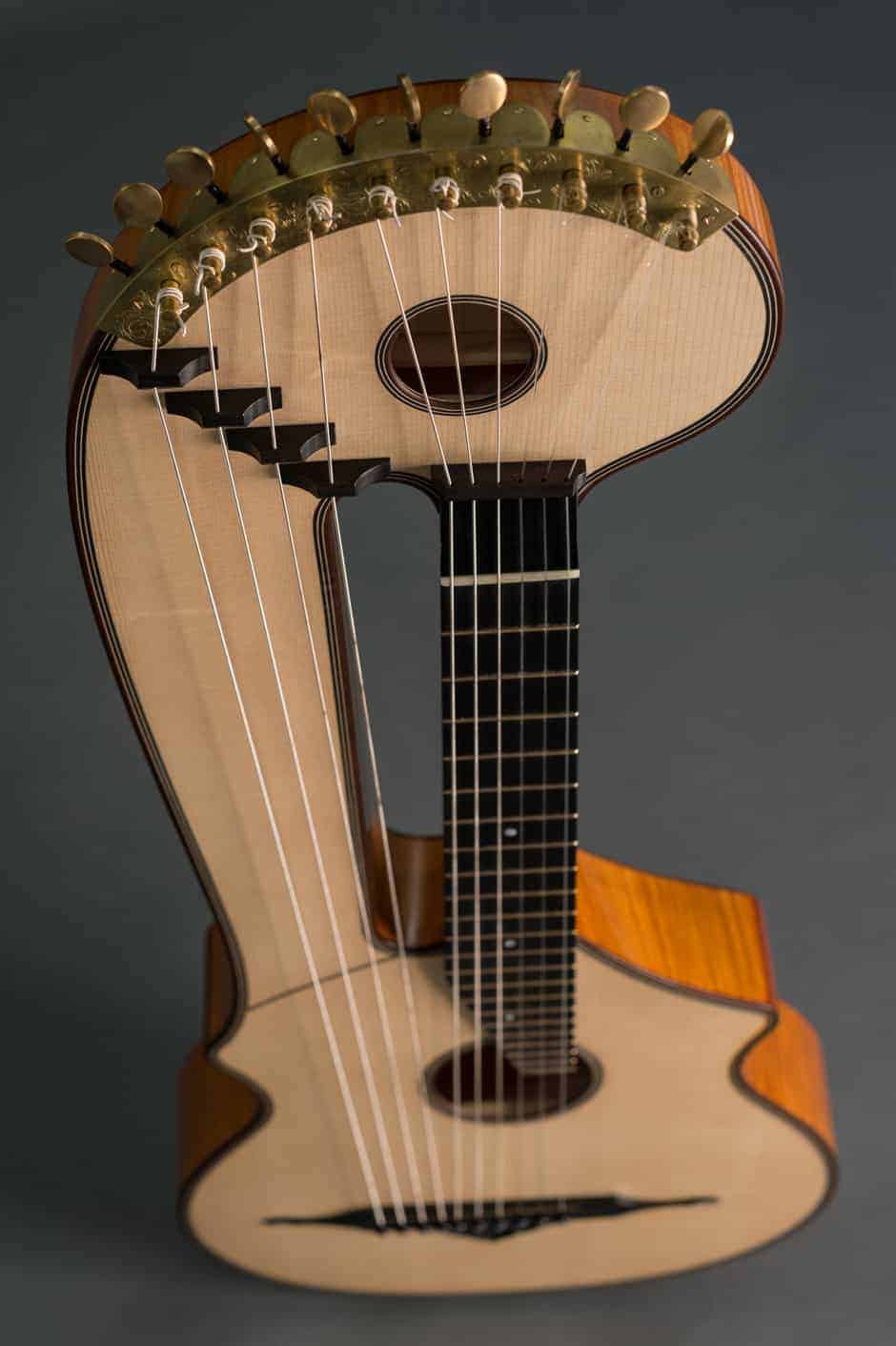
Pure structural freedom but with a clear pulse, that is the style of Giovanni Kapsberger (1580-1651). A capricious melody is accompanied by something resembling a basso continuo. Kapsberger's spontaneous style with rhythmic peculiarities and strongly contrasting passages still knows how to fascinate. Originally written for lute but now brought to sound on a 10-string Bogengitarre. Remarkable in many ways!
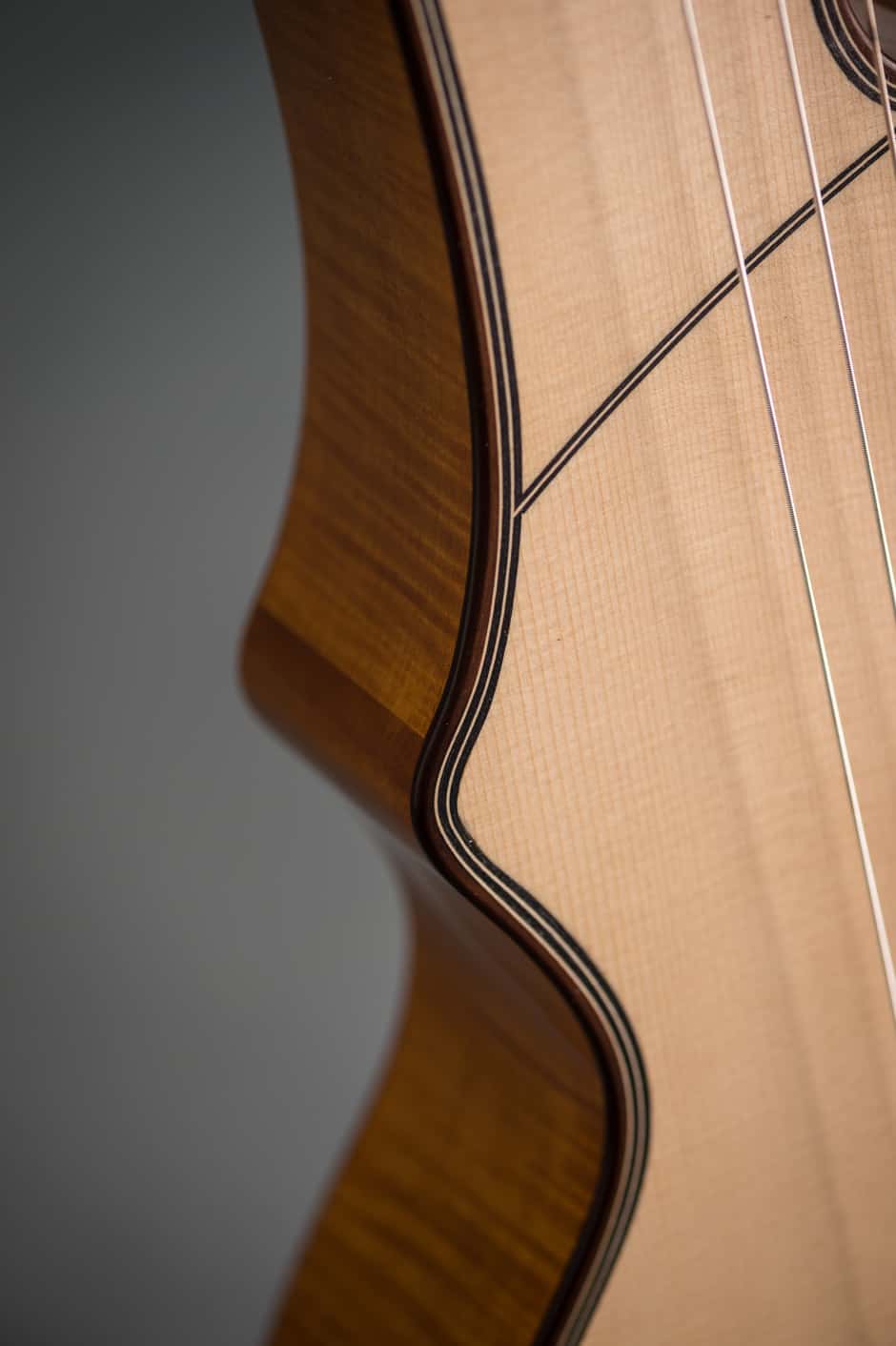
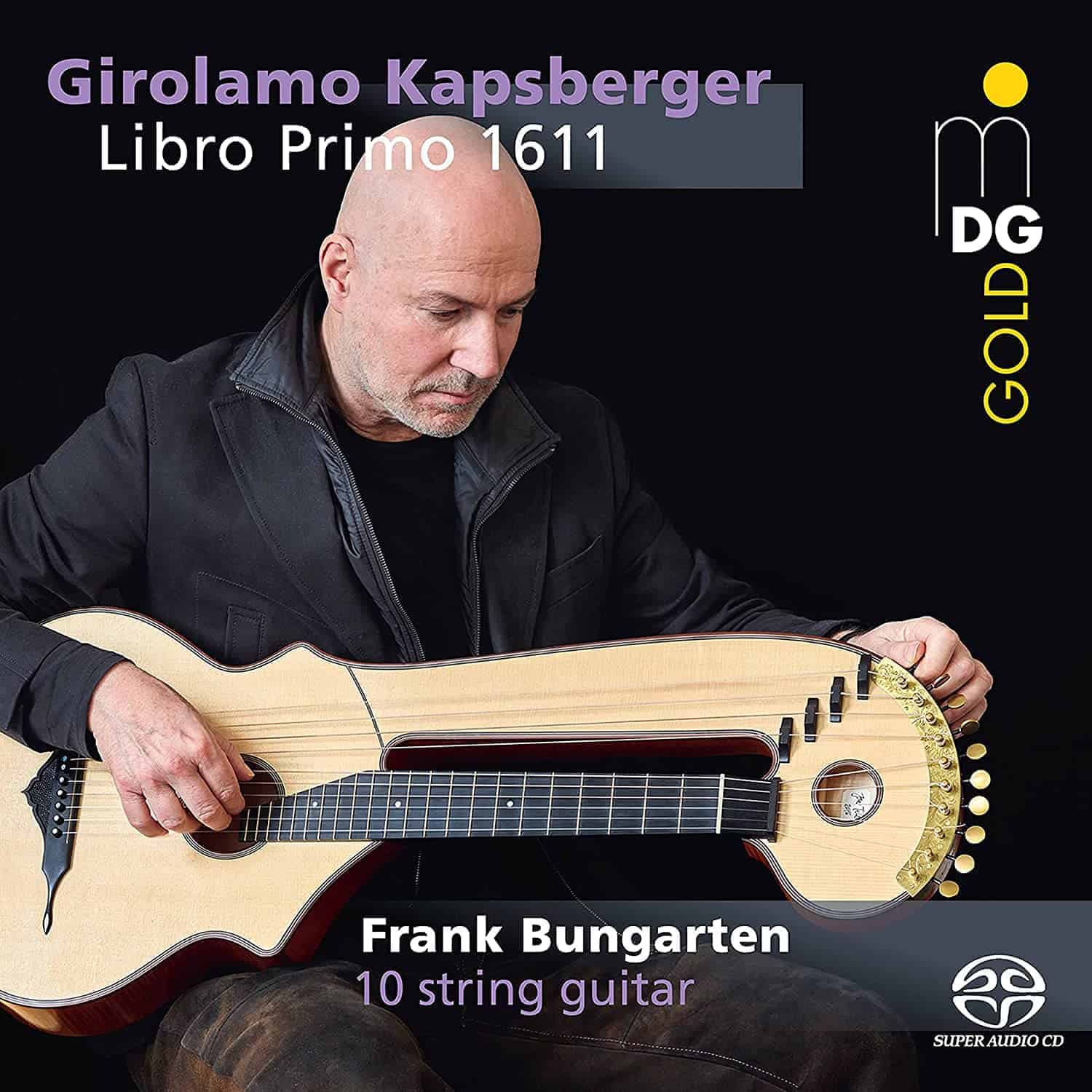
Although Frank Bungarten's instrument is based on a model dating from a later period (from 1847), he does use early 17th-century playing techniques. The popular style luthé is perhaps one of the most characteristic of this period. In the tablature, the notes are all written underneath each other, which in theory would mean they should all sound simultaneously. With this style luthé, the notes sound in an irregular arpeggio one after another from the lowest to the highest. This unpredictable element gives the music a whimsical edge.
Ornamentations with fast runs belong here too. These are not indicated in the tablature but were added by lutenists to make the work their own in a unique way that no one else could replicate. Frank Bungarten is sparing with his ornamentations. Fast bindings (a combination of hammer-ons and pull-offs) seem to be Bungarten's favorite ornamentation. This keeps the number of notes limited and allows a steady meter to be maintained.
Previous
Next
Norwegian lutenist Rolf Lislevand (°1961) describes Kapsberger's music as "wavering between inspired cleverness and total confusion". To me, it rather evokes a baroque version of the empfindsame style that became popular around 1750 in northern and central Germany. The music is like an unconscious stream of thought. A musical idea is presented, the lutenist plays with it in variations before moving on to another idea and then another, only to return to the first one after all. Or not quite, what was the first idea again? It did move on…
Due to this stream of ideas, it indeed lacks the tight structure that characterizes other German composers of his time, including Heinrich Schütz (1585-1672). The capricious turns of Girolamo Frescobaldi (1583-1643) come to the fore. But with Kapsberger there is less attention to the virtuosic and a clear supporting bass line remains present to accompany the melody. The bass line, through the aforementioned steady meter, becomes a kind of anchor point for the listener. It gives the music its necessary stability. This stability serves as a counterweight to the unpredictable course. Bungarten's interpretation of the tablature does not feel like total confusion for this very reason, but rather the inspired cleverness for which Kapsberger was known as an instrumentalist.
3.7/5
WHO: Frank Bungarten [10-string Bogengitarre]
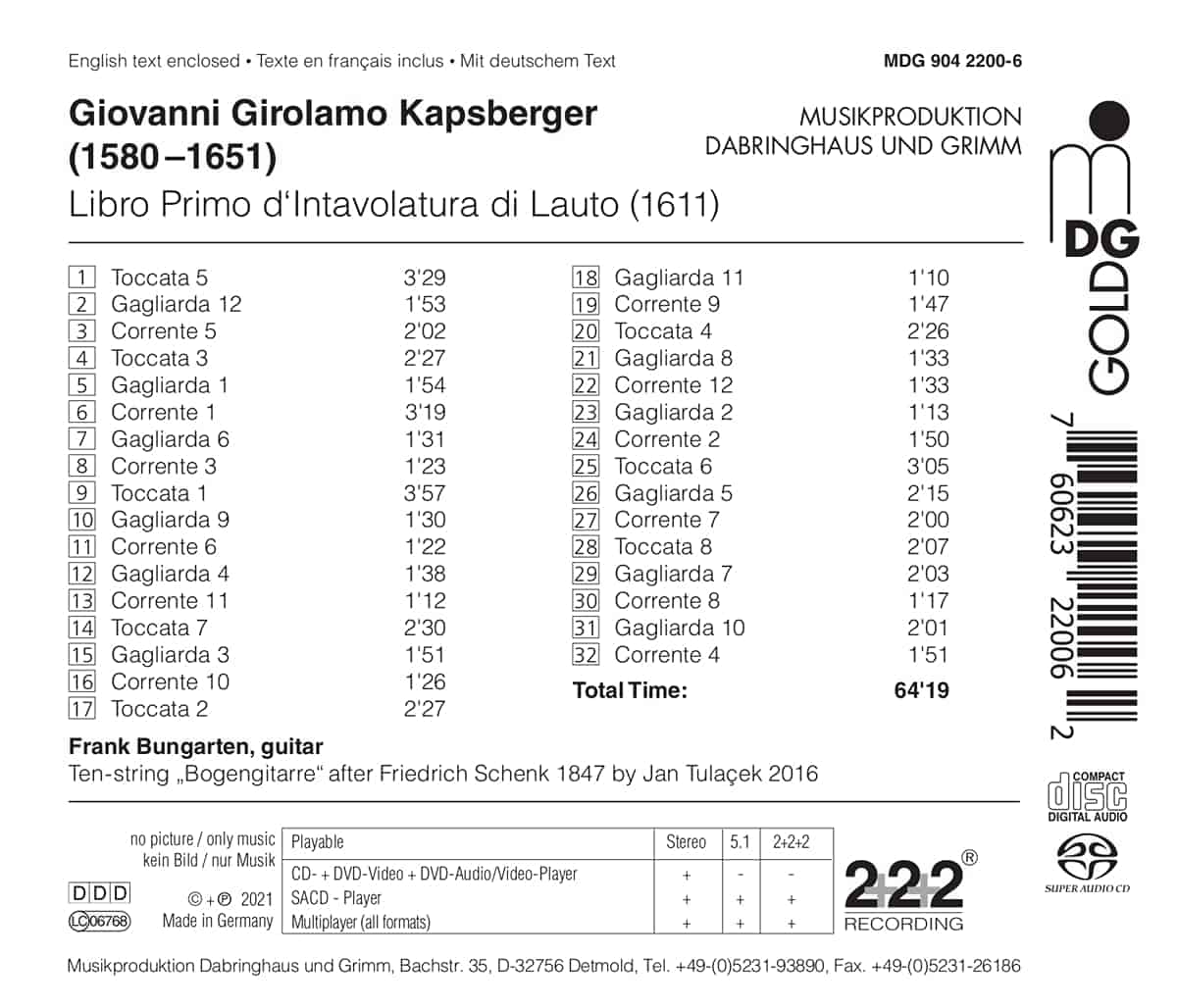
WHAT: Giovanni Kapsberger: Libro Primo D'Intavolatura di Lauto (1611)
LABEL: MDG Gold 904 2200-5
ORDER: JPC