
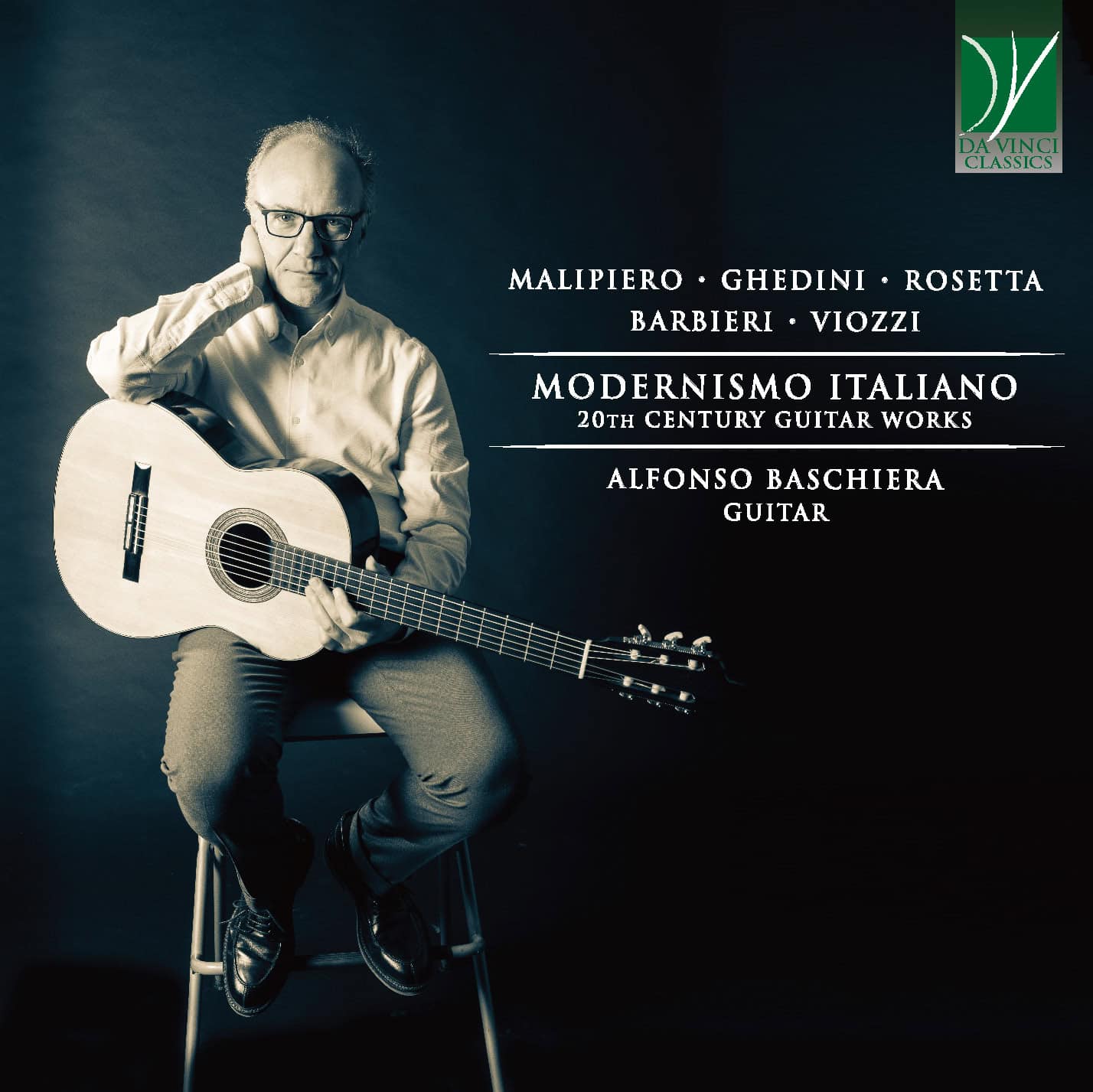
After the epigones of Veristic opera, the composers of the so-called "Generation of the Eighties" (i.e. Casella, Pizzetti, Alfano, Respighi and Malipiero) brought new vitality to Italian instrumental music of the twentieth century. These composers had received a solid academic education; they were open both to the rediscovery of Italian musical heritage from the past, as well as to the innovations that followed one another in the premieres of Parisian theaters.
What these composers have in common is the rediscovery and study of Italian instrumental music written between the sixteenth and eighteenth centuries (from Monteverdi to Vivaldi, and from Gabrieli to Frescobaldi), the preservation of tonality, and the addition of elements linked to modality and chromaticism.
Among these composers, even though they were less innovative than Malipiero and Ghedini, are also Mario Barbieri and Giuseppe Rosetta. Giulio Viozzi, from Triëst, on the other hand, was able to develop a style with powerful chromatic features.
Even though all the pieces presented here were written between 1953 and 1984, we cannot speak of avant-garde music. There are no graphic formulas linked to new music, there is no question of abandoning tonality, which is still clearly present. Everything can rather be understood in the context of the new currents of the Italian instrumental school after World War II. The shadow of Casella and his broad European vision hangs over all these works. This movement can rightly be called "Italian modernism".
 buy link*
*If you make a purchase through the link above, we receive a small commission. This allows us to continue providing you with reviews and articles. By buying something through our link, you support us in writing new articles. Products will never be more expensive for you when using our links.