
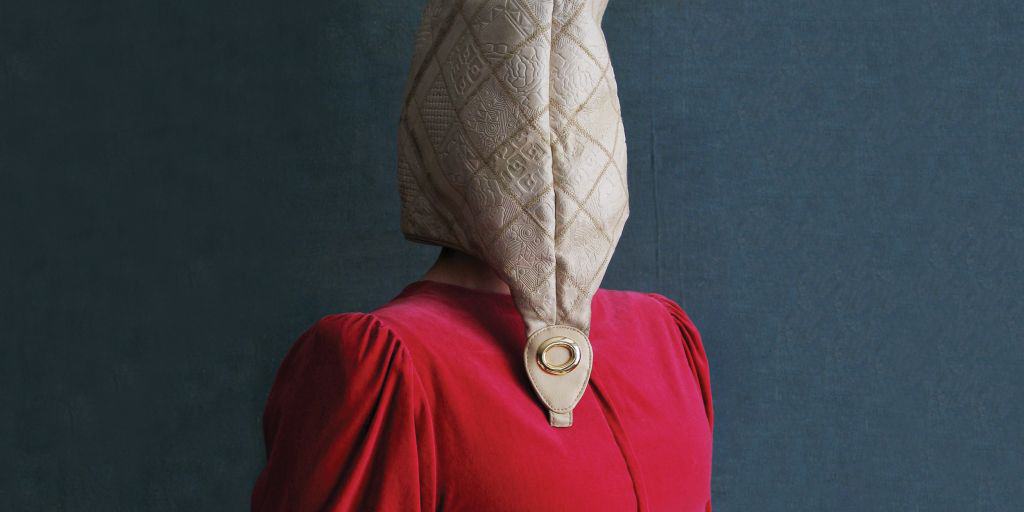
On Thursday, March 15, Peter de Caluwe presented the new season of the Koninklijke Muntschouwburg. As expected, it is a program that does anything but break new ground, but instead offers some unexpected productions and a number of creations. Even the – let us say – more "traditional" operas on the program receive a special angle that makes them intriguing.
Peter de Caluwe was inspired by the literary-philosophical ideas of Swiss German-language author Hermann Hesse (1877-1962) and specifically a quote from his book Das Glasperlenspiel (The Glass Bead Game). Peter de Caluwe expressed the hope that "the 2018-2019 season may inspire you through the spiritual panorama it offers - a Seelenlandschaft, as a conscious contrast to the fleeting, fragmented world that surrounds us – and that our eternal quest for self-knowledge may ultimately result in beauty and wisdom." A beautiful wish in which the programmed operas can play a profound meaning.
Deprivation of freedom and superhuman strength
It brought the intendant directly to the first production of the new season, Mozart's Die Zauberflöte, which will receive a very special interpretation by Romeo Castellucci, where this "visionary all-around artist" seeks "deeper layers" (quotes Peter de Caluwe). I find it particularly fascinating that Janáček's From the House of the Dead will be presented in a production by that other culture director of the moment, Krzysztof Warlikowski, moreover conducted by a young female conductor, Mirga Gražinyte-Tyla. In line with this harsh story, for which Janáček based himself on the novel by Dostojewski, there is another fascinating work programmed that revolves around deprivation of freedom and superhuman strength to survive, namely Push, a composition by Howard Moody, based on the true story of Brussels Jewish Holocaust survivor Simon Gronowski. An unlikely story that offers a fascinating "community project," in which professionals and amateurs work together. The piece was already performed in Chichester and receives its Belgian premiere at the Munt in the Malibranzaal.
There is another creation: Frankenstein by Mark Grey: an opera that was planned for the Extra Muros season, but was postponed due to circumstances. There are two buffo operas on the program: the popular Don Pasquale by Donizetti, where Laurent Pelly unleashes his imaginative direction to extract the petty aspects and where Altinoglu will make a musical year-end celebration out of it together with a number of bel canto specialists, including Michele Pertusi in the title role. The other buffo is a rarity. Re Orso by Marco Stroppa (1959) is a work commissioned by the Opéra Comique de Paris and the Munt. After its premiere in Paris in 2012, the opera finally receives its Belgian premiere at the Munt. The story is a fairy tale – though not devoid of nightmarish moments – by Arrigo Boito (1842-1918), an author-composer (Mefistofele) whom we know mainly as Verdi's librettist. Stroppa does not shy away from electronics in his works and so it becomes an absolutely contemporary counterpart to the traditional opera buffa! With Arrigo Boito we also arrive at Amilcare Ponchielli's La Gioconda, an opera known from one fragment, the Danza delle Ore. This opera set in Venice finally gives the audience the chance to see it in full at the Muntschouwburg.
Hermann Hesse themes
A highlight that with its metaphysical layers naturally belongs in the Hermann Hesse theme is of course Wagner's Tristan und Isolde, with which Altinoglu continues his Wagner series at the Munt. The opera season closes with a real fairy tale, namely the Russian opera by Nikolay Rimsky-Korsakov to be discovered, The Tale of Tsar Saltan, a perfect fit for Dmitri Tcherniakov and, like the still memorable Golden Cockerel, musically in the good hands of chief conductor Alain Altinoglu. Two operas are given in concert form: Stravinsky's The Rake's Progress with none other than Barbara Hannigan as conductor and the grand opéra by Giacomo Meyerbeer, Robert le Diable, with the fantastic conductor Evelino Pidò, who is currently conducting the diptych Cavalleria/Pagliacci at the Munt.
There are, as every season, a series of recitals with great singers (Padmore, Gens, Kožena) and concerts including the symphonies one through eight by Ludwig Van Beethoven, also with Altinoglu. In addition, there is also dance with a kind of retrospective of Anne Teresa de Keersmaeker and in cooperation with other federal cultural institutions in Brussels, I would still like to mention L'Homme de la Mancha, fifty years after its premiere at the Munt and forty years after the death of Jacques Brel in October 2018.
A fascinating next season in which countless discoveries await. You will find all the details at www.demunt.be.
- WHAT: presentation of the new opera season of the Koninklijke Muntschouwburg
- WHEN: 2018-2019
- PHOTO: © De Munt