
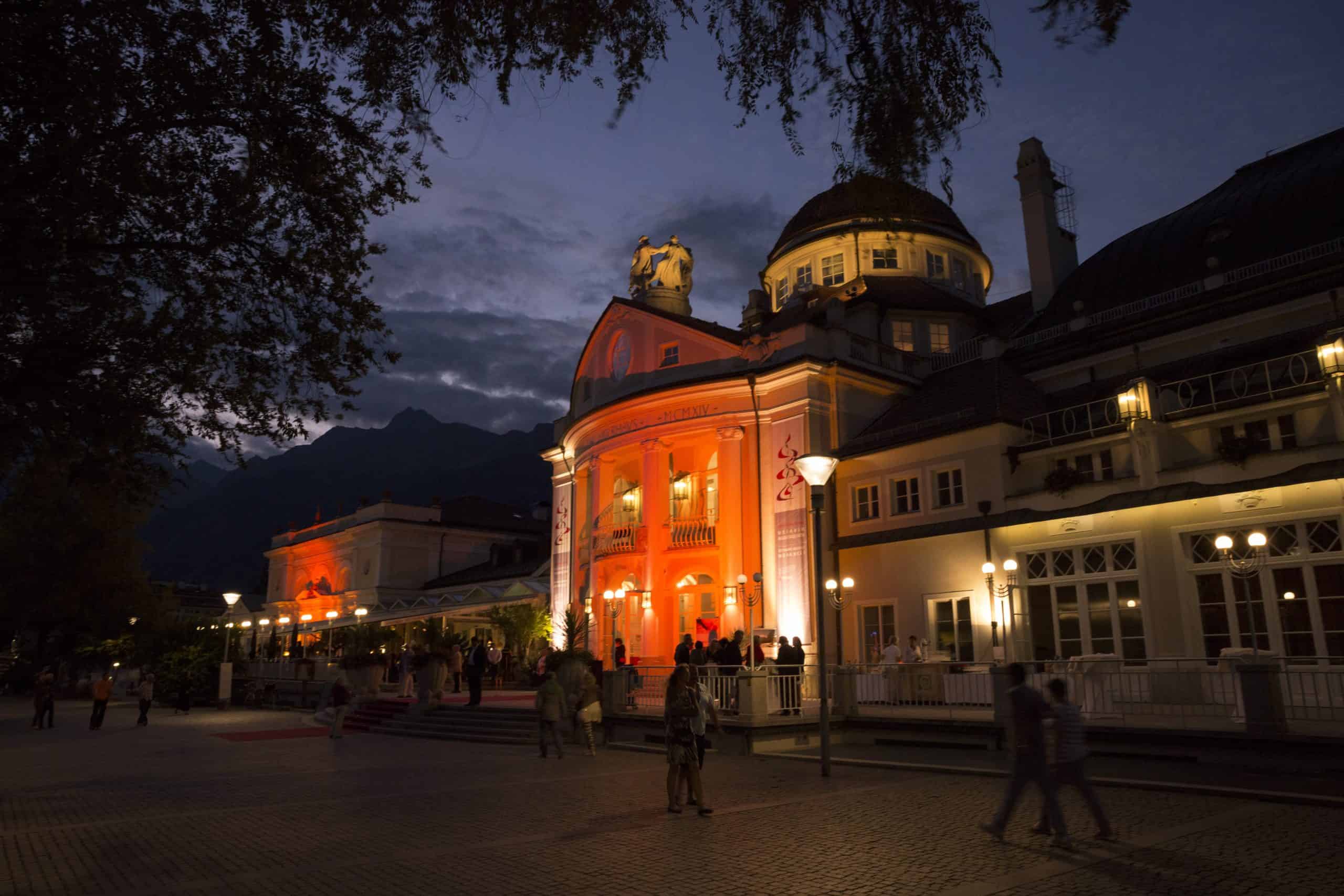
The European classical music landscape is dotted with festivals during the summer months, with many well-known names. But do you also know the South Tyrolean festival in the spa town of Merano? Half of the residents speak German, the other half Italian. It lies at a crossroads of cultures, thanks to or because of the 19th-century Austro-Hungarian dual monarchy. For two months, August and September, the Südtirol Festival Merano.Meran. runs. Music circle organization Cimarosa had it on its program. We traveled along (26/8 – 2/9) and enjoyed not only the beautiful surroundings but of course also a number of excellent concerts.
Trevor Pinnock meets Maurice Ravel.
A first concert featured an age-marked Trevor Pinnock. He briskly takes the stage of the Kurhaus in Merano. He is guest conductor at the Südtirol festival and tonight leads the Kammerorchester Basel. With sweeping gestures he keeps that chamber ensemble – but there are at least 40 musicians on stage – in good order. They play Maurice Ravel's Tombeau de Couperin. You would not immediately associate Trevor Pinnock with Ravel. Isn't he the man who pioneered with early music for years and performed it with his English Consort? Now working with a composer from a more recent past! A work that Ravel wrote to commemorate friends and acquaintances who fell in the First World War. Yet that music sounds almost cheerful. But of course, it is based on those French suites from the time of François Couperin, dance pieces they are, here in the chamber music version extremely melodious and pleasantly orchestrated, the hallmark of Ravel, and performed with drive and solidity by this ensemble.
Then comes, short-haired and gray, (she is from 1944) the Portuguese piano star Marie João Pires on stage and plays superbly and perhaps for the umpteenth time that beautiful 23rd piano concerto by Mozart. And she does that with playful simplicity, as befits Mozart. Perhaps not as delicate as she did in the past, but with that beautiful adagio she can seduce everyone to thunderous applause, even though the orchestra sometimes sounded loud and sharp. But such a Kurhaus hall is not exactly the ideal soundbox either. Well renovated, though.
Trevor Pinnock conducts – with baton this time – one more Gounod, namely his second symphony. That he wrote a number of operas, with Faust as the best-known, we know that, but symphonies? Tour leader and musicologist Pieter Bergé provided commentary to his fellow travelers prior to each concert on the trip. He may be a professor, but one who knows how to communicate science – in this case musicology – in an accessible way. He had warned us. It would sound like early Beethoven. And indeed, that's how it sounded, and Charles Gounod knew that he would score with his audience that way. For symphonic music there was little enthusiasm in musical life in Paris of those years. It was then fully dominated by opera and had no ear for new symphonic music. Gounod reaped success, also in Merano, together with the Kammerorchester Basel. The Kurhaus guests forced it to an encore. And that was a witty dessert: the cackling La gallina (the hen) from the suite Gli ucelli (the birds) by Ottorino Respighi.

Liturgical music
Five kilometers from Merano lies the village of Lana. It was in the parish church of Lana that on that next concert evening silence remained silent. That was the impression you got listening to six motets by Anton Bruckner. He wrote about twenty of them. It was up to the choir of Latvian Radio to perform them as purely as they were written, positioned in front of the impressive Gothic altarpiece of the church. Liturgical chants with those typical and predictable final chords. Performed perfectly but often too loud for such a small village church, fortunately without reverberation. With an otherwise restrained Ave Maria there came in my opinion a crescendo that was too loud to accentuate the pain about "the fruit of her womb."
That "forte" was also often present in the other religious work that conductor Sigvards Klavza performed with his choir: Peter Tchaikovsky's St. John Chrysostom Liturgy. Powerful, too powerful in such a small church, that liturgy really begs for a large and dark Byzantine basilica. An excellent choir, sometimes too loud, but never too sharp. Each time introduced with the chant for a deep dark voice, that of the "pope" and answered by that ever clear choir singing. Impressive. With a standing ovation, the Latvians paid tribute to Ukraine with the "Prayer for Ukraine" by the now nearly 84-year-old Ukrainian composer Valentyn Silvestrov.
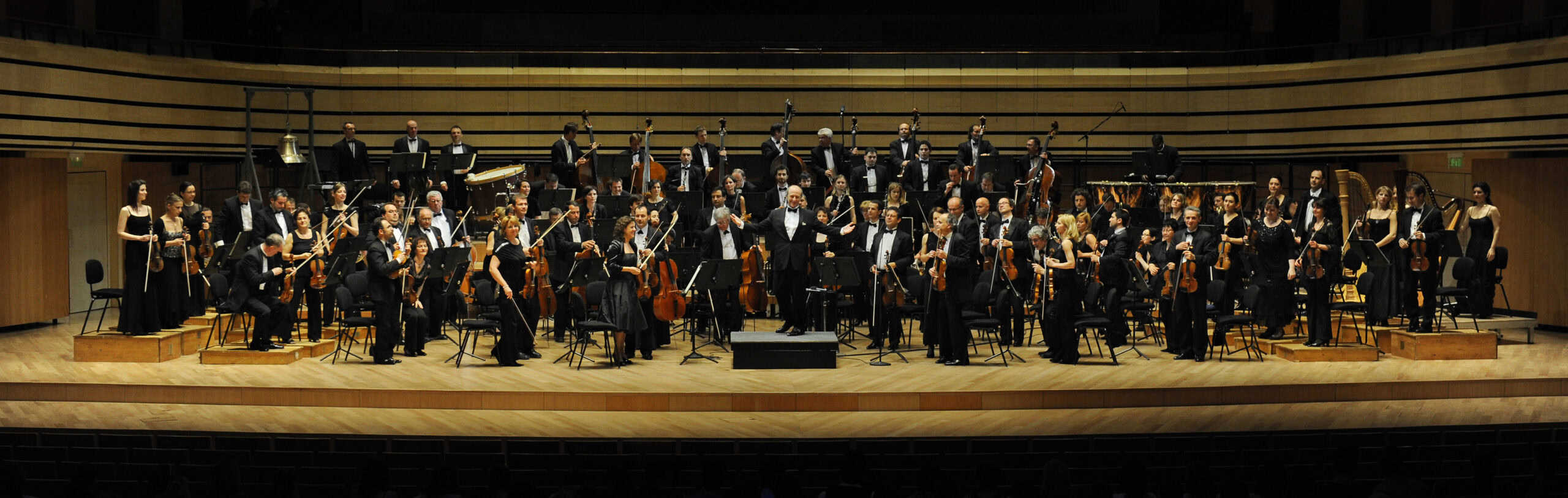
Budapest Festival Orchestra with Wagner, Beethoven and Haydn
An evening with Iván Fischer and his Budapest Festival Orchestra, who would want to miss that? It was therefore immediately on the program of the Cimarosa trip to the Südtirol Festival in Merano. In the city's Kurhaus they first played the Siegfried Idylle. Professor Pieter Bergé, who as an excellent lecturer introduced each concert for his fellow travelers, showed us a 'very short video' about the first performance of that idyll. You saw a "re-enactment" of how in 1870, on the staircase landing in front of Cosima's bedroom in Wagner's Villa Tribschen in Lucerne, he wanted to surprise his wife with this symphonic birthday greeting. He wrote that idyll for only 13 musicians, Iván Fischer brought considerably more onto the stage. The strings immediately take you along, while the other instruments come in softly: the flute with the so-called Siegfried motif and the woodwinds that were arranged in front of the conductor. An unusual arrangement but they carry the work after all. And in whichever version it is performed, with the Budapest Festival Orchestra you're in good hands, even better: excellent!
You're also in good hands with them for a cello concerto. It is one by Joseph Haydn, the first one, thought to be lost but rediscovered in 1961. The cellist is none other than Nicolas Altstaedt. And you immediately hear that this is a distinctive personality who takes on this work by papa Haydn. A cellist of a new generation, always performing in his stocking feet. The way he handles his instrument and the notes of the score forces you to watch his almost devilish playing. It is about a completely contemporary and idiosyncratic interpretation. Orchestra and conductor willingly follow his lightning-fast virtuosic performance. Every cellist in the orchestra who would treat his instrument the way this soloist does would be standing at the door the next day. Not this Nicolas Altstaedter. He has not only star qualities but above all also substance and class. Then much is possible, if not everything.
An accomplished conductor (Iván Fischer is after all 71) and an accomplished orchestra (it has existed since 1983) conclude with a blockbuster. The Eroica by Beethoven. There is only good to be said about that. The revolutionary composer wanted to dedicate his symphony to that revolutionary general Bonaparte. But when he crowned himself emperor, Beethoven found him just another power-hungry potentate like all the other emperors and deleted Napoleon's name from the title page of the score. It became a long and expansive symphony. For fifty minutes you are relentlessly delivered to Beethovenian inventiveness and Fischerian drive. Anything but a boring evening.
A recital with Magdalena Kozená
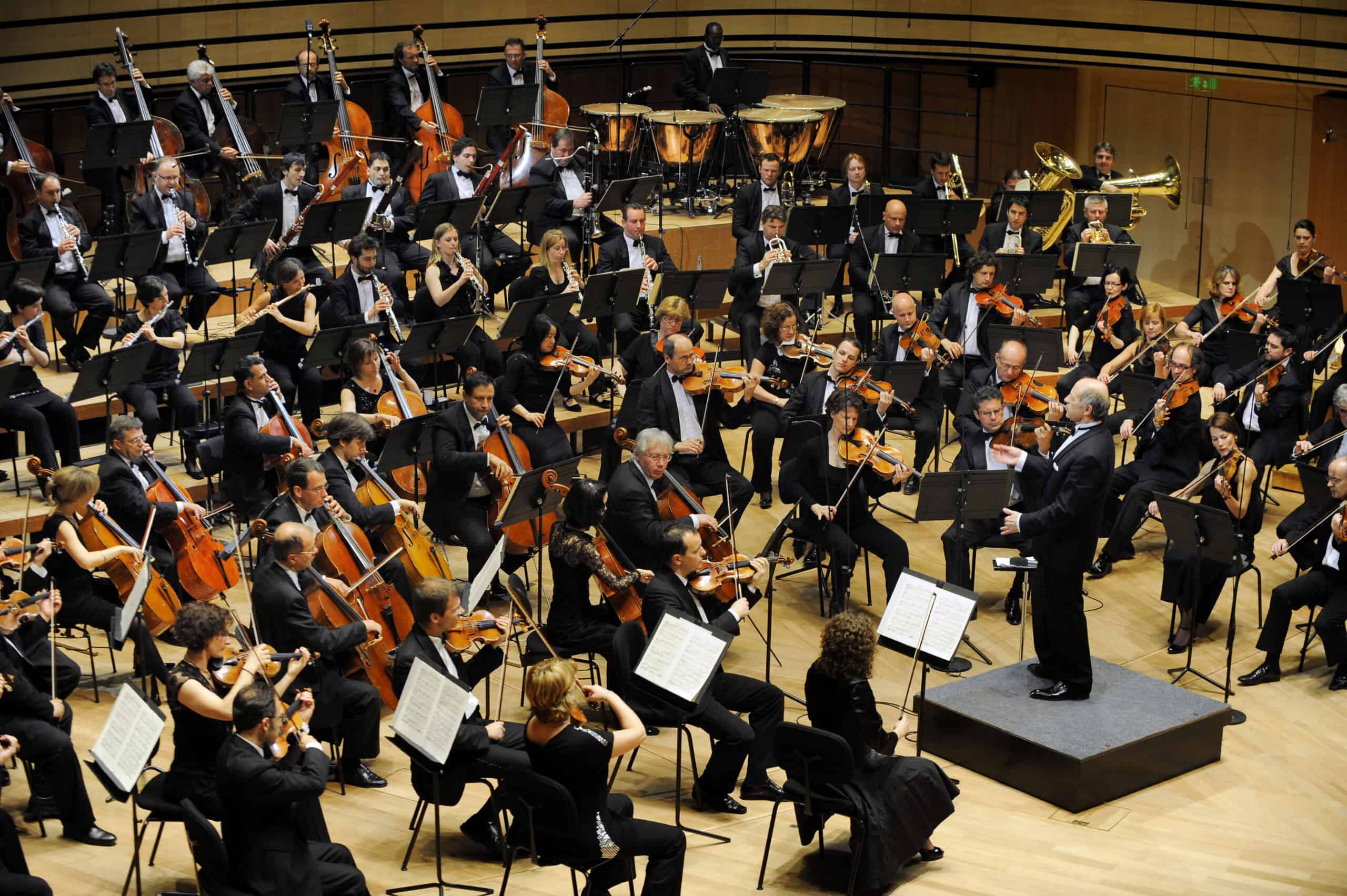
The festival also brings us a song recital. For a big name like that of mezzo-soprano Magdalena Kozená, the large hall of the Kurhaus is only half full. Yet announced as a magnificent evening of the art of song. The mezzo-soprano opens the recital with a selection of songs by Johannes Brahms. Romanticism through and through, further developing what his great predecessors in the genre had done, Robert Schumann and the much-praised Schubert. Unfortunately there were no text booklets available. Even for a predominantly German-speaking audience that must not be easy. You inevitably listen more to the inventive piano accompaniment than to the very expressive voice of Kozená. For that piano accompaniment, Brahms needs more notes than his illustrious and more sober predecessors, incidentally.
A totally different repertoire came with songs by Modest Mussorgsky. Indeed, you can call those six miniatures that way. They come from the cycle "The Nursery." Mussorgsky himself wrote the texts, coming from a child's mouth, in dialogue with the nanny. Voice and accompaniment interpret amusing events from the nursery with full sound imitations. "Gallop, little horse" is one of those miniatures. Magdalena Kozená is at her best here, with appropriate expression and without too much vibrato. Her accompanist, Russian-Israeli-American pianist Yefim Bronfman, could also let loose here.
It goes differently and more seriously with the Satires. Five Romances for piano and soprano by Dmitri Shostakovich. Criticism of the regime wrapped in satire. About situations from Russian history but also applicable to situations in the composer's time. Those songs suit Kozená much better than those from the Romantic period. And with songs by Béla Bartók we certainly arrive at a repertoire that is tailor-made for her. Béla Bartók registers – literally – scenes from village life and then sets them to music, and naturally includes numerous folk elements. Remember that besides being a composer he was also a music ethnologist. It was his passion and he completely succeeds in his aim to turn folk music into art music. Witness these masterpieces in his song production with which Kozená could truly shine. She came even closer to her roots with two sparkling encores from the works of her two Czech compatriots: Leoš Janáček and Bohuslav Martinů.
Bach's Brandenburg Concertos
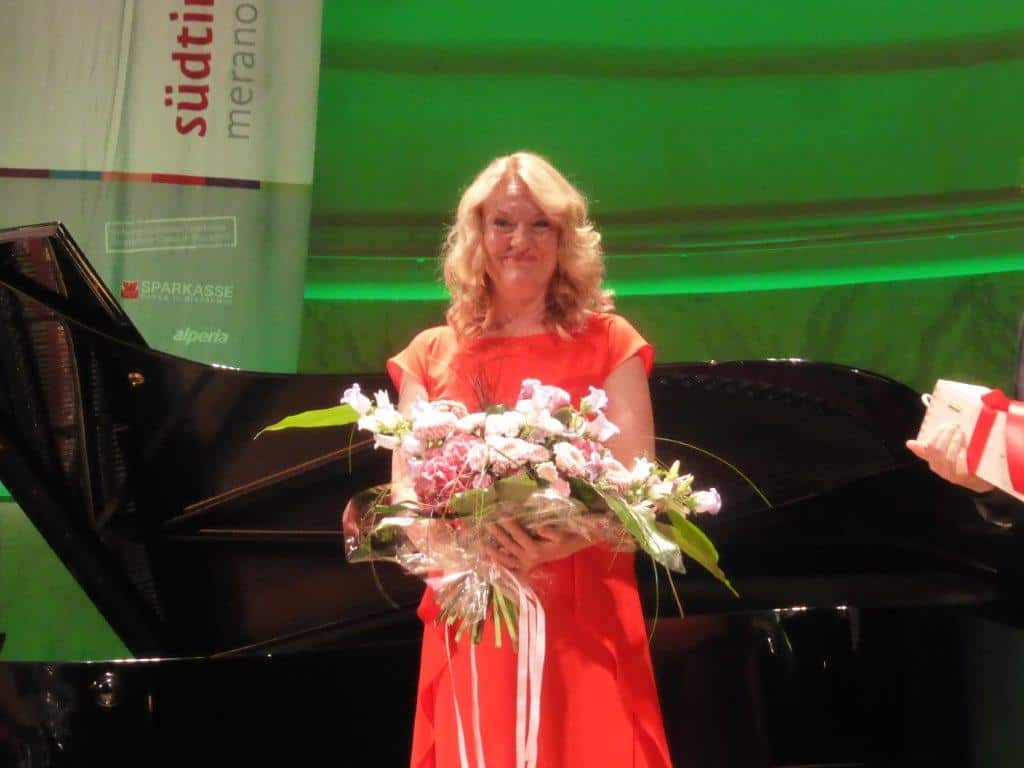
Our last concert was not in the grand hall of the Kursaal but in the smaller "Pavillon des Fleurs. Different venue, different music. Much of Bach's work is popular, and the Brandenburgse concerto's are certainly among them. We get to hear numbers 3, 4, 5 and 6 performed by the Cordia Ensemble. They play a home match as they come from the South Tyrolean Bruneck, where German and Italian culture meet. Concertos often follow fixed schemas but great composers like Bach handle them loosely. Add to that the baroque swing and you get an ensemble where soloists and tutti chase each other with pleasure. By now we are so accustomed and spoiled by perfectly balanced CD recordings that we are surprised by the somewhat peculiar dynamics of a live performance, on historical instruments no less. In slower passages you hear even better that typical tonal quality of theirs. The British guest violinist Rachel Podger plays on an instrument from 1739. The leader of the Ensemble Cordia, Stefano Veggetti, also plays on a historical instrument and was for a long time principal cellist with Anima Aeterna of Jos Van Immerseel. Wonderfully beautiful was of course that 5th concerto with a starring role for harpsichordist Takashi Watanabe and with a brilliant part for the velvety traverso sound of Jana Semerádová. Truly dance-like music for soloists and tutti alike. Dialogue and ensemble playing were abundant with these artists.
Thus ends a whole week of Südtirol festival in Merano with a climax. Even though many big names are still on the program until the end of September. A little-known city with a poorly known festival in what was once a busy 19th-century spa resort. Want a name? Sissi was a regular here, the nickname of fairytale empress Elisabeth of Austria and queen of Hungary….
© Damian Pertoll © Damian Pertoll


WHAT: Südtirol Festival Merano.Meran
WHERE: Merano, Italy
WHEN: 26 August – 2 September 2022
WHO: Kammerorchester Basel conducted by Trevor Pinnock and with Maria João Pires [piano]
Latvian Radio Choir conducted by Sigvards Klava
Budapest Festival Orchestra conducted by Iván Fischer and with Nicolas Altstaedt [cello]
Magdalena Kozená [mezzo-soprano] and Yefim Bronfman [piano]
Ensemble Cordia conducted by Stefano Veggetti
MUSIC ORGANIZATION: www.cimarosa.be