
The MuCH Waterloo Festival. Little known in Flanders, that festival unless the location where it takes place: the Koningin Elisabeth Muziekkapel van Argenteuil. It is the refuge for participants in the competition who made it to the finals in the eponymous competition and there go into seclusion to prepare their final week. It is an almost paradisiacal place, bordering the Zoniënwoud and since 2015 also equipped with a new building with a beautiful concert hall. It is a small hall with a capacity of 250 seats and with a unique view of the forest behind it.
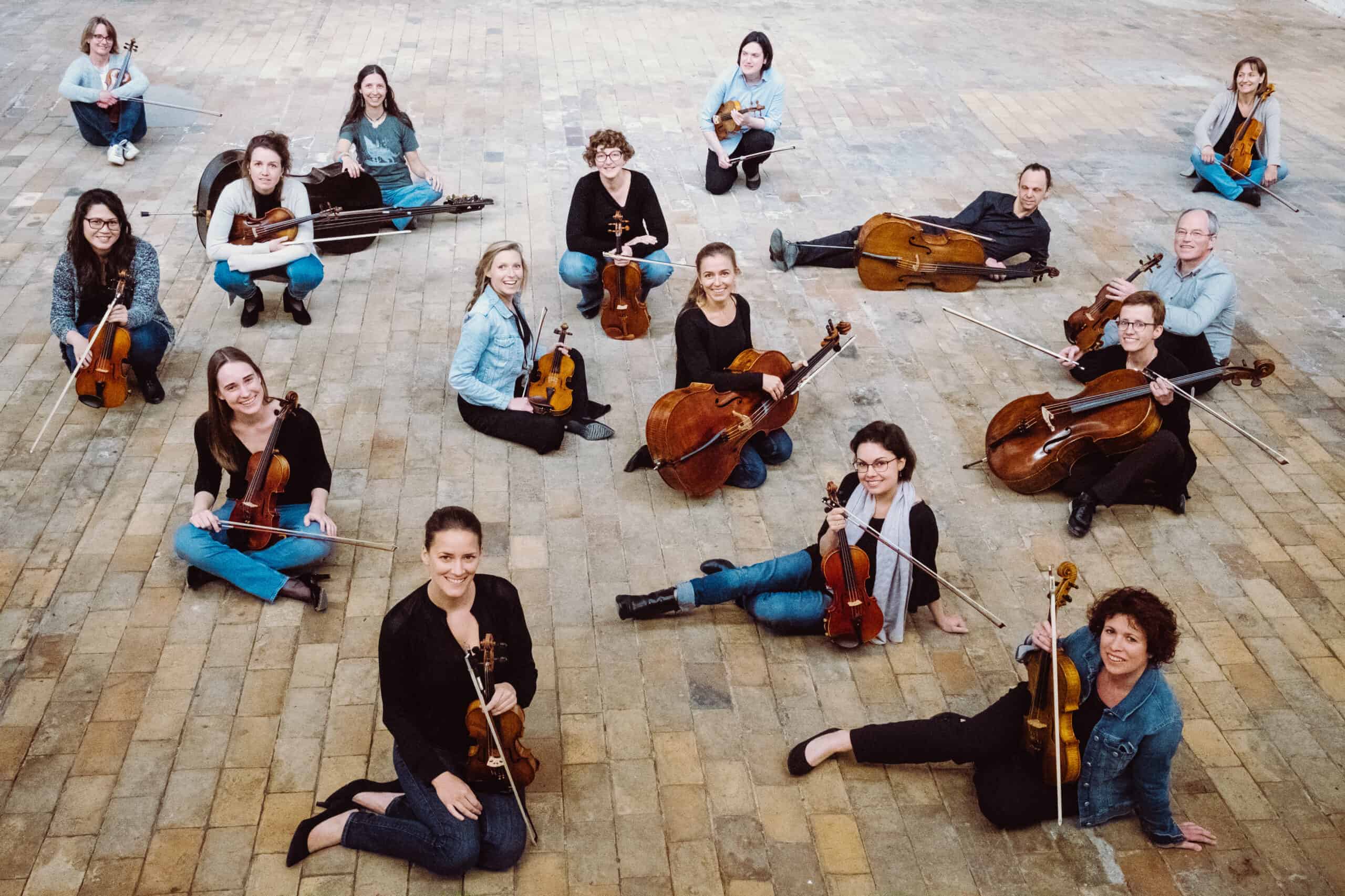
A small orchestra also took the stage this evening. It was once called "Collegium Instrumentale Brugensis" and was led by Patrick Peire, which later became "Het Kamerorkest Brugge" until violinist Jolente de Maeyer gave it new impetus and transformed it into the ensemble "BRYGGEN Bruges Strings." The name refers to the iconic Hanseatic wharf (Bryggen) in the Norwegian city Bergen. Just as Bruges was once an important Hanseatic city, but the most northerly one. Because the company also wants to put Northern Europe on the musical map and bring music from Northern Europe, Russia and the Baltic states.
Minimalism and post-minimalism
And this interest becomes apparent immediately from the opening piece: Summa by Estonian Arvo Pärt. It is a program with a number of minimalists on the  program. With a few notes, Pärt knows how to immerse you immediately in his own idiom, in his own musical universe. It is originally a vocal work by him reworked for string ensemble. Simple harmonies, serene, mystical, hypnotic...these are the words you often hear about this composer. Philip Glass is the second minimalist in line with his second string quartet, now also for ensemble. And again here that immediate Glass feeling of an apparently simple string score backed by repetitive bass tones. In other sections also more powerful rhythmically and bordering on syncopation. And then two pieces from "Plan & Elevation" by Caroline Shaw. She is one of those versatile and young American composers at home in both hip-hop and contemporary classical music and certainly in the minimalist corner of it. "Plan & Elevation"are terms from architecture and she loves to be inspired by beautiful architecture and exceptional places. This work came about when she was wandering around the orangery and under the beeches of the Dumbartons Oaks estate when she was a music fellow there.
The Four Seasons according to Max Richter
The main piece of the evening is reserved for successful composer Max Richter. You hear his "recomposed" Vivaldi quite often on the radio, but experiencing his arrangement of those Four Seasons live gives a special kick. It is the young Hungarian-American Abigel Kralik who solos, and how! And she can fully count on the strong backing of her Bryggen colleagues.
She is currently artist in residence at the Muziekkapel. What did Max Richter actually do with Vivaldi's concerto, I ask her. "Cut and Paste," she says. "Here and there cut some fragments from the score, made a puzzle out of it, applied their own chord schemes to it, so that it almost sounds like punk with a rhythmic ostinato that wonderfully fits that Baroque momentum." Remixing and sampling is what it's called. The "recomposed" sounds so much like the real Vivaldi that you expect at any moment that the violinists will make a mistake and play the real score. No worries, despite the strong swing they remain faithful to Richter. The slowly unfolding spring, the leaden summer heat, the colorful autumn palette and the icy winter, it all comes virtuously but differently, sometimes more angular and sharp, sometimes quieted. For many listeners, an uplifting discovery. It is proof that not all "contemporary classical music" is difficult to digest and that there is more than the "older" classical music that comes out of our stations daily. These are music genres that are sometimes spoken of very condescendingly, but which apparently are well-liked by both older and younger audiences alike. A matter for reflection and here brilliantly played and promoted by Jolente De Maeyer's BRYGGEN and soloist Abigel Kralik
Photo: Wouter Maeckelberghe, Roger Creyf