
Anyone traveling to Portugal must really make a stop in Mafra. The palace is one of the largest baroque palaces in Europe. It houses an enormous library with over 40,000 books mainly from the 17th and 18th centuries. The basilica happens to have six (6!) organs that can be played together, there are museums and in the towers there are two carillons, one of which is unplayable and the other one of the best baroque carillons, if not the best in Europe. Off to Mafra!
UN shows interest
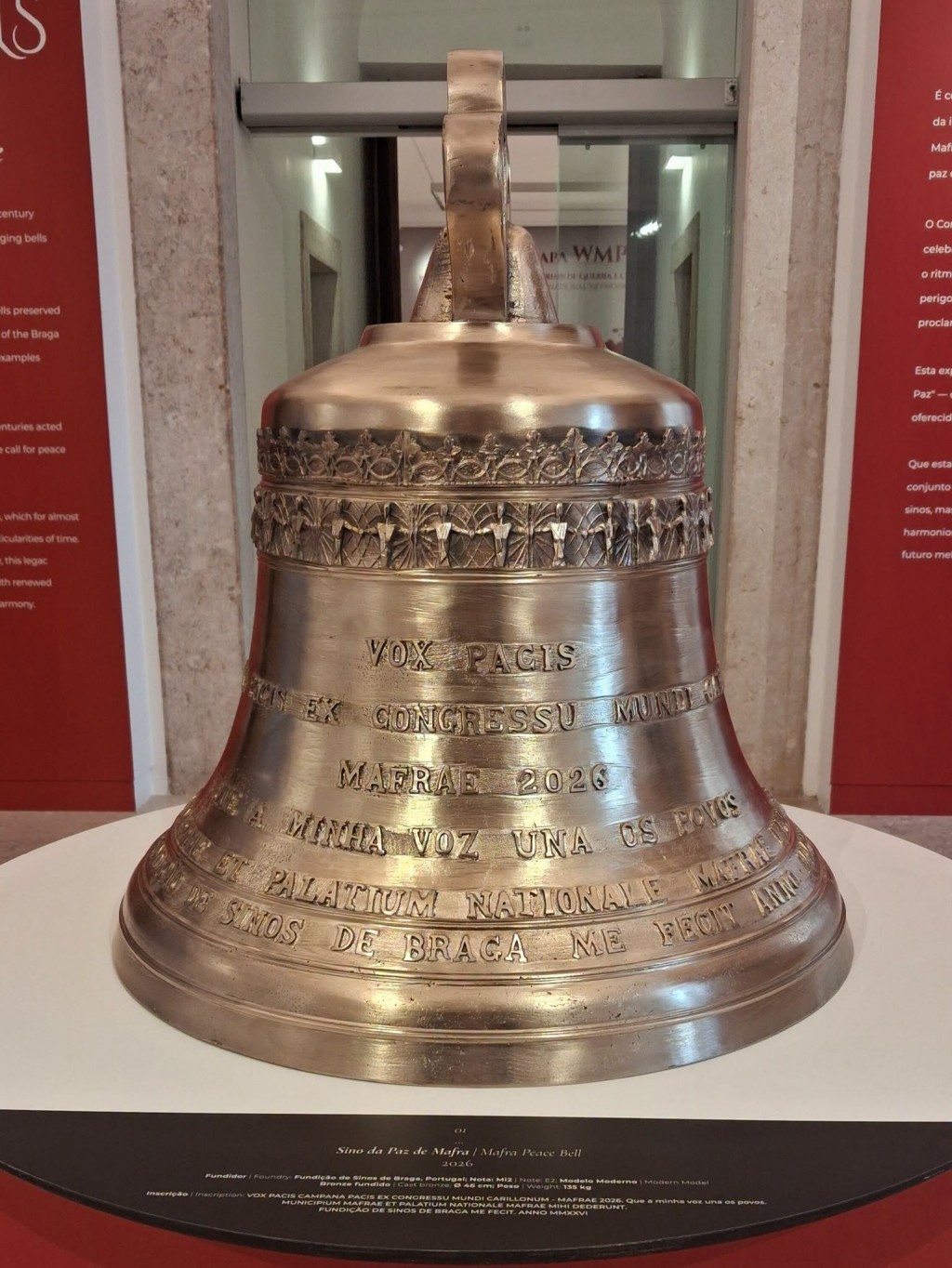
On the sidelines of the triennial congress of the World Carillon Federation (BWF), the initiative was taken to cast a peace bell. In these difficult times where major wars threaten, a musical beacon of hope. UN Secretary-General António Guterres honored the congress with a meaningful foreword in the catalog of the exhibition that was also organized on the sidelines of the congress.
The congress was opened by Abel Chaves, carillonneur of Mafra and director of the congress, by Koen Van Assche, chairman of the BWF and mayor Hugo Manuel Moreira Luís of Mafra who, in collaboration with the palace director Sérgio Gorjão, welcomed the international guests and cut the proverbial ribbon. After the customary words of appreciation, cooperation, the importance of the carillon in the past – present – future, the occasional exhibition was opened. A very educationally rich presentation that not only teaches more about how remarkable it is that two carillons ended up in a palace in Portugal, but also what the carillon is, what the instrument has stood for for centuries and what else it can mean.
The catalog became a substantial scholarly book, in both Portuguese and English. This book can immediately be called a standard work for the carillon and it would be good to include it in the curricula of the few carillon training programs in the world. Intense and particularly thorough historical academic research preceded the exhibition and the book. Note that until mid-April 2027 the exhibition can be visited. After that it will likely and hopefully certainly become a permanent part of the palace's collection which, besides the famous library, also houses museums.
Peace bell
Carillonneur and congress director Abel Chaves was pleased with the idea of having a bell cast on the spot on the opening day of the congress, a Peace bell no less. The casting of the bell would be framed with music on bells and with dance, dance that depicted the fire around and the melting of the bronze. All this in the open air because in Portugal it is warm in summer and hardly rains. Fortunately it didn't rain, it was only warm near the fire. University students touched inverted standing bells, little bells rang and dancers in flowing garments sometimes made you look a bit too much away from the Peace bell casting process underway. It is impressive to see that this is no simple day's work. It requires utmost attention, precision and no nervousness. But what if you are a worker in a bell foundry? That's quite different from working on a specially prepared flattened pyramid shape in sand with a temporarily built melting furnace in a limited space, in the eye of dozens of cameras large and small and attended by the political leaders of the municipality and all those foreign guests.The accident happened, the lifted ton of molten bronze slipped from the tongs and crashed down onto the sand. The hot liquid bronze splashed down like water in all directions onto the sand floor. Fortunately no one was injured, but everyone was confronted with the hard reality: casting a bell is no child's play and is always (!) risky. There have been failed castings in multiple bell foundries in the past. Not really many, but still. And so it is actually good (well) that this happened precisely to awaken awareness of the dangers inherent to the profession. Of course an "Ooooohhhh!" went through the air from all those present. What now? Well, provision had been made for possible situations such as rain that would have spoiled everything, a technical error in the casting process or something else. The true Peace bell had already been cast and would be shown and sound in splendor and glory on the last evening of the congress. Oh yes, a very beautiful bell and with a warm, round, creamy full sound, not shrill at all. A bell cast with love for the craft, for the carillon, for Peace. Hopefully it may sound much without having to celebrate the end of yet another war. Peace for the sake of peace, as a festive bell. Oh yes.
[caption id="attachment_57276" align="alignleft" width="682"]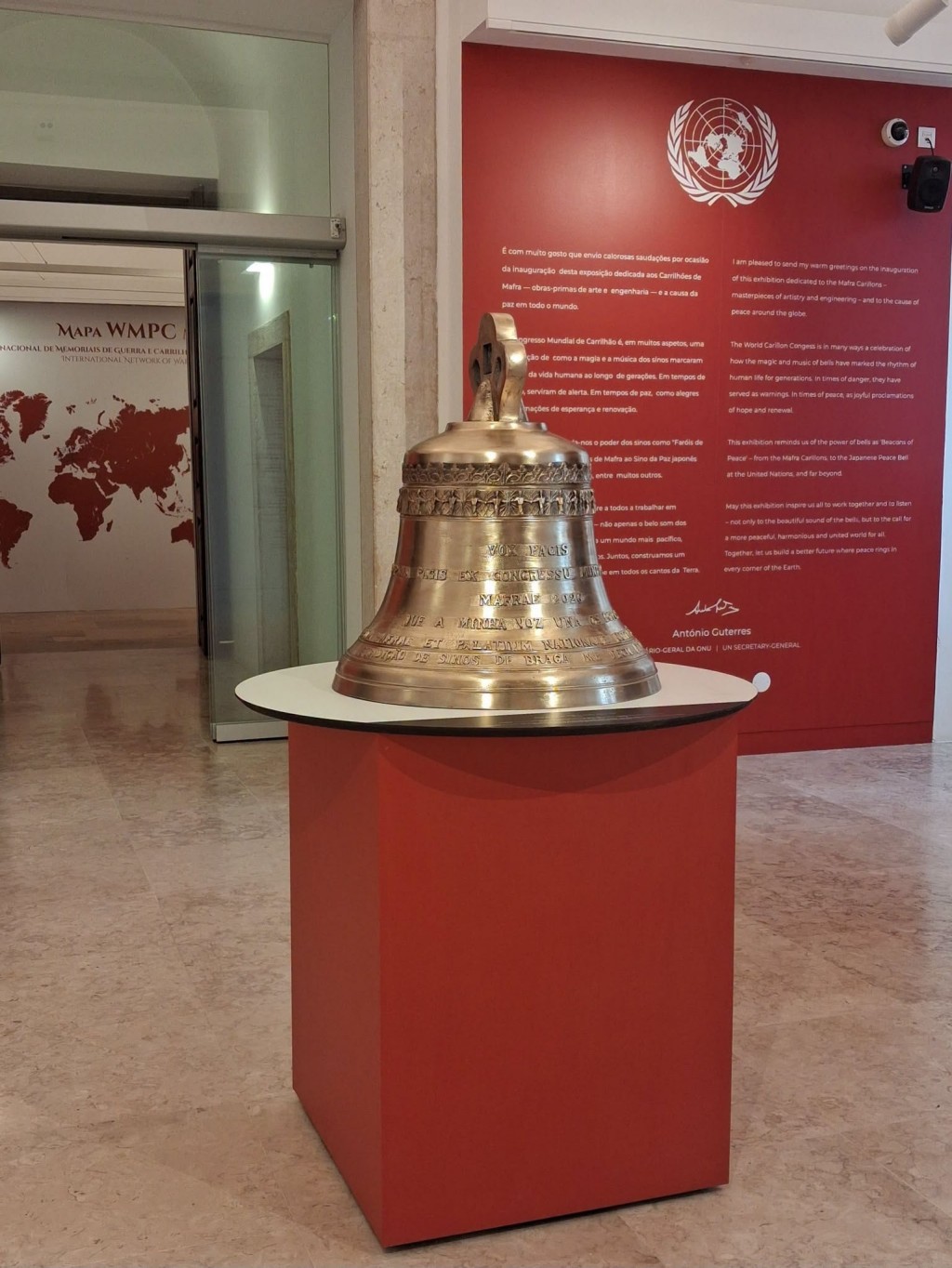 Peace bell, Palace Mafra, Portugal[/caption]