
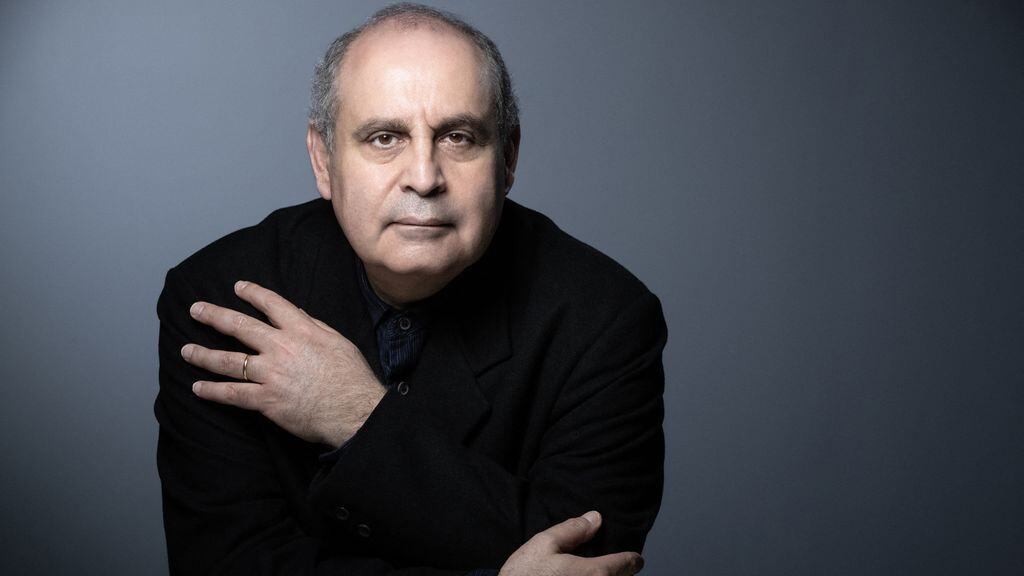
I was startled to hear Sunday morning on "Klara staat op" the announcement that director Pierre Audi had passed away.
There are people whom you can hardly imagine, or want to believe, have gone, but it happens, people who suddenly disappear. Pierre Audi was still super-active and in any case far too young. He was born in Lebanon in 1957, his parents emigrated to France and Pierre Audi found his way into theater via Oxford and London. With contemporaries such as Robert Wilson and Robert Lepage, he developed a contemporary and experimental vision of theater and opera. In 1988 he came to the Netherlands. There he spent many years leaving his mark on the opera productions of the Nationale Opera. Whether it was Gluck, Mozart, Monteverdi or Richard Wagner, his method and style were always recognizable. Insight into the characters, poetic, aesthetic and yet sober in the portrayal and respect for the music. Contemporary, idiosyncratic but without far-fetched or meaningless adaptations to current events, for he had too much respect for the music and for the context of the composer.
He also staged some memorable productions at the Muntschouwburg, at the invitation of Peter de Caluwe, with whom he had worked together in the Netherlands for many years. His Pelléas et Mélisande (with designs by Anish Kapoor) from 2008, I still see it before me as if I saw it yesterday. That he was invited to complete Wagner's Ring des Nibelungen with the two final parts convinced me to go see the rest of the Ring at the Munt. For I was absolutely convinced of his production of the Ring in Amsterdam which I went to see twice. The production of Tristan und Isolde which he was to bring back to life next season at the Nationale Opera is on the schedule. A small fragment about Isolde's Liebestod from the program brochure following this Tristan revival now takes on a very special meaning: "At the end of the opera there is nothing left but a black silhouette. She is ultimately just a voice. Thus the Liebestod becomes what it is, an epilogue to the opera, with a view to an unknown future".