
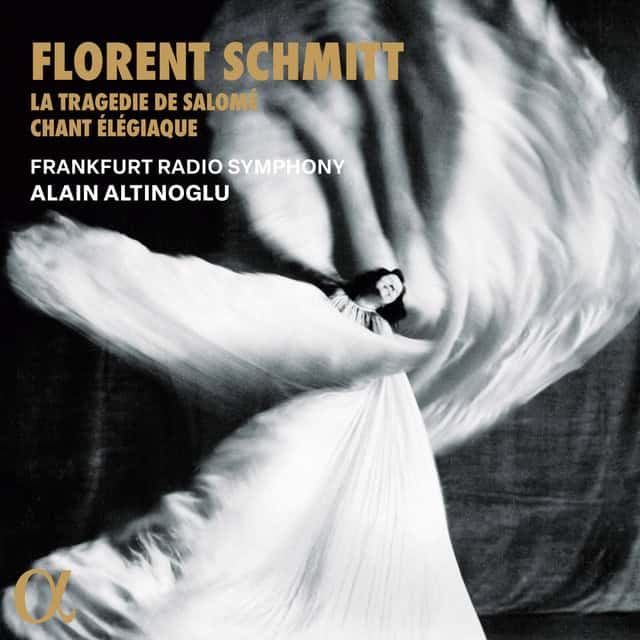
Schmitt's ballet music La tragédie de Salomé dates from 1907 and is based on Salome as she is performed in Flavius Josephus' extensive treatise on early Jewish history (ca. 94 AD). We also find this subject matter in two gospels: that of Matthew (14) and Mark (6).
The ruler Herod Antipas, vassal king of Galilee and Perea, asks his stepdaughter Salome to dance for him during a feast he is giving, in return for which he will fulfill all her wishes. Salome dances (the famous dance of the seven veils) and demands from her stepfather, urged on by her mother Herodias, the head of John the Baptist. On stage, it ultimately turns into an extremely bloody affair that has inspired not only many a composer but also many a director an innumerable number of times. The scenario does not mince words: (sexual) lust, jealousy and betrayal take center stage, in a sultry, often even churning maelstrom.
For completeness: Schmitt's Salomé is literarily not based on Flaubert's novella of the same name (1877) nor on Wilde's play of the same name (1891), but on the drama The Tragedy of Salome by Robert d'Humières, who was artistic director of the Parisian Théâtre des Arts from 1907 to 1909 (until 1907 the Théâtre des Batignolles). Diaghilev would later use the poem for his Ballets Russes (1913).
French conductor Alain Altinoglu (*1975) has gained considerable opera experience and you can hear that in this ballet performance as well: as if he is breathing along with the (of course invisible) ballet on this album (an 'opera sans paroles', as the composer once remarked), phrasing smoothly, but at the same time rhythmically incisive and alert. The whole presents itself as one of the finest performances of this fascinating work that has no equal in its genre. It should also be noted that the orchestral treatment is considerably less decadent than in Richard Strauss' opera of the same name.
The Frankfurt musicians present themselves with fervent and meticulously worked-out orchestral playing down to the smallest details. The splendid color palette and the excellent recording form an ideal combination for this ballet music that is only rarely heard and seen on stage. Equally atmospheric is the contribution of soprano Ambur Braid in 'Chant d'Aiea'.
The whole is particularly beautifully rounded off with the Chant élégiaque, which lasts just under seven minutes, in which a special role is reserved for the warm, lyrically immersed cello solo, which Philipp Staemmler gives an extremely imaginative shape. In short, this is a release of grand stature.