
— text by Peter Leys
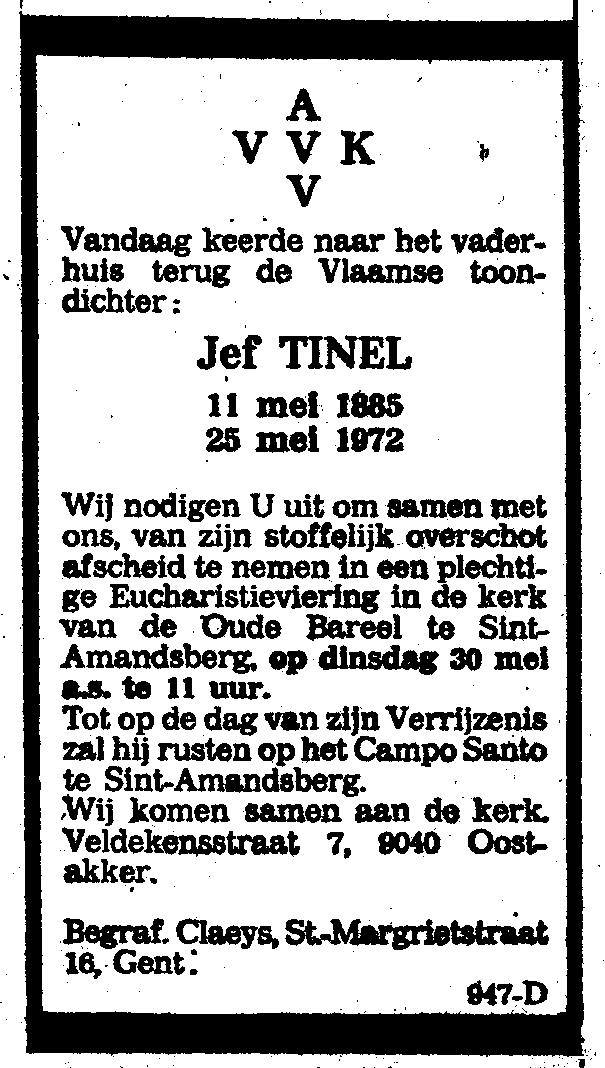 On 25 May 1972, composer-organist-conductor-teacher-music school director Jef Tinel passed away in Gent. The news was covered by various media and even made the BRT late evening news.
Many prominent figures such as BRT music director Leonce Gras, music inspector Jef Dispa, the Belgian Association of Composers, Authors and Publishers (SABAM), minister Theo Lefevre, the Flemish Folk Art Movement and composers such as Jean Douliez, Gabriël Verschraegen and Jules Vyverman expressed their condolences.
The funeral in the church of the Oude Bareel in Sint-Amandsberg on Tuesday 30 May drew large crowds. Composer Jean Douliez played the organ and some singers from the Ghent Oratorio Society and the Ghent Jef Tinel Choir accompanied the service. At the grave, a speech was delivered by journalist-art critic Jan D'Haese.
The first Flemish – National Song Festival after Tinel's death paid a moving tribute to his faithful conductor: his battle song 'Wij zijn bereid' was sung by those present without a conductor. A spotlight illuminated a solitary conductor's podium to emphasize the empty place.
In Diksmuide, the IJzerbedevaart commemorated his conductor and composer with a beautiful text in the roll call of the dead.
An ad hoc Jef Tinel committee organized together with 'The Days of Flemish Song' on 23 February 1973 a memorial concert in the festival hall of the Crombeen Institute in Gent. Jean Douliez and VTB-VAB chairman Jozef Van Overstraeten spoke.
A children's choir conducted by Blanca De Bruycker, the girls' choir Amabile conducted by the recently deceased conductor Jos Vandenborre, the Jef Tinel Choir conducted by Dries Leys and singer Gaby Versprille provided the musical part. And of course there was communal singing conducted by Willem Demeyer.
BRT radio recorded the choir sections of the children's and girls' choirs as part of the programs around radio school choirs at that time.
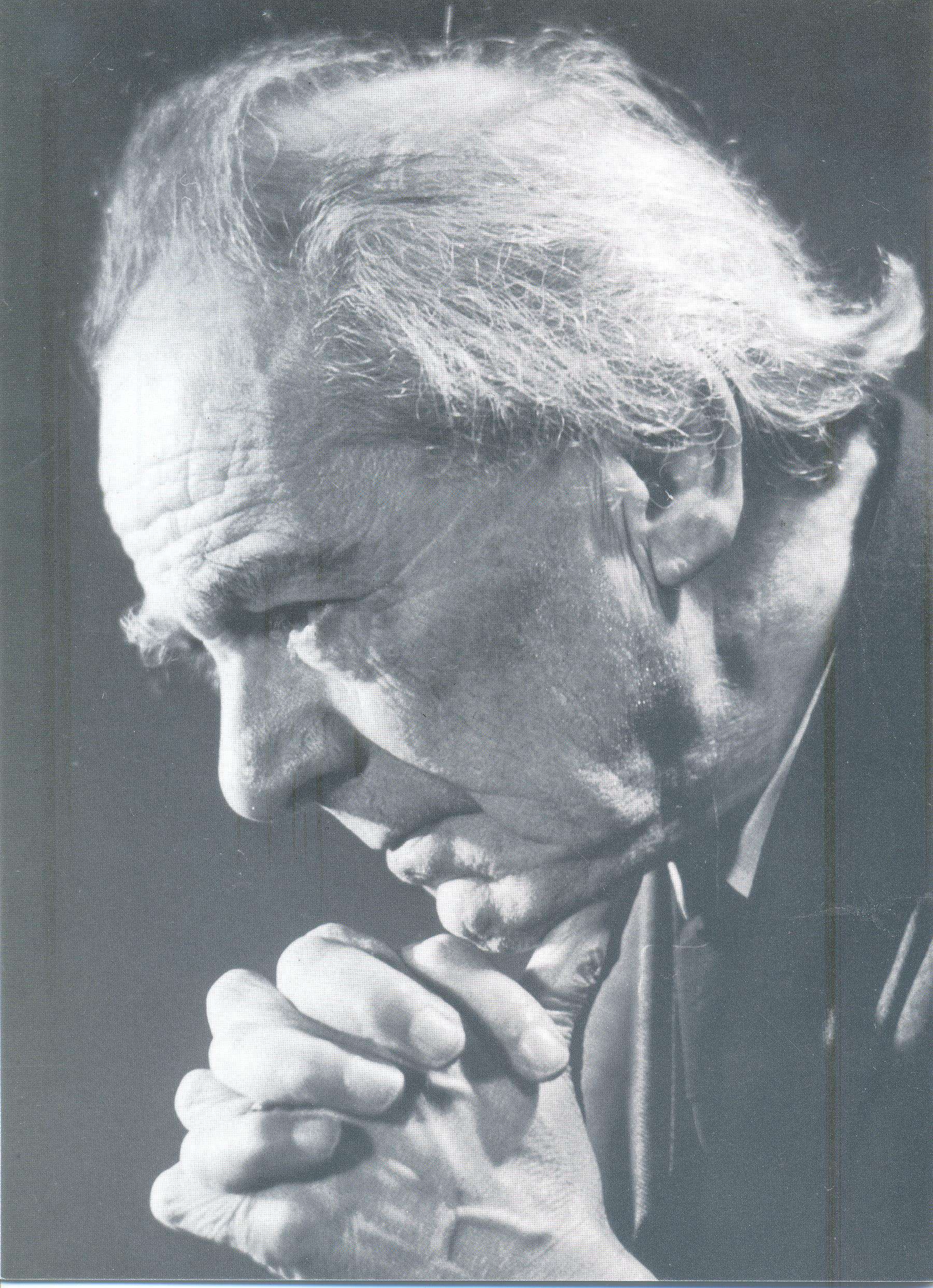
Who was this Jef Tinel?
An excellent education
Born in Lessen on 11 May 1885 and later moved to Maldegem, he received his first lessons in organ and harmony from his father Oscar Tinel (1852-1913) who was the older brother of Edgar Tinel (1854-1912).
As early as the age of 9, he replaced his father and other organists from the region.
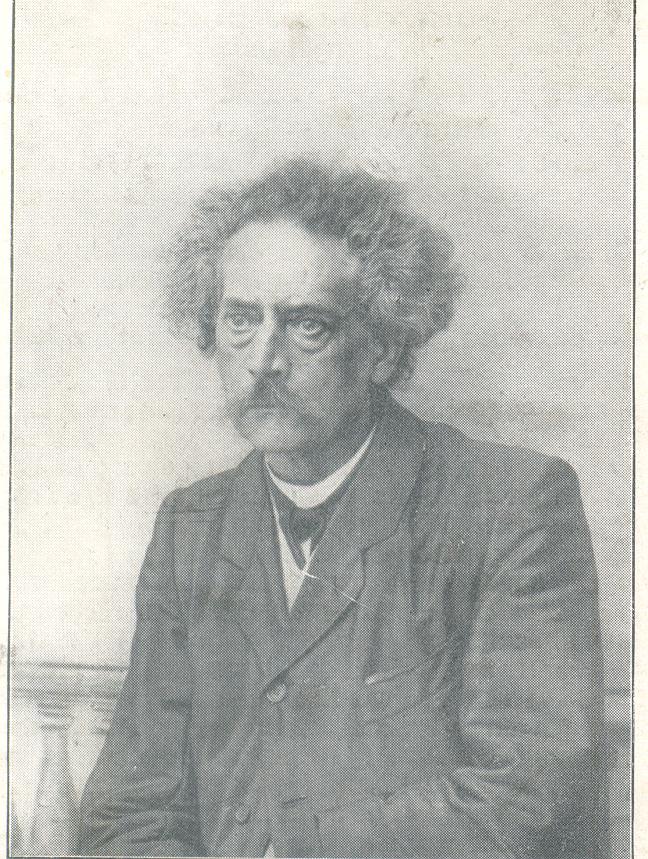
After his college years in Eeklo, Jef Tinel studied as a sacristan-organist in Sint-Niklaas and from 1903 to 1907 he studied at the Lemmens Institute in Mechelen organ, harmony, counterpoint and fugue with Aloys Desmet (1867-1917) and of course with Edgar Tinel. Arthur Meulemans (1884-1966) was one of his fellow students.
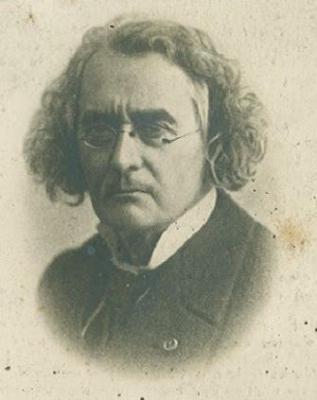
Around 1912, Jef Tinel perfected himself in composition with Leo Moeremans (1861-1937) who taught at the conservatory in Gent. There he met, among others, H.G. D'Hoedt (1885-1936) and Robert Herberigs (1886-1974) as fellow students.
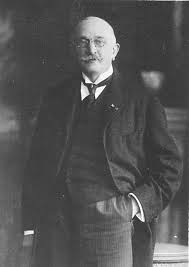
In 1935 he obtained the diploma of music teacher in secondary education. This versatile education offered him many opportunities for a rich and varied career.
A career in 2 major spheres
A successful period took place from 1908 to 1944.
From 1908 to 1929, Tinel was organist successively in Zele, Maldegem and Sint-Amandsberg.
After a stay in Tielt (1929-1936) as a music teacher, music merchant and accountant, he returned to Maldegem to become director of the music school from 1936 to 1944. It was crescendoing…
During this period, Jef Tinel conducted various brass bands and choirs (e.g. Ypres mixed choir and the Maldegem 't Daghet in het Oosten) with which he performed inside and outside the province, on the radio and even abroad. He was repeatedly asked to be a jury member for choir and brass band competitions alongside important musicians such as Paul Gilson, Jaak Opsomer and Karel Candael.
In the Flemish Movement, Jef Tinel made a name for himself alongside figures such as Jef Van Hoof, Emiel Hullebroeck, Remi Ghesquière, Renaat Veremans, Gaston Feremans and Arthur Meulemans as a composer and conductor at the Flemish-National song festivals and IJzerbedevaarten. He was for a time bandmaster of the Verdinaso of Joris Van Severen.
This latter led in 1944 to a suspension from all his positions. After an internment of 13 months in Gent, he was released and was acquitted ab initio of all charges. But he was meanwhile 60 years old…
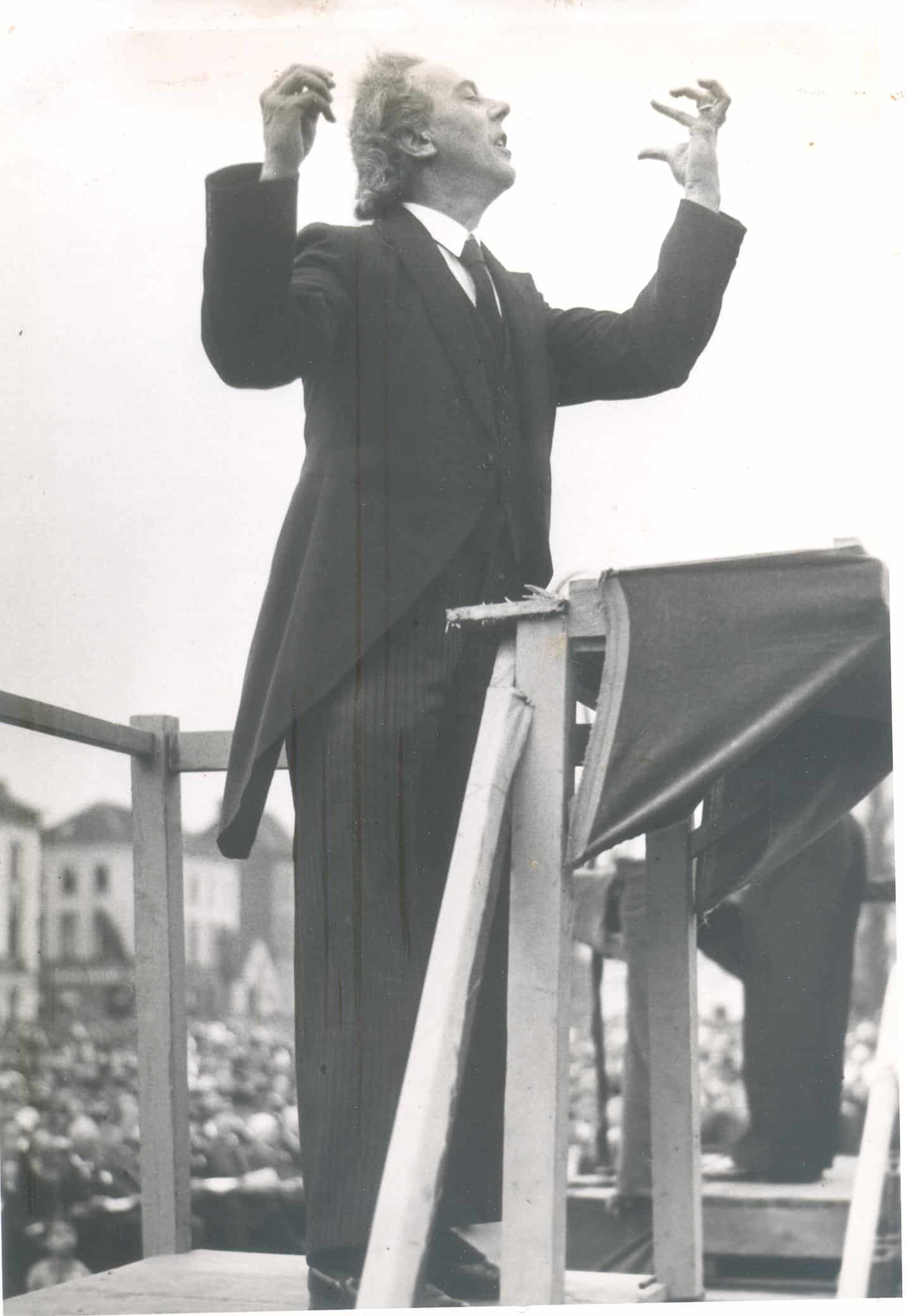
Nevertheless, an interesting and busy period followed from 1948 to 1967.
'Master Tinel', as he was called in the Sint-Stefanusparochie of the Augustinian fathers in Gent, found his footing again and resumed, mutatis mutandis, his former activities as organist, choir director, music teacher for the young friars, conductor at singing festivals and IJzerbedevaart and jury member in various competitions.
Willem Demeyer, composer Lieven Duvosel and music critic Berten De Keyzer became close friends as did composer Jean Douliez and artist Renaat Saey. Among the younger generation of singing festival conductors (Armand Preud'homme, Wies Pee, Fernand Van Durme and Lode Dieltiens) he was held in high regard.
Music inspector and conductor Jef Dispa also became a friend of the house.
Dispa had his own string orchestra and organized a tribute concert Tinel in 1955 at the Gent conservatory on the occasion of his 70th birthday, together with a choir conducted by Gent organist Omer Van Puyvelde.
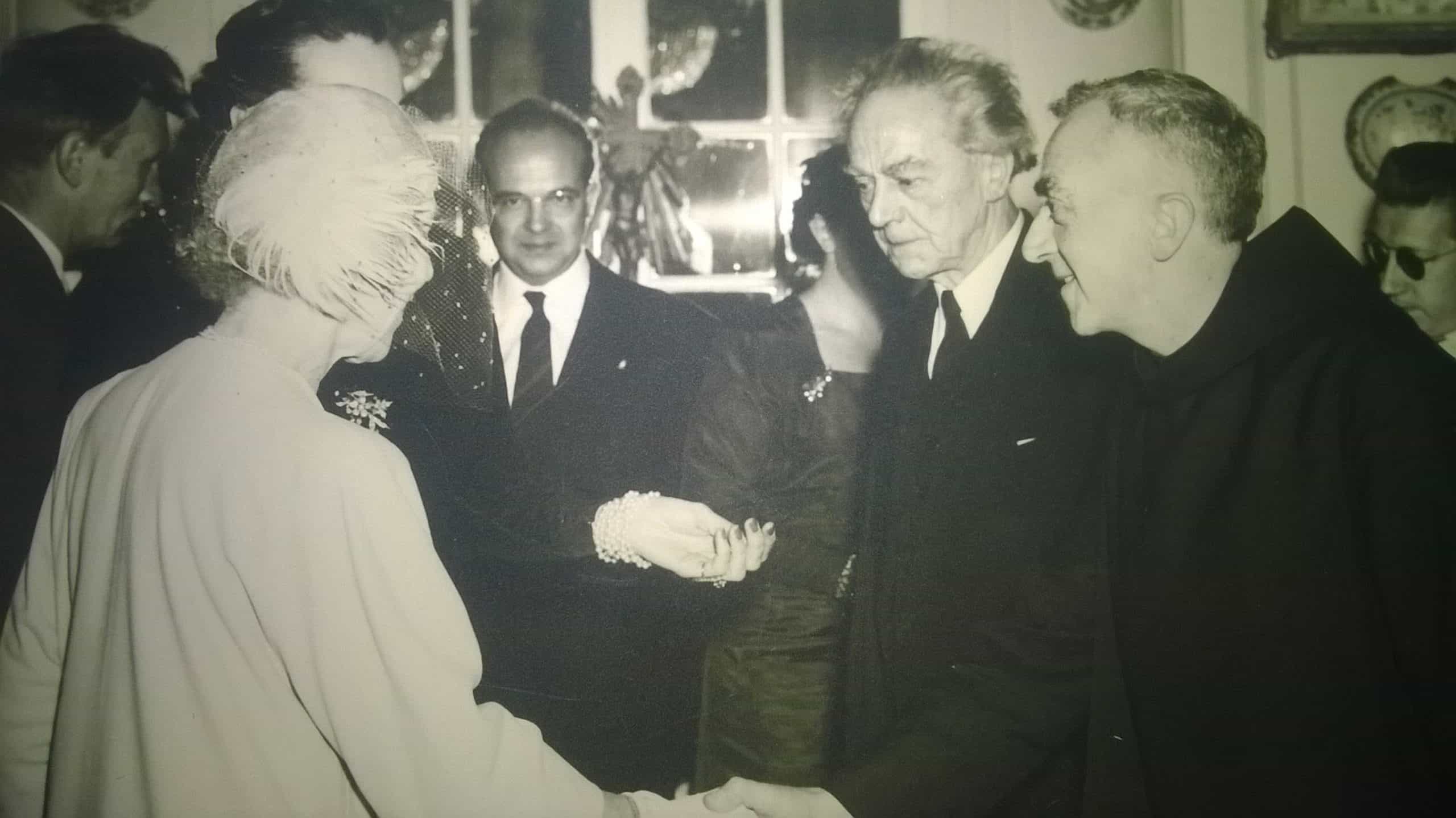
Still in the 1950s Jef Tinel was a guest several times during the artists' weekend at castle Drie Koningen in Beernem with countess D'Hespel. He even met Queen Elisabeth there.
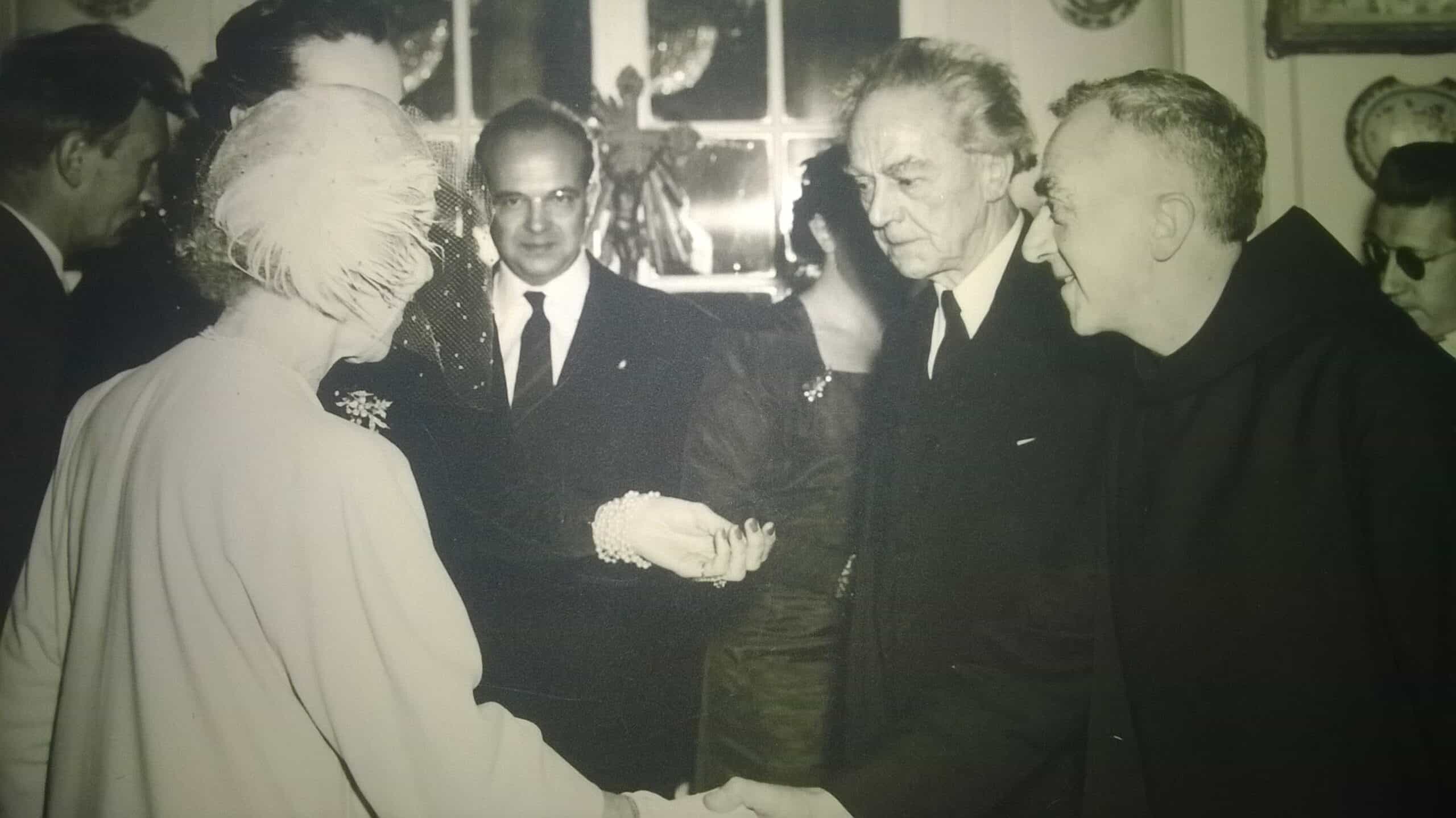
The day before his appearance as conductor at the singing festival in 1967, Jef Tinel suffered a stroke. This marked the near end of all his activities. A long and painful illness led to his death in 1972.
Composer Jef Tinel
Songs
In the Algemene Muziekencyclopedie Jef Tinel is listed as a song composer. Although this description is too one-sided, it is correct in that he received wide recognition with his songs.
First and foremost, we think of the songs for the singing movement of Willem Demeyer. Text providers included Wies Moens (Vlaggelied), Roger Lammens (Wij zijn bereid), Steven Debroey (Waakt op), Eugeen De Ridder (Nieuwe jeugd), Lode Lichte (De koene vendels), Willem Gijssels (Mijn Vlaanderen), Karel Robma (Vlaanderens schoonste dag), Albrecht Rodenbach (Daar waren drie tamboers) and others. Some of these songs were published by the ANZ, Roelanduitgaven and the Davidsfonds.
In the ANZ journal Harop, pedagogue-composer-conductor Wies Pee published a contribution on teaching a song. He used Tinel's 'Wij zijn bereid' as an example because according to him it met the requirements of a good folk song in terms of melody, rhythm and text placement. The Waas musician Fernand Van Durme compiled a collection with songs about the Waasland. From Jef Tinel he included 'Hymne aan het Waasland' in it.
But there was more: from the beginning of his compositional activities, art songs occupied an important(er) place in his oeuvre. He wrote art songs on texts by, among others, Guido Gezelle (Beêvaertlied, Heer mijn hert is broos, O ene uit al,… Jef Tinel ranks among the top 10 of composers who worked on Gezelle texts in terms of number of compositions.), Alice Nahon (Menschenoogen, Geloof), Jan H. Eeckhout (Aan de stilte, Alleen het leven), Pol De Mont (O kom met mij in de lentenacht), Hubert Buyle (Sicut lilium), Marcel Breyne (Avondvrede), Willem Gijssels (O moedertje), Jos Impe (Stabat mater), Fons Vandemaele (Sneeuwvlokjes) Yvonne Waegemans (Angelus, Klaagliedeke, Mijn zangerke), Herman Broeckaert (Daar leefde ne keer een kwezelken), Leonce Reypens (Wees dankbaar), Karel De Gheldere (O kon ik), Albert Vermeire (Moeder, Goên avond klein Bietje), Broeder Dorothé (song cycle around the church year), Cyriel Verschaeve (Maria's wiegeliedje), pater Desiderius Stracke (Biddend rijst mijn hart), Emiel Fleerackers (O moeder met de maagdenkroon)…
Commentaries by Hullebroeck, Van Nuffel, Wilford and Moortgat on his songs were not to be scoffed at. They saw in this 'Flemish Schumann' one of the most important representatives of his generation. Lieven Duvosel called them 'real pearls'.
Moortgat, Hullebroeck, Wilford and publishers De Ring, Averbode and Davidsfonds published some piano pieces, organ works and songs.
Choral music
Jef Tinel composed, alongside this large number of songs, quite a lot of religious and secular choral music for male choir, equally voiced and mixed choir.
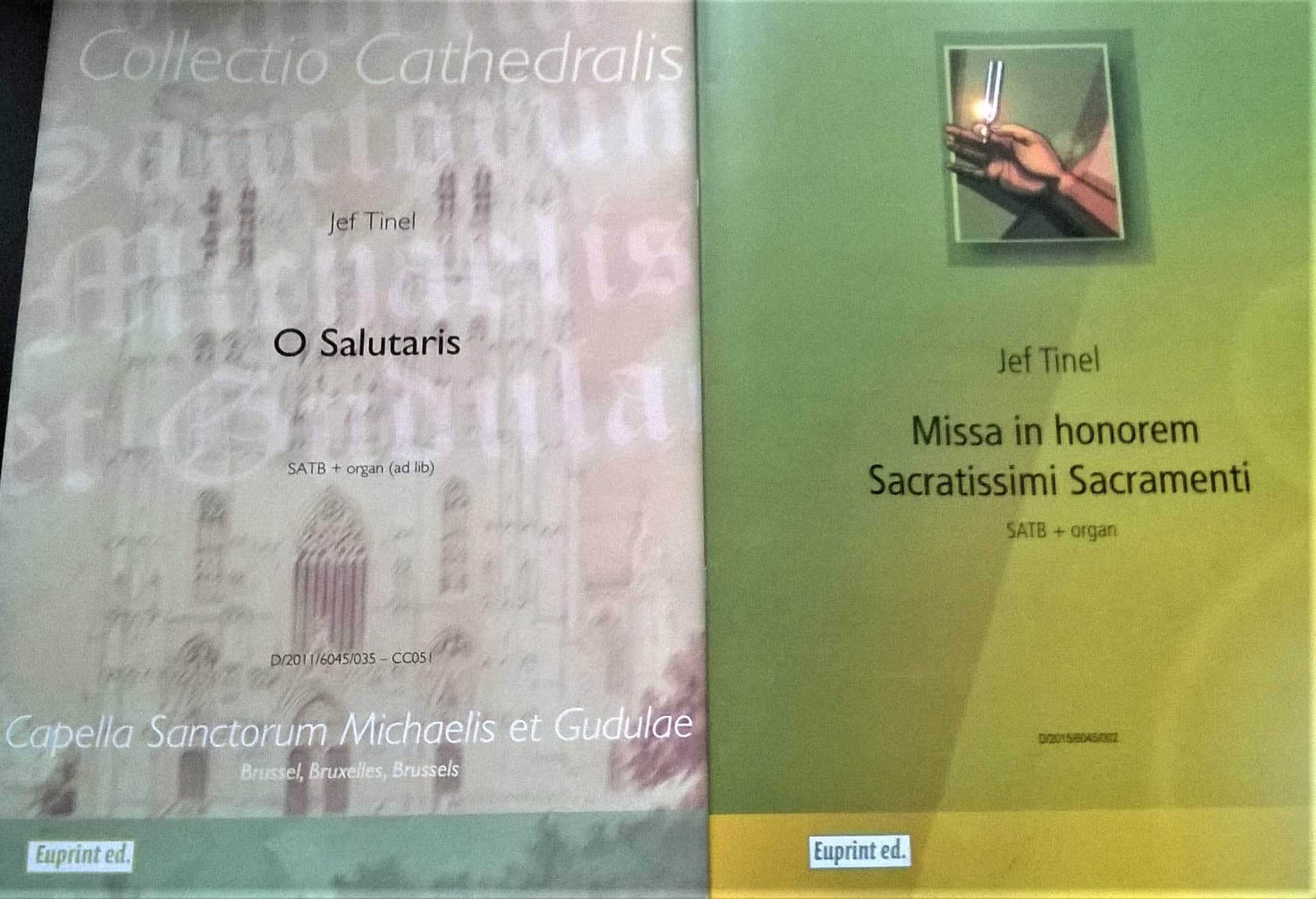
Important are the 6 masses (e.g. Missa in honorem sacratissimi sacramenti from 1915 and the Missa Salve Regina from 1960 for mixed choir and organ; Missa in honorem Sanctae Lutgardis from 1921 for three-part male choir and organ and 3 masses for equal voices and organ), a whole series of motets (including O salutaris hostia, Tu es sacerdos, In te speravi, Pie Jesu, Terra tremuit, Tantum ergo, Adeste Fideles…), 6 religious choral works on texts by Guido Gezelle and Keer dine oghen on text by Servaas Daems.
Kurt Bikkembergs arranged a publication of the Sacraments mass and the motet O salutaris hostia a few years ago and performed them several times with the Brussels cathedral choir. He called these works 'a flash of genius'.
From his secular choral works we mention Fantasia (Albrecht Rodenbach), Leg op mijn hart uw voorhoofd (Pol De Mont), Twee kinderen (Lodewijk Dosfel), 't Was in de blijde mei (Guido Gezelle), Truike (Lambrecht Lambrechts) and En 's avonds (folk song text).
He arranged various Christmas, Beggar and folk songs for choir.
Alongside a strong interest in vocal music, Jef Tinel also showed considerable enthusiasm for instrumental music.
Organ and piano
As an organist he naturally wrote a great deal of music for 'his' instrument: Aanbidding, Ach hoe vluchtig is het leven, Andante, Cibavit, Gaudeamus, Gaudeamus voor O.L. Vrouw, Improvisata, In exitu, In stille aanbidding, Ite missa est, Jubilate, Koraal, Scherzo, and various fugues, variations on Gregorian themes and Christmas songs and chorale arrangements.
In Tinel's religious choral music and in the organ music the influence of the Lemmensinstituut is noticeable: classical and strict form, rich melodies, no bombast or experiment, fine harmonies and interesting organ parts.
For piano he composed a few suites, Drie scherzo's, Sprookje, a collection of 62 pieces (Herinneringen uit mijn jeugd) walses, Mazurka, scherzos, ballades and numerous small intimate, descriptive and narrative pieces as we also find in Mortelmans, Van Hoof, De Jong, Durlet and his teacher Edgar Tinel. Fluent and melodic, playful, cheerful, atmospheric and finely harmonious.
For piano and violin he composed 3 sketches (Wiegelied; Zomeravond and Sprookje).
Orchestral works
Less well known are the orchestral works of Jef Tinel.
During his period in Tielt he conducted bands and fanfares. It is therefore logical that he composed for that instrumentation. Symphonic poems such as Marcia funebra, Spokendans and variations on folk songs Het daghet in den Oosten, Reuzegom and Het loze vissertje.
In Maldegem, in the 1940s he turned to the symphony orchestra. He composed two orchestral suites. Fantasia voor trompet en orkestbegeleiding and Herdenking for large orchestra.
In the 1950s, under the impetus of Jef Dispa, Tinel began composing for string orchestra. He wrote a Suite voor strijkorkest, Miniatuurtriptiek voor strijkers, variations on the folk song Het viel een hemels douwe and Ballade.
Some solo songs received new accompaniment for strings and the choral work Als 't bruine veld was written for mixed choir and string orchestra. For his best-known popular songs he also wrote orchestrations for large orchestra.
Theatre music and cantatas
A separate part of his oeuvre is the music for theatrical plays (biblical and mystery plays) on texts by Jef Crick, Jos Vandenberghe and Toon de Mindere. These are compositions for orchestra, choir and soloists.
Most successful was Fra Angelico. It was performed several times from its creation in 1926 until the late 1970s. Besides that, he wrote music for De blindgeborene, De verloren zoon, De verrezene, Arnoldusspel and Mozes.
During his study period in Gent he composed the Halewijncantate for choir, soloists and orchestra on a text by Raf Verhulst. Later he composed a few occasional cantatas for equal voices and accompaniment: Christus' dood en verrijzenis and Jubelcantate.
Conclusion
As a composer, Jef Tinel clearly sought and found his own path.
He was not an expressionist, not an impressionist, opposed to experiments, not a bombastic romanticist…. He created an art carried by a fine poetry and a noble thought, coupled with a moving simplicity. But always strictly structured and expertly crafted with a personal harmonic color.
Gaëlle Deldime summed it up nicely in 2000 in her final thesis at the ULB when she wrote that Tinel was on the road his whole life for his Church and the people. This is evident from his compositions and activities.
In Gent and Maldegem there is a street named after Jef Tinel.
More info, audio fragments and scores:
- Category:Tinel, Jef - IMSLP
- TINEL, Jef (seniorennet.be)
- (18) Jef TINEL (1885-1972): Vlaams toondichter - YouTube
- Jef Tinel - Wikipedia
— text by Peter Leys