
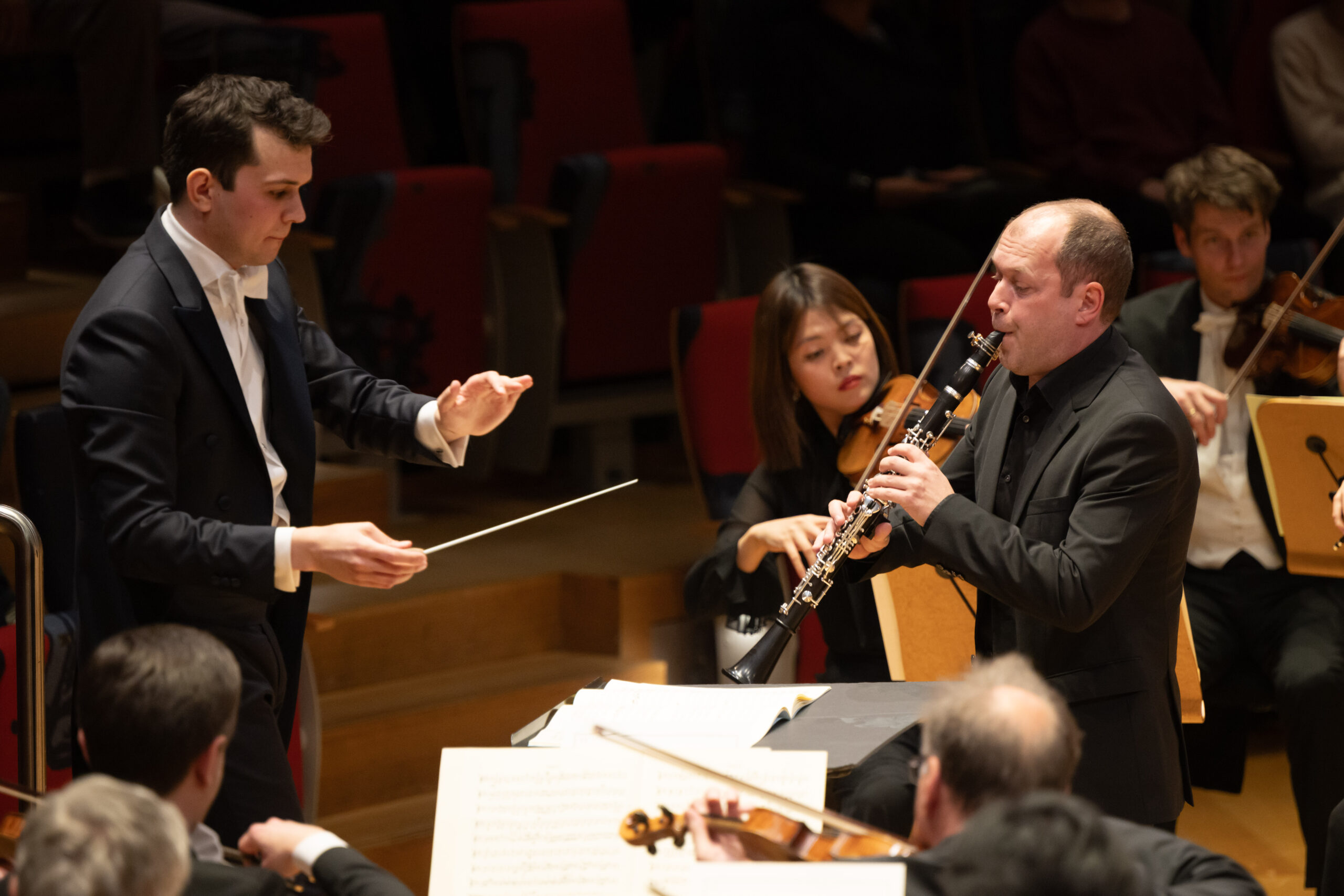
It is a familiar occurrence at Pierre Boulez Saal in Berlin: a program that does not aim for effect or prestige, but for concentrated listening. This concert too, with the Staatskapelle Berlin on 15 April under Tim Fluch's direction, fit seamlessly into that profile. The dramaturgy was not a random succession of works, but a carefully constructed line, in which Wolfgang Amadeus Mozart (1756-1791), Carl Maria von Weber (1786-1826) and Ege Gür (°1998) mirrored each other around questions of style, memory and sonic identity. From the opening, the energetic commitment was striking: musicians and conductor played with visible pleasure and intensity, with tight entries and alert reactions within the ensemble.
Classical articulation and romantic breath
Mozart's overture to Die Entführung aus dem Serail opened the concert lightly, but with an underlying tension between style and meaning. Fluch respected the rhetorical sharpness without over-accentuation; after all, the "Turkish" color remains a stylized construction within a classically articulated orchestral image. The strings remained tight, woodwinds and brass responded with subtle irony. This made the overture sound less like an opera introduction than a compact reflection on cultural projection. The dark, layered sound of the Staatskapelle prevented superficiality and gave the whole a more psychological than anecdotal depth.
In Weber's Clarinet Concerto No. 2, the tension shifted to early romanticism, where subjectivity becomes more central. Soloist Tibor Reman opted decidedly for lyrical expression: his tone was vocal and breathing, with a melancholic color. He met the technical demands of the work effortlessly, with a matter-of-fact yet impressive combination of virtuosity and musicality. The dialogue with the orchestra was essential: the Staatskapelle formed a finely layered accompaniment structure in which motifs were subtly caught and reflected. The Adagio formed the center, where the clarinet moves between speaking and singing. Reman chose here for expression through phrasing rather than virtuosity; the line remained intense without sentimentality. The final section brought theatrical lightness and rhythmic energy, but without nervousness. The orchestra provided an energetic yet tightly controlled accompaniment, with a convincing interplay between fireworks and refined ensemble playing, without ever overpowering the soloist. Thus emerged a reading in which virtuosity never became an end in itself, but was entirely in service of a deeply felt musical narrative.
Fragmentation, resonance and symphonic seriousness
Gür's Effaced Figures shifted the perspective after the intermission toward fragmentation and transformation. The music moved between recognition and distortion and connected with a sonic world in which West-European and Oriental influences converge. Fluch and the Staatskapelle did not stabilize this instability, but let it exist within a transparent sound field without hierarchy. Thus emerged a layered space in which different temporal strata functioned side by side. The orchestral sound here remained less linear and strongly focused on color and texture; lines dissolved into sound fields. Dynamics worked as suddenly shifting breath. Within this sound mist, the musicians played with extraordinary concentration, with striking solos from cello and double bass and sharply articulated harp interjections.
Then Mozart returned with the Prague Symphony, which gave the evening a circular structure. Fluch approached the work seriously but not heavily, with tension building from harmony rather than tempo. In the Andante, the rhetorical lines received their full weight: speaking melody without anecdotalism. The Staatskapelle built a layered yet breathing polyphony, in which voices remained clearly defined yet flowed into one another. Striking was the playful precision in the ensemble playing and the audible pleasure with which the orchestra played, without this compromising concentration or inner tension.
The finale was energetic but controlled: not a virtuosity sprint, but a controlled building of tension that was held step by step. Fluch kept the drama consistently internal and avoided any effect-seeking. This gave the work a tension that grew from within. He proved himself a conductor with a clear future, precisely in the way he knows how to organize intensity without forcing it.
Continuity, perspective and listening experience
What determined this evening were not the individual works, but their mutual tension. The Staatskapelle Berlin switched effortlessly between styles without losing identity. An additional dimension arose from the changing seating position in the oval hall: before and after the intermission, the perspective shifted from behind the orchestra to in front of it, which noticeably deepened and nuanced the listening experience.
Thus this concert became a reflection on continuity and rupture: how Mozart, Weber and Gür each use sound as a meaning-bearer, and how a contemporary performance does not dissolve those layers, but lets them exist side by side – without ever simplifying them.