
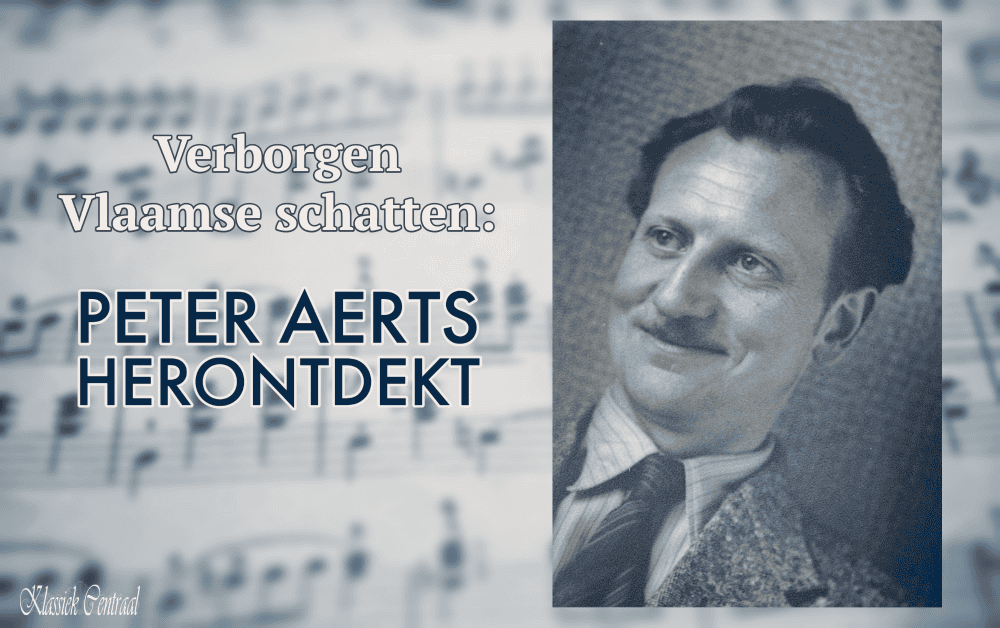
Flemish song has always remained somewhat in oblivion, in the shadow of dasdeutsche Kunstlied. Entirely undeservedly. An intimate genre such as the lied leaves room to explore the possibilities of the language and to musically showcase its richness. In the romantic 19th century, composers such as Philippe Vanden Berghe (1822-1885), Peter Benoit (1834-1901) and Jan Blockx (1851-1912) chose poems by their own writers in the vernacular. Although the phenomenon lived only on the margins, composers continued to believe in the musical possibilities of the Dutch language throughout the 20th century. One of the driving forces was Peter Aerts (1912-1996).
Today, 110 years ago, composer Peter Aerts (1912-1996) was born. The perfect opportunity to give this homegrown composer extra attention.
[caption id="attachment_33390" align="alignleft" width="199"]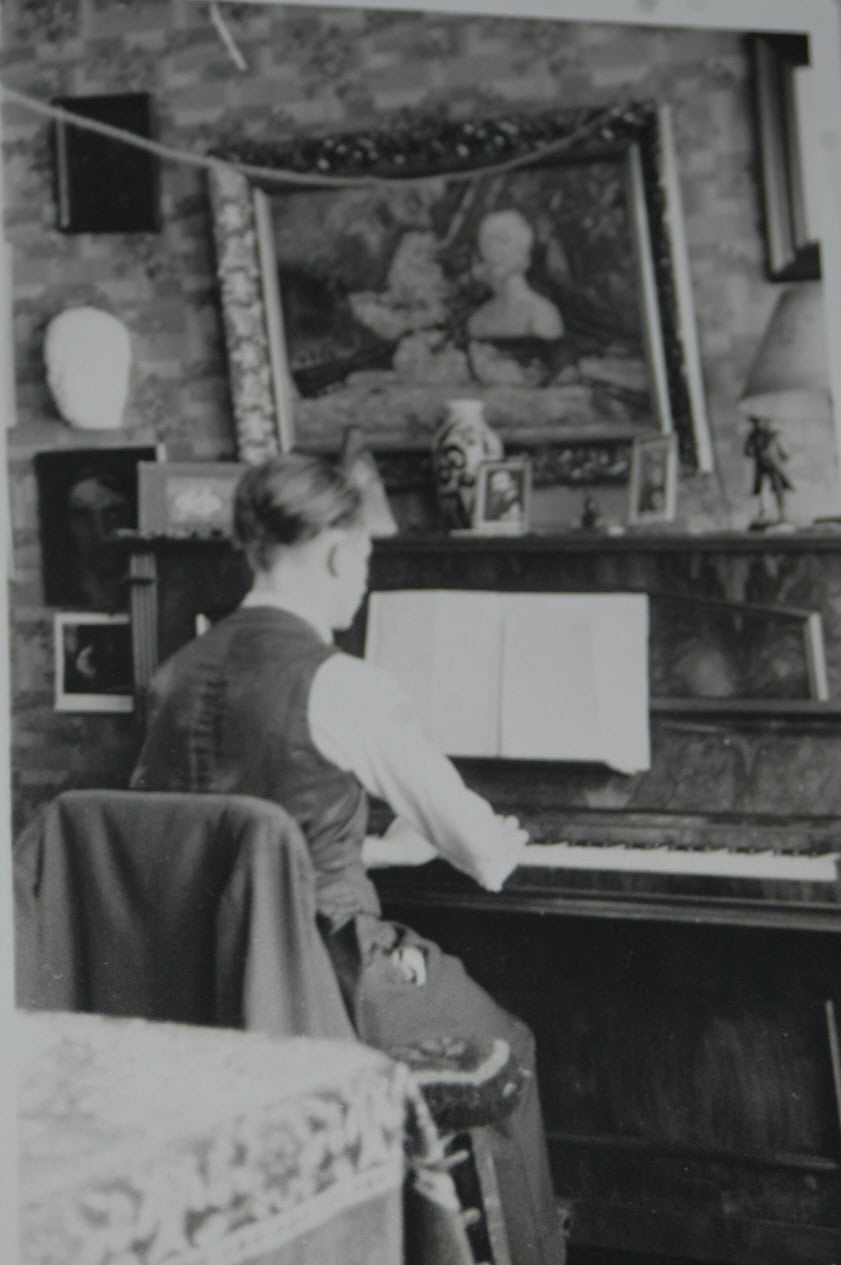 Peter Aerts at the piano
 presumably at the Vlaams Huis on 't Kiel (late 1920s-early 1930s)[/caption]
Peter Aerts was born into a musical family. From an early age he was surrounded by music. Aerts received his first piano lessons from his aunt Jozefa Aerts (1872-1958). His first 'official' studies began at the Koninklijk Vlaams Conservatorium van Antwerpen. After a break due to financial reasons, Aerts resumed his music studies at the conservatory and won first prize for music theory (1936) and second prize for harmony (1943).
During the period that Peter Aerts completed his studies, he was already growing into an important figure for musical life in and around Antwerpen. Thus in 1932 he succeeded composer-conductor Jef Van Hoof (1886-1959) — contemporary of August De Boeck and Lodewijk Mortelmans — as accompanist of the mixed choir Kunst en Vermaak in Borgerhout. Under Aerts' leadership, this choir achieved great success during the 1930s. In 1939 Aerts became conductor of the Sint-Niklase choir 'Jonc Vlaems Vri Vlaems'. As a pianist, he built a career as an accompanist to singers. This for both concerts, record recordings and radio broadcasts.
[caption id="attachment_33394" align="aligncenter" width="300"]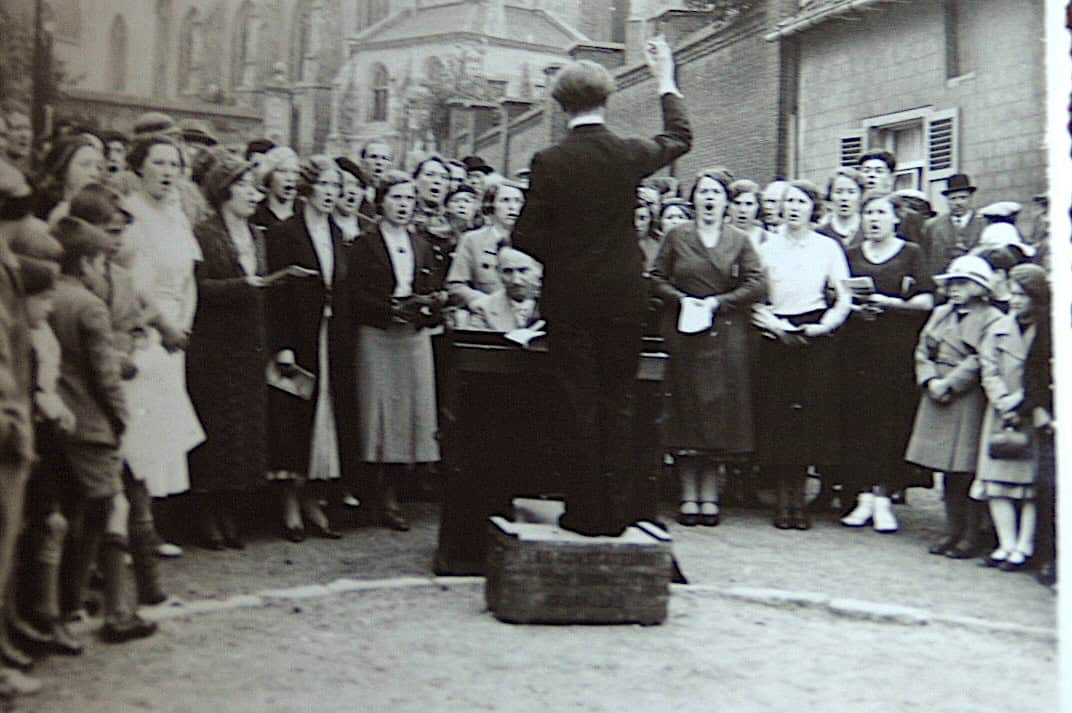 conductor of the choir "Kunst en Vermaak" (Borgerhout, early 1930s)[/caption]
An important figure for Peter Aerts' musical language was Jef Van Hoof (1886-1959). Presumably these two composers met around 1930 in Borgerhout. There was an immediate connection and mutual respect. Together they traveled as advocates of Flemish music for musical evenings and recitals throughout the region. Songs accompanied by piano were on the programme. Later Aerts reworked several of his own but also Van Hoof's songs into orchestral versions.
In addition to a professional relationship, Aerts and Van Hoof also developed a friendship. They met regularly at the Spokenhof, the cultural hub of Antwerpen where Van Hoof's circle of artists felt at home. Aerts was taken into the group and met among others Edgar Denhaene (journalist at De Volksgazet and librettist of Groen en Grijs), Prosper Verheyden (expert on old manuscripts) and Emmanuel De Bom (author and journalist). It was also at the Spokenhof that Aerts met his wife Angelina van de Cruys.
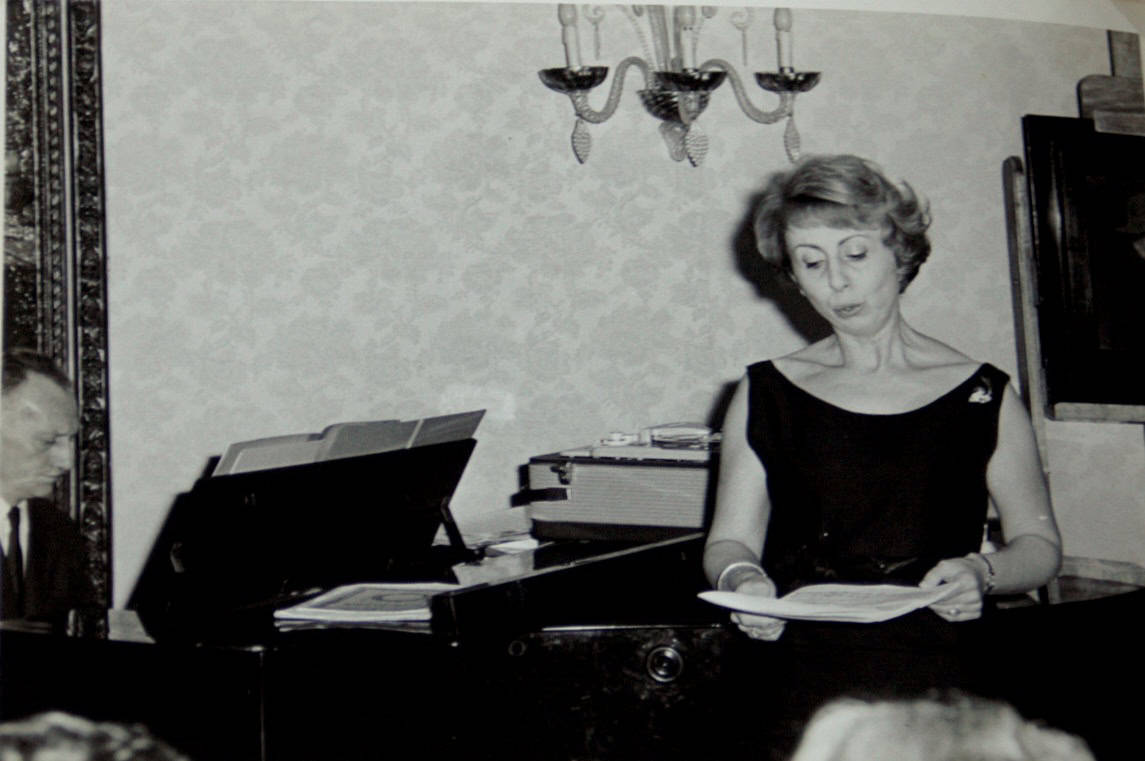
Previous Next
The art song holds a special place in his oeuvre. Possibly under the influence of his good friend Van Hoof, Aerts developed a preference for the lied. Aerts began a quest for the musical possibilities and limits of the human voice. In total, he composed more than a hundred art songs, children's songs and sacred songs and songs in the folk tradition. Both on Dutch as well as on German, French, English and South African texts. In his songs he departed from the possibilities of the text and the musical richness of the language. The vocal part was always accompanied by instrumental accompaniment that complemented the vocal line. As a much sought-after accompanist at lied recitals, Aerts knew how to provide the piano part with extra lyricism, a rich harmony that explored the boundaries of tonality and late-romantic gestures. This colorful language is also reflected in the later orchestral versions. With even more timbre possibilities he painted the words in musical sounds.
In addition to songs, Aerts also composed music for other genres. He composed the burlesque opera Groen en Grijs (1953) to a libretto by Edgar Denhaene, various choral works, works for solo piano, carillon, chamber music, symphonic works, fanfare, and the mass Missa Angelorum. For his choral composition Uchtend-Hymne (1955) he won the Provincial Prize for Music from the province of East Flanders, and with Metamorfozen (1978) the Prize for Carillon Composition from the city of Mechelen. Some of his compositions Aerts wrote under the pseudonym Piet Pech. He chose this name because misfortune always seemed to find him.
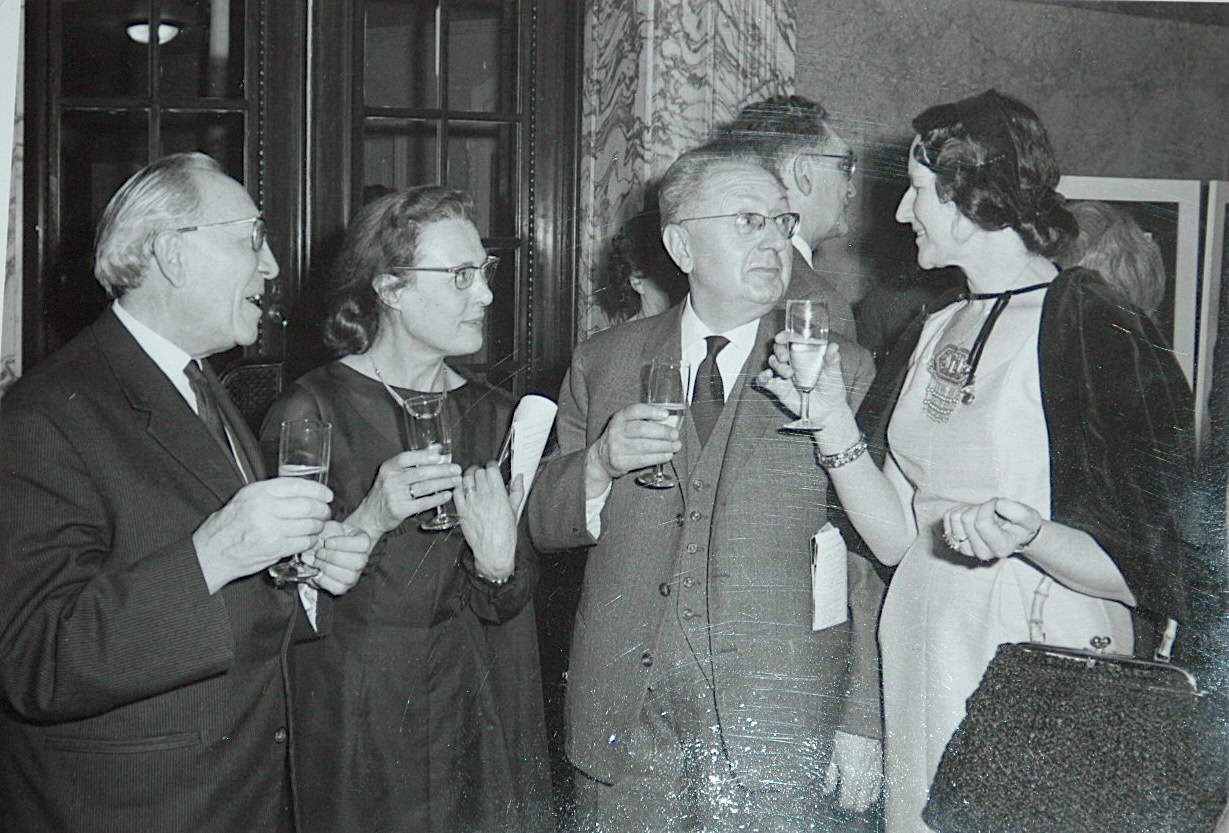
The daughter Helena Aerts donated almost the entire estate, including scores in manuscript, to Flemish research institutions. Since 2004, the library of the Royal Conservatory has kept the majority of Aerts' compositions. But in the archives of this library, these works are forgotten. Music should not gather dust but should be heard!
Only a few works are still performed and even fewer are available in recordings. Fortunately, occasionally a number of scores are still brought out from under the dust, including the autographed manuscript of In Flanders Fields under the label Phaedra (1), dedicated to music of our own soil. In this remarkable song, Aerts gives the war poetry of John McCrae from 1915 a strongly expressive vocal line. With remarkable care for text placement and phrasing, the poem comes to life. The inner musicality of McCrae's text comes to the fore. Aerts listens to how the words sing and translates them into sounds and colors for voice and orchestra. His orchestral style is reminiscent of the way Gustav Mahler and Hugo Wolf translate late-Romantic drama into the 20th century. Aerts plays with tonal boundaries while painting expressionistically with the orchestra's sound colors. Deep tristesse and lighthearted humor are intertwined. The result is a gripping and sublime whole. The Dutch tenor Peter Gijsbertsen delivers a moving interpretation in this Phaedra performance and knows how to sing the text with appropriate expression and intensity.
This song can also be heard in the original version with piano, sung by soprano Ann De Renais accompanied by her husband Daniël Schroyens at the keyboard. Daughter Helena Aerts released this work independently on cd in 2017, together with other admirable German and Dutch tone poems, such as Moederken and Droefgeestigheid.
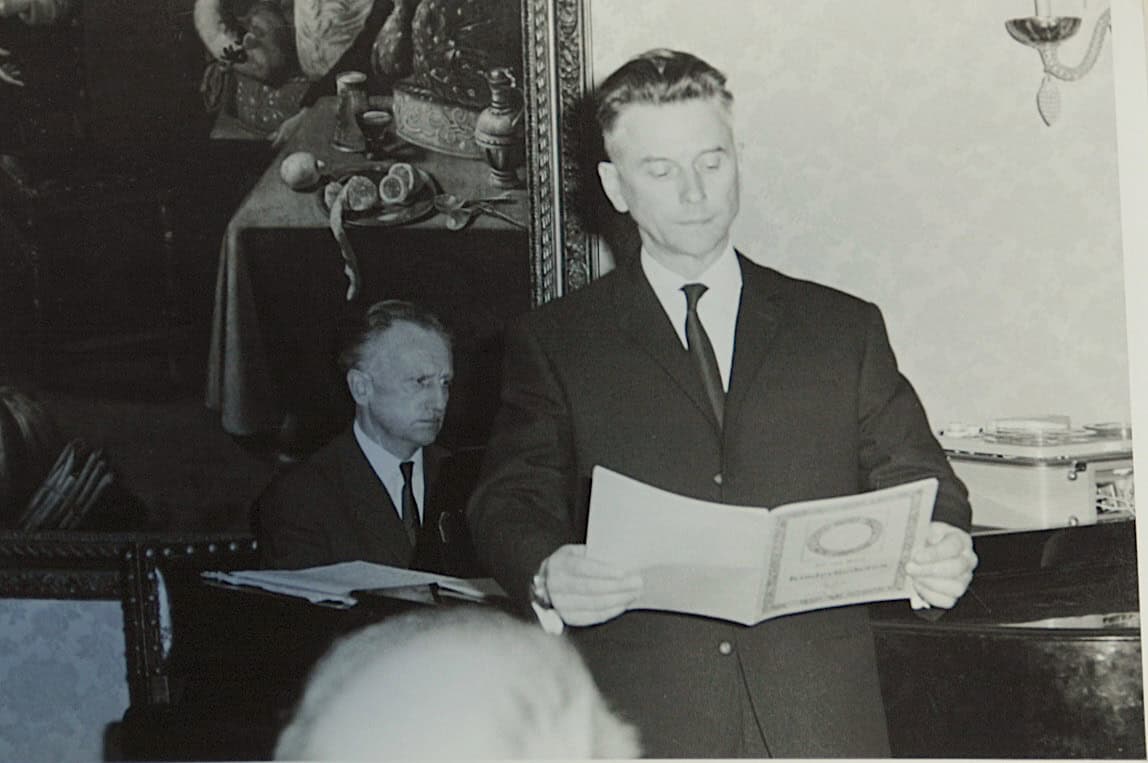
Peter Aerts with Stan Hodister Jef van Hoof together with Angelina van de Cruys at 't Spokenhof, and Leentje Peter Aerts at the piano with children around him. Leentje second from the right in a checkered apron. Peter Aerts choir conductor of the "Kunst en Vermaak" (Borgerhout, early 1930s) Peter Aerts together with E. Van der Eyken and M. de Jong (11 September 1971) Peter Aerts at the piano. On the piano stands the portrait of J.v.H. and a score, an edition of De Crans (founded by E. Denhaene, Prosper Verheyden, Jef v.H. and the graphic designer Jos Léonard, from whom the title page is). On the wall hangs a death mask of Beethoven and a painting by D. Joacim. Peter Aerts (16 years old, ca.1928) Widow of L. Mortelmans and Peter Aerts together with R. Veremans, R. Bollen, R. Verbruggen, Mia Vinck and L. Jespers M.Byttebier together with A.v.d Cruys, Edgar Denhaene (librettist Groen en Grijs) and Magda de Groodt


(1) The orchestration of Flanders Fields was recorded thanks to Jan Dewilde at Musikproduktion Höflich München in the series the flemish Music collection