
Ode to Verdi and Speranza Scappucci
Opéra Royal de Wallonie Liège put a brilliant full stop to a fine opera season with Simon Boccanegra, by Giuseppe Verdi. Director Laurence Dale delivers a compelling and, above all, clear version of the complex story in monumental sets by Gary Mc Cann. Speranza Scappucci proves to be the fervent inspirer of Verdi's masterpiece.
As is often the case in Verdi's oeuvre, political and personal entanglements are interwoven and form a complex whole. Verdi composes the opera after his Paris opera Les Vêpres Siciliennes. The opera meets with moderate success at its premiere at the Teatro La Fenice in Venice in 1857. Verdi nevertheless loves his opera and in 1880, 23 years later, he reworks it together with librettist Arrigo Boito, whom he considers the right man for the job. From the correspondence during this collaboration comes the famous quote from Verdi: "I agree that the table wobbles a bit, but with improvements to a couple of legs it will hold up." At that point he already has plans for an Otello opera based on Shakespeare and he wants to test Boito, as it were, as librettist for that next major project. The reworked version of Simon Boccanegra at the Scala in Milan in 1881 is an enormous success. Following on from the previous quote, Verdi responds: "the broken legs of old Boccanegra seem to me to be splinted in the right way."
Previous Next
Story with a double layer
Simone Boccanegra, the sea captain who has cleansed the Ligurian and Adriatic coasts of African pirates, is put forward by the Genoese people for the office of Doge. In this function, Boccanegra considers it his task to reconcile the nobility (the patricians) and the people of Genoa – the plebeians – with each other. But he must deal with resistance from the patricians, represented by the nobleman Jacopo Fiesco. And there comes the personal strand of the story, for – from the prologue we have learned that Boccanegra once seduced Fiesco's daughter, Maria, and has a daughter by her. The child is lost. Later in the opera it emerges that she was raised as Amelia by the noble Grimaldi family. Simone discovers that Amelia is his long-lost daughter. After a story of betrayal and false accusations, Simone only reveals at the end of the second act that he is her father. After an uprising, Paolo is condemned as a traitor but he has meanwhile poisoned the doge. Only at the end does Boccanegra introduce his daughter to her grandfather Fiesco and he gives his blessing for Amelia's marriage to Gabriele Adorno before he dies. Gabriele becomes the new doge.
A simultaneously contemporary and classical production
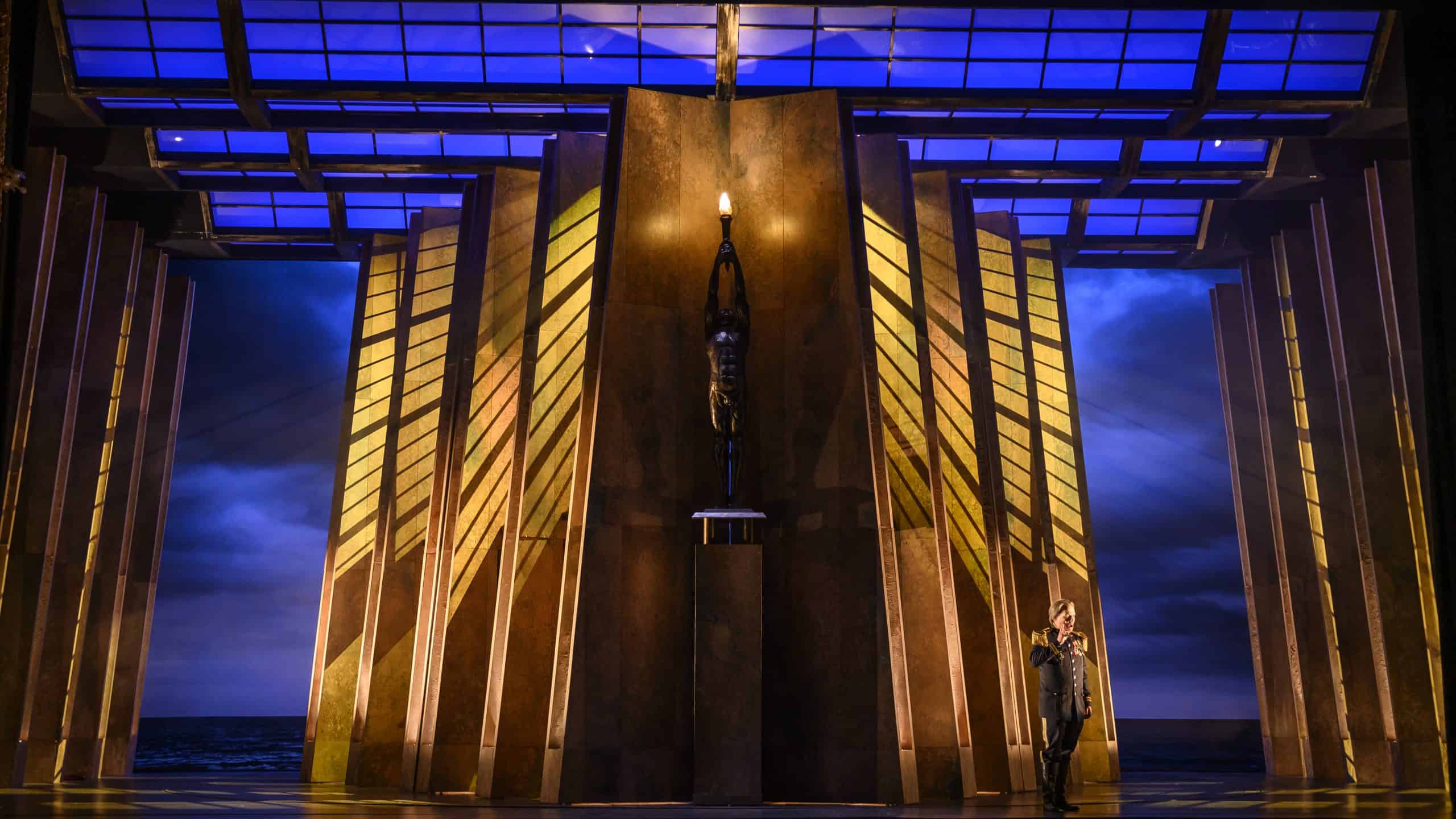
It is no easy task to clearly bring the complicated story of Simon Boccanegra to the stage. Director Laurence Dale has managed it admirably. What is particularly nice is that the opening curtain shows an evocative seascape, a backdrop that also forms the background for later scenes in the opera. The sea is indeed an aspect connected to the historic doge city of Genoa, the location of the story. The staging is perfectly worked out with both sharp confrontations and subtle gestures. For example, in the prologue there is the refined depiction of the death of Maria, Simon's secret beloved, daughter of Fiesco and mother of Amelia. The scene is dark and bathed in mourning. In the great scene of the Council of State, high tension is built through the correct positioning of the characters. A first highlight is Amelia's sudden intervention in defense of Simon (at a moment when it is not yet known that she is his daughter) and as a second highlight the curse that Simon pronounces over Paolo. (In a glance at Verdi's repertoire, it recalls the fierce and equally ominous curse of Marullo in Rigoletto). Equally convincing is Amelia's second intervention to save her father in the second act. The final scene offers a comforting image in all its tragedy. The political solution consists in the appointment of Gabriele as the new doge and the marriage of the young couple Gabriele and Amelia. And privately, Simon experiences, as it were, a peaceful end, united in love with the deceased Maria. A touching image as the conclusion of a gripping production. A veritable ode to Verdi.
Stylized set
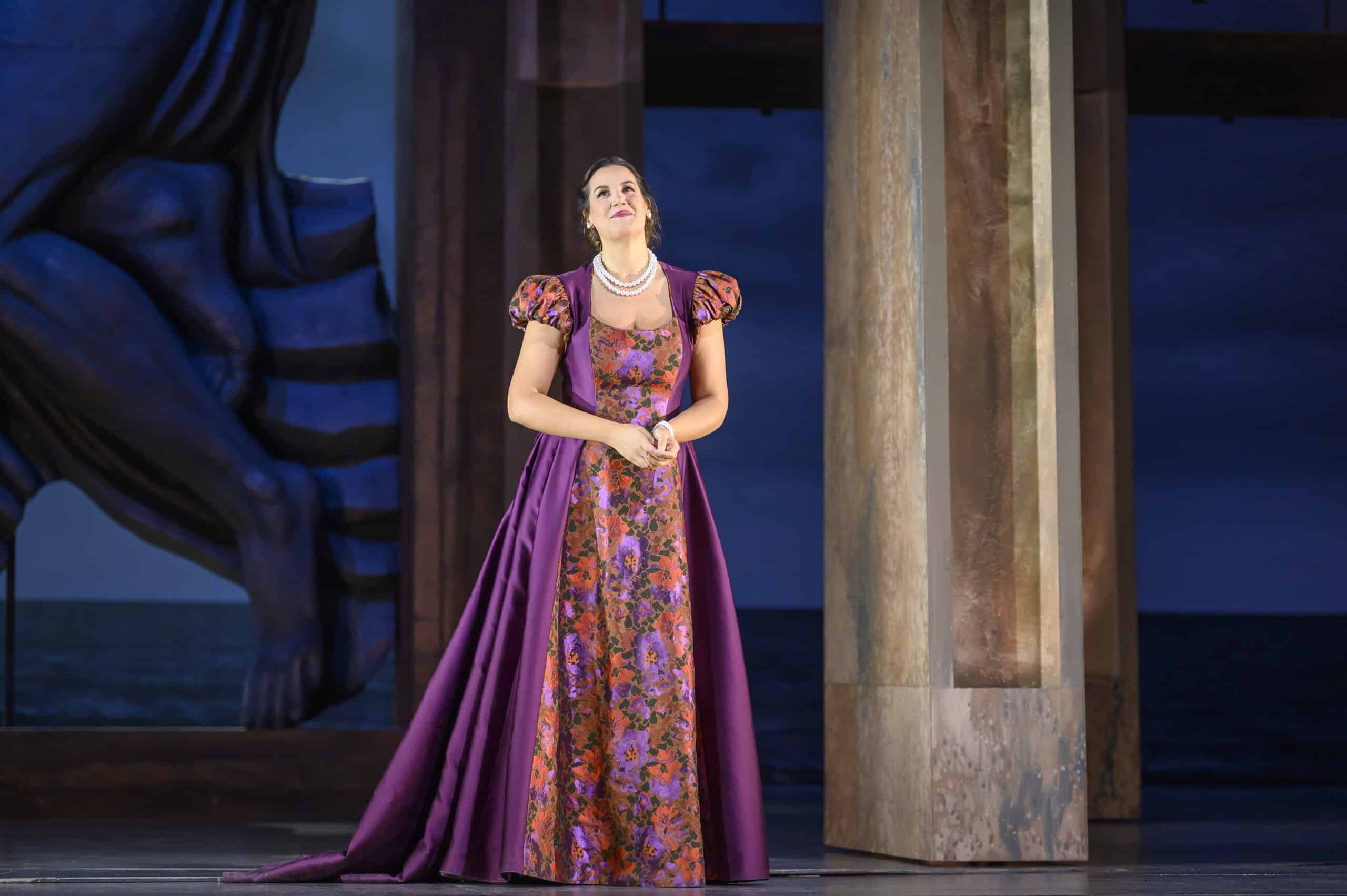
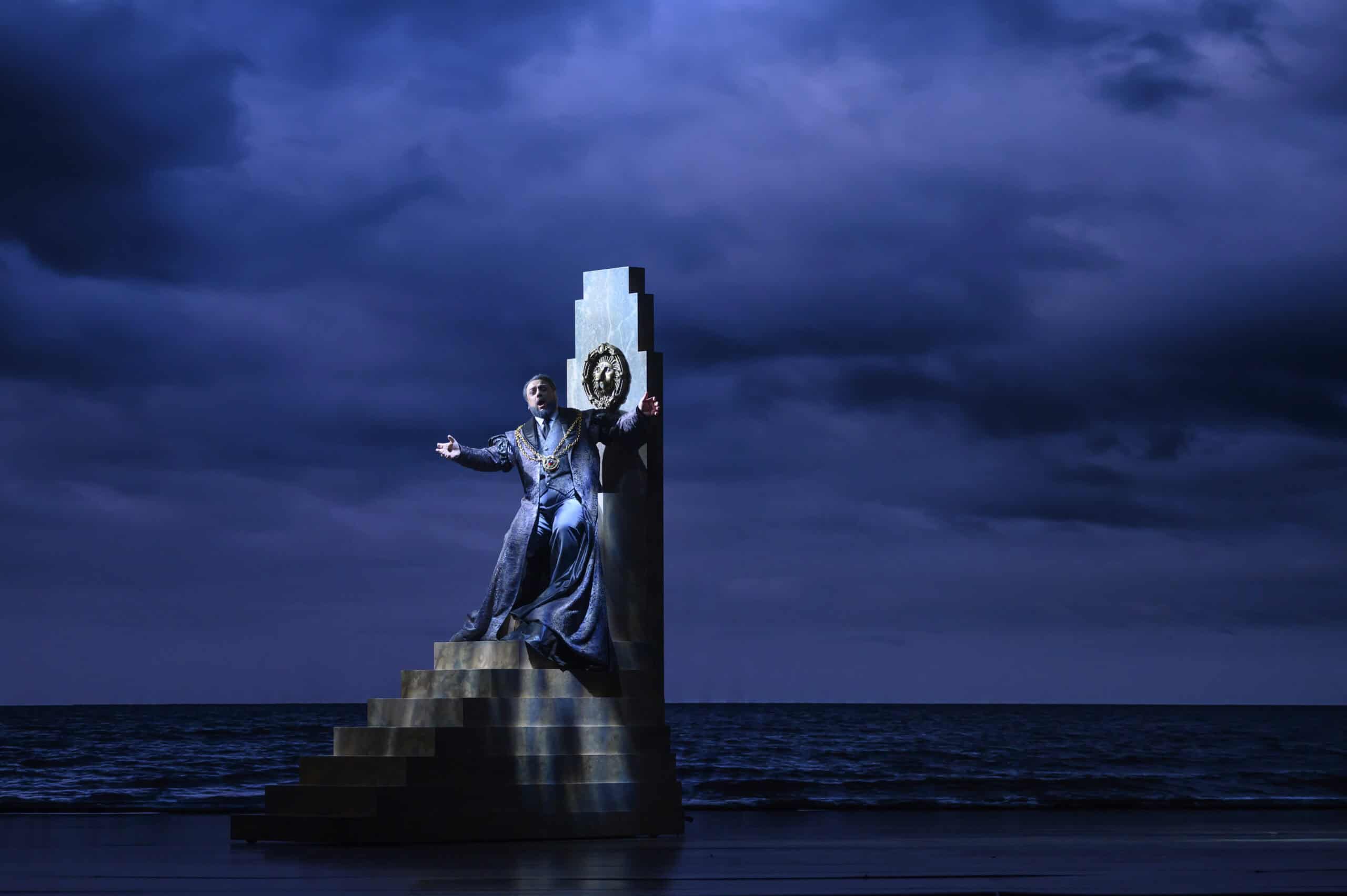
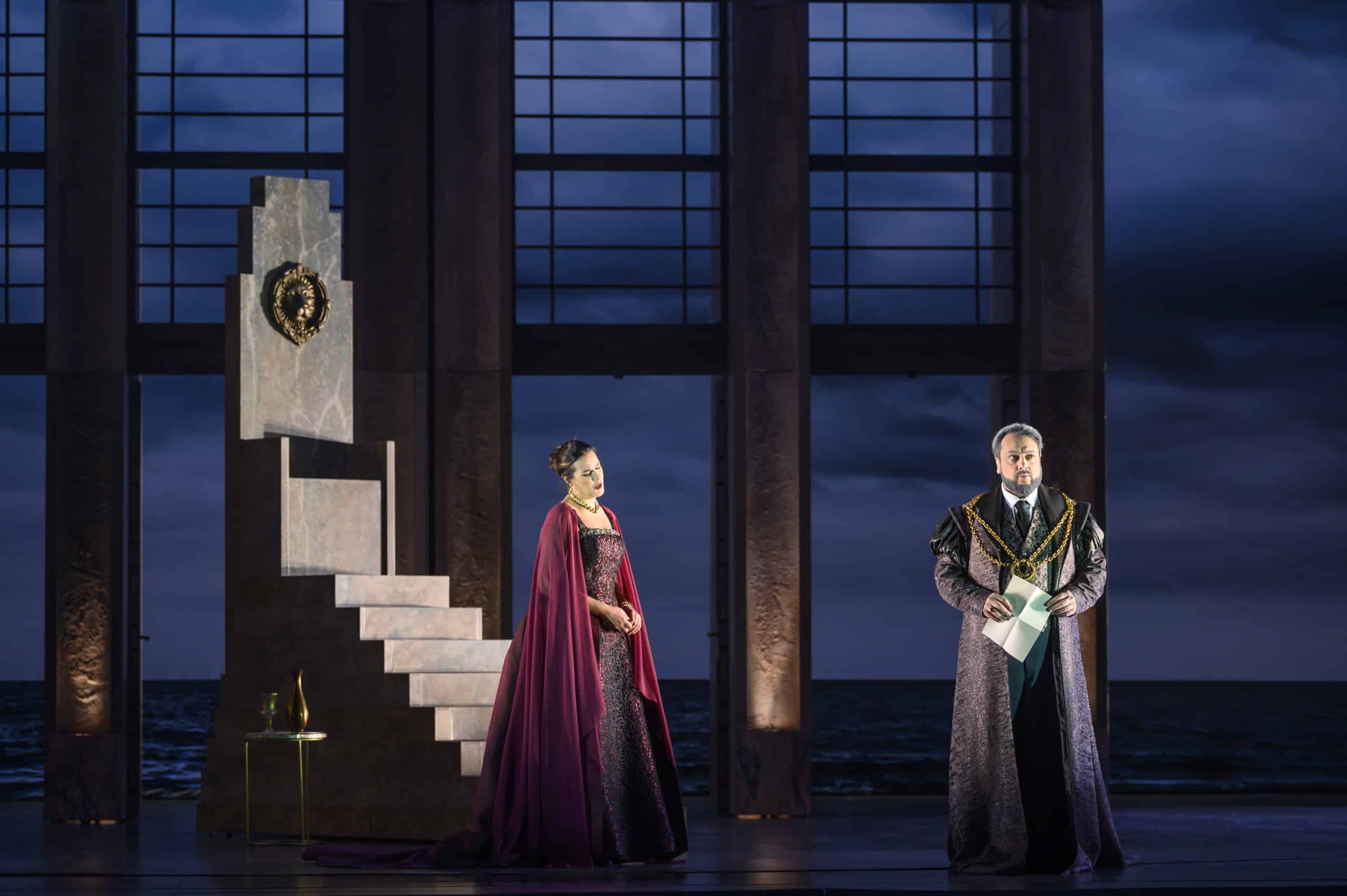
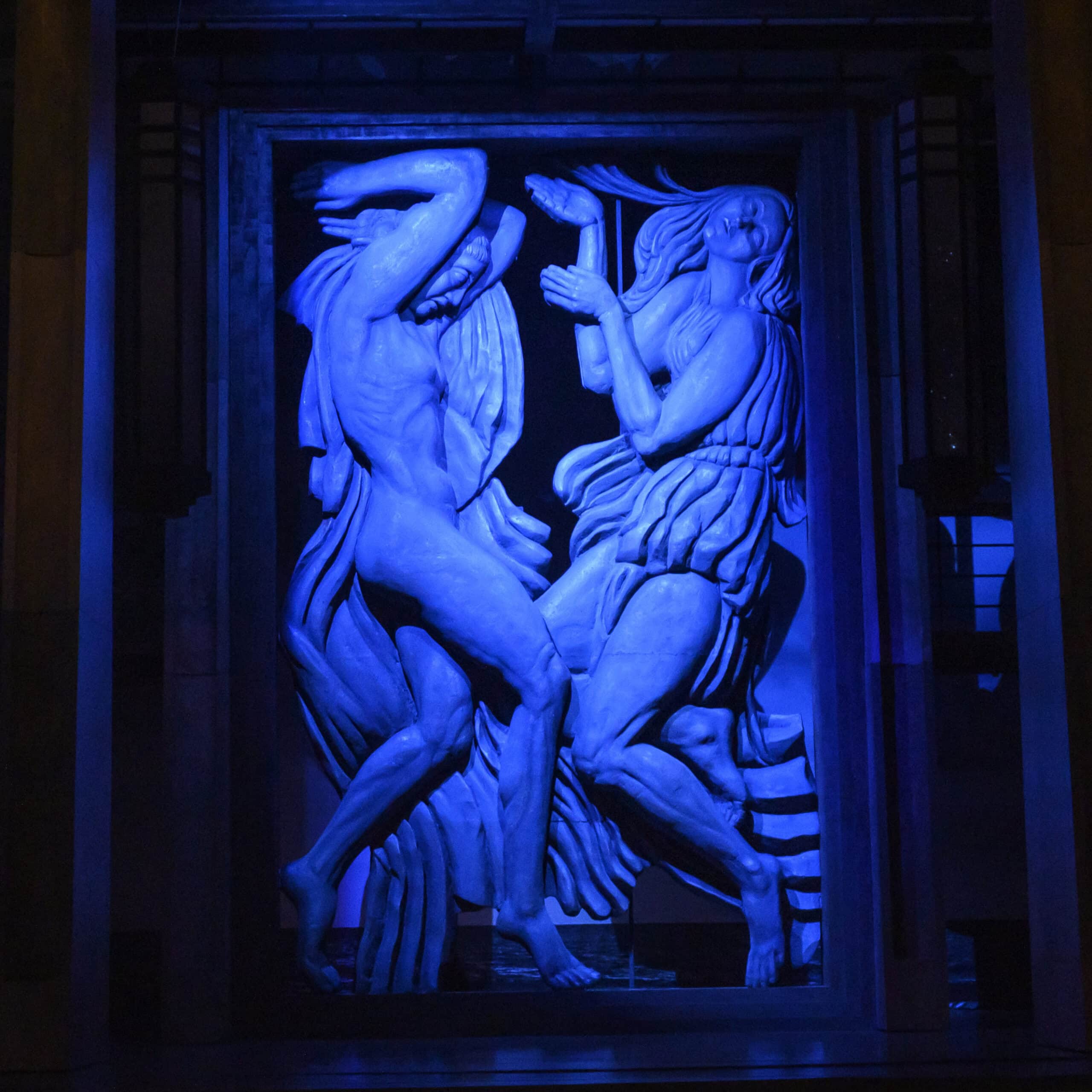
This successful production is of course also enhanced by the beautiful stylized decor. The doge's palace in art-deco style is versatile and offers the opportunity to suggest the various locations in a simple manner. The large lamps are splendid and the sculptures in the second act emphasize the aspect of private relationship and love. The space around the building's pillars provides the opportunity to let the outside scenes of uprising penetrate inward, without additional scene changes. The doge's throne in the third act, along with the stairs, is not only an expression of power and grandeur but also a symbol of distance and risk. Within the elegant decorative image, the stylish costumes fit equally well, in their elegance and reference to the bygone period appearing equally modern.
Gripping musical drama
Against the somber decor background described above, bass Riccardo Zanellato set a first vocal highlight of this rich score with the mournful lament "Il lacerato spirito" (the tormented spirit). With his warm bass and measured authority, Zanellato created a perfect Jacopo Fiesco. Lionel Lhote once again proved his flexible acting talent and voice control as the villain of the piece, Paolo. Marc Laho slightly disappointed as Gabriele Adorno. His voice remained flat and sounded monotonous even in the beautiful passage where he suspects Amelia of love for Simon ("O inferno!….Cielo pietoso, rendila"), and the vocal nuances required that Verdi composed for him did not always come through. As an actor too, he could not really make the passionate lover convincing. A pity, especially since we have heard his voice perform better in Liège. Federica Lombardi gave an elegant and confident character to her role of Amelia. In her opening aria "Come in quest'ora bruna"– that delightful opening after the contemplative prelude of the first act, a tribute to dawn at sea – she sounded initially somewhat sharp but she mastered her part with emotional depth and vocal colors (the duet with the doge). George Petean, who through his extensive repertoire might be considered an ideal Verdi baritone, performed Simon Boccanegra in all required aspects, the decisive ruler but also the sensitive father and friend.
To the musical feast in this Simon Boccanegra, the orchestra contributed greatly, under the leadership of the beloved departing conductor Speranza Scappucci. We have rarely heard the orchestra play so motivated, harmonious and compelling. Scappucci stimulates her musicians to their utmost ability and they clearly respond with pleasure to her stimulus. The sad-shimmering strings in the prologue, the beautiful oboes in the prelude of the first act and in the introduction of Amelia's narrative confession as an orphan, the lyrical duet between father and daughter, but equally the frenzy of the intense scenes including the overwhelming curse of Simon at the end of the first act. The mysterious trombones and timpani as Simon drinks the poisoned cup, the desolate horn melody, the motif in the trombones and bassoons in his death scene. These are individual orchestral highlights that Scappucci brilliantly draws from Verdi's score. That the orchestra responds to it so sublimely can only be interpreted as a tribute to an appreciated and respected conductor, from whom they bid farewell as chief conductor! An ode to Scappucci, who also received exuberant applause.
- WHAT: Giuseppe Verdi Simon Boccanegra
- WHO: Direction: Laurence Dale
Conductor: Speranza Scappucci; choir director Denis Segond
Cast: George Petean, Federica Lombardi, Riccardo Zanellato, Marc Laho, Lionel Lhote - WHERE: Opéra Royal De Wallonie Liège
- WHEN: Sunday 19-6-2022
(to be seen until 25-6-2022)
© J. Berger © J. Berger © J. Berger © J. Berger © J. Berger © J. Berger


