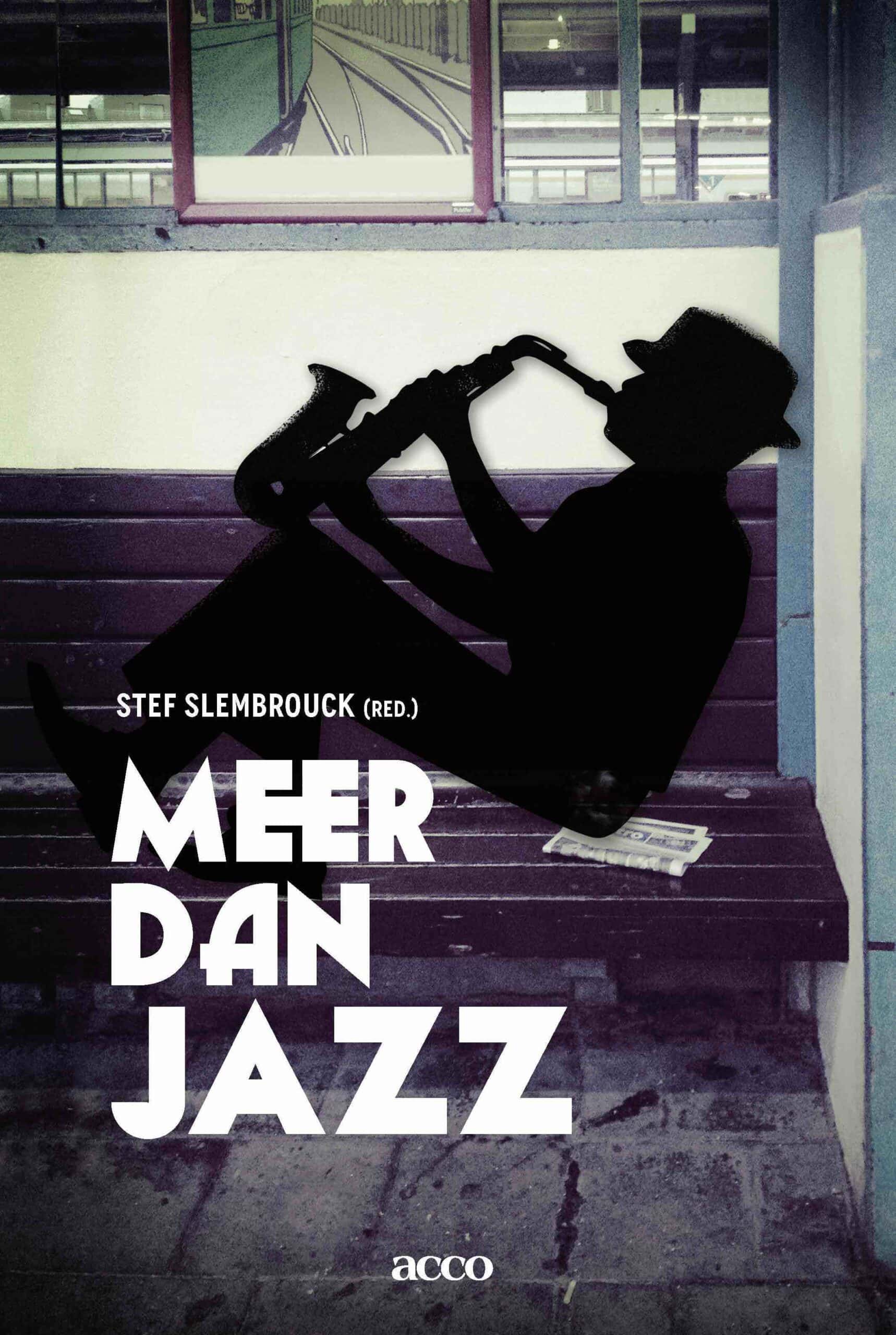
And yes, jazz has also caught the attention of serious composers: in 1918 Stravinsky already came up with his Ragtime, Georg Antheil wrote "A Jazz Symphony" in 1925, and later there was Shostakovich with his two Jazz Suites. And jazz too, just like classical music, has its "iron" repertoire. But hasn't jazz, with its improvisations on those many American Songbook "standards," become a museum music genre, tied to a bygone era? A professor of linguistics at Ghent University sought out a select group of jazz companions to describe that exceptional 20th-century music genre with him from a multitude of angles. They each do so from their own expertise: musicological, historical and art historical, sociological, journalistic…. The title is therefore "Méér dan Jazz" edited by prof. dr. Stef Slembrouck.
All this based on an academic lecture series he organized at Ghent University. What prompted it? The hundredth anniversary in 2017 of jazz music. At least if you take the appearance of the first recorded album in 1917 in New York as its birth year. But is it still successful or accessible in its contemporary forms? In a first chapter, musicologist Maarten Weyler tries to help us understand how those jazz musicians work. It is indeed the most difficult chapter but also the most thorough. With an explanation of how a "song" is put together musically, which chords can accompany it, etc. He compares various performances of a "standard," sung versions and instrumental ones. Jazz turns out not always to be "easy listening." But you are helped with references to Youtube videos where one thing or another can be easily found and listened to. A more than excellent analysis, also about improvisation and instruments. With, for example, an extremely precise description of what a rhythm section or drum kit can mean: and how that works with those "brushes," "sticks," "snare drums," "cymbals"….. A fine piece of jazz instruction.
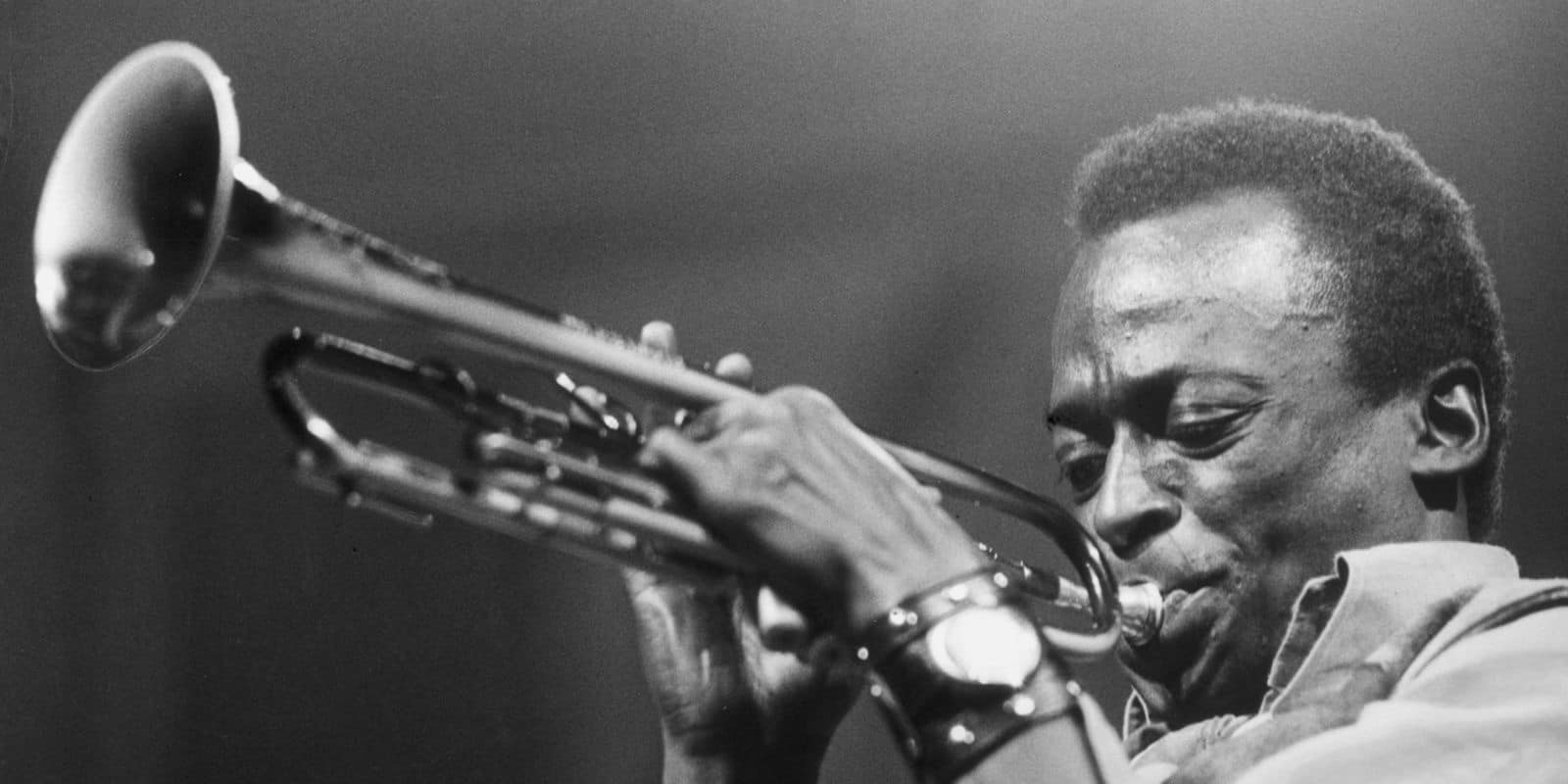
Musicologist Marc Leman (IPEM-Ghent) talks about "listening to jazz." That sounds simple but it isn't. He researches it scientifically. What music does to our body. And yes, with jazz you often can't sit still, that's correct. Academic studies on this exist and have even produced the concept of "embodied music cognition." In his lab there are motion sensors and cameras, neuroscience and mathematical models. Highly technological research. Fortunately there is also the anecdote about how Miles Davis moves his big toe and what that does for synchronization between the musicians and jazz fans, for their body and brain.
Easier and more pleasant to read is the story by Matthijs De Ridder about how the Jazz Age spread throughout Europe. Be careful, here a literary scholar speaks and travels along the literature of that time for that purpose. And he also passes by "Jazz in little Belgium." It is full of lesser-known information about jazz history during that interwar period. And very instructive too about the evolving career of Paul Van Ostaijen. How the poet-activist, fleeing from Berlin where he had taken refuge, preached his popular revolution: jazz and dada. How it should be done, he described in his film scenario "De bankroet jazz." A beautiful piece of forgotten Flemish literary history! As a finishing touch you also get how jazz was dealt with in a couple of novels from other Western European countries.
A separate story comes from Christopher Hall from London where jazz also arrived far removed from the "homeland…." Was there room for a European jazz there, for example in that famous jazz club of Ronnie Scott? In that London jazz scene there were, according to him, four important musicians and he portrays them briefly: the immigrant Jamaican Joe Harriot, (mixing Caribbean music with "free form jazz"), the white South African Chris McGregor who with his mixed jazz groups like the Brotherhood of Breath challenged the apartheid regime, the influence of rock and pop music via John McLaughlin and London improvisation music with figures like Derek Bailey and Evan Parker (both also welcome guests in the Bruges temple of free jazz, "De Spiegel" of Maurice vande Vannet, where I often saw them at work.)
About how important technology has been for documenting jazz, teacher and researcher Matthias Heyman tells us extensively: from early piano rolls via 78s and the longplayer to sophisticated recording studios and the role of sound engineers (like Rudy Van Gelder). About how important radio was in the United States in the thirties for the popularization of swing. And about the consequences for the emergence of bebop during the musicians' strike in the conflict over copyright. With, also in jazz, attention to "historical performance practice."
Jazz and film is a treat for film historian Pascal Vandelanoitte of LUCA Brussels. You'll learn everything about the use of jazz in films: as accompaniment to silent films, about sound film and biopics about jazz musicians. Also how that music was often associated with sexual and moral decay. Attention also to different film genres: "film noir", the difficulties in the States in bringing white and black musicians/actors together during times of segregation. And also about the European "nouvelle vague" with iconic films such as "Ascenseur pour l'échafaud" (with Miles Davis) and the soundtrack of "A bout du souffle". I would also add "Odds against tomorrow" as a film noir with that intriguingly dark music by the Modern Jazz Quartet.
It is a literary scholar, Sarah Posman (and that is evident from the attention to the written word alongside the played music) who in a separate chapter tries to get a grip on voracious John Zorn. Jazzman, yes, but also so much more. Saxophonist and perhaps even more of a sort of ideologue of his own avant-gardism and who tries to articulate that as well. Musically he does that by playing in constantly changing formations with which he sets up his projects. And he writes that down in the essay "Memory and Immortality in Musical Composition" which is discussed extensively here. Also read the interesting pages about his Jewish identity that John Zorn rediscovers with his group Masada.
In a fluent and clearly written contribution, Didier Wijnants, long-time jazz critic of De Morgen, introduces us to a very special figure. He situates in a small monograph the life and work of pianist Andrew Hill. According to him, this jazzman stands in the tradition of Thelonius Monk but also grows beyond it to evolve into an idiosyncratic and sometimes bizarre sonic world. He also studied composition with Hindemith and was a university lecturer for a time. Picked up by the new record label Blue Note he achieved particular success. With his piano playing he brought a new swing to the free improvisation jazz of that time with his "characteristic refusal to land precisely on the beat". An "anti-metronome" writes Wijnants, with "tilting music". A very beautiful portrait by a big fan of the "well-kept secret" Andrew Hill.
And how I would have loved to be at that interactive masterclass by the trio of Ben Sluijs with which this lecture series was concluded. You might be able to experience something of it if you read in the transcript of what happened how their playing, the explanations that went with it and the dialogue with the audience present truly turned out to be an improvisatory experiment. Central was the question improvisation, what is that now, "playing in the moment"? Choosing from many possibilities what feels good, also in relation to the people you play with.
With "More than Jazz" this book does not deliver yet another jazz history or another photo book about the genre. Quite a few academics populate this book, but it is a thorough piece of work that lets you discover many unknown aspects and figures of that music. What makes it unique? The approach to this phenomenon from a scientific research interest we read. That's right. Recommended!
WHAT: "Meer dan Jazz"
WHO: Stef Slembrouck (ed.)
PUBLISHER: ACCO