
Twenty-seven years ago, a festival emerged in Berlin that distinguished itself from the many international music festivals Europe has to offer. Young Euro Classic wanted not only to provide a platform for the continent's best youth orchestras, but above all to create a place where music brings people, cultures and generations into contact with one another. That starting point has barely lost its significance over the past decades. On the contrary: in a time when, as Gabriele Minz puts it herself, many people view the world with uncertainty and feel that everything threatens to fall apart, the festival's original mission perhaps sounds more timely than ever. This edition confirms once again that classical music can be much more than an artistic experience alone. It creates a space where young people from different parts of the world truly meet each other, learn to understand one another and, without grand words, experience that a shared musical tradition remains one of the most direct answers to division.
This is also the undercurrent that continually returns in the conversation that Werner De Smet conducted for Klassiek Centraal with general director Dr. Gabriele Minz and project manager Carolin Trispel. Young Euro Classic was never conceived as a succession of summer concerts, but always as a meeting place where artistic excellence, cultural curiosity and international dialogue reinforce each other. Behind the impressive list of participating orchestras lies a vision that has barely changed since its founding: young musicians need not only an international platform, but equally a context in which they can meet each other without competition as a driving force, but with exchange as a starting point. In that sense, the festival has grown over twenty-seven years into an established fixture on the international festival calendar, without ever abandoning the original ideal that was the basis for it.
A European dream in Berlin
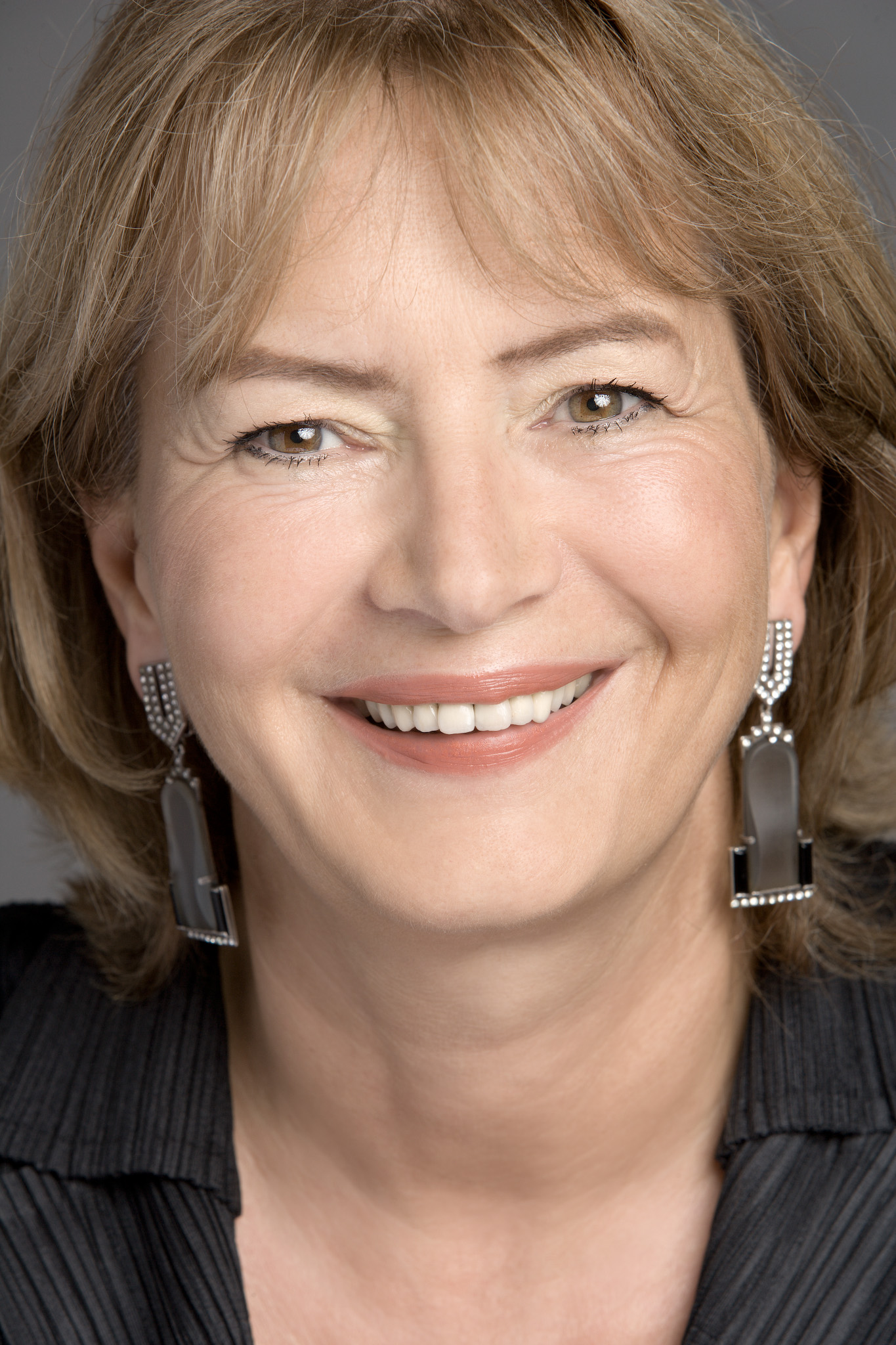 This thought originated in Berlin just after reunification, a city that was still very much seeking its new identity and at the same time growing into the symbol of a Europe where old borders began to slowly disappear. Against that background, Gabriele Minz and Willi Steul – then chairman of the Deutscher Freundeskreis europäischer Jugendorchester e. V., the association that lay at the basis of Young Euro Classic – developed the idea for a festival that would let the European idea speak not through political language, but through music. "When we founded Young Euro Classic as a private initiative, we especially wanted to keep the idea of a democratic and open Europe alive," says Minz. "We were convinced that music connects people with each other, regardless of national borders, generations or language." That conviction still forms the foundation of the festival. For this very reason, Young Euro Classic, twenty-seven years later, still carries that same core message, even though the festival has meanwhile grown into an event of much larger scale.
From the beginning, then, it was more than a festival in the classical sense of the word. It was to become a place where exceptionally talented young musicians from diverse countries and cultural backgrounds could meet at the highest artistic level, without competition setting the tone. The exchange of ideas, traditions and interpretations became the real goal, and Berlin proved to be the ideal place for this, not by coincidence. No other city carries the history of division and reunification so visibly, and it is precisely that tension that makes it a logical backdrop for a festival that does not want to confirm borders but to transcend them. From that same thinking also arose the Diplomatic Board, in which embassies of the participating countries continue to play not only a supporting but also a symbolic role in the international anchoring of the festival today.
What seems almost self-evident today was anything but at the start. The festival began as a one-time project around the millennium change, with no guarantee of continuation. That it still exists twenty-seven years later and enjoys international recognition was never foreseen. It was above all the reactions of audiences, press and musicians that convinced the initiators to continue building. In the process, there also grew an awareness that the original European focus was too limited to sustain the project's dynamism. Although the first editions brought together exclusively European youth orchestras, it soon became clear that musical tradition cannot be confined within geographical boundaries. "The European orchestral tradition has left deep marks worldwide," says Minz. "For this very reason, it is so interesting to see how different countries have adopted that tradition and given it their own voice." That insight, incidentally, grew not without resistance. The concept of a festival exclusively for youth orchestras was initially met with considerable skepticism and sometimes even viewed condescendingly. Few believed that young ensembles could captivate a broad audience over several weeks. The artistic quality of the participating orchestras has since amply refuted those doubts.
Thus Young Euro Classic grew into an international meeting point where orchestras from Europe, Asia, Africa, North and South America and Oceania meet each other in a shared context. The European classical tradition remains the starting point, not as a norm or boundary, but as a common language in which differences are allowed to be heard. What once began as a European initiative developed into a laboratory where diverse performance practices, musical backgrounds and cultural sensitivities continually influence and enrich each other. That international expansion did not move the festival away from its original mission, but rather strengthened it. Young Euro Classic today proves that artistic quality cannot be determined by age or origin, but by talent, conviction and the willingness to listen to each other across borders.
For this edition, Minz sums up the red thread of the programme in three words: Zuversicht als Klang – hope and trust as sound. In a time when many people view the world with uncertainty, the festival wants to show that music can give hope, can connect people and can help shape the future. Not naïve waiting, she emphasizes, but a motor to remain capable of action.
A festival that lets itself emerge
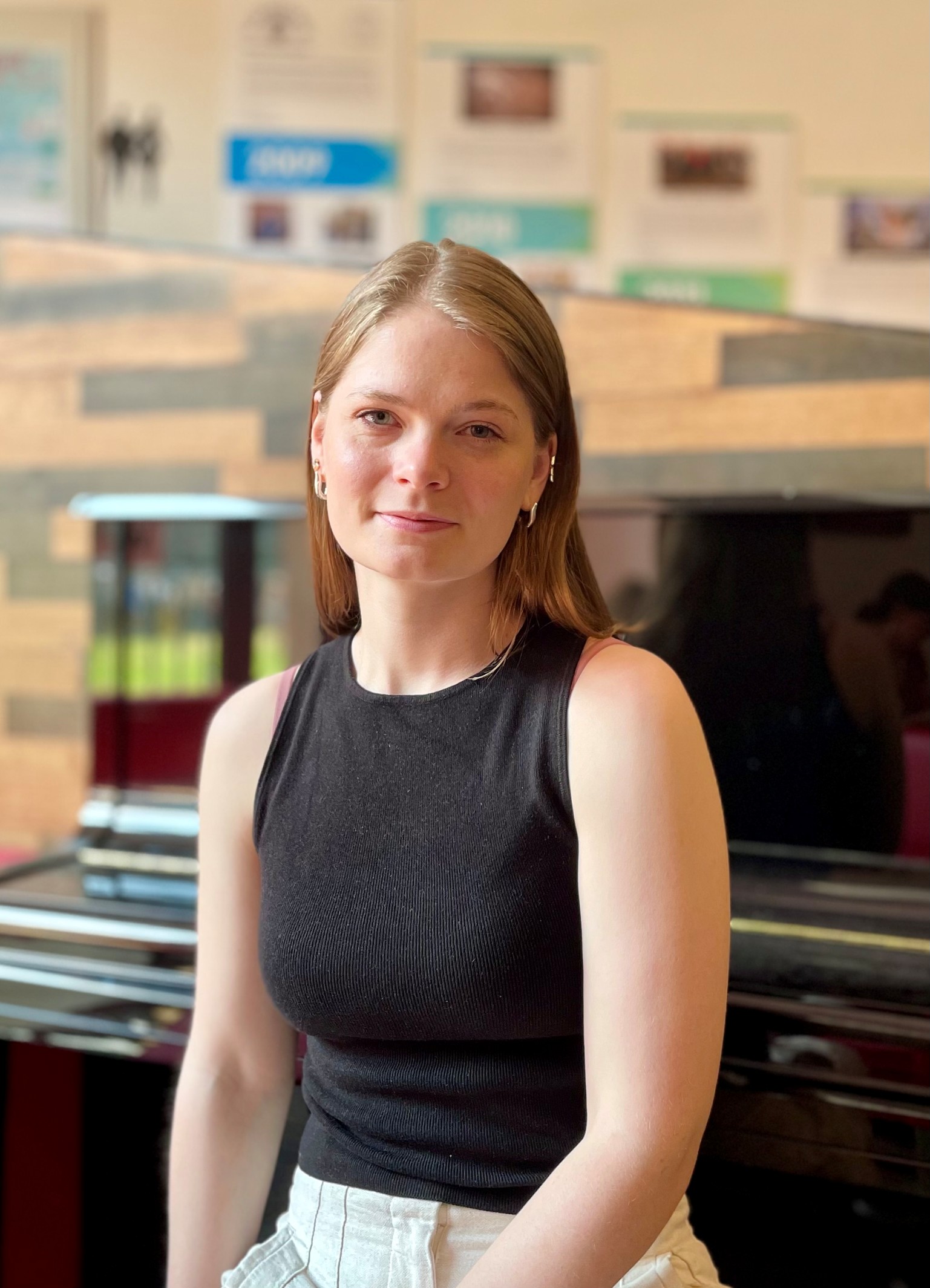 Artistic quality remains the foundation of programming today, though it is not imposed in a rigid format. In consultation with the artistic leadership – cellist Alban Gerhardt and Mathias Hinke – the orchestras largely determine their own programmes, soloists and conductors. Only a number of global guidelines ensure balance: a major symphonic work, a solo concerto, contemporary music and ideally a work from their own cultural context. "The orchestras are not just our guests, they also help determine the character of the festival," says Carolin Trispel, and precisely therein lies the uniqueness of the whole: the festival is not assembled as a programme, but emerges as a sum of artistic voices.
This philosophy is also consistently applied in the selection of orchestras. Artistic excellence remains the first criterion, but attention is also paid to international distribution and variety. Usually, the national youth orchestras apply themselves, but sometimes the organisation also takes the initiative to invite a special ensemble. Some ensembles return regularly, such as the European Union Youth Orchestra and the Bundesjugendorchester, which are invited almost every year because of their special significance for the festival, while others have the opportunity to present themselves in Berlin through a rotation system.
For many young musicians, such an invitation means more than a performance: it is a form of recognition, a confirmation that their career path is being seen, and often also a first step in an international network that will determine their further development. Some orchestras even came into being partly because of this ambition: the Portuguese Jovem Orquestra Portuguesa, according to its own account, was only founded with a view to an invitation to Young Euro Classic. For musicians who ultimately do get to play in the Konzerthaus Berlin, that remains a moment they will remember for the rest of their lives – not only because of the venue itself, but because it makes their years of work visible and acknowledged.
The audience is also an integral part of this dynamic. Over the years, the festival has built a loyal audience, some of whom deliberately plan their stay in Berlin during the festival weeks to attend multiple concerts. For many, Young Euro Classic has become a fixed appointment in the summer. At the same time, the organisation continues to seek out new generations through music schools, collaborations with Berlin districts and digital channels. Notable here is the openness with which this audience approaches the programme: not only the great classics, but also contemporary music and lesser-known works are received with the same curiosity. This attitude makes it possible to give new music a legitimate place, which is further strengthened by the European Composition Prize – awarded by the Mayor of Berlin – in which a lay jury crowns the best world or German premiere of the festival and thus emphasises that new music should not be the exclusive domain of specialists.
Although Young Euro Classic has meanwhile become a worldwide festival, the European idea has, according to Minz, essentially remained the same as at its founding – though it may be more important than ever today. In a time when international tensions are increasing again, she sees culture as one of the few domains where genuine encounter is still possible. "At Young Euro Classic, everyone meets on equal terms," she says. This principle is visible in the Diplomatic Board and in the equal treatment of all participating orchestras. In this way, a festival emerges in which musicians not only represent their own tradition, but also, without being forced, embody a form of cultural diplomacy. Minz also points out that Young Euro Classic takes place at a time when Berlin's major concert halls traditionally take their summer break. It is precisely for this reason that the festival has grown into a unique meeting place in the city's cultural life, where for seventeen consecutive days young musicians from all over the world can meet each other and the audience.
The 2026 edition brings this vision to life in an exceptionally rich and international programme, with debut orchestras from Luxembourg, China, Turkmenistan, Slovenia and Italy, among others, alongside the fiftieth anniversary of the European Union Youth Orchestra. For the first time in the festival's history, a choir alone fills an entire concert evening: the Estonian National Opera Boys' Choir. On top of that come cross-border projects in which genres and traditions intersect, such as the encounter between the South Indian Konnakol Trio around Karthik Mani and jazz musicians around saxophonist Jakob Manz, or the collaboration between the Polish Penderecki Youth Orchestra and the Orchestra of the Americas, which together rehearse a new programme for a shared debut concert.
In the series Future Now – Musical Diaries, this openness is taken further: ensembles from Argentina, Morocco, Vietnam and Tajikistan, together with an international ensemble from four nations, present their contemporary perspective on their own musical tradition. And with YEC im Kiez, the festival ventures into Berlin's urban space itself – on 3 August, for example, musicians from the Bundesjugendorchester and the National Youth Orchestra of the USA come together for two pop-up concerts in the city's neighbourhoods, outside the Konzerthaus.
A look to the future
Minz and Trispel look with realism at what lies ahead of them, but without doubt about the core. The symphonic youth orchestra remains the heart of the festival, while the context around it continues to grow through new collaborations and urban initiatives. Trispel wants to further develop the Festival im Festival format – with which the festival has already opened its gaze to musical traditions outside the classical orchestral world – in the coming years, together with a further expansion of YEC im Kiez. The greatest challenge here lies not in the artistic content, but in the financial reality of cultural organisations today. Digital media will play an increasingly important role, but solely as a gateway, never as a replacement for the live experience.
Because ultimately, that is precisely the essence of Young Euro Classic: the conviction that music only truly gains its meaning when it is performed live, in the same space, between people who meet not through screens but through sound. There, in that shared presence, hope remains audible as music.