
The Playful Lightness of the Clarinet
Eddy Vanoosthuyse
- Label
- Phaedra
- Catalogusnummer
- PH 92094
- EAN / barcode
- 5412327920940
- Verschijningsdatum
- 20 oktober 2016
Charles Louis Hanssens “jeune” (1802-1871) Charles Louis Hanssens “jeune” was born in a family of Ghent musicians. His father Joseph was conductor of the Ghent Opera and his uncle Charles Louis was a composer and for many years conductor of the Brussels Monnaie. Around 1812 his father Joseph Hanssens exchanged the Ghent Opera for the Amsterdam Opera, and its orchestra was the one in which his son made his debut as a cellist at the age of ten. As a composer too he was precocious, even though he had to teach himself from 1816 on, after the untimely death of his father. Even at the age of fourteen he wrote a number of chamber music works, including a string quartet and a string quintet. Three years later he finished his opera Les deux joueurs ‘The Two Gamblers” and shortly afterwards he followed it up with three concertos (for clarinet, bassoon and horn). After a conflict about his fee for the “opéra-ballet” La fête du temple in 1825, he moved to Brussels to become cello soloist of the orchestra of the Brussels Monnaie, which his uncle conducted. The homonymy of their names led to the uncle being called “l’ainé” and the nephew, “jeune”. In 1828 Hanssens ‘jeune’, then aged 26, participated in a composition exam that was judged by Luigi Cherubini and Antoine Reicha, as a result of which he was appointed to teach harmony and composition at the Brussels Royal School of Music. After the Belgian Revolution (1830) he was suspected of orangeism (i.e., sympathy for the Dutch, ruled by the House of Orange) and he left Belgium for a while to work in Amsterdam, The Hague and Paris. After the successful premiere of the Requiem that he composed in memory of the victims of the Belgian Revolution, he was cleared and this enabled him to return to his native city of Ghent. As conductor of the “Société des Concerts du Casino” from 1838 until 1844, he was a pioneer in programming Beethoven’s symphonies. In 1844 he moved to Brussels, to become musical director of what was then the country’s most important concert organization, the “Société royale de la Grande Harmonie”. In Brussels he again showed himself to be a fervent advocate of Beethoven. A high point was the Belgian premiere of Beethoven’s ninth symphony on February 17, 1849. Meanwhile he had in 1847 become conductor of the Monnaie, the second scion of the Hanssens dynasty to occupy that position. At the Monnaie he conducted the entire repertoire, from Mozart through his contemporaries Meyerbeer, Berlioz and Gounod. He also laid the foundations of the strong Wagner tradition that would be the Monnaie’s. Towards the end of the 1860s his health began to fail and as a conductor he faced ever more resistance. He died on April 8, 1871, at the age of 68. Hanssens left an impressive series of works: choral works, operas, cantatas, oratorios, masses, a Requiem, many chamber music works, a series of overtures, orchestral fantasies, fourteen ballets, nine symphonies and some ten concertante works, for which the clarinet was his favorite instrument. His preference for this instrument was doubtless stimulated by his friendship with the Brussels clarinet virtuosos Joseph Blaes and Frédéric Franck.
Ook bij Phaedra

In Flanders' Fields Vol. 99 - Six Suites for Harpsichord
Jan Devlieger
Phaedra
·
2018

In Flanders' Fields Vol. 98 - A Symphony of Trees
Piet Swerts
Phaedra
·
2018
·
2 cd's
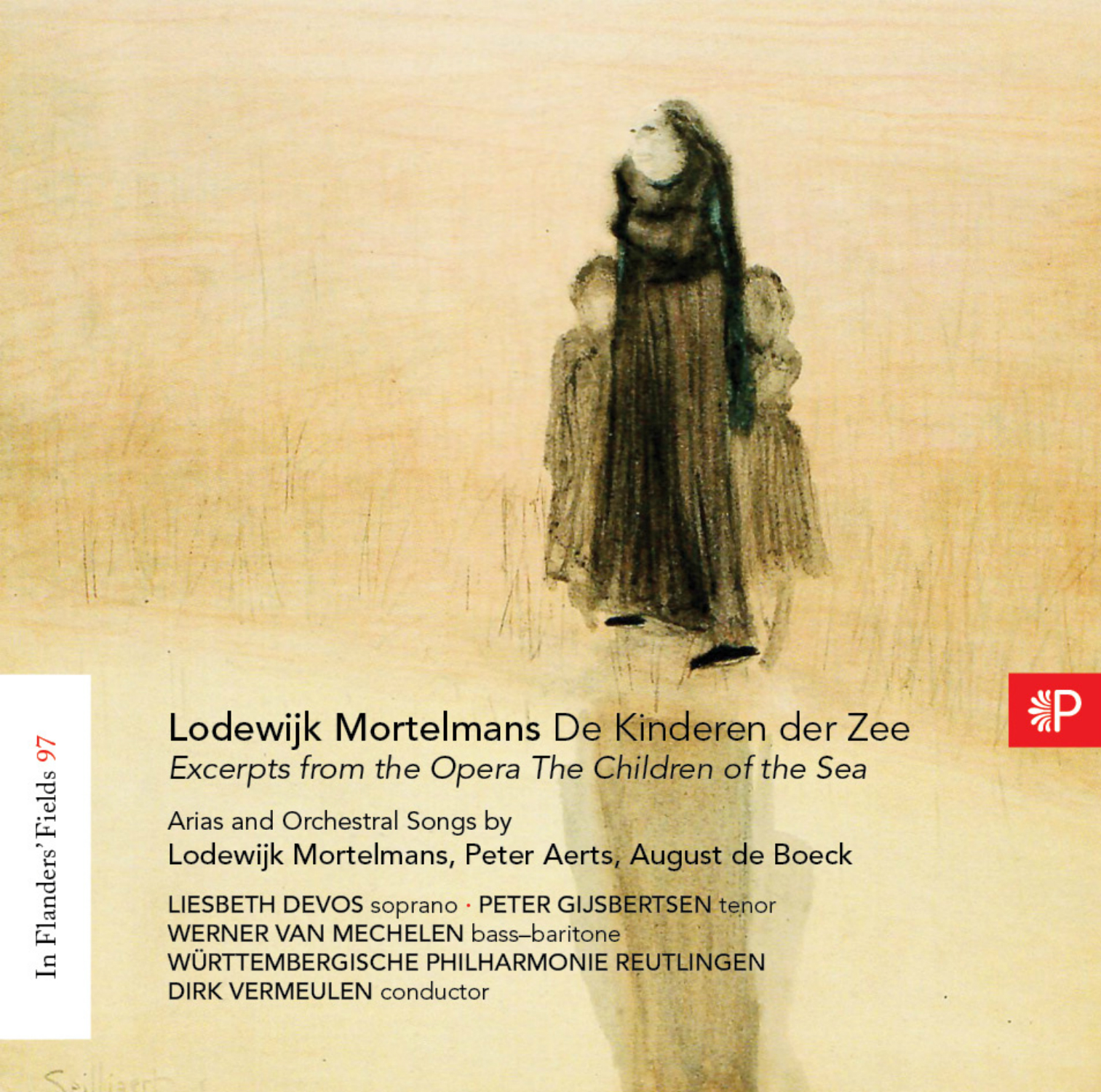
In Flanders' Fields Vol. 97 - The Children of the Sea
Liesbeth Devos, Peter Gijsbertsen, Werner van Mechelen
Phaedra
·
2017
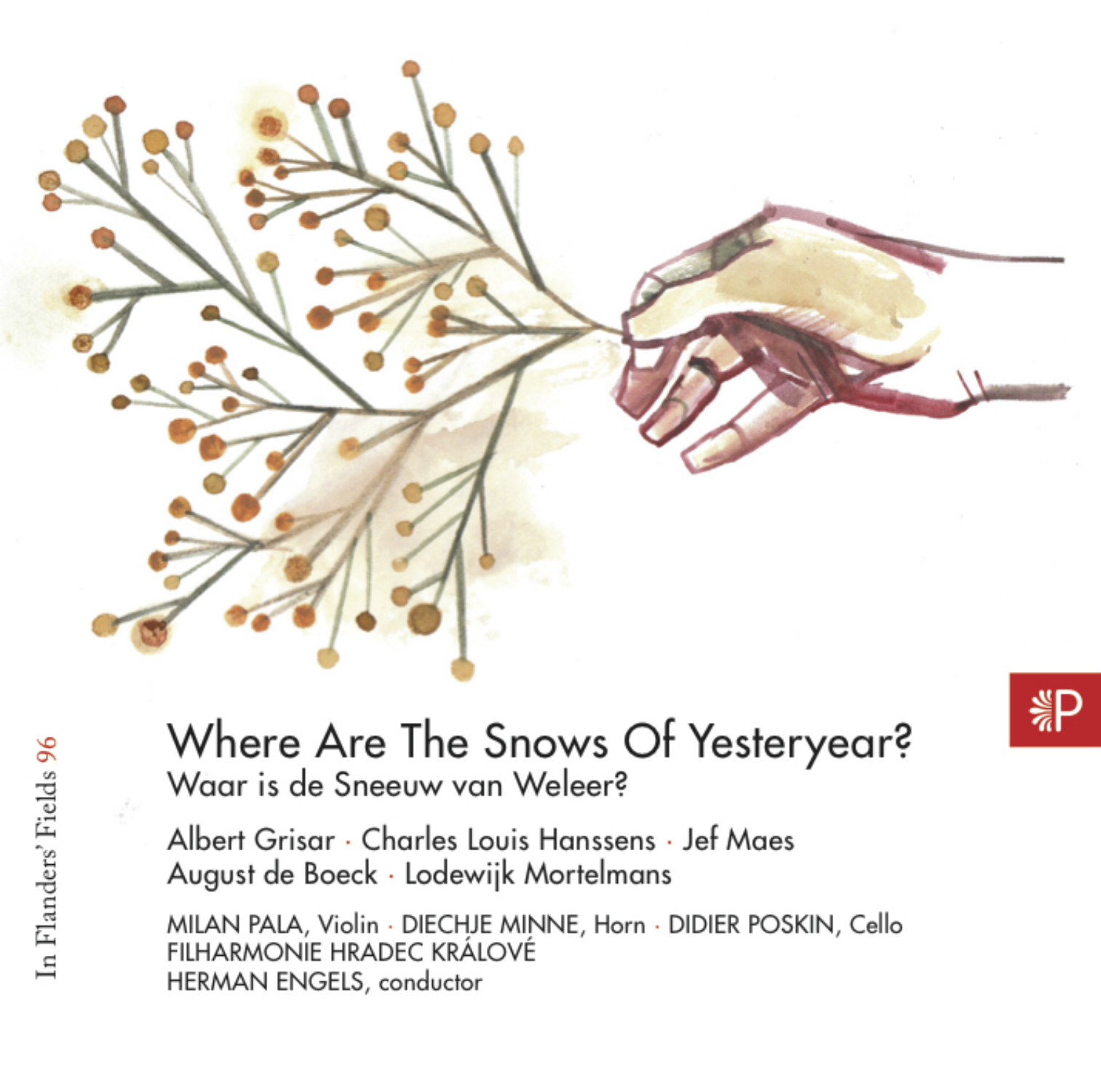
In Flanders' Fields Vol. 96 - Where Are The Snows Of Yesterday?
Herman Engels, Milan Pala
Phaedra
·
2017