
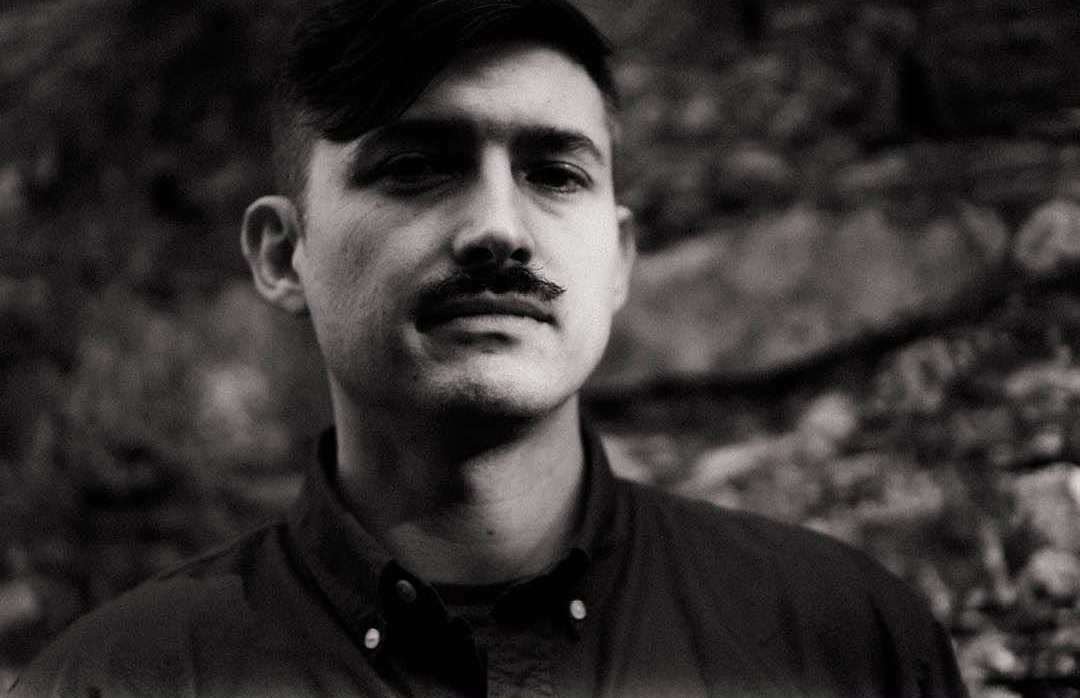
Und dann hast du diese Momente: wie ist das möglich… und doch so wunderbar. Du denkst, die alte Musikszene kennst du mittlerweile ganz gut und dann – ups – steht dort plötzlich jemand, von dem du denkst: wie habe ich in Gottes Namen noch nie von dieser Person gehört?
Es geschah im MA Café.
Nach dem Abendkonzert hatte ich eine kleine Wahl vor mir. Sollte ich noch zum kostenlosen Abendkonzert im Café gehen, oder sollte ich die Fahrt nach Antwerpen doch antreten? Es wurde das erste. Ich fragte die resolute Türsteherin höflich, die sich während des Konzerts übrigens ausgezeichnet ihrer Aufgabe entledigt hatte, ob es notfalls einen anderen Ausgang gab, falls ich doch früher gehen wollte, als direkt an der Künstlerin vorbei. Respekt ist schließlich das Mindeste, was man bei einem kostenlosen Konzert bieten kann.
Aber diese Frage sollte sich schnell erübrigen.
Als Jonatan Alvarado seine ersten Noten sang, war es klar: ich blieb.
Jonatan Alvarado ist ein argentinischer Sänger und Lautenist, spezialisiert auf die Tradition des Selbstbegleitgesangs. Er studierte klassischen Gesang und Laute am Conservatorium van Amsterdam und ist unter anderem Musikdirektor von Seconda Pratica, einem Ensemble, das sich der Renaissance und frühen Barockmusik widmet, mit besonderem Fokus auf Repertoire aus Lateinamerika. Daneben arbeitet er mit verschiedenen renommierten Ensembles aus der Welt der Alten Musik zusammen.
Das ist die ordentliche biografische Version.
Aber eigentlich erzählt sie wenig davon, was sich an diesem Abend im Café abspielt.
Denn Alvarado hat etwas, das man nicht aus einem Lebenslauf herausholt. Er singt alte Musik nicht so, als würde sie in einer Vitrine liegen. Er macht etwas daraus, das hier und jetzt passiert.
Und unweigerlich musste ich kurz an Marco Beasley denken.
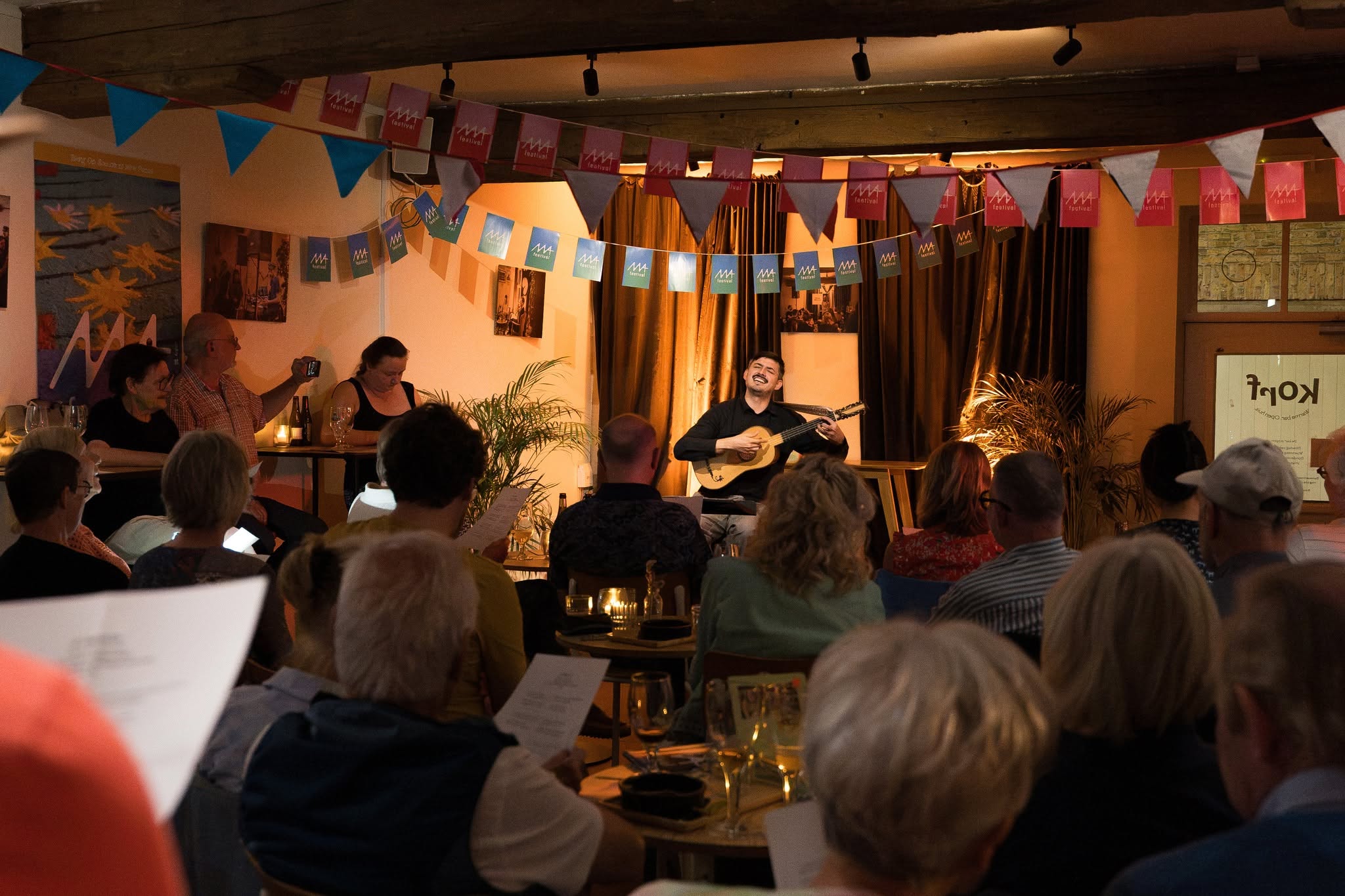 Nichts ist schlimmer, als Künstler miteinander zu vergleichen, denn jeder Künstler hat seine Eigenheit. Aber das rhetorische Talent, die natürliche Art des Erzählens mit Musik, die Weise, wie eine Stimme zu einer Geschichte wird: da war für mich etwas von derselben Magie drin.
Und auch der Umgang mit dem Publikum. Offen. Zugänglich.
"Klatschen Sie ruhig, wann immer Sie mögen." Wie angenehm kann das sein?
Das Café half da natürlich mit. Das war kein Konzertsaal, in dem die Distanz zwischen Künstler und Publikum fast von selbst durch eine Bühne, Stuhlreihen und angemessenes Schweigen entsteht. Hier saß man dicht bei der Musik. Man spürte fast, wie Alvarado Kontakt zu den Menschen vor ihm suchte. Und er hatte offenbar keine Notwendigkeit, sich hinter der Ernsthaftigkeit der alten Musik zu verstecken.
Was er genau alles sang, habe ich ehrlich gesagt nicht ganz rekonstruieren können. Es ging von Argentinien nach Peru – wo alte Kodizes ebenfalls einen Schatz an Repertoire bergen – und dann weiter nach Spanien und Portugal. Es gab Priester, die offenbar gerne mit dem Zeigefinger warnten, ein Rezept mit dreißig Eiern, Liebende, die sich am Tejo nicht treffen…
Nun ja.
Ich habe vor allem das Gefühl, dass ich eine Tür zu einer Welt geöffnet habe, in der noch sehr viel zu entdecken ist.
Alvarado bewegt sich durch Jahrhunderte alte Musik, über Manuskripte und mündliche Traditionen, tut das aber, ohne jemals den Kontakt zu einem zeitgenössischen Publikum zu verlieren. Er sucht nicht nach der distanzierten, „kultivierten" klassischen Gesangsweise, die alte Musik manchmal so unerreichbar machen kann. Im Gegenteil: Seine Stimme bleibt unmittelbar, rhetorisch und idiomatisch.
Er lässt alte Musik klingen, als wäre sie nicht alt. Du musst nicht erst wissen, aus welchem Kodex etwas kommt, wer der Komponist war oder in welchem Jahr es geschrieben wurde. Du musst erst einmal zuhören wollen.
Jonatan Alvarado kann mühelos ein abendfüllendes Programm gestalten, in dem sich Musik und Geschichten ständig abwechseln. Die Musik, die er mitbrachte, rief Bilder hervor. Argentinien, Peru, Spanien, Portugal. Kirchen und Straßen, Priester und Liebende, der Tejo, Rezepte und Geschichten. Man sah es fast vor sich.
Und dann war da das Finale.
Alvarado machte einen mutigen Versuch, das anwesende Publikum – das man kaum südeuropäischer Phlegmatik verdächtigen kann – ein argentinisches Lied mitsingen zu lassen.
Und ja. Es ist gelungen. Einigermaßen. Denn dieses Spanisch… das ist doch nicht so einfach vom Blatt!
Aber auch das war charakteristisch für den ganzen Abend. Keine Distanz, keine „jetzt machen wir alle zusammen mit, weil das ins Konzept passt". Einfach: singt mit. Und das Publikum tat es.
Das ist keine Rezension, sondern eine Entdeckung!
Ich ging ins MA Café, weil ich noch unsicher war, ob ich bleiben würde.
Ich blieb.
Und ich entdeckte Jonatan Alvarado.
Liebe Leser, entschuldigt mein Enthusiasmus. Aber stöbern Sie doch selbst in seiner digitalen Welt. Hören Sie, was er tut, schauen Sie, was er bringt, entdecken Sie sein Repertoire.
Ich bin mir ziemlich sicher, dass Sie genauso schnell bezaubert sein werden.
Und sollte Jonatan Alvarado nochmal irgendwo in einem Café, einer Kirche oder einem Konzertsaal auftauchen:
bleiben Sie! MAfestival Jonatan Alvarado Fotos: MAfestival / Laia Van den Borre Konzert: Freitag, 7. August 2026, MA Café, Brügge English version: Jonatan Alvarado: Sometimes, You Simply Have to Stay And then there are those moments: how is it even possible… and yet so utterly delightful. You think you know the early music scene reasonably well by now, and then, out of nowhere, someone appears and makes you wonder: how on earth have I never heard of this person before? It happened at the MA Café. After the evening concert, I found myself facing a small decision. Should I stay for the free late-night concert in the café, or should I start the drive back to Antwerp? I chose the former. I did politely ask the formidable door attendant, who had done an excellent job throughout the concert, whether there was another exit in case I decided to leave early, rather than having to walk directly in front of the performer. After all, respect is the very least one can offer at a free concert. As it turned out, the question quickly became irrelevant. The moment Jonatan Alvarado sang his first notes, it was obvious: I was staying. Jonatan Alvarado is an Argentine singer and lutenist specializing in the tradition of self-accompanied singing. He studied classical voice and lute at the Conservatorium van Amsterdam and serves, among other roles, as the musical director of Seconda Pratica, an ensemble devoted to Renaissance and early Baroque music, with a particular focus on repertoire from Latin America. He also collaborates with several renowned ensembles in the world of early music. That is the neat biographical version. But it tells you very little about what actually happened in that café. Because Alvarado possesses something you will never find on a résumé. He does not perform early music as though it were a precious artifact displayed behind glass. He makes it feel like something that is happening here and now. And inevitably, my thoughts drifted for a moment to Marco Beasley. Comparisons between artists are rarely fair, because every artist has a unique voice and personality. Yet there was something of the same magic here: the rhetorical artistry, the natural gift for storytelling through music, the way a voice can become a narrative in itself. The same could be said of his relationship with the audience. Open. Accessible. "Feel free to applaud whenever you like." How refreshing is that? Of course, the café setting played its part. This was not a concert hall where distance between performer and audience is almost automatically created by a stage, rows of seats, and an atmosphere of reverent silence. Here, you were close to the music. You could almost feel Alvarado reaching out to the people in front of him. And he clearly had no desire to hide behind the solemnity that sometimes surrounds early music. To be honest, I cannot fully reconstruct everything he sang. The journey took us from Argentina to Peru, whose old codices contain a wealth of fascinating repertoire, and then onward to Spain and Portugal. There were priests apparently fond of wagging their fingers, a recipe involving thirty eggs, lovers failing to meet on the banks of the Tagus... In short. What stayed with me most was the sense that I had opened a door onto a world in which an enormous amount remains to be discovered. Alvarado moves effortlessly through centuries-old music, drawing on manuscripts and oral traditions, yet never loses contact with a contemporary audience. He does not aim for the distant, cultivated classical style of singing that can sometimes make early music feel inaccessible. On the contrary: his voice remains direct, rhetorical, and deeply idiomatic. He makes early music sound as though it is not old at all. You do not need to know which codex a piece comes from, who composed it, or in what year it was written. First and foremost, you simply need to be willing to listen. Jonatan Alvarado could effortlessly sustain a full evening programme in which music and stories continually intertwine. The music he brought with him conjured images. Argentina, Peru, Spain, Portugal. Churches and streets, priests and lovers, the Tagus, recipes and tales. You could almost see them unfolding before your eyes. And then there was the finale. Alvarado made a brave attempt to persuade the audience, who could hardly be accused of Southern European spontaneity, to join him in singing an Argentine song. And yes, it worked. More or less. Because Spanish is not exactly easy to sight-read! But that, too, captured the spirit of the entire evening. No distance. No artificial "now we are all going to participate because that is part of the concept." Simply: sing along. And the audience did. This is not so much a review as it is a discovery. I went to the MA Café because I was still hesitating whether to stay. I stayed. And I discovered Jonatan Alvarado. Dear readers, forgive my enthusiasm. But do yourself a favour and explore his digital world. Listen to what he does. Watch what he brings to the stage. Discover his repertoire. I am fairly certain you will be charmed just as quickly as I was. And if Jonatan Alvarado should happen to appear again in a café, a church, or a concert hall somewhere: stay.