
And then there are those moments: how is it even possible… and yet so utterly delightful. You think you know the early music scene reasonably well by now, and then – oops – someone suddenly appears and makes you wonder: how on earth have I never heard of this person before?
It happened at the MA Café.
After the evening concert, I found myself facing a small decision. Should I stay for the free late-night concert in the café, or should I start the drive to Antwerp? I chose the former. I did politely ask the formidable door attendant – who, by the way, did an excellent job throughout the concert – whether there was another exit in case I decided to leave early, rather than having to walk directly in front of the performer. Respect is, after all, the very least one can offer at a free concert.
But that question quickly became irrelevant.
The moment Jonatan Alvarado sang his first notes, it was clear: I was staying.
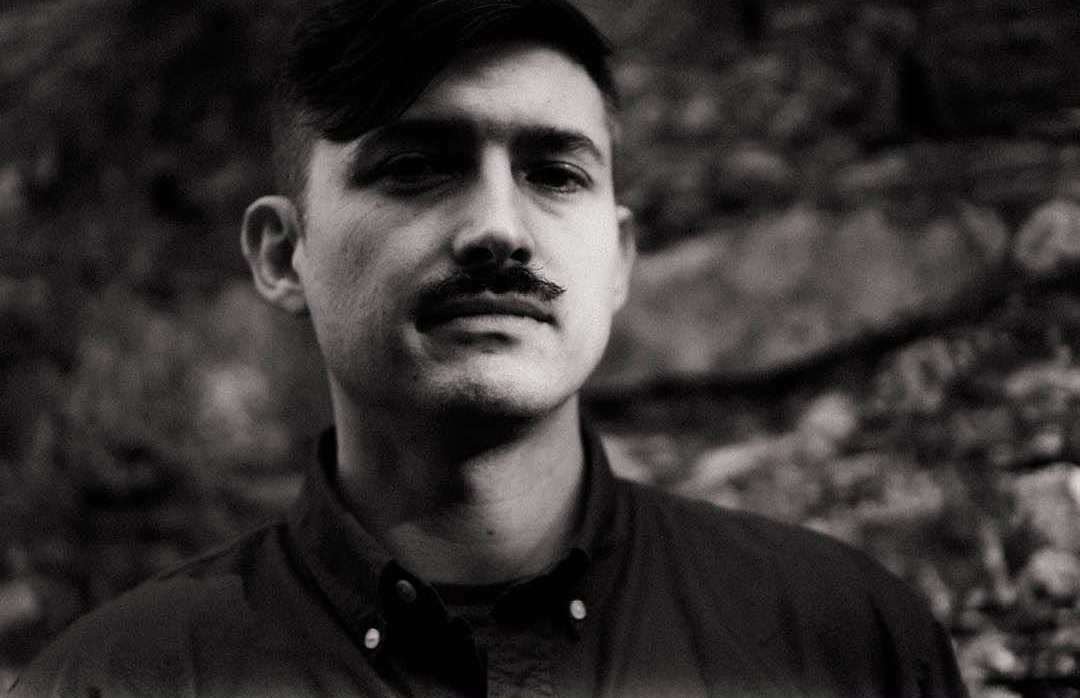
Jonatan Alvarado is an Argentine singer and lutenist specializing in the tradition of self-accompanied singing. He studied classical voice and lute at the Conservatorium van Amsterdam and serves, among other roles, as the musical director of Seconda Pratica, an ensemble devoted to Renaissance and early Baroque music, with a particular focus on repertoire from Latin America. He also collaborates with several renowned ensembles in the world of early music.
That is the neat biographical version.
But it tells you very little about what actually happened in that café.
Because Alvarado possesses something you will never find on a résumé. He does not perform early music as though it were a precious artifact displayed behind glass. He makes it feel like something that is happening here and now.
And inevitably, my thoughts drifted for a moment to Marco Beasley.
 Comparisons between artists are rarely fair, because every artist has a unique voice and personality. Yet there was something of the same magic here: the rhetorical artistry, the natural gift for storytelling through music, the way a voice can become a narrative in itself.
The same could be said of his relationship with the audience. Open. Accessible.
"Feel free to applaud whenever you like." How refreshing is that?
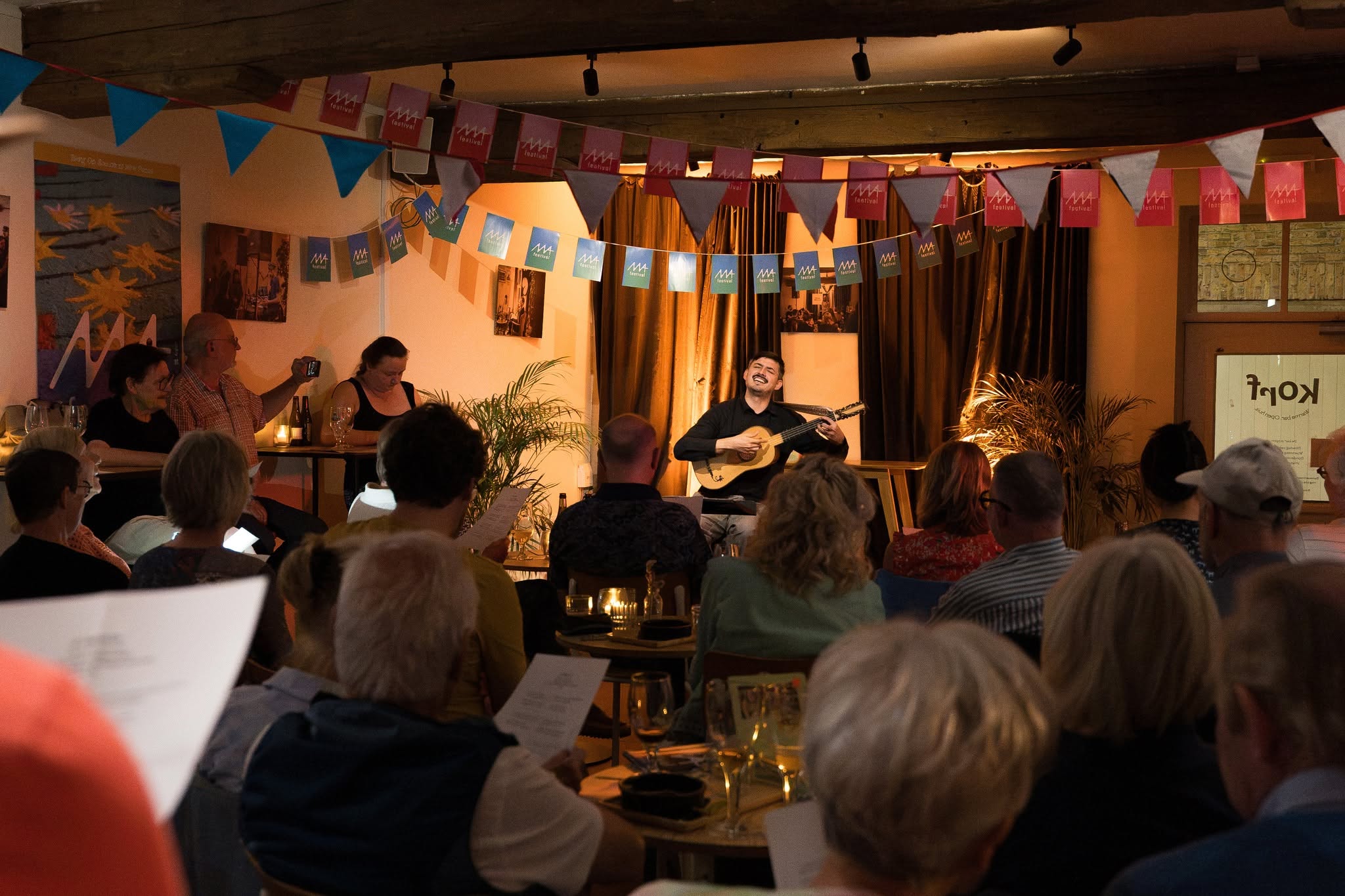
Of course, the café setting played its part. This was not a concert hall where distance between performer and audience is almost automatically created by a stage, rows of seats, and an atmosphere of reverent silence. Here, you were close to the music. You could almost feel Alvarado reaching out to the people in front of him. And he clearly had no desire to hide behind the solemnity that sometimes surrounds early music.
To be honest, I cannot fully reconstruct everything he sang. The journey took us from Argentina to Peru – whose old codices contain a wealth of fascinating repertoire – and then onward to Spain and Portugal. There were priests apparently fond of wagging their fingers, a recipe involving thirty eggs, lovers failing to meet on the banks of the Tagus…
In short.
What stayed with me most was the sense that I had opened a door onto a world in which an enormous amount remains to be discovered.
Alvarado moves effortlessly through centuries-old music, drawing on manuscripts and oral traditions, yet never loses contact with a contemporary audience. He does not aim for the distant, cultivated classical style of singing that can sometimes make early music feel inaccessible. On the contrary: his voice remains direct, rhetorical, and deeply idiomatic.
He makes early music sound as though it is not old at all. You do not need to know which codex a piece comes from, who composed it, or in what year it was written. First and foremost, you simply need to be willing to listen.
Jonatan Alvarado could effortlessly sustain a full evening programme in which music and stories continually intertwine. The music he brought with him conjured images. Argentina, Peru, Spain, Portugal. Churches and streets, priests and lovers, the Tagus, recipes and tales. You could almost see them unfolding before your eyes.
And then there was the finale.
Alvarado made a brave attempt to persuade the audience – who could hardly be accused of Southern European spontaneity – to join him in singing an Argentine song.
And yes, it worked. More or less. Because Spanish is not exactly easy to sight-read!
But that, too, captured the spirit of the entire evening. No distance. No artificial "now we are all going to participate because that is part of the concept." Simply: sing along. And the audience did.
This is not so much a review as it is a discovery!
I went to the MA Café because I was still hesitating whether to stay.
I stayed.
And I discovered Jonatan Alvarado.
Dear readers, forgive my enthusiasm. But do yourself a favour and explore his digital world. Listen to what he does. Watch what he brings to the stage. Discover his repertoire.
I am fairly certain you will be charmed just as quickly as I was.
And if Jonatan Alvarado should happen to appear again in a café, church, or concert hall somewhere:
stay! MAfestival Jonatan Alvarado photos: MAfestival / Laia Van den Borre concert: Friday, August 7, 2026, MA café, Brugge