
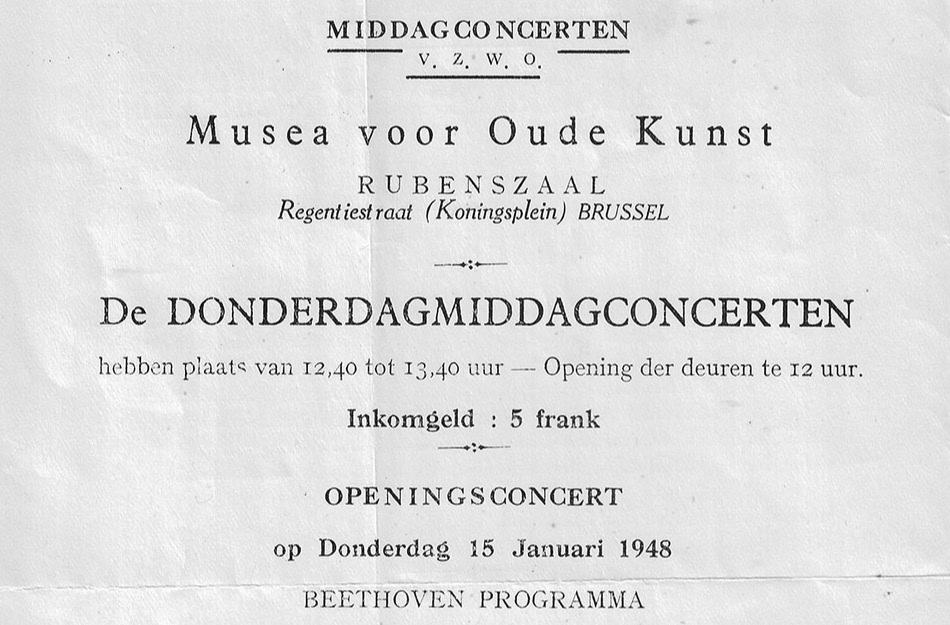
Three quarters of a century ago, on 15 January 1948, Sara Huysmans organised the very first Belgian Afternoon Concerts on the Brussels Kunstberg following the London example. She was the daughter of politician Camille Huysmans and Marthe Marie Catherine Espagne and received her education, among other places, at King's College London. A driven, passionate woman who set new standards in the cultural field. The initial intention was to lift the public's spirits and counter the dreadful war years with beauty.
Looking back and ahead
The organisation has meanwhile completed a fine journey of 75 fruitful years. Time to reflect for a moment and resolutely and skilfully usher in the new year with sparkling music and, above all: to continue the tradition. Times change and the programmers respond to this and let a fresh wind blow. They build a bridge between styles, temperaments and generations.
An afternoon concert is a pleasant break from the daily grind for the many commuters who work in Brussels during their lunch break. For music-loving seniors, attending a concert at midday feels safer than venturing out in the evening. People with plenty of time can combine it with a day of pottering around the capital.
On Sunday 15 January, there are no fewer than three concerts scheduled in the MIM and the KMSKB.
Klassiek Centraal had a conversation with one of the programmers: Dirk Vermeulen
-75 years of Afternoon Concerts to look back on and still alive and kicking.
D.V.: Alive and kicking indeed. It is enormously important to be able to do this. A few years ago I was asked to join the Board of Directors and take on the programming. I accepted that with great pleasure because 'chamber music' has been an enormous passion of mine throughout my life. I was a chamber music teacher for twenty years. That interconnectedness and combativeness is still there today. It is the most beautiful thing there is. Of course, I don't do that alone. There are just over 20 concerts per season. To organise those, to contact musicians... that takes an enormous amount of time. There is a flood of requests. In other words: we notice an enormous need for performances among young musicians. To handle that, I wanted to bring someone in. I asked Guy Van Waas, a colleague conductor/composer/clarinetist, a very gifted fellow. We do it together. It is a double job.
-After corona, picking up the thread again with the public is not self-evident!
D.V.: It is indeed not easy. Our biggest concern, however, is that we have a predominantly older audience. In the past, we mainly got working people through the door who caught a concert during their lunch break. The great challenge now is to rejuvenate our audience.
-How will you tackle that: by offering young musicians a platform or by exploring different repertoire?
D.V.: We are intensely working on that. We are also trying to involve the Conservatories. There are all sorts of young talents. We are trying to open up the predominantly classical programme of the past to other genres with, among others, jazz with top pianist Erik Vermeulen. He will perform with a Trio. We have the award-winning accordionist Sara Salverius. We are exposing all sorts of other genres to the public. Not just Schumann and Brahms, but also contemporary composers. We need to experiment more and more and also motivate students from the major Conservatories that are within a stone's throw of the MIM to come. It is an old sore that apparently students do not encourage their fellow students. That is a very peculiar phenomenon. When I was a teacher in Brussels, I had to move heaven and earth to organise concerts together. How to explain that phenomenon, a doctoral student should really write a paper about it sometime. I am at a loss as to why young people do not encourage each other in large numbers. That makes me honestly sad.
-Sunday 15 January celebrates the 75 years on the clock with 'Pomp and Circumstance' with no fewer than three concerts.
D.V.: I absolutely wanted to involve an old friend of mine: Jozef De Beenhouwer, an incomparable pianist of 19th-century repertoire. He also programmed the Afternoon Concerts for many years. That was the reason for me to have him perform first for the 11 a.m. concert at the MIM. He brings beautiful works by Clara and Robert Schumann, Brahms, Chopin and Lodewijk Mortelmans.
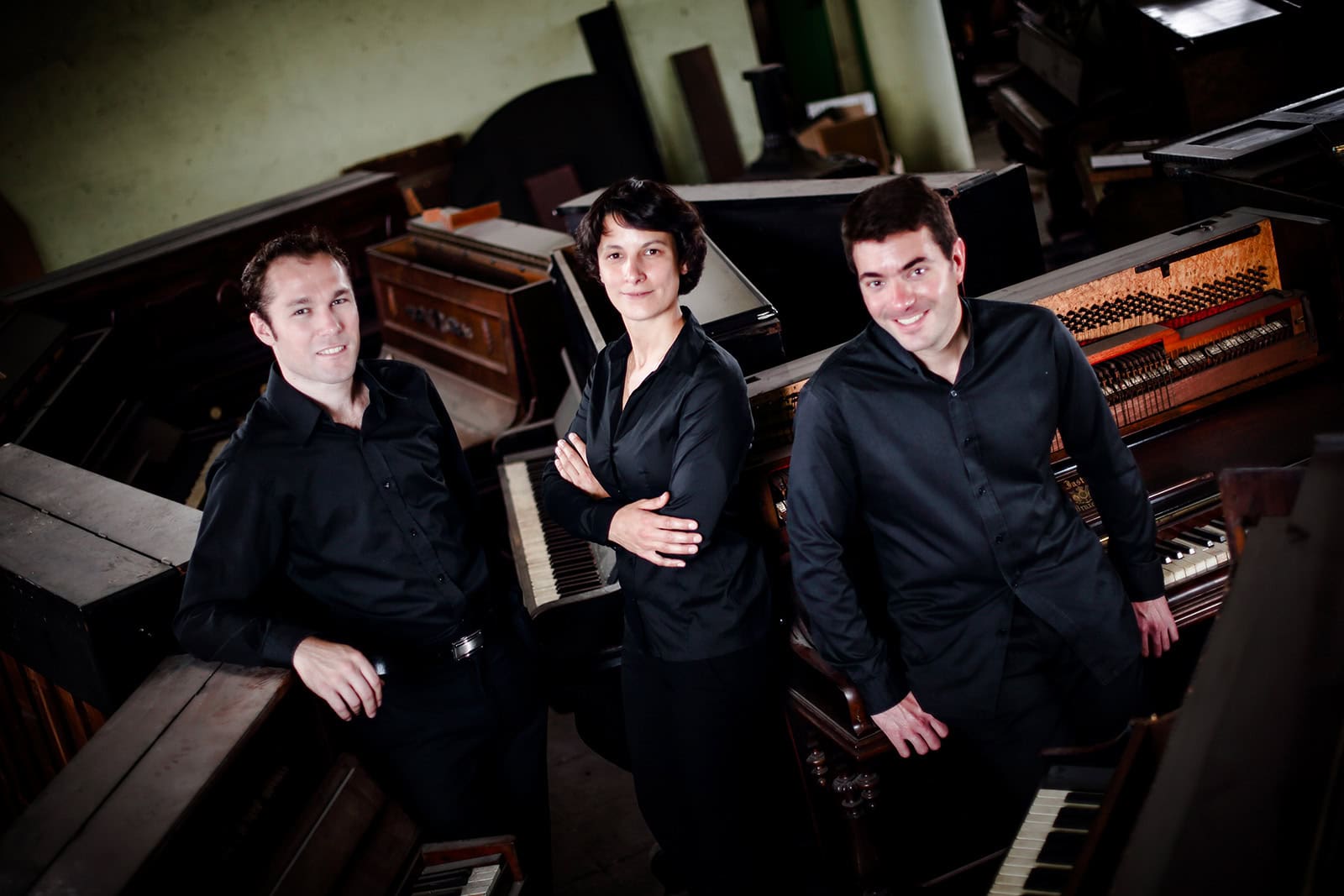
I describe them as 'three young foals' Myriam Ayari / Matthieu Normand / Nicolas Collinet, the orchestre de poche MNM Trio, they continue at 14:30 the festivities and will perform with six-hand keyboard. That will be very amusing. Three young people, because I really believe there must be contrasts. We have the older, truly experienced musician with a career of more than forty years and young instrumentalists who are just emerging. That will undoubtedly be fantastic. At 16:00 there is the closing concert at the KMSKB with the rarely performed Beethoven septet performed by seven musicians who exceptionally take the stage together. Why? Well, we discovered in the archives that the very first concert of the Afternoon Concerts in Brussels in January 1948 featured that very piece performed with seven top musicians. It is truly a circle that has come full circle.
-How frequently are the Afternoon Concerts offered.
D.V.: Weekly on Thursday at the Musical Instruments Museum (MIM).
-It is somewhat indiscreet, but how are the concerts financed.
D.V.: We are actively working behind the scenes with the Board of Directors to activate all channels. Contacts with the Brussels Region, the Flemish and Walloon governments had all become somewhat diluted. The National Lottery also helps us along a little. We really need more room to manoeuvre. We do nothing but pay our musicians below standard. Yet they remain massively willing to come and perform. Also the top musicians of the Beethoven concert with an impressive track record: Tatiana Samouil – violin, Tony Nys – viola, Karel Steylaerts – cello, Adrien Tyberghein – double bass, Jean-Marie Charlier – clarinet, Luc Loubry – bassoon & fagot, Jean-Pierre Dassonville – horn.
-The Afternoon Concerts take place at a democratic price.
D.V.: Weekdays at € 12 and the festive programme € 20 for the entire JUBILE75 programme.
-Are all tickets already sold out?
D.V.: Not yet. Interested parties can always visit our website for more info and are warmly welcome.
PRACTICAL INFO | JUBILE75
DATE: 15 January 2023
PROGRAMME:
11:00 — Piano Recital | MIM | € 10 (under 26: € 5 / subscription: free)
14:30 — MNM Trio | MIM | € 10 (under 26: € 5 / subscription: free )
16:00 — Beethoven | KMSKB | € 20 (under 26: € 10)
ADDRESSES:
Royal Museums of Fine Arts of Belgium, Regentschapsstraat 3, Brussels
Musical Instruments Museum, Hofberg 2, Brussels