Memento Mori, remember that you will die, forms the finale of a triptych In Memoriam (2004) and Mea Culpa (2006) around the theme of Loss. This centuries-old Latin expression became the starting point for an introspective production, which could be watched via streaming last Saturday.
Choreographer Sidi Larbi Cherkaoui is a cultured artist with a holistic view of the world. His mission manifests itself on the philosophical and existential level. He pauses and looks at the world surrounding us: listens, observes, analyses, reflects. This production revolves around the fleeting nature of life and the question of what remains after death. Russian-American writer Vladimir Nabokov described our existence aptly: "Un éclair entre deux éternités", a sigh between two eternities. The insignificance of human existence against cosmic reality. Strange but true, Nabokov died in 1977 as a result of a virus. Reflecting on death awakens the awareness that it accompanies us from our first cry to our last breath. This constant presence makes our life a great mystery. We regard death as massive darkness. All the great questions in life cannot be answered; we can only guess at them. Memento Mori is not interpreted here in a negative or fatalistic sense, but to celebrate life and be vigilant towards emptiness.
Remake for Ballet Vlaanderen
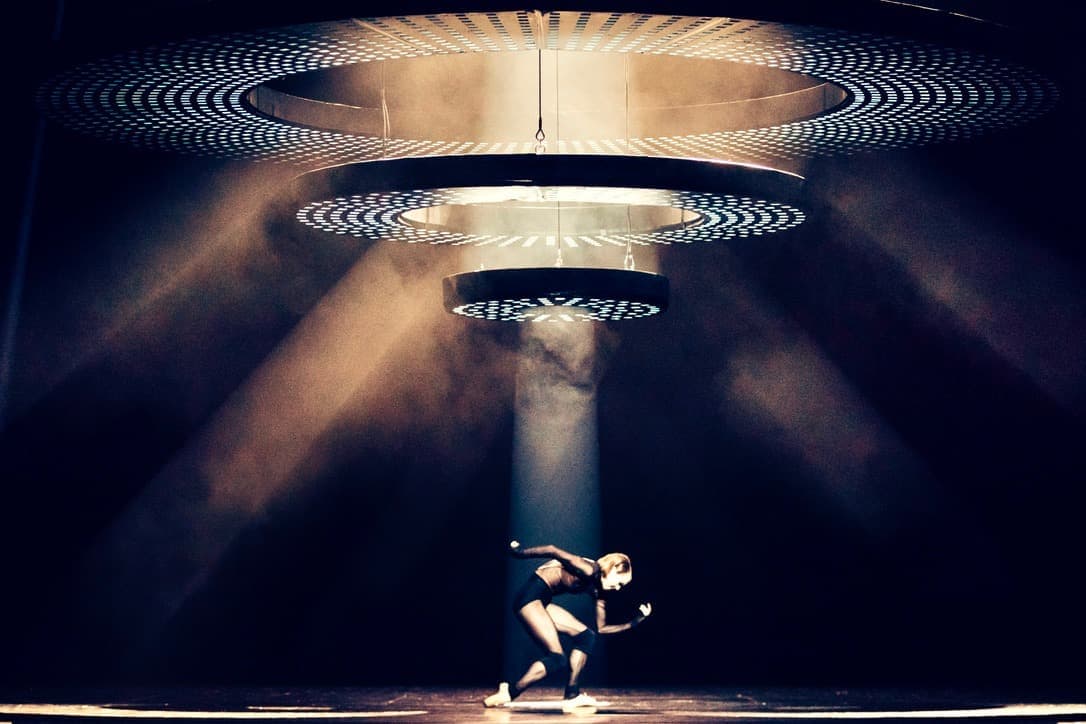
Cherkaoui created this work in 2017 for Les Ballets de Monte Carlo and reworked it in 2018 for Ballet Vlaanderen. The circle is an important element in this production. Much like a priest at the grave says: "From dust you are and to dust you shall return." The cycle, or the circle of life. Above the dancers hovers a light circle consisting of three elements: large, smaller and a minuscule core that can move independently from each other. Rings that hang directly above the dancers or tilt sideways like a canopy. Sometimes it looks like a halo, at other times a spaceship. Cherkaoui connects different dance styles in this production. He lets classical ballet confront tango, hip-hop and his highly individual fluid contemporary dance language in a pronounced soundscape by French pop artist and multi-instrumentalist Woodkid. His percussion inspires swift pointe work and military formations where the dancers march across the stage in tight ranks. The production is constructed in a fragmented narrative structure.
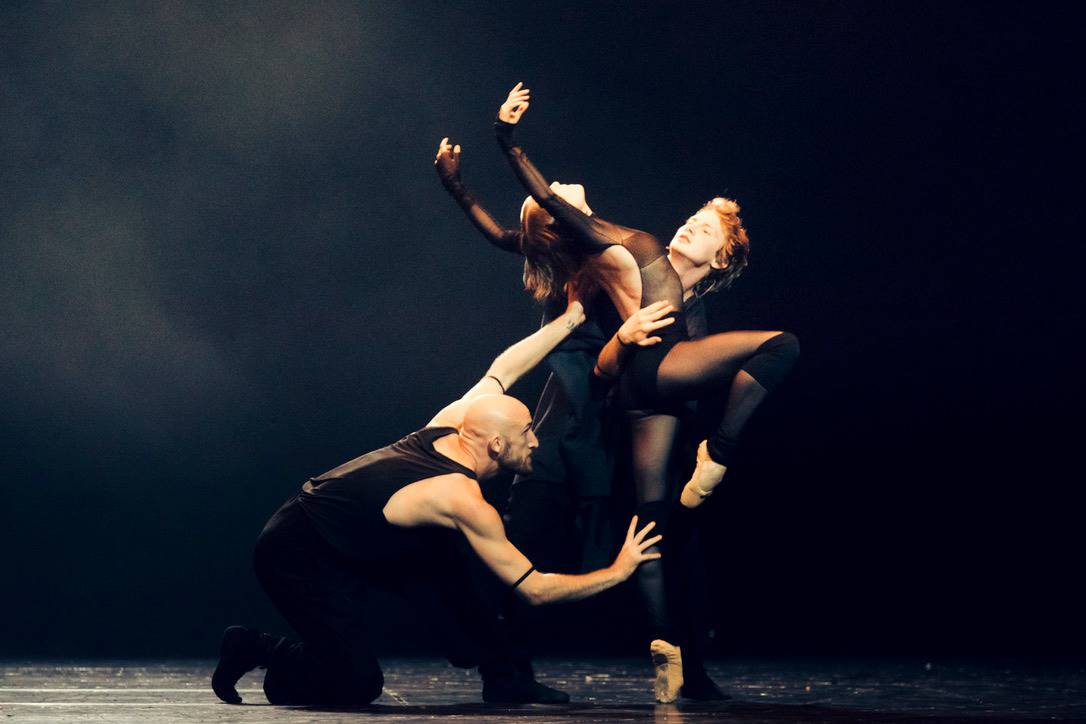
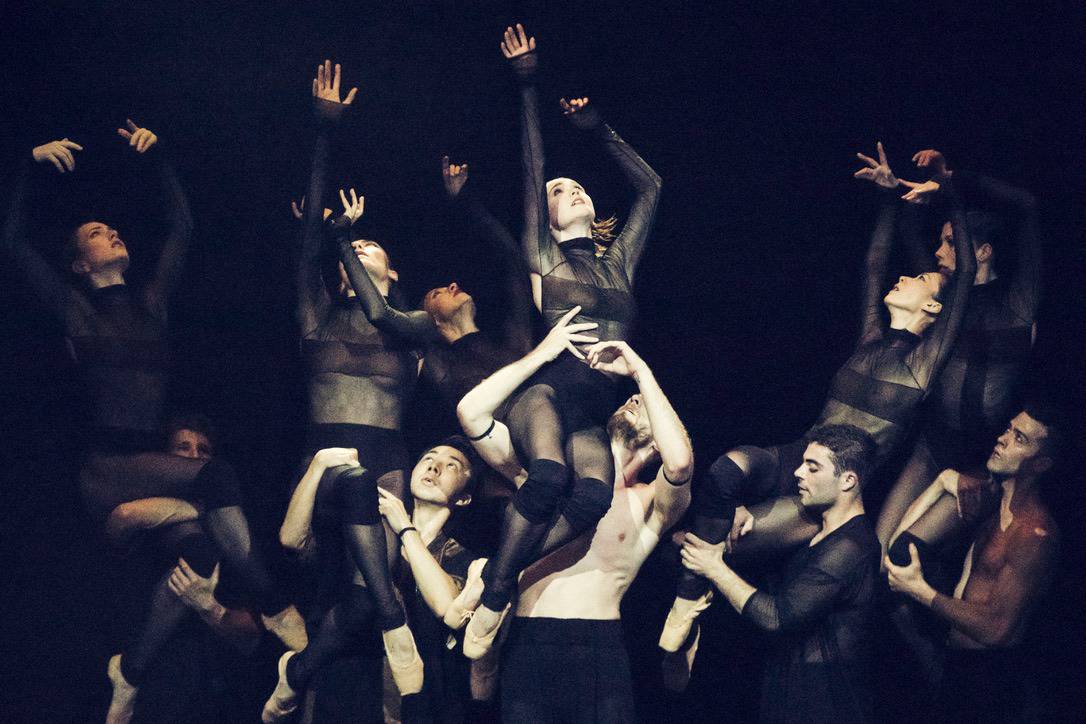
The cast is large: with 10 female and 10 male dancers, Cherkaoui creates a world that seems constantly in motion on the vibe and rhythm of the music. The classical style is interwoven with contemporary idiom and shows the virtuosity in the diversity of Ballet Vlaanderen. A fluid universe in which the forms, the number of dancers, and the speed of movement constantly vary. Continuous transformation and shifting gears, in a whirlwind of bodies that come and go like the tide. Every few minutes bring changes of energy in space and on the floor. Now and then a couple finds each other, caught in a tender embrace. In this pandemic where we must keep our distance, the image of a man and a woman, two people, who merge in an embrace by simplicity, intimacy and warmth is moving. Contrasting with this are images of technical complexity that impress. Bodies that hook into each other, roll over each other, carried high above heads like an offering or the serene journey to a final resting place, tight lifts, and an impressive solo with powerful and feline suppleness performed by Nini De Vet. The slow movements in principal Nancy Osbaldeston's solo also have not only overwhelming grandeur, but also tender grace. A large group hug that falls apart is followed by the dancers walking backwards on pointes, lining up in a row behind each other, and with their arm movements evoking the image of the Indian deity Shiva. The outermost ring descends all the way to the stage floor and becomes an arena where male virility receives emphasis, followed by an intimate classical pas de deux between Nancy Osbaldeston and Matt Foley, after which other couples join in. A melody inspires another tight and brisk tango. Matt Foley gets the stage to himself for a moment. A dancer who always impresses by his height, flexibility and jumping power. The other dancers rejoin and disappear into the wings. In the final image only two dancers remain: Matt Foley and Nancy Osbaldeston. They are as it were engulfed by the largest ring.
Through the eyes of a child
There is nothing new under the sun. In the course of the production, Cherkaoui also engages a chorus as in ancient Greece in which he has his dancers recite from the work of Michaël Pollan who states, among other things, that we must see life unprejudiced through the eyes of a child.
The costumes by Antwerp designer Jan-Jan van Essche are predominantly black. They fit perfectly into the picture and sometimes fan out in perfect circular shapes around the bodies. The scenography was entrusted to Amine Amharech, architect, installer, furniture designer and painter. The whole is enveloped in diffuse lighting by Fabiana Picccioli, a distinct color palette that constantly receives a different shade or intensity, more fascinating than a perfect tint with the three glowing circles above that also lead their own life.
To do justice to this ballet via streaming as much as possible, considerable attention was also paid to the video editing.
Sidi Larbi Cherkaoui dwells in the highest regions of the art scene. Memento Mori is once again a skillful display of his stylistic prowess, full of refinement and special effects and moves, but lacks the brilliant sparkle of previous creations. Twirls, rhythm and speed, spun threads in a web of narratives, are the main components. At the beginning of the performance, children's voices are heard in 'Hello, from the children of planet earth', they also close Memento Mori. The cycle is complete.
WHAT: Memento Mori
WHO: Ballet Vlaanderen. Choreography: Sidi Larbi Cherkaoui; Music: Woodkid; Scenography: Amine Amharech; Light: Fabiana Piccioli; Costumes: Jan-Jan Van Essche; Dancers: Nancy Osbaldeston, Matt Foley, Nini De Vet, Morgana Cappellari, Anaïs De Caster, Clàudia Gil Cabus, Ruka Nakagawa, Nicha Rodboon, Laurine Muccioli, Shelby Williams, Nicola Wills, Viktor Banka, Claudio Cangialosi, Giovanni D'Agati, Brent Danneels, Daniel Domenech, Mikio Kato, Philipe Lens, Shane Urton, James Waddell, Lateef Williams
SEEN: 6 February 2021, via streaming
PHOTOS: Filip Van Roe