
In the autumn of 1996, the Austrian association Servus organized a Haydn Festival in Mechelen on the occasion of its 10th anniversary and the celebration of Austria's Millennium, which found considerable resonance in the most remote corners of Flanders. Its overwhelming success prompted the organizers at the time to make this event a biennial tradition. With this goal in mind, the Haydn Society Flanders was founded in Mechelen in 1998.
'Amazing Haydn', directed by Alfons Deleus and his wife, is a small volunteer organization that has been giving an important impetus to cultural life in Mechelen for 24 years with the support of the city. This edition features four magnificent concerts in equally magnificent venues: four beautifully restored churches that are part of Mechelen's rich heritage. The second concert in the series at Sint-Pieters-en-Pauluskerk was nothing short of Vienna.
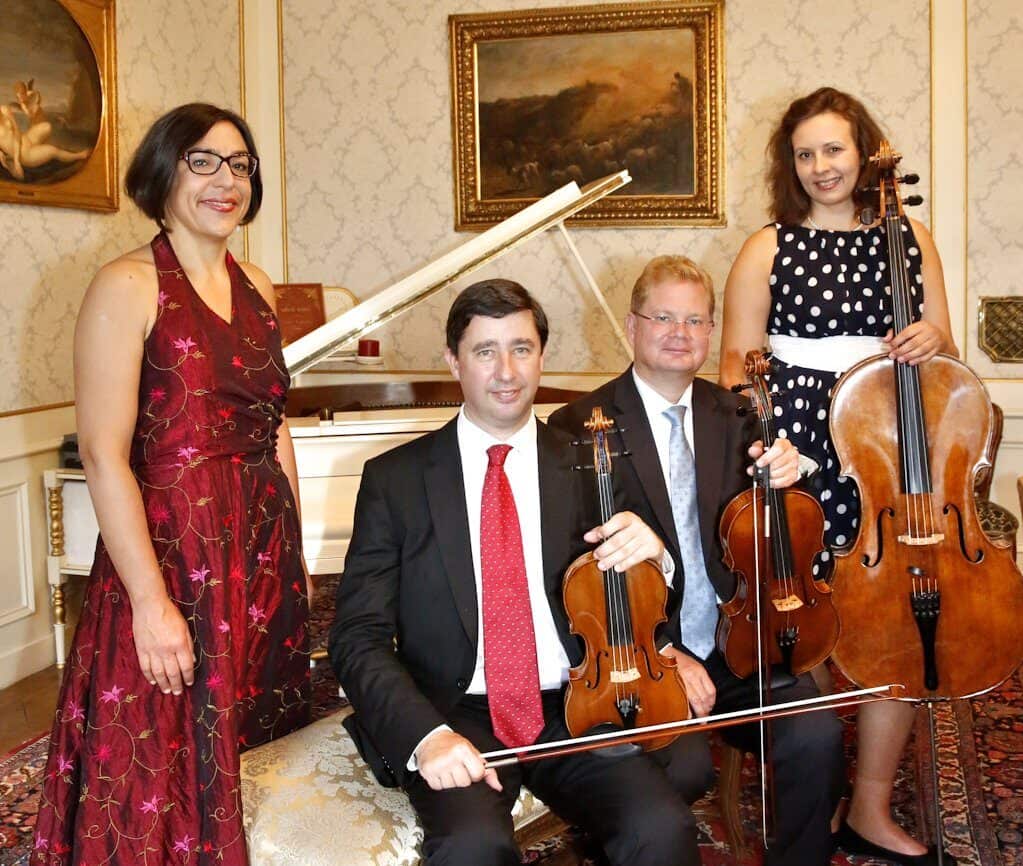
Performers: Lissy Quartett Wien
This quartet consists of four top musicians. Fascinated by the forgotten Viennese composer Joseph Mayseder, Raimund Lissy, concertmaster of the Wiener Philharmoniker, together with colleague Robert Bauerstatter, leader of the violas of the Wiener Philharmoniker, Maria Grün cellist with the Wiener Symphoniker and the Vienna State Opera, and Bulgarian-Viennese pianist Srebra Gelleva, founded the Lissy Quartett in 2008. With the aim of giving Joseph Mayseder's rarely performed repertoire a 'boost' and having it featured more in concert halls. Joseph Mayseder is flanked in this concert by Haydn of course, as well as Mozart and Brahms. Seeing this Quartet at work in our own country was a rare opportunity. They perform mainly in Vienna due to the extremely busy schedules of both the Wiener Philharmoniker and the Wiener Symphoniker.
Joseph Haydn (31 Mar 1732 – 31 May 1809)
Piano Trio in G no. 39 Hob. XV: 25 - Gypsy Trio
It is perhaps the best-known piano trio by Haydn and is sometimes called the 'Gipsy Rondo Trio' because of the finale in Hungarian style with many accelerations and emphatic accents. Haydn knew better: his notation 'Rondo all' Ongarese' came closer to the original source. That was the Balkans, where as kapellmeister of the Hungarian magnate Esterházy he learned both Hungarian dances, Romanian folk music and Croatian dance kolo. Haydn drew eagerly from compositional possibilities. Alongside the piano, he makes the violin an equal partner and the cello a remarkable accompanist.
Wolfgang Amadeus Mozart (27 Jan 1756 – 5 Dec 1791)
Piano Quartet in E flat, KV 493
Mozart wrote only two piano quartets. It is Mozart's genius that has given the phenomenon of the piano quartet such brilliance and splendor. He was not influenced by what the general public could handle. His contemporaries could not appreciate the complex structure. Today we stand in admiration of the richness and finesse. The composer of a piano quartet constantly balances on the edge of a chamber musical and orchestral setting and musical form. It is only given to the greatest composers to bring this balancing act to a successful conclusion. Mozart achieves a real dialogue between the three string instruments and the keyboard. Again and again we are amazed by the melodic and harmonic inventiveness, the strong expressivity and the high complexity of the music. Even the simplest turn testifies to his particular generosity. Sometimes exuberant and then again introverted.
Joseph Mayseder (27 Oct 1789 – 21 Nov 1863)
Souvenir à Baden,Concert Variations in E opus 63
Amazing Haydn also sets out to program compositions by lesser-known composers. Joseph Mayseder, the surprise of this concert, a discovery and a revelation. For many people, including myself, he was or is an illustrious unknown.
Joseph Mayseder, this born and bred Viennese began studying violin at a young age and was quickly recognized as a child prodigy and brought into contact with most of the famous violinists and teachers. What he achieved in his life as a performing soloist, teacher and composer is staggering. During his lifetime he received numerous distinctions. Yet he fell into oblivion, became lost in the folds of music history.
The rediscovery of Mayseder is due to Raimond Lissy. 'Souvenir à Baden,' Concert Variations in E opus 63, proves the unbroken vitality of his music. This work begins with a skillfully composed virtuosic passage for violin. It must have sounded daring and experimental in his time. Surprisingly impressive music, every instrumentalist gets his moment to excel. Six delightful variations, good for a total of twenty minutes of extraordinarily beautiful music.
Johannes Brahms (7 May 1833 – 3 April 1897)
Piano Quartet no. 3 in c opus 60 "Werther"
The heaviest piece was reserved for the end. The piano played a major role in Brahms' oeuvre. He was, moreover, a great admirer of Haydn. He began this piano quartet in 1855 and only completed the work twenty years later. A solid, charged and tormented composition. The title refers to Die Leiden des jungen Werthers by Goethe. Werther must share his love for Lotte with his friend Albert and sees only one way out: to shoot himself in the head. Brahms, who was a well-read man, undoubtedly saw behind the names Lotte, Albert and Werther Clara and Robert Schumann and himself. He had a lifelong but unusual relationship with Clara. He felt a strong conflict between his love for Clara, his respect for her and his friend Robert, which at one point led him to allude to suicide. The impact of the work was so great that the city council of Leipzig imposed a distribution ban due to 'incitement to suicide'.
In this piano quartet, all the tragedy of an impossible love is expressed, the turbulent and tormented. A particularly sensitive cello part is incorporated. After the last note, it takes a moment to catch your breath and regain a sense of reality.
A lengthy standing ovation rewarded the exceptionally brilliant performance by the Lissy Quartett Wien.
WHO: Lissy Quartett Wien (Raimond Lissy [violin], Robert Bauerstatter [viola], Maria Grün [cello], Srebra Gelleva [piano])
WHAT: Joseph Haydn – W.A. Mozart – Joseph Mayseder – Johannes Brahms
WHERE: Sint-Sint-Pieter-en-Paulkerk (Mechelen)
WHEN: 2 October at 15:00
still on the agenda
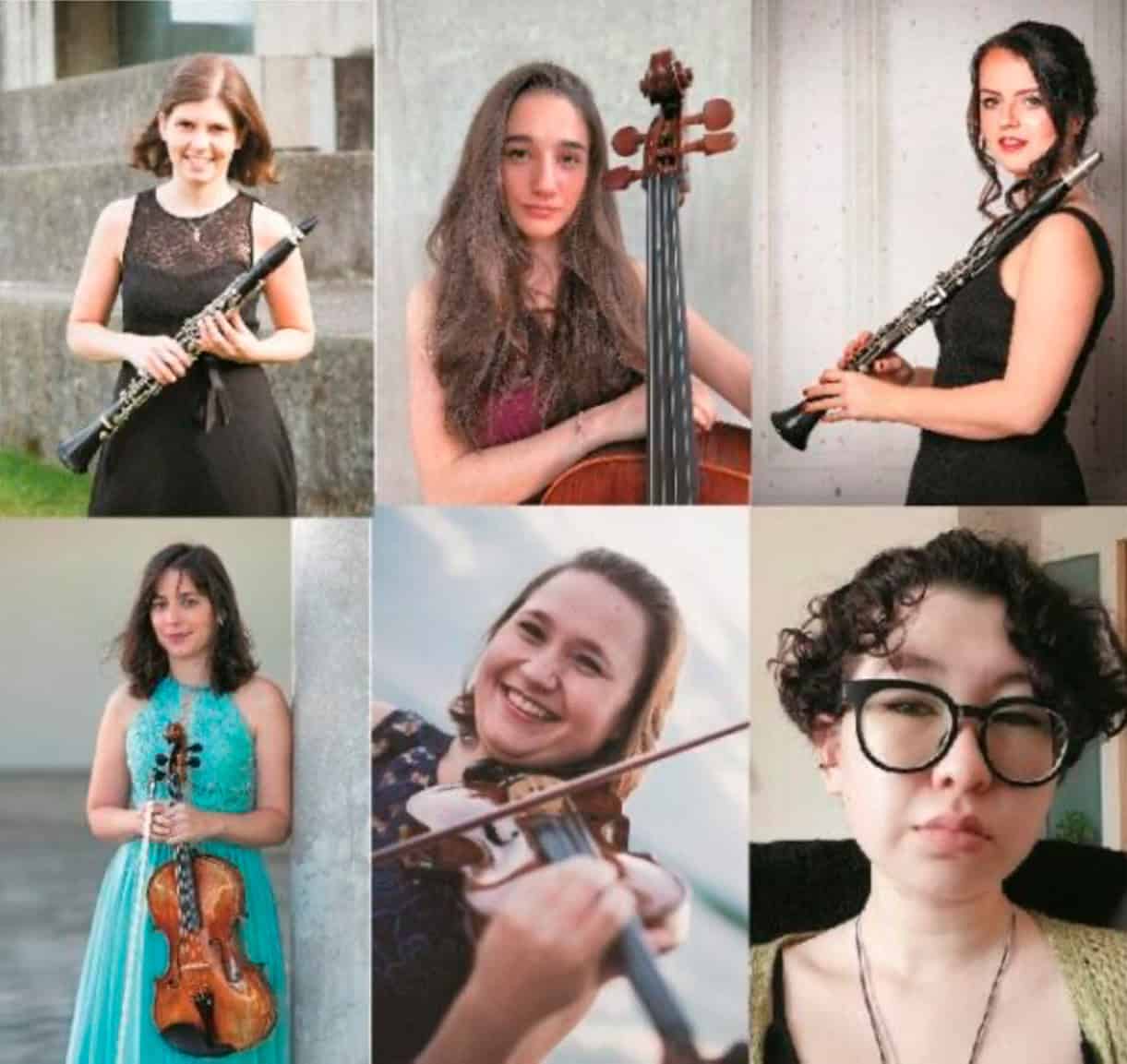
WHO: Damenquartett des Haydn Konservatoriums Eisenstadt, Veronika Oberleitner, Sonja Equiluz [clarinet]
WHAT: Joseph Haydn – W.A. Mozart – C.M. von Weber
WHERE: Church of Our Lady of Leliëndaal Bruul (Mechelen)
WHEN: 9 October at 15:00

WHO: Südwestdeutsches Kammerorchester Pforzheim
WHAT: Antonio Rosetti – Joseph Haydn – Franz Anton Hoffmeister – Luigi Boccherini
WHERE: Sint-Janskerk (Mechelen)
WHEN: 16 October at 15:00