
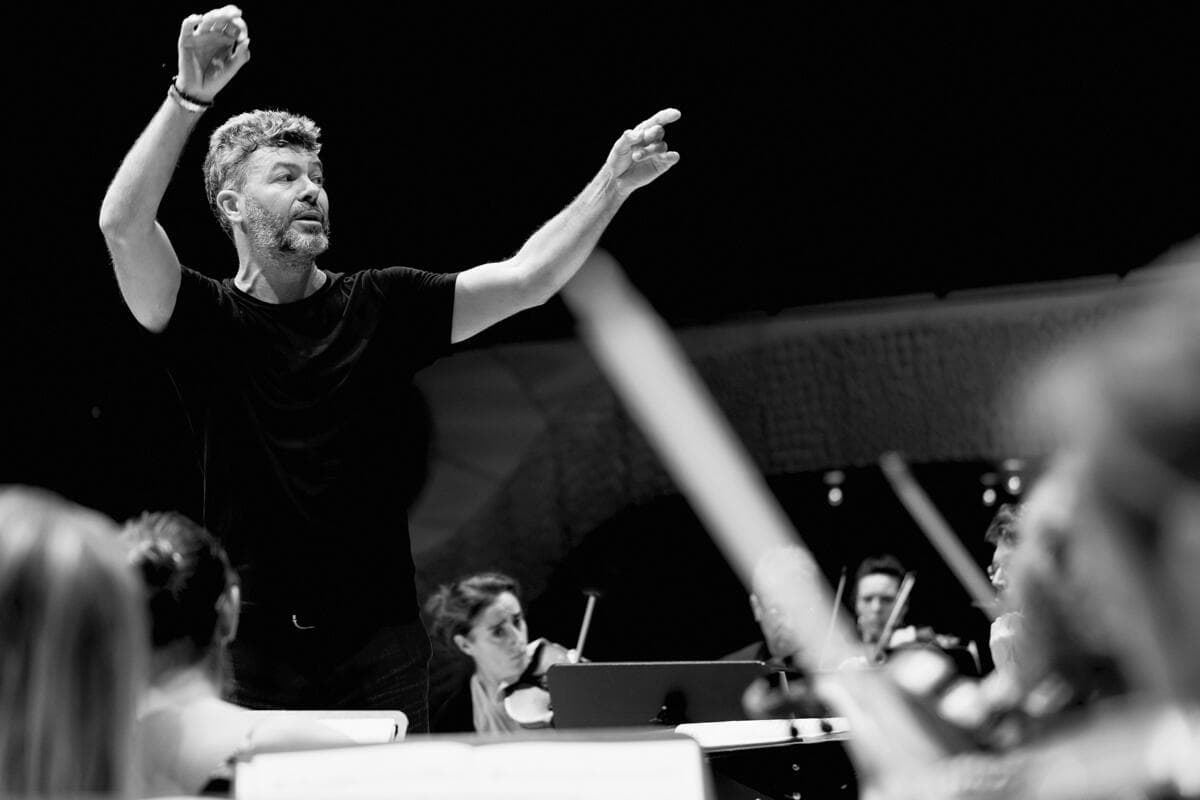
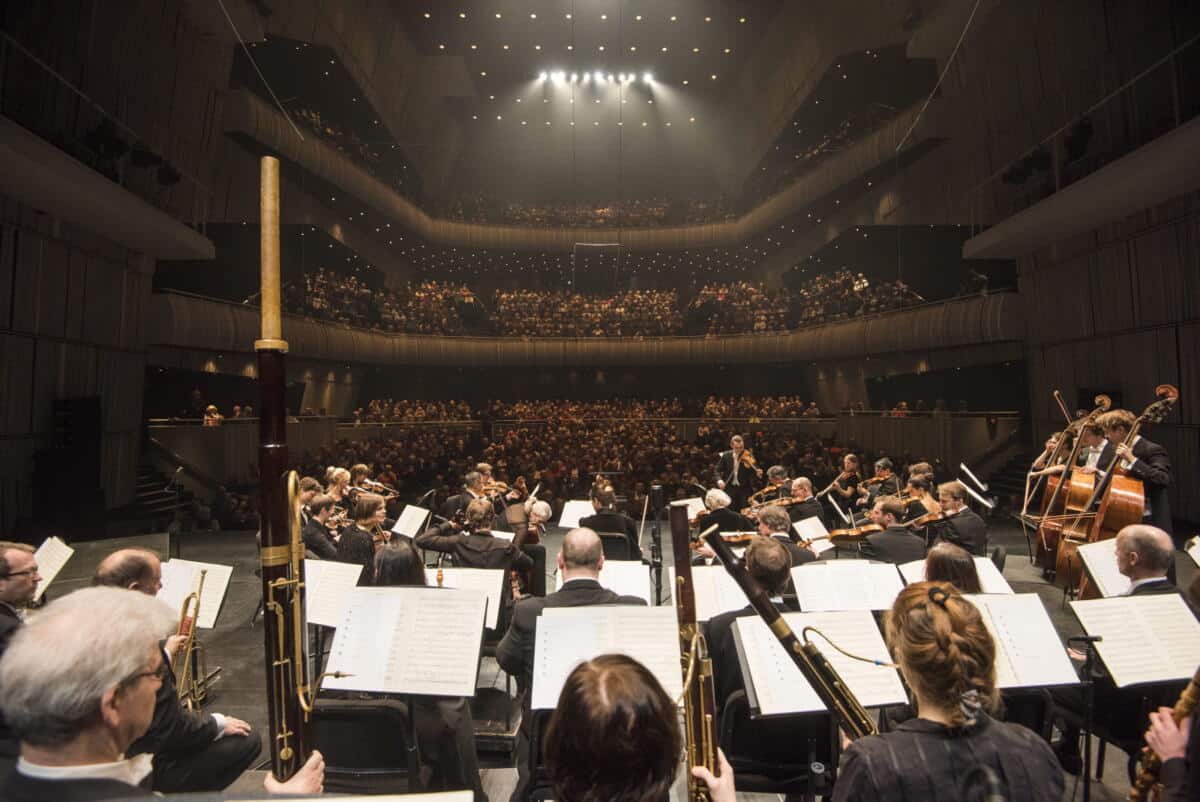
Last Saturday, Anima Eterna Brugge, under the direction of Spanish conductor Pablo Heras-Casado, performed the Seventh Symphony by Anton Bruckner. The concert took place in the Concertgebouw Brugge, the orchestra's loyal home venue. Beforehand, this event had managed to capture considerable media attention; afterwards it proved to be justified, as the concert was an event, not only because of the performance itself, but especially because of the promise it holds for the future.
First, the performance itself: Bruckner symphonies are not performed all that frequently in our region anyway. When they are, it is usually by 'contemporary symphonic orchestras' that tend to emphasize the monumental character of Bruckner's symphonies: Bruckner is then often played slowly, loudly and solemnly. Disappearing into a grand sound can sometimes feel wonderful, but such an approach often obscures the wealth of shadings that is indeed present in Bruckner's symphonies.
Precisely because Bruckner's symphonies are often portrayed so one-sidedly, it could hardly be otherwise than that Anima Eterna would sooner or later sink their teeth into this repertoire. For years, the mission of this orchestra has been to row against the current, not necessarily to be contrary, but to get as close as possible to the source. Concretely, this means that period instruments are consistently deployed, that the original performance conditions are carefully explored and that the score is reread as if there had never been a performance history. One consequence of this is that the sonorities change; they become softer, warmer, more delicate and have more shadings. Furthermore, the balance between the different instruments and instrument groups shifts drastically. In particular, the reduction of the string section invariably brings about a change in perspective. So it must literally and figuratively have been a relief for the mere eight wind instruments that Bruckner prescribes in his Seventh Symphony to be able to play this work without having to strain themselves in the hope of being heard.
In addition to tone colour and balance, there is also a third constant element of change: the texture rendering, that is: the extent to which the different musical layers that are simultaneously at work in a piece of music are made audible. Bruckner's music is often described as 'massive', but actually it usually is not. It harbours an unspeakable polyphonic wealth, which is inevitably lost if the desire for loudness is insufficiently restrained. The more transparent the performance, the better that layering can reveal itself, of course – a maxim that Anima Eterna has always held high, and that also made a world of difference in this Bruckner performance.
On the one hand, that was an enormous achievement of the Spanish conductor Pablo Heras-Casado, with whom Anima Eterna embarked on this project. In his early years, Heras-Casado's focus was mainly on Renaissance music and Baroque, which developed in him a very refined sense of counterpoint and texture. Later, he immersed himself more and more in the Romantic repertoire, including the operas of Richard Wagner, Bruckner's great idol. These two worlds, which in traditional musical culture usually stand miles apart, thus merge in Heras-Casado in a wondrous way. In any case, it was rare, especially in a Bruckner symphony, to hear transparency and pathos blend so peacefully and effortlessly together.
On the other hand, the merit of the musicians in this should not be neglected; one too easily forgets that period instruments are more difficult to play than modern ones: they are less stable in pitch, less precise in their attacks and were often challenged by the composers of the time up to (or just beyond) their limits. Playing on period instruments is thus a challenge, but a challenge that is particularly valuable because it serves a deeper aesthetics and a higher ideal of beauty. (Mistakes are thus by definition beautiful mistakes.) The musicians of Anima Eterna Brugge threw themselves fearlessly into this ideal last Saturday, driven by a conductor who was emotionally and conceptually on exactly the same wavelength. Only thus was it possible for something special to happen: Bruckner was freed from his reputation, which in itself is an even greater achievement than the excellent performance of his music.
The lasting impression from last Saturday was all the more meaningful because the concert also seemed to contain a promise for the future. The performance of the Seventh was, after all, only the beginning of a broader Bruckner exploration in collaboration with Heras-Casado in the coming years. Bruckner's Third and Fourth Symphonies are now also scheduled. What Saturday's concert made clear is that this project will be able to develop in the spirit of curiosity and lucidity that Jos van Immerseel instilled in his ensemble many years ago and which led to a complete rediscovery (or at least re-experiencing) of many great orchestral works. The fact that this is happening precisely with a repertoire to which Van Immerseel himself never felt particularly strongly drawn makes the symbolism of this project all the stronger. With the old soul in new hands, Anima Eterna is now truly ready to develop itself with new energy on the path on which it has excelled over the past decades: the thorough rediscovery of (usually) known orchestral repertoire. Only if the old can become new can the soul be eternal. Thus the Bruckner revival is also a revival of the ensemble itself.
What Anima Eterna Brugge additionally still needs most is the cultural insight that their historically informed and inspired approach offers an unmistakable added value to our musical culture. In the past fifty years, Flanders has played an incredibly important role internationally in the exploration of historical performance practices. It has thereby helped completely rediscover some repertoires and gradually won an audience for them. That work is far from complete. As soon as there are signs, as now, that this exploration can be further developed under high-quality artistic conditions, it is our cultural duty to support it. EVEN if one would actually prefer to hear one's Bruckner more lush.
Pieter Bergé
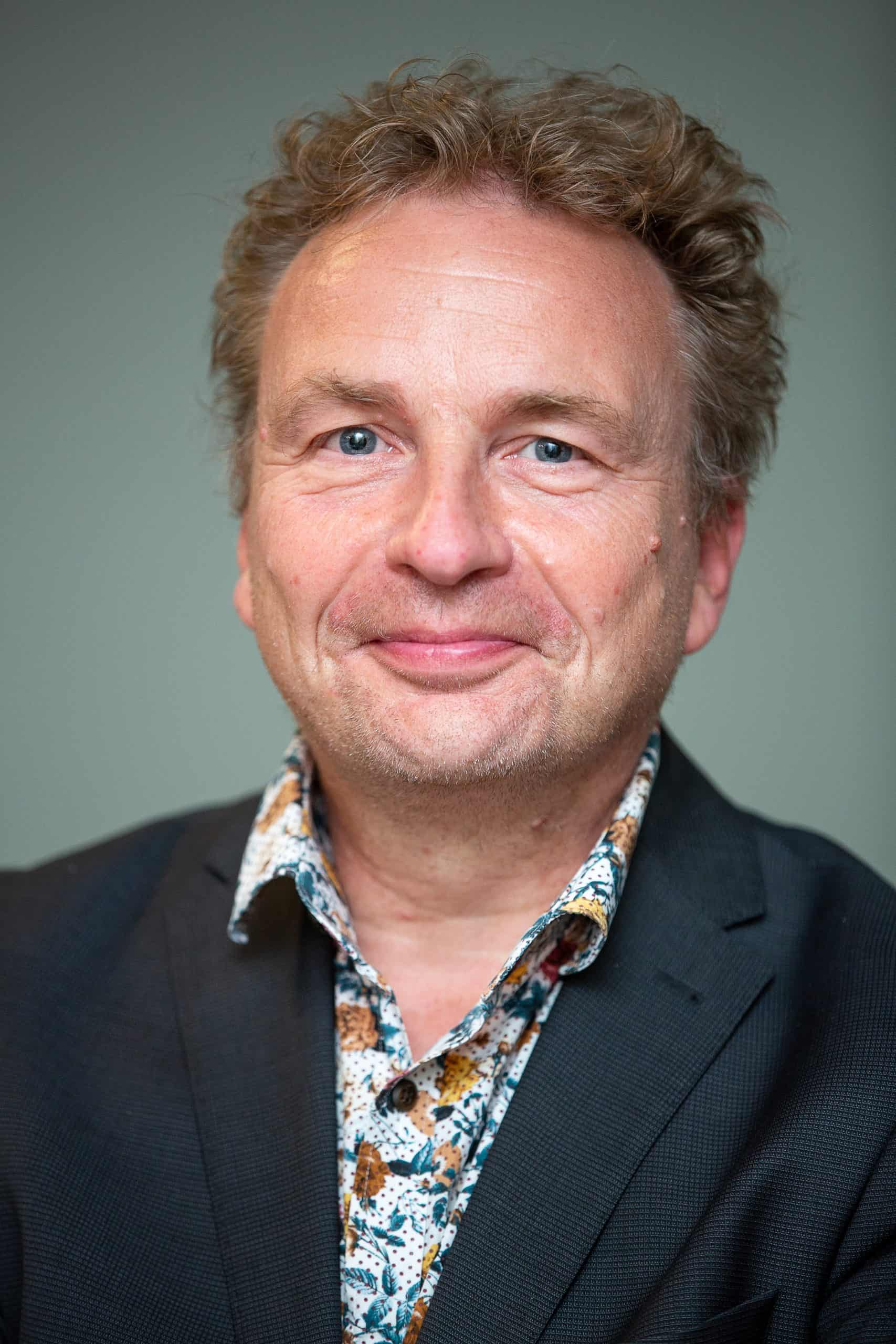
Pieter Bergé (°1967) is professor of musicology at KU Leuven. He has published extensively on the operas of Arnold Schönberg and the analysis of instrumental music from the late 18th and 19th centuries. For a broader audience, he has written in recent years about the Requiem by Mozart (Wie schreef het requiem van Mozart?), the supposed inaccessibility of new music (Wat valt er eigenlijk te begrijpen? Een essay voor Beethovenliefhebbers en Schönberghaters), a music history for the young at heart (Hoe groen klinkt een gitaar? En 99 ander dingen die je moet weten over klassieke muziek), and Shostakovich's complex relationship with the Soviets (De leugens en de schaterlach). He has just published a book on Kurt Weill's opera Aufstieg und Fall der Stadt Mahagonny. Both his scholarly work and his publications for a broader audience have repeatedly won awards. Since 2015, Pieter Bergé has also been artistic director of the Leuven Festival 20・21.