
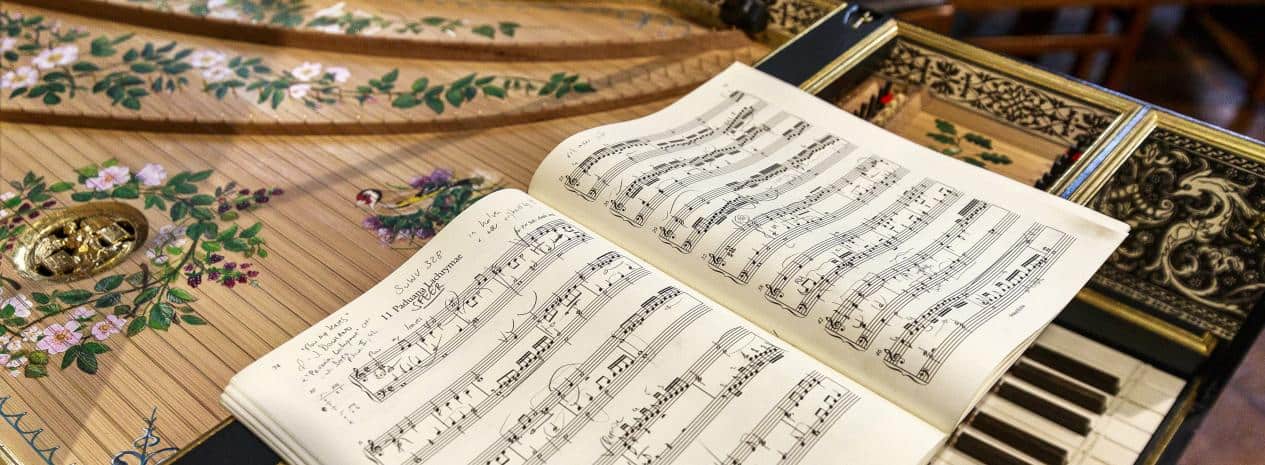
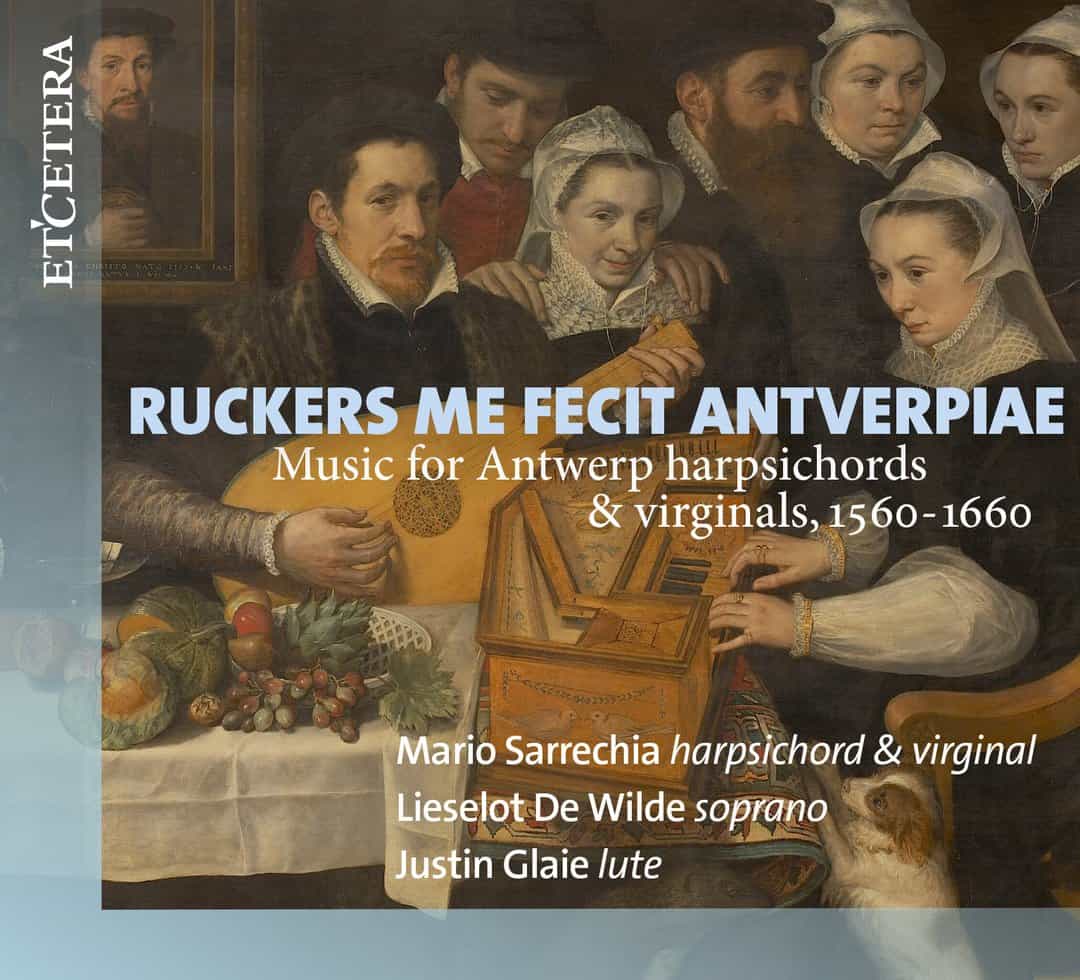
Musical instruments from the Vleeshuis (Antwerp) and MIM (Brussels) come back to life. No fewer than five different Antwerp virginals and harpsichords modeled after Joannes Ruckers, Andreas Ruckers and Joannes Couchet can be heard on the new cd Ruckers Me Fecit Antverpiae by Mario Sarrechia. With these historic instruments, the harpsichordist sketches a musical landscape of 17th-century Antwerp.
Museum Vleeshuis and Snijders&Rockoxhuis joined forces for the project 'Antwerp Harpsichord City'. The cd Ruckers Me Fecit Antverpiae, recorded in the Antwerp Begijnhofkerk, marks the start of their new collaboration. For this cd, they delved into the archives together with Belgian harpsichordist Mario Sarrechia. In search of music from the period 1560-1660, the golden age of Antwerp harpsichord building, they found extensive correspondence from and about the Duarte family. It was an exceptionally musical family that moved to Antwerp shortly before 1575. They would have had at least five keyboard instruments in their home and were good friends with the famous Antwerp harpsichord builders Ruckers-Couchet.
The house concerts of the Duarte family formed the basis for the cd's program. A remarkable European repertoire sounded for Antwerp music lovers. In addition to the Duartes' own compositions (which unfortunately have not been preserved), works by John Bull (ca.1562-1628, England), Girolamo Frescobaldi (1583-1643, Italy), Johann Jakob Froberger (1616-1667, German-speaking territories) and Michel Lambert (1610-1696, France) were performed.
In addition to repertoire that circulated among the Duarte family, the cd also features works by Jan Pieterszoon Sweelinck (1562-1621, Netherlands). Sweelinck traveled to Antwerp in 1604 to buy a Ruckers harpsichord. His music thus presumably also sounded in the city. The cd was further supplemented with anonymous compositions from the keyboard manuscript Susanne van Soldt (1599).
Based on the structure of the house concerts at the Duartes, Mario Sarrechia developed a program. Keyboard works alternate with lute songs for variety. Soprano Lieselot De Wilde and lutenist Justin Glaie bring alongside the traditional lute songs also arrangements together with Sarrechia for voice and virginal and lute and harpsichord.
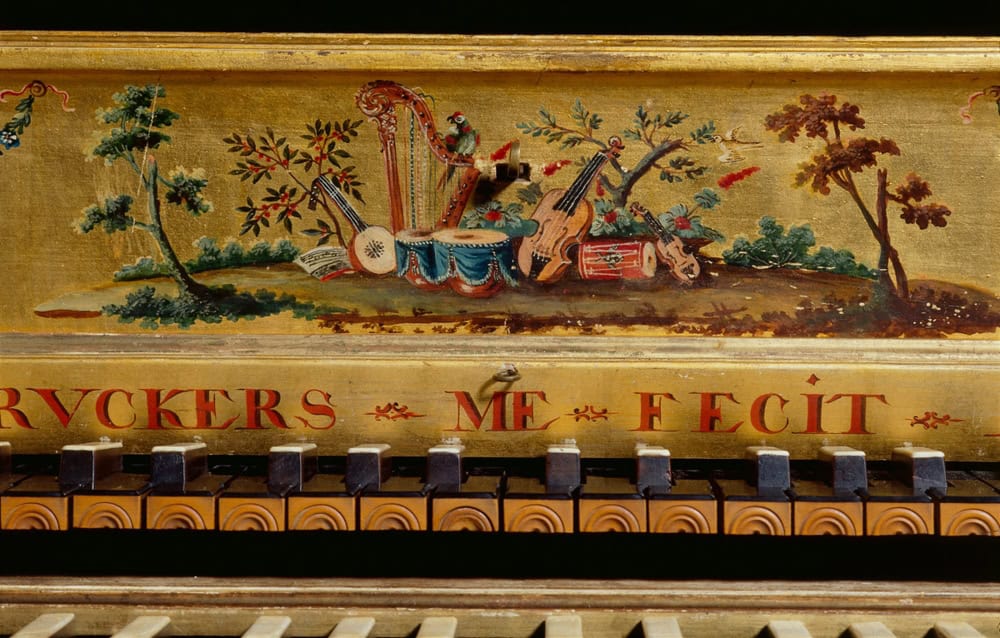
The cd opens with a festive work, the Brande champanje [track 01] from the keyboard manuscript of Susanne van Soldt. Sarrechia performs this composition on two different instruments, a virginal and an ottavino (child virginal), which can be used together as a "mother and child" virginal. Their difference in tone color is a pleasant playful interpretation by Sarrechia.
As a contrast, after the cheerful, instrumental dance follows a more restrained composition for voice and lute. Dont vient cela [track 02] is a lute song by French composer Claudin De Sermisy (c.1495-1562). The text is by one of the most famous poets of his time, the prolific Clément Marot (1496-1544). Many of his poems were set to music, particularly by De Sermisy. The composer seemed to have a preference for Marot's poetry. Lieselot De Wilde sings the text with tasteful restraint and works in concert with the church's acoustics. At swelling notes, she lets her voice fill the space. Even with faster songs like Ung gay bergier [track 06], De Wilde manages to maintain this synergy.
A weaker interpretation is Sweelinck's Pavana Hispanica [track 13] by Glaie and Sarrechia. The arrangement for lute and harpsichord offers no added value compared to the original. The lute is so overwhelmed by the harpsichord. Glaie's plucking is completely lost. Although it is difficult to isolate the instruments, the lute does provide a warmer tone color at some points. If the intent was to play with timbre and warm up the metallic sound of the harpsichord, this intention unfortunately gets lost.
There is clearly much attention paid to research and the program's arrangement. The story throughout the cd is easy to follow and at the end the circle is complete. The cd ends in the same atmosphere as it begins. Sarrechia concludes with the combination of virginal and ottavino with the energetic, instrumental dance Pavane dan Vers [track 26]. The dance-like character of the pavane is clearly at the forefront. You can easily imagine the dance steps. A wonderful interpretation to end with.
 4.2/5
4.2/5
WHO: Mario Sarrechia [keyboard], Lieselot De Wilde [soprano], Justin Glaie [lute]
WHAT: Ruckers Me Fecit Antverpiae
LABEL: Etcetera (KTC1755)
ORDER: JPC