Today marks the start of Belgian Music Week again. Composers and artists from home soil take center stage. On this first day here at Klassiek Centraal, we focus on "Belgian romanticism for piano". Through five composers and two new albums, we explore a century of piano music.
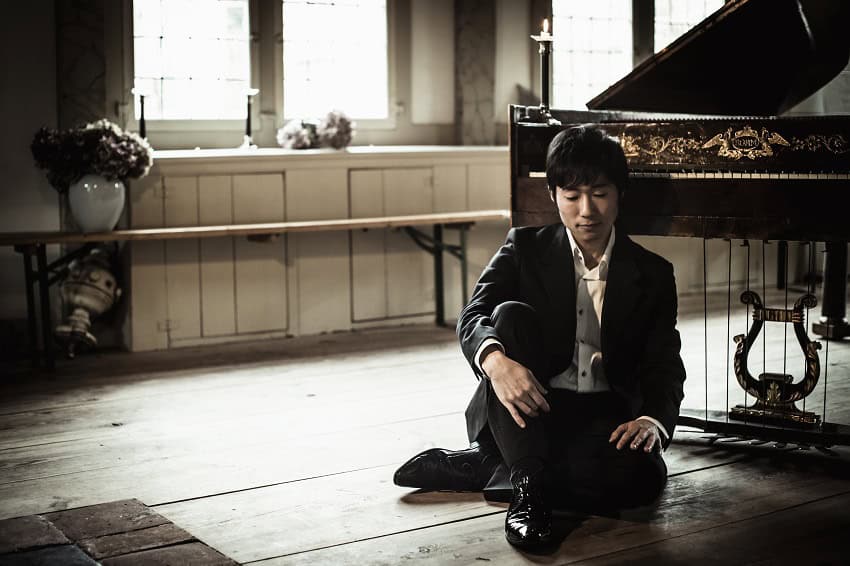
Naruhiko Kawaguchi — joint winner of the MA Competition 2016 — presents Flemish piano music from the Romantic era on pianoforte. His album Au clair de la lune was released in collaboration with the Study Centre for Flemish Music, and Jan de Wilde from SVM wrote the text for the booklet. The result showcases both well-known and lesser-known names. Peter Benoit (1834-1901) is accompanied by three other composers.
Kawaguchi opens his new album with music by Charles Louis Hanssens (1802-1871). His Concerto pour le piano forte (1839) is heard here in an arrangement for piano and string quintet. This adaptation was arranged by the composer himself, as was customary at the time. This chamber music version illustrates the delicate, Chopin-like virtuosity and brings the concerto into the salon. The concerto is through-composed in one movement, with the sections flowing organically into one another. Hanssens demonstrates mastery in brilliant melodies with variations. Hanssens was a leading composer in shaping the Belgian musical landscape, and this concerto reveals how he achieved that status.
From one great name to another. After Hanssens come three works by Benoit. One of these is Troisieme fantaisie op.18 (1860) [track 03]. In this fantasy we hear a musical style that echoes a lesser-known contemporary. The contrast between hammering passages alternating with feather-light lyricism also resounds in Au clair de la lune. Impromptu op.17 (1866?) [track 06] by Philippe Vanden Berghe (1822-1885). This dynamic approach recalls Baroque terraced dynamics, but the sonorous harmony is unmistakably Romantic. It gives the music vitality and power.
The Caprice sur la romance flamande (before 1855) [track 05] is the centerpiece of this CD. The work is by Jean Vanderheyden (1823-1889), a student of Pierre Zimmerman who also taught Charles Gounod and César Franck, among others. Vanderheyden composed primarily for the home and adapted larger genres for the salon. The chosen Caprice is a fine example of this. It consists of variations on the Flemish tune Roosje uit de dalen by Antwerp carillonneur Jan Frans Volckerick (1815-1897). The appeal of this work lies in balancing lyricism and virtuosic playing. Kawaguchi's interpretation is tasteful and intimate. Perfect for a salon setting.
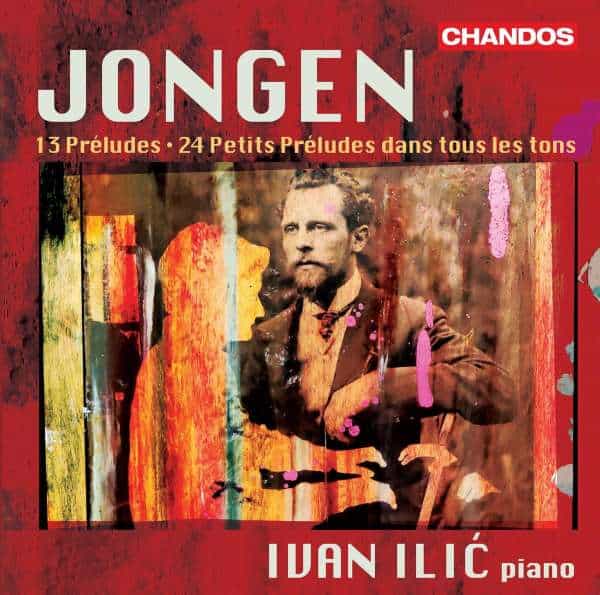
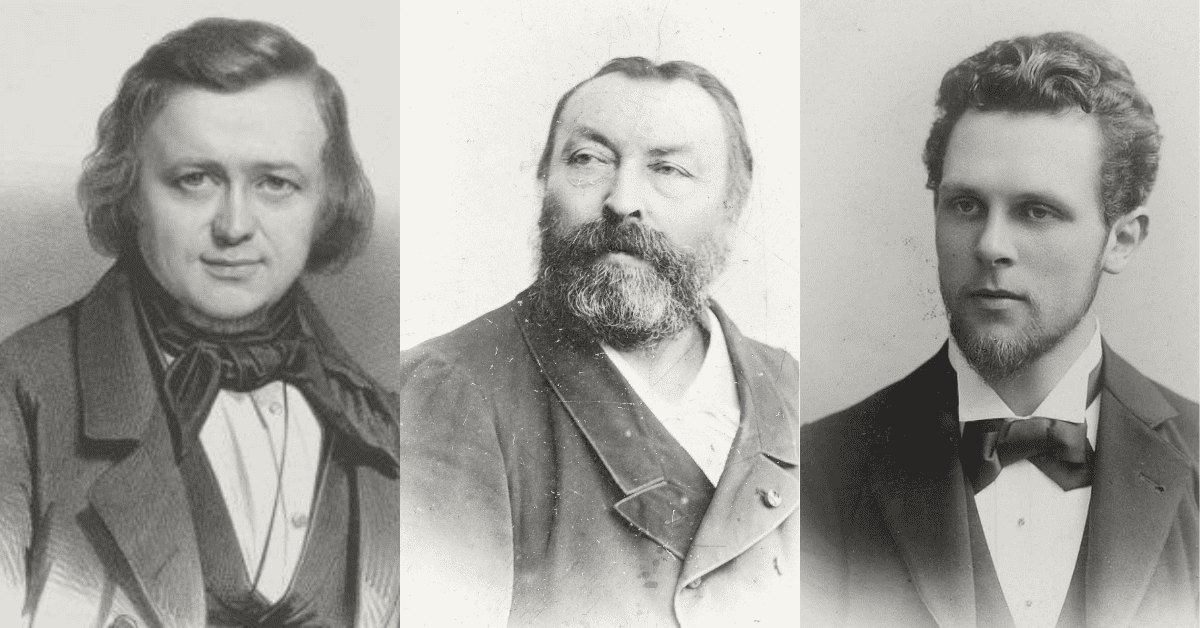
Pianist Ivan Ilić has released music from across the language border. He presents an album filled with piano preludes by Walloon composer Joseph Jongen (1875-1953). This Liège composer amassed an impressive body of work during his lifetime. Yet nowadays few of his scores see the light of day. Perhaps because he had less influence than his Liège colleague César Franck. Ilić disproves this reasoning with this album.
Jongen composed six opus of preludes including two collections: 13 Préludes, Op.69 (1922) and 24 Petits Préludes dans tout les tons, Op.116 (1940-41). The first collection from 1922 represents an important turning point in Jongen's compositional style. His early works show considerable influence from Fauré. But from 1922 onwards, from this prelude collection, Jongen seems to have found his own voice and style.
The inscription "Inquiétude" is certainly not chosen incorrectly for the first prelude. The constant stream of notes in the right hand and rapid chords in the left hand give this movement an restless character. The unusual 5/4 meter (occasionally interrupted by a 3/2 expansion) also creates an uncomfortable sense of time. There is always one note too many in each group. This collection does not open with a bravura piece featuring impressive virtuosity. Yet this opener is certainly equally challenging technically. Not to say even more challenging. The pianist must not lose himself in the unstable flow of the music but must engage his inner metronome to stay in time.
The stylistic contrast with other preludes, including no. 5 "Eau tranquille", is striking. Yet certain characteristics recur. The right hand is characterized by a constant stream of parallel thirds that give voice to water. In the left hand, an arpeggio (rapid chord notes in succession) sounds, followed by a note of the chord repeated as a pulse. In another way, Jongen creates rhythmic discrepancy here. Rather than providing an accent at regular intervals, he shifts it constantly. As a listener, you lose an anchor point in time. The capricious path of the water comes alive in this way. Again, it is not so much virtuosity that is the challenge for the pianist, but rather keeping track of these shifts so he himself doesn't get lost.
Perhaps the most virtuosic prelude from this collection is no. 11 "Papillons noirs". This prelude opens with an eye-catching chord, after which the playing begins. The right hand moves from left to right across the keys back and forth, while the left hand supports the note stream with chords.
With the second collection on this album, Ilić also brings Jongen's later style to the fore. With 24 preludes in all keys, Jongen aligns himself with a musical tradition that found inspiration in Das wohltemperierte Klavier by J.S. Bach. In the Romantic era, it had become customary to work progressively by key signature (e.g.: C major followed by A minor). Composers such as Chopin and Shostakovich organized their collections in this manner. Jongen, however, returns to Bach's organization and groups the parallel keys together (e.g.: C major followed by C minor).
In other ways too, Jongen looks back to the music of his predecessors, particularly the Baroque. Forms such as the canon (no. 5), the fughetta (no. 8) and the sarabande (no. 14) make their entrance. Jongen also includes lesser-known genres such as the late seventeenth-century Provençal folk dance rigaudon (no. 13) in this collection. With attention to phrasing, intonation and accentuation, Ilić brings these preludes to life in a delightful manner.
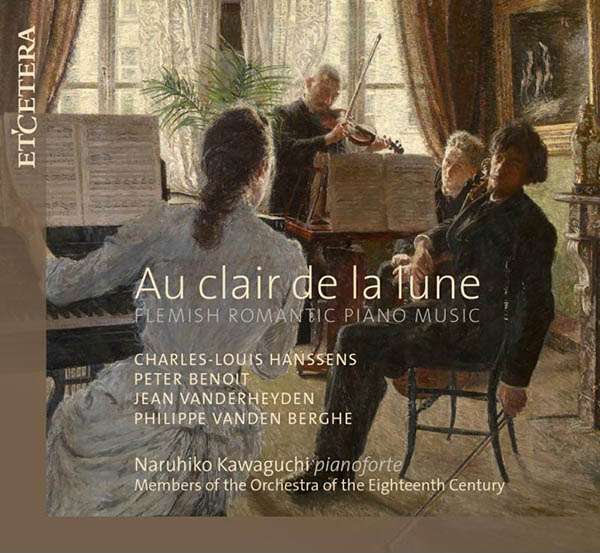
WHO: Naruhiko Kawaguchi [piano], members of Orchestra of the Eighteenth Century (track 01: Sophie Wedell & Franc Polman [violin], Yoshiko Morita [viola], Albert Brüggen [cello], Maggie Urquhart [double bass])
WHAT: Au clair de la lune - Flemish Romantic Piano Music
RELEASE: Et'cetera KTC1718
ORDER: JPC
WHO: Ivan Ilić [piano]
WHAT: Jongen: Préludes
RELEASE: Chandos CHAN20264
ORDER: JPC