
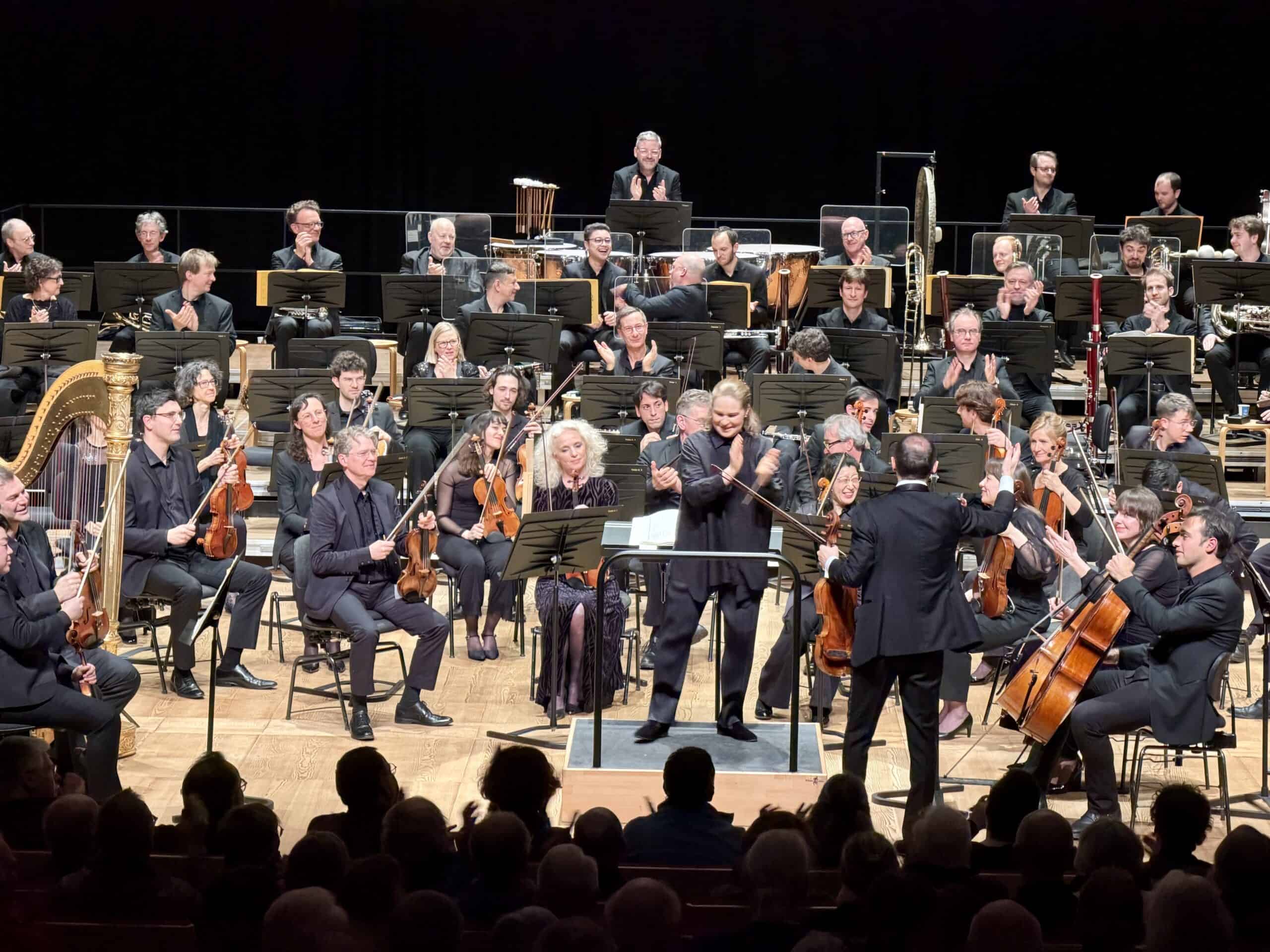
During the weekend of February 21 and 22, 2026, the Belgian National Orchestra under the baton of Eva Ollikainen presented a program entirely devoted to Romantic intensity and existential depth: Harold in Italy by Hector Berlioz and the Sixth Symphony by Pyotr Ilyich Tchaikovsky. We chose to attend the performance of February 21 at the Grand Manège in Namur. This meant a slightly longer journey, but the choice proved more than justified. The bright, spacious, and pleasantly ventilated hall offered a listening comfort that one does not always experience in the often overheated and stale Henry Le Boeuf hall at BOZAR. Music like this demands breathing space—both literally and figuratively.
What made this program particularly strong was the interconnection between both works. Although Berlioz and Tchaikovsky are separated by roughly sixty years and several thousand kilometers, they share the same Romantic sensibility: a pronounced subjectivity, a fascination with the inner landscape, and an orchestral language that does not conceal emotions but amplifies them. The combination of these two scores gave the evening an extra dramatic layering. The introspective wandering of Berlioz' Harold found, as it were, a distant echo in the existential despair of Tchaikovsky's last symphony. As a result, it was not merely a chronological succession of two masterworks, but a carefully constructed arc of tension.
Berlioz: a wandering soul with viola
Harold in Italy is not a classical concerto, but a hybrid work in which the viola functions as a contemplative traveler wandering through orchestral landscapes. Antoine Tamestit gave that wandering character an exceptional layering. His tone was warm and incisive, without ever becoming heavy. He chose not for emphatic virtuosity, but for a narrative approach in which color and phrasing were central.
What particularly struck was the natural manner in which Tamestit inscribed himself into the orchestral fabric. The balance between soloist and orchestra was exemplary. Ollikainen carefully safeguarded the transparency of Berlioz' often delicate orchestration, so that the viola was never overwhelmed, but neither was it artificially pushed forward. In the second movement, with its processional character, an almost understated atmosphere of stillness emerged, in which orchestra and soloist encountered each other in a subtle field of tension. The finale brought sharper contrasts and more dramatic accents, which the orchestra executed with precision and energy.
Tchaikovsky: the inescapable weight of the Sixth
After the intermission came Tchaikovsky's Sixth Symphony, the "Pathétique". Ollikainen chose an interpretation that was emotionally charged, yet never sentimental. The first movement was organically constructed, with a clear arc of tension and carefully calibrated climaxes. The thematic oppositions were worked out clearly, without losing sight of the larger line.
The asymmetrical waltz rhythm of the second movement received a light irony, while the scherzo was impressively built up to what seemed a triumphant climax. The orchestra sounded here homogeneous and powerful, with well-aimed brass and energetic strings. That the audience withheld applause until after the final section strengthened the dramatic impact of the work.
In that last movement, the existential core of the symphony came fully into bloom. The strings played with a soft yet intense dignity, which in the acoustics of the Grand Manège came particularly beautifully into its own. The space allowed the sound to breathe and gave the pianissimo passages an almost tangible tension. The conclusion, slowly fading away, was delivered with a remarkable concentration. The silence that followed was not a formality, but a natural extension of the music.
The Belgian National Orchestra confirmed with this concert its high level. Eva Ollikainen proved herself a conductor with a clear conception and a sharp sense of dramaturgy, while Antoine Tamestit with his deeply felt interpretation of Harold in Italy left a lasting impression. In the combination of these two works lay a special power: two voices from different times and places that, once placed alongside each other, entered into a surprisingly coherent and compelling musical dialogue.