
Young talent infuses monumental symphony in Magdeburg
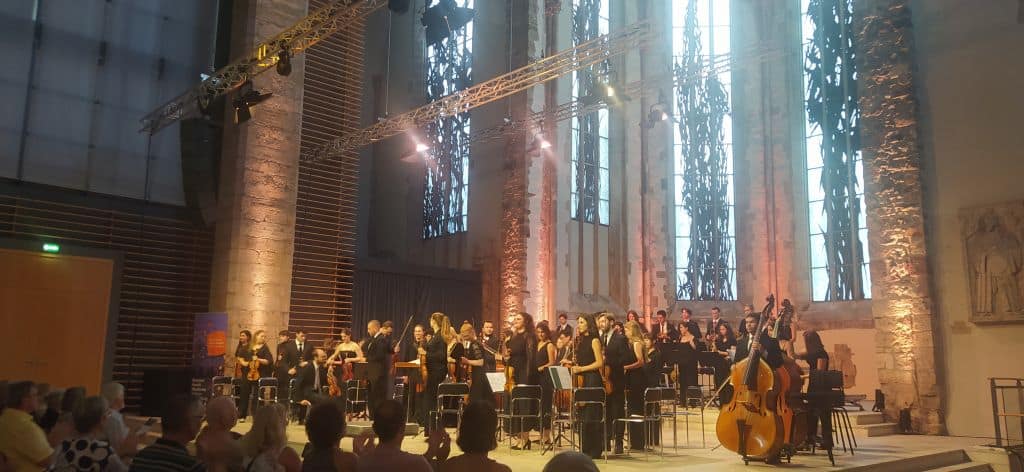 In the sacred space of the Johanniskirche in Magdeburg – where Gothic arches reach toward the light and raw stone bears witness to devastation and restoration – on Sunday, August 10, a performance of Bruckner's Fifth resonated deeply. Not through perfection. Not through orchestral supremacy. But through soul. Through who played, and how.
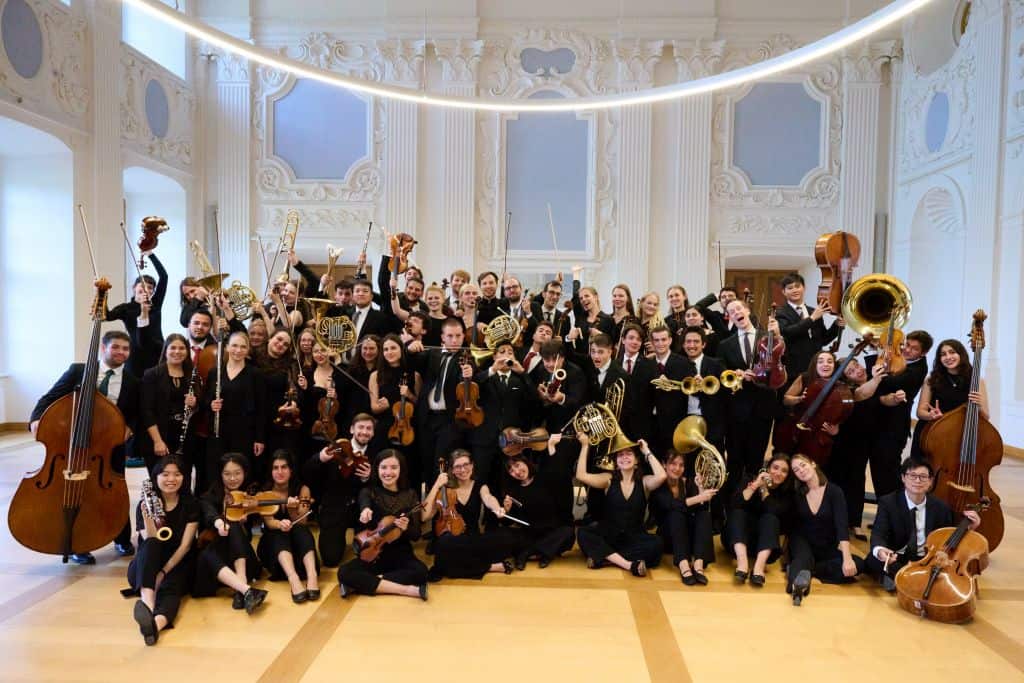
On stage: the Internationales Akademieorchester of the SommerMusikAkademie Schloss Hundisburg. Fifty young musicians from more than 23 countries – some not yet twenty, others from regions where silence means fear rather than peace. They had one week. No established master, no certainty. Only score, intention, each other's presence, and the hunger of young people to mean something. What unfolded was not a predictable closing event of a summer academy. It was a ritual in which generations and cultures met. Where music became not spectacle, but testimony. Where the breath of Anton Bruckner (04.09.1824 – 11.10.1896) was not captured in strict tempi, but carried like a prayer.
An orchestra as temporary community
The SommerMusikAkademie Schloss Hundisburg is not a school like any other. It is rather a living organism: a place where musicality ripens, and where the human who makes music is also central. Here technique is not seen separately from meaning, and virtuosity not from empathy. Young people from the furthest corners of the world find here more than sound: they find each other. They share stories, silences, glances. Not flat uniformity, but a richly varied mosaic of voices. Not competition, but dialogue.
What made this performance so special was precisely that: the sound was collective, breathing, listening. No soloist's willfulness overshadowing the whole, but an inner flow in which each voice joined the greater whole. Bruckner's Fifth, a symphony of structures and tensions, became here not a construction of technique, but a cathedral of sound and meaning.
 Praetorius: conductor with spiritual compass
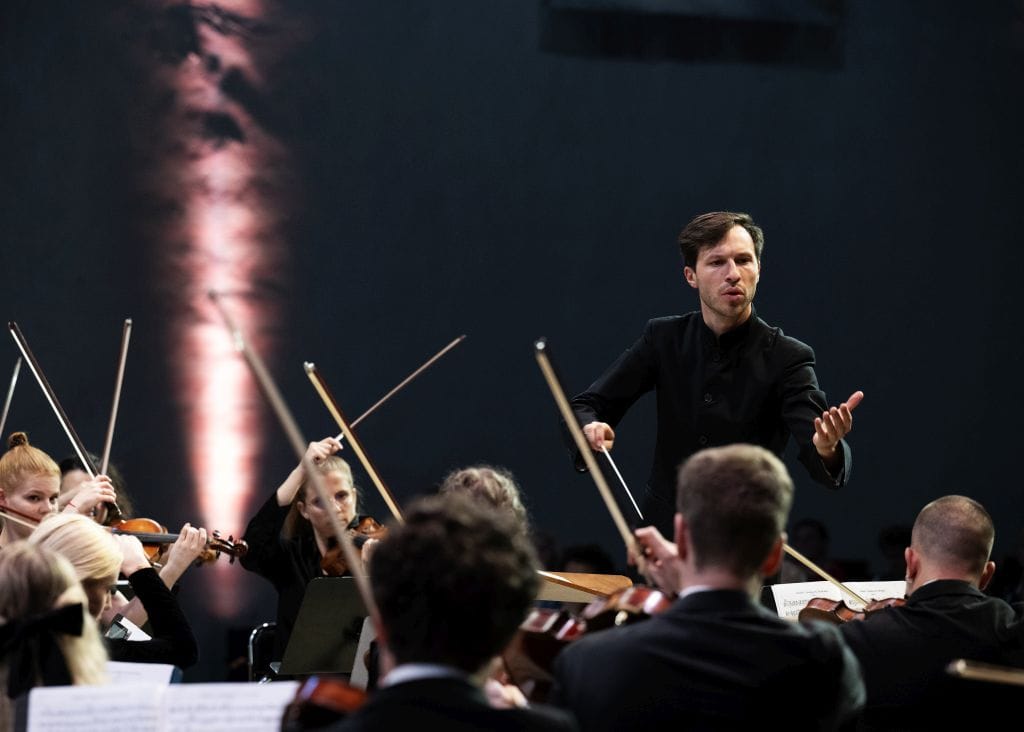
At the center of this sound-structure stood Friedrich Praetorius. A young conductor with remarkable natural authority. Not authoritarian, but attentive. Not governed by schemas, but by breath, space, time. Although he never knew Sergiu Celibidache personally – he was born in the year of his death – his approach breathes something of that spirit: the waiting, the allowing to grow, the honoring of silence as a bearer of meaning. Not as style, but as conviction. In the Adagio, that heart of Bruckner's Fifth in which sorrow and hope unfold in slow arches, Praetorius led his orchestra with an almost sacred precision. Every pause was charged. Every subtle acceleration was laden with intention. His interpretation showed what music can be when it does not impose itself, but reveals itself – when it does not play, but speaks.
Music as moral force
In a world that increasingly produces loud division, this concert spoke in whispered but all the more convincing terms of connection. Here no sloganeering ideals, but a simple, tangible reality: Russian and Ukrainian musicians, playing beside each other. Not as a press release, but as a human act.
What Bruckner wrote – music that reaches toward the infinite, yet remains rooted in human vulnerability – received an extra charge here. As if every note was nourished by what remained unspoken between the seats: longing for peace, for closeness, for meaning. Each phrase became a miniature of empathy. The music spoke to the heart, not through effect-seeking, but through authenticity. Here music sounded not as abstraction, but as bridge. Not as metaphor, but as deed.
 A ruin as witness
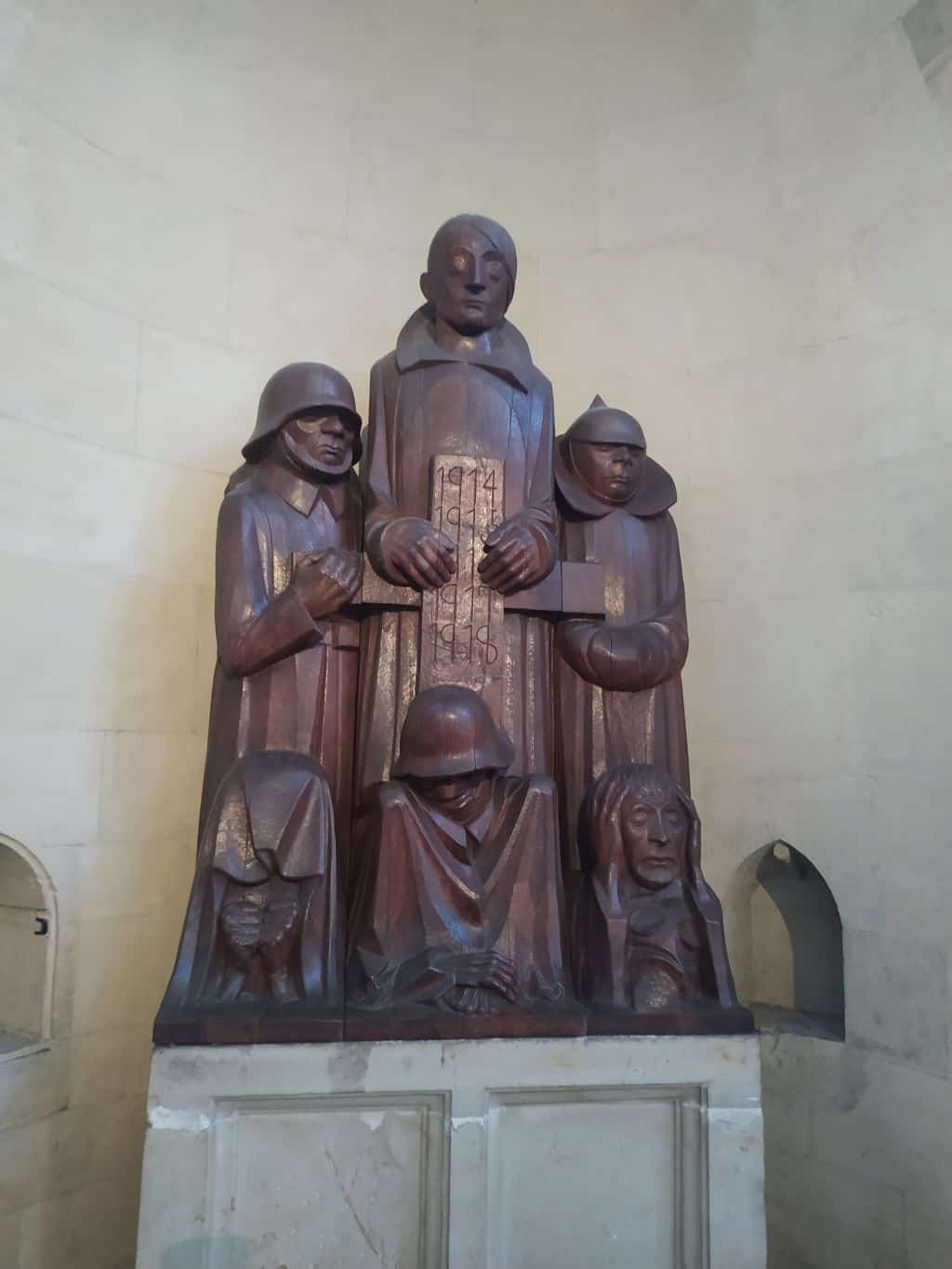
The Johanniskirche, partly ruin, partly restored, breathed along. Its open roof, its unfinished walls, its history as a bombed space: everything resonated with Bruckner's sound world, which itself is a field of tension between foundation and transcendence, between structure and surrender. During the Adagio, Ernst Barlach's Ehrenmal (02.01.1870 - 24.10.1938) loomed in thought – that silent memorial in Magdeburg's Dom, where a bending figure embodies the senselessness of war in restrained grief. A work once removed by the Nazi regime, for fear of its pacifist power. Bruckner's music – with its slow lines, its compelling slow breathing – reflected this intensity. Image and sound seemed to meet, in silence, in seriousness, in their shared refusal to shout where whispering suffices.
From structure to release
The performance carried the monumental structure of the symphony not only technically, but also dramaturgically convincingly. Each section found its natural place within the greater whole. The dark, incantatory opening made room for the Adagio, the beating heart of the work, which unfolded like an inner journey — slow, intense and permeated with an almost sacred silence. Only then did the scherzo break loose: a pulsing explosion of energy, a powerful breath that contrasted with the measured weight of the preceding section.
In the finale — with its notorious fugue — there was no muscular music, but a shared climb toward the light. In Praetorius' hands, complexity always remained organic, never cerebral. The fugue became a spiritual resolution, a collective prayer; not a display of power, but restrained glory. Like light falling through stained glass and at once breaking and bundling together, so sounded the final measures: as something higher, yet brought forth by human beings.
Coda in sound and silence
As an encore, the musicians sang — without typical choir formation, scattered across the stage — Locus iste. A motet that Bruckner wrote for sacred space. No show, no finale, but an echo. The voices mingled with the stone vault, the breath of the space and the silence of the audience. It was as if the church itself sang. As if sound, memory and hope converged for a moment in a single breath. After the performance came embraces, farewells, long looks. Not everything was spoken, but much was felt. Some knew: perhaps we will never play together again. That very awareness gave the moment its weight.
Epilogue: a memory that keeps trembling
What made this concert exceptional was not merely the quality of performance, but the conviction with which it was played. Not the "how" prevailed, but the "why". What sounded here was a testimony: that music, in the hands of young people with open ears and hearts, can be more than sound. That it is a language that builds bridges where words fall short.
The SommerMusikAkademie Schloss Hundisburg proved itself to be more than an academy: as a workshop of hope. A breeding ground of humanity in sound. A place where listening matters more than speaking, and where connection is not an ideal, but a practice — in tone, in silence, in presence. And somewhere — beneath the vault of the Johanniskirche, between stone and air — something lingers. A tremor. A memory. Invisible, but palpable. As a promise. As light.