
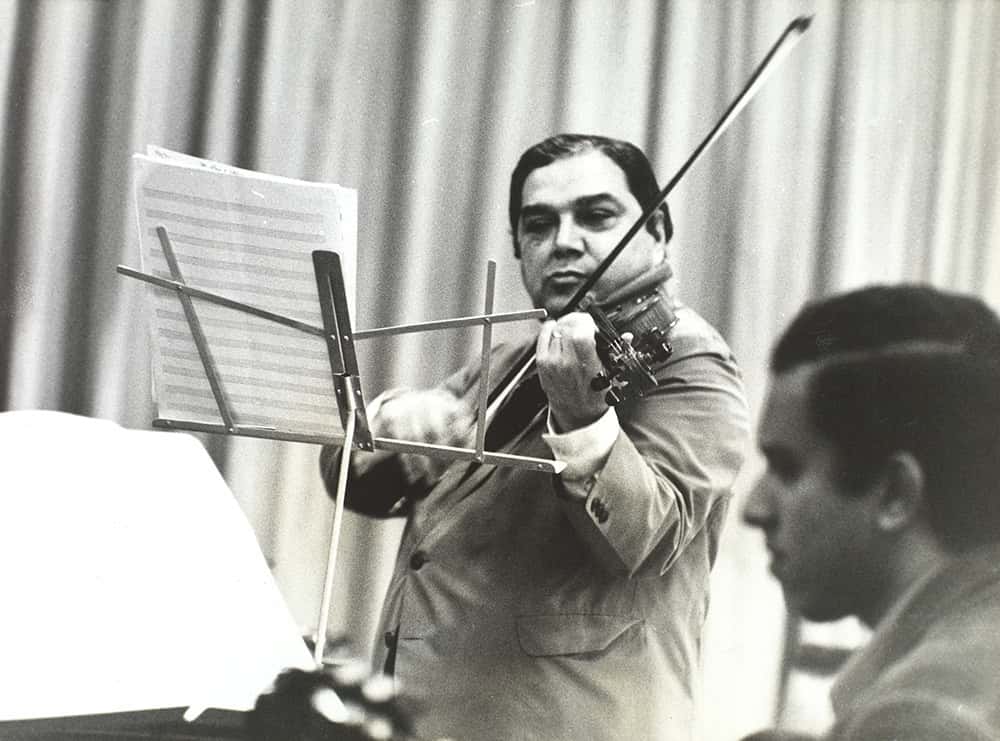
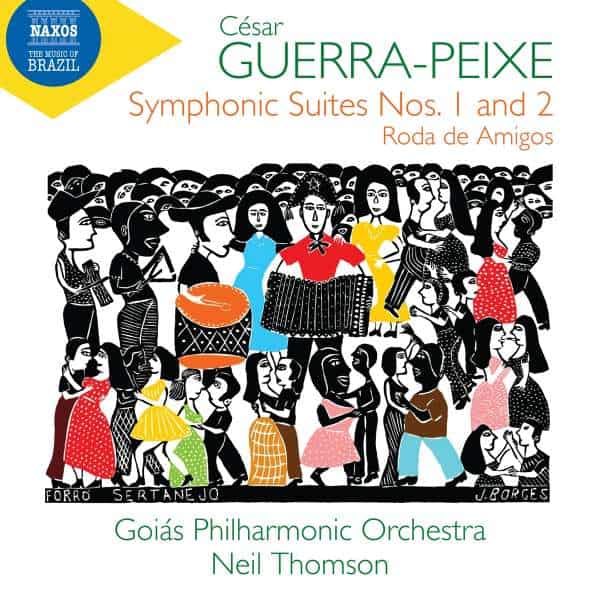
The latest addition to Naxos' Music of Brazil-series is the music of César Guerra-Peixe (1914-1993). In his symphonic works the composer blends indigenous music with European classical music. British conductor Neil Thomson succeeds, together with the Goiás Philharmonic Orchestra, in bringing Guerra-Peixe's exuberant character back to life.
The series Music of Brazil is part of the Brasil em Concerto-project. To commemorate 200 years of Brazilian independence, the country's musical heritage is being recorded on cd (often for the first time). The first cd (8.574067) featured music by Alberto Nepomuceno (1864-1920), a champion of Brazilian cultural nationalism. The most recent addition is the symphonic music of César Guerra-Peixe (1914-1993).
Assimilation and inclusivity
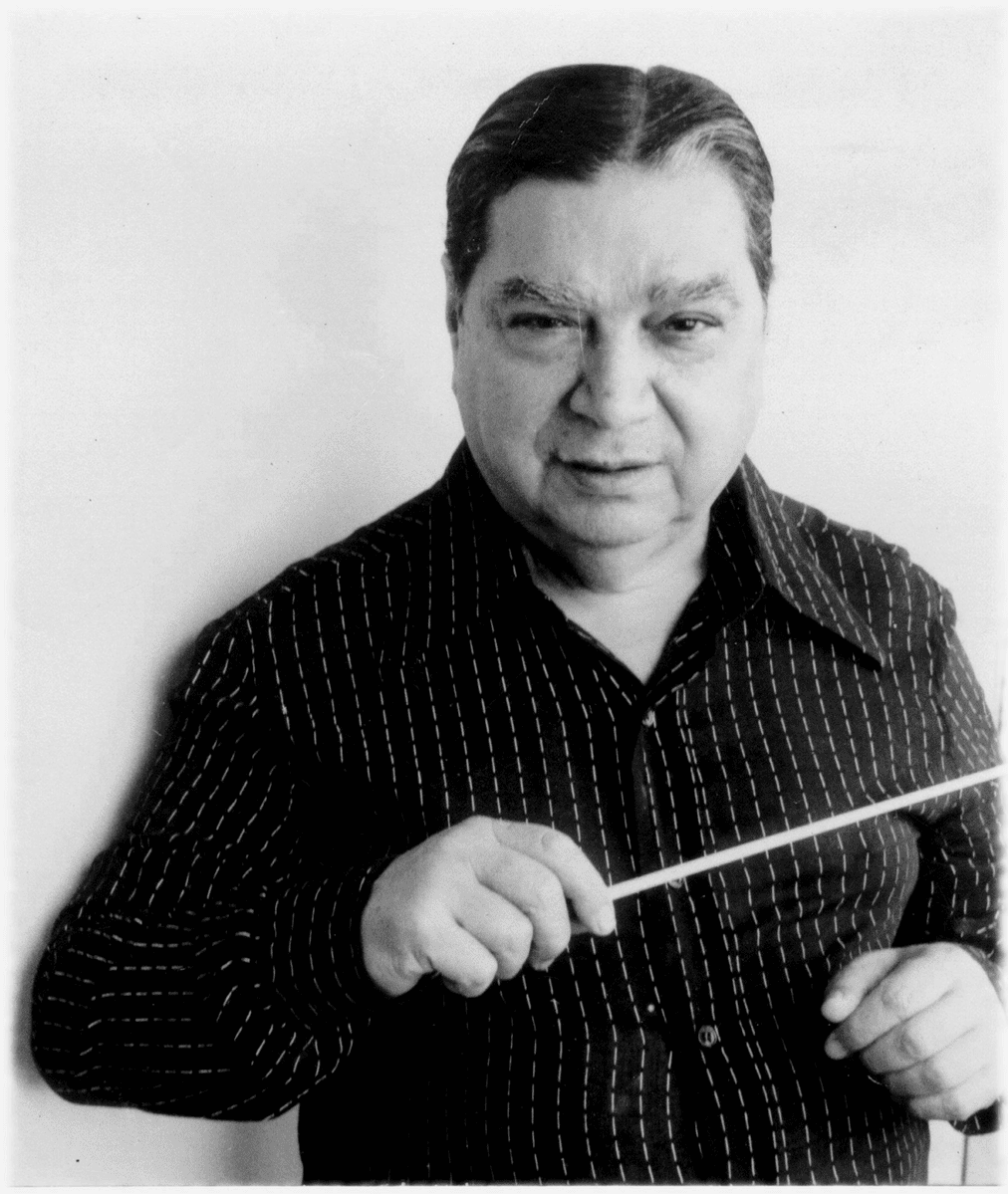 César Guerra-Peixe was born in Petrópolis, The Imperial City of Brazil. He was the son of Portuguese immigrants with a Roma background. This multicultural background later translated into his compositions as well.
Guerra-Peixe studied from 1932 to 1940 at the Escola Nacional de Música in Rio de Janeiro. After his studies in violin and composition he joined the Música Viva movement and followed the example of Hans-Joachim Koellreutter who brought serialism to Brazil. Disappointed with avant-garde techniques, young Guerra-Peixe sought other sources of inspiration. He found them in his country's traditional music. It is from this ethnomusicological quest and experimentation that his Symphonic Suites Nos. 1 & 2 (1955) emerged.
Sounding Brazilian culture
In his two symphonic suites two Brazilian regions come to life musically. The first suite with the subtitle "Paulista" evokes the state of São Paulo and the second study with the subtitle "Pernambucana" evokes the state of Pernambuco. Both follow a traditional four-movement structure, with the first part opening with a dance, followed by a fast movement and a third lyrical section, concluding with an exuberant and fast finale.
Symphonic Suites Nos. 1 opens with "Cateretê" named after the Brazilian dance of the same name incorporated in this section. Rhythmic passages alternate with a free, song-like style. The strings and brass of the two fast sections "Jongo" and "Tambu" are linked to one another and both draw from the same material, namely an Afro-Brazilian dance. The second movement "Jongo" refers to the dance itself while the fourth movement "Tambu" refers to the characteristic percussion instrument. The enthusiastic percussion section and brass of the Goiás Philharmonic Orchestra make it impossible not to move with the music.
In Roda De Amigos (1979) — the work placed between the two suites on the cd — the woodwinds show their exceptional qualities in short solos. The soloists engage in dialogue with the orchestra, which here has more of a supporting function. Like the suites, this intermezzo also refers to Brazilian culture. The title Roda refers to a Brazilian tradition associated with, among others, capoeira in which friends make music in a circle.
The cd closes with Symphonic Suites Nos. 2. In this second suite too, the percussionists and woodwinds excel. The complex rhythms and detailed instructions of the composer in "Maracatu" are performed in an exceptional manner. In "Frevo" the skilled interpretation of the brass and in particular that of the clarinet solo is in the spotlight. Conductor Neil Thomson brings out the essence of each traditional style with power and sophistication. This results in a lively and exciting listening experience.
 4.5/5
4.5/5
- WHO: Goiás Philharmonic Orchestra conducted by Neil Thomson
- WHAT: Guerra-Peixe: Symphonic Suites Nos. 1 & 2
- LABEL: NAXOS 8.573925
- ORDER: JPC