
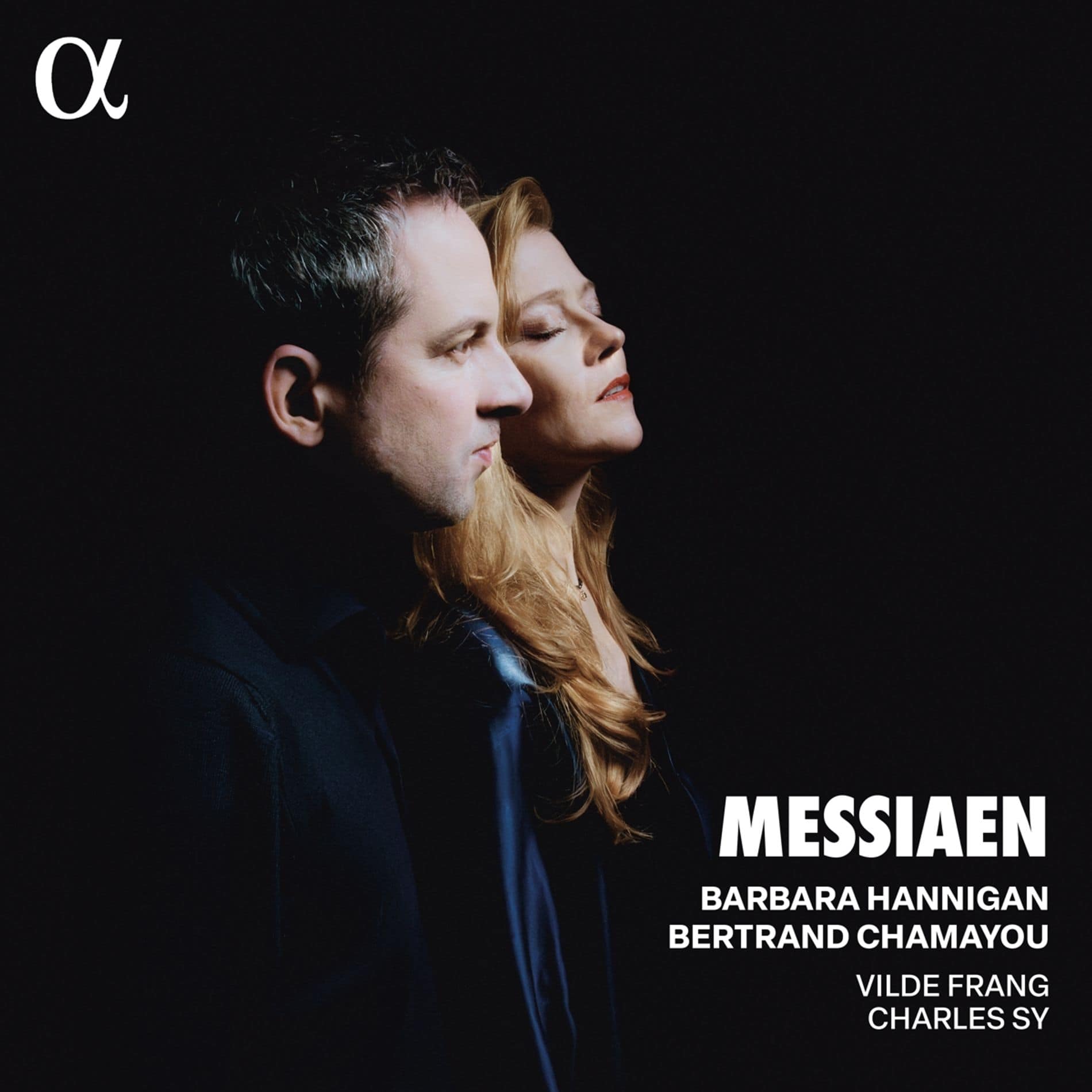
On this album two song cycles by Olivier Messiaen (1908-1992) for soprano and piano on his own texts: Chants de Terre et de Ciel and Poèmes pour Mi. Messiaen completed Poèmes in 1936 (the version for soprano and orchestra was created a year later) and Chants in 1938. La Mort du Nombre, also on his own text, for soprano, tenor, violin and piano, dates from 1930.
Although these are works that found their way fairly early in Messiaen's creative spirit, we already find in them the first characteristics of his later work, the enchanting transformation of religiously tinged images (the Poèmes are based on text fragments from the New Testament) and personal impressions into musical expression. Furthermore, it cannot escape anyone's notice that in both cycles the sensual-erotic occupies a prominent place, inspired by his warm but ultimately failed relationship with his first wife, the violinist and composer Claire Delbos. Chants is closely linked to the birth of their son Pascal.
In La Mort, Messiaen has brought two souls together, both filled with deep sorrow because they are separated from each other. The second soul: 'Je veux m'approcher / Quelle force invisible m'arrête? / Pour qui ces liens? / Pour qui ces chaines?' To the questions comes no answer.
Barbara Hannigan shows us in all her vocal beauty a sublime flowing blend of intensity, intimacy and refinement, with Bertrand Chamayou in his most inspiring and colourful role as pianist ('accompanist' is hardly adequate, far from it). They have been working together for a long time and thus seem to have built an almost intuitive musical relationship from which this recital also fully benefits. Poèmes pour Mi requires according to the composer a 'soprano dramatique', a requirement that Hannigan with her rather light soprano voice cannot meet, but her expressive power makes up for much.
In La Mort du Nombre, the imaginative and theatricality-free contribution of tenor Charles Sy is equally striking. Violinist Vilde Frang combines a fervent tone with deeply felt expression.