
Click here for the table of contents

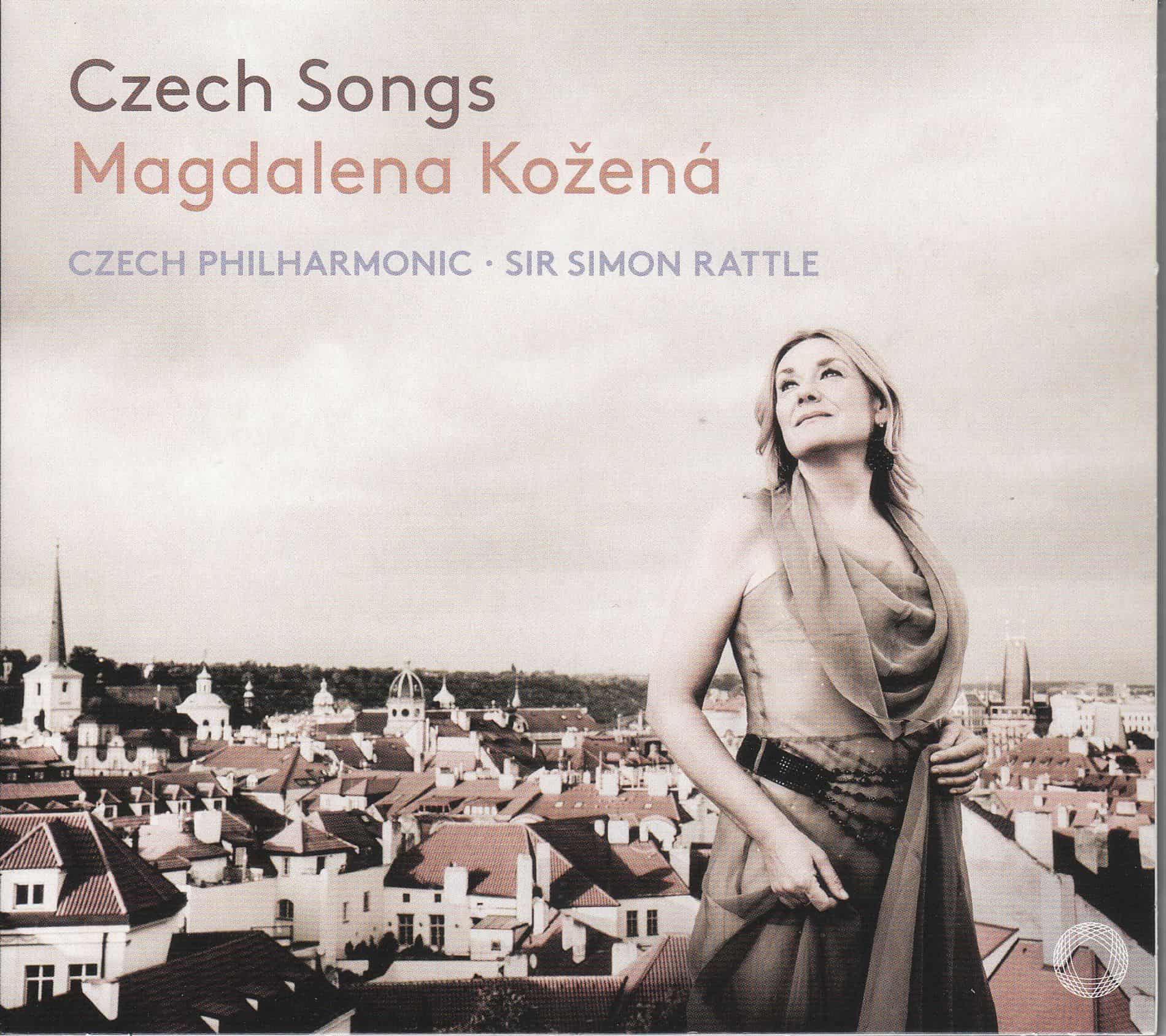
Magdalena Kožená, the Czech mezzo, has a 'thing' with Czech folk music, as became so clear and convincing from the here reviewed recital by me - Folk Songs, the album title speaks for itself - with as then driven by her vocal intensity musical partners the Czech Philharmonic Orchestra under the direction of her husband Sir Simon Rattle. Her excellent vocal art and idiomatic interpretations must certainly have melted many a musical heart back then. That will, as far as this second album is concerned, certainly be no less.
The same characteristics also make this second release a rewarding and adventurous experience, and we hear her warm and radiant mezzo in a mixed programme that - it is more than merely a curiosity - also includes the seven songs by Bohuslav Martinu based on Japanese folklore from 1912, stemming from a period when virtually everything that came from Japan as well as from other parts of Asia was not only in Western but also in Central Europe decidedly 'en vogue'. As was the case, for example, with Mahler's Das Lied von der Erde, completed in 1909 and based on Chinese texts translated into German.
It was the German translator Paul Enderling who published his Japanische Novellen und Gedichte in 1905, which in turn formed the basis for the Czech poet Emanuel Lešehrad and thus for Martinu's Nipponari: Ukázky žaponské lyriky (freely translated Nipponari: Examples of Japanese Poetry). It should be noted that Martinu employed a great variety of different styles in his compositions that were not necessarily traceable to those of Central Europe (although those were not absent from his remarkable oeuvre either).
Hans Krása and Gideon Klein are also represented on this gem. Krása with his first official opus, the four orchestral songs, and Gideon Klein with his Wiegenlied. Both composed during their forced stay in the transit camp Terezín (Theresienstadt). Krása died on 17 October 1944 in the gas chamber of Auschwitz-Birkenau, Klein probably on 27 January 1945 in the labour camp Furstengrübe near Katowice; although some sources write that he lost his life during one of the many death marches (the Russians were on the heels of the Nazis).
Virtually all programme items fall far outside the 'iron' repertoire, which makes this album as a whole even more attractive, albeit that the orchestrations by Jiří Teml and Jiří Gemrot respectively represent an unavoidable toll on the original (vocal line and piano).
The palm of victory goes, however, to Magdalena Kožená, whose mezzo lends itself both to the youthful-radiant, slender and warm as well as to the somber undertones. Her expression reaches far, her diction is above all criticism, and the beautifully highlighted orchestra provides the necessary synergy. Thus a particularly successful sequel to Folk Songs!