
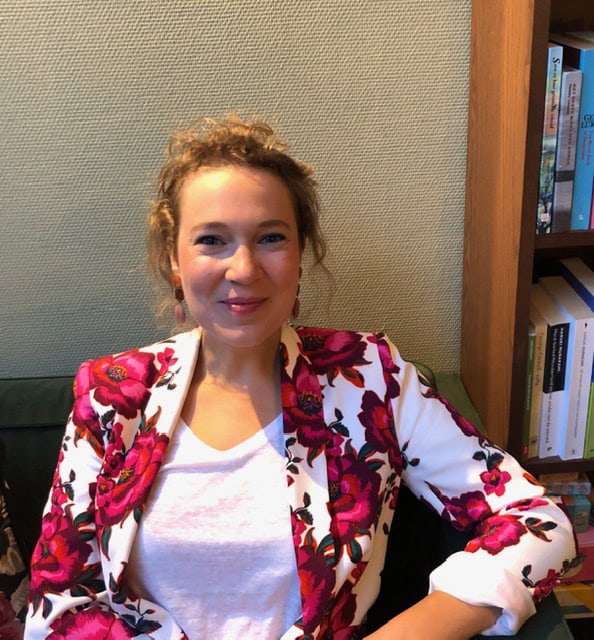
text submitted by Tille Van Gastel, professional flautist and performance coach specializing in stage fright and fear of failure
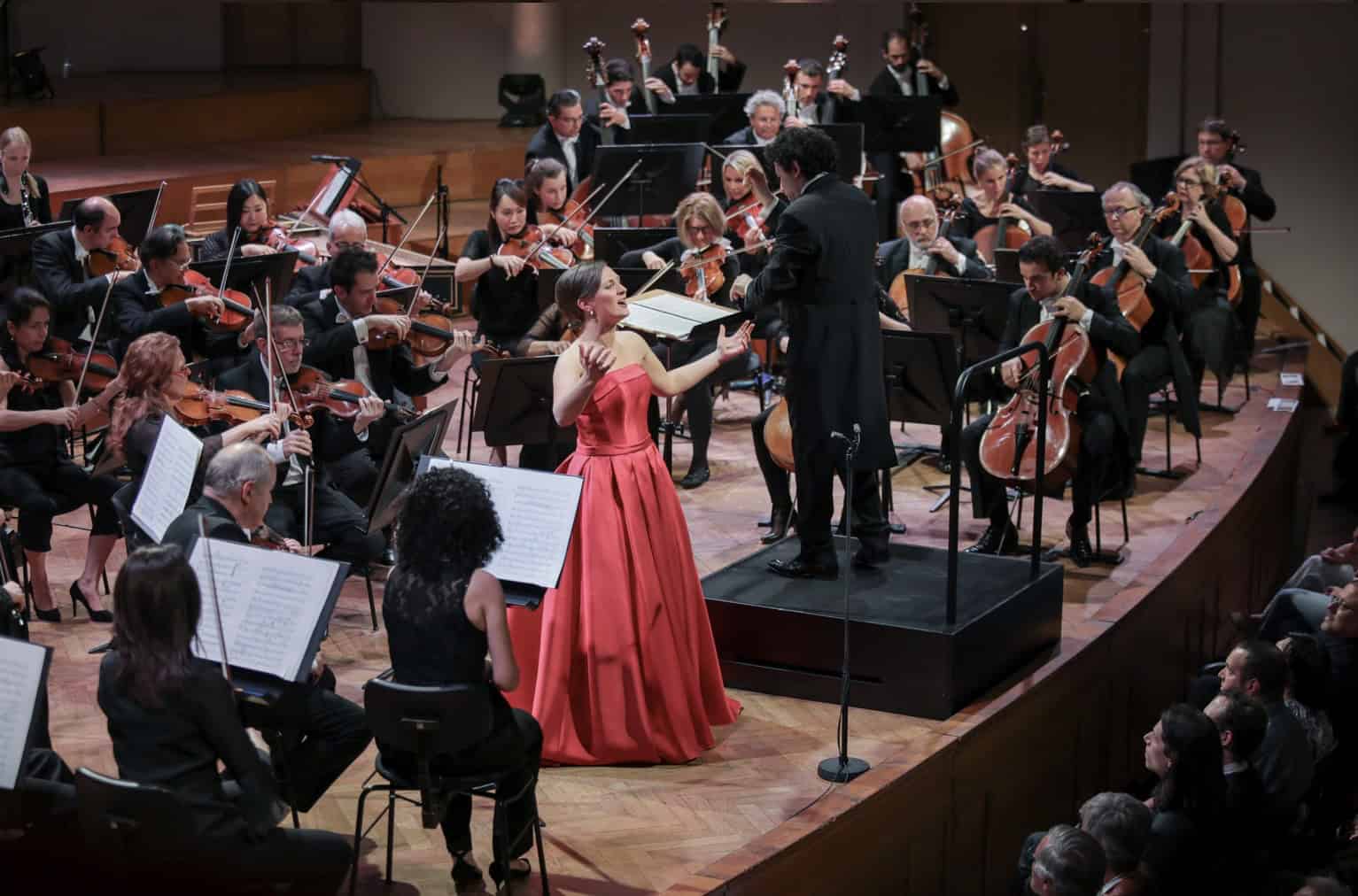
Last month, the Koningin Elisabeth Wedstrijd took place once again. Cellists from all over the world traveled to Brussels to participate in this prestigious competition. For those young people, it is a great honor to be invited based on a few recordings submitted in December. What the audience gets to see is the result of months of hard work. That sentence sounds so banal, because what does "months of hard work" actually mean? Of course, this refers to the study process that focuses on the musical aspects, but at the same time, one must not overlook the mental part. Many of these young musicians experience high pressure on their shoulders, resulting in stressful performances. Figures tell us that 80 to 90% of professional musicians take medication just before they audition. Greats like Maria Callas, Pablo Casals and Vladimir Horowitz had a very difficult time in the final moments before they took the stage[1]. When comparing the classical music world to top sports, one can observe that there is a major difference in the way musicians are guided psychologically. In top sports, people are well aware of what it means to be in the spotlight and what consequences (positive and/or negative) that can have on performance. This is why there are so few top-level athletes who do not surround themselves with coaches, trainers, psychologists, etc. Despite the fact that musicians realize that their work has strong similarities with top sports, in practice talking about stress and anxiety remains a taboo. (this was addressed, among other things, in the book 'Musiceren is topsport' by Bert De Cuyper, Griet Baert and Linde Verjans, as well as in the book "De paradox van plankenkoorts" by Mieke Wouters) Stage fright manifests itself in many forms such as trauma stage fright, panic stage fright, compulsive stage fright and so on. The type of stage fright that occurs very frequently is social stage fright. What is typical of this kind of stage fright is that people worry a lot about what others think of them. That 'other' expresses itself in the form of the audience, colleagues, the conductor, the director and not least in oneself. But how does it actually come about that people attach so much importance to that as humans? How can one feel so insecure towards others? According to Dr. Steve Peters, humans have both a 'Chimp' and a 'Human' in their brain. A wild chimpanzee needs a group. Without a group, a solitary chimpanzee has much less chance of survival because it is easier for predators to catch it. However, if the chimpanzee is a member of a group, there are many more eyes and ears alert to protect it. Hence the strong instinct to gather as a group; being expelled from the group means almost certain death. That drive to belong is equally present in the inner 'Chimp' in the human brain. It is a need so powerful that people will do a great deal for it, sometimes at the cost of themselves. People so desperately want to be accepted and approved by the group because the inner Chimp tells them that danger lurks everywhere and they had better be part of a group. This results in group pressure where people think they need to impress others, make no mistakes, and too often 'please' others. The fact that one needs people around them is very normal and also conducive to happiness. What one must not lose sight of, on the other hand, is that one cannot be friends with everyone and that this certainly does not need to be. It is advisable to surround yourself with a few people you know are completely trustworthy and whom you really like. Invest in these friendships/loves and that is sufficient. One is never able to please everyone, however much the Chimp in humans would like to. Soprano Charlotte Wajnberg, laureate and public prize winner of the KEW in 2018, also recognizes the emotions that accompany social stage fright. She tackles them with an inner pep talk in which she reminds herself that she is 500% prepared, that she has done and will continue to do her best, and that the audience is not there to break her down. In addition to technical and musical preparation, mental preparation is also very important. In visualizations, she imagines the smallest details: how she takes the stage, how she will move and how she will leave the stage after the performance with a smile and a feeling of gratitude. It is precisely because of this intense and accurate preparation that it is possible for her to leave room for spontaneity at the moment of performance. By creating elementary habits through daily routines, Wajnberg can always fall back on these at moments of great tension. Those routines are both technical, such as warming up the voice, and structural, such as planning the day. On a performance day, if possible, she will retrieve her fixed pattern. For her, that is nothing more or less than taking up her professional responsibility. It is fascinating to know that musicians of her caliber also experience the same stress symptoms: a high heart rate, rapid breathing, suddenly feeling very hot,… These symptoms are far from pleasant and conducive to making music, but actually this is a way of the body to protect itself. The 'Chimp' thinks at times of stress that it is better to run away, fight or freeze, and to achieve this, a physical mechanism kicks in (the famous Fight, Flight or Freeze response). High heart rate, rapid breathing, dry mouth,… are expressions of that. As counterintuitive as it seems, the best response to this is gratitude rather than combativeness. Thanking your body for doing its job is more worthwhile than cursing it for its age-old mechanisms. As a human, one is rarely spared from limiting emotions and their side effects. Everyone can search for their own way to deal with them. Often, deep breathing (as simple as it sounds) is already a very great help. Also knowing what one needs at such a moment, in the form of self-recognition or confirmation, will resolve a large part of the panic. Great drives of humanity are the desire to be seen and to belong somewhere. If one succeeds in fulfilling these fundamental basic needs, one can make great strides forward. It is a continuous process that leaves plenty of room for development. The good news is that stage fright can be tackled; one really does not have to keep dealing with it! www.tillevangastel.be [1] Stage fright. Pim Wippoo en Liesbeth Citroen References:- The Chimp Paradox. Dr. Steve Peters
- The Tiger Wakes. Peter A. Levine
- Pim Wippoo en Liesbeth Citroen
- Rob Faltin
- The paradox of stage fright. Mieke Wouters
- Making music is a top sport. Bert De Cuyper, Griet Baert en Linde Verjans