
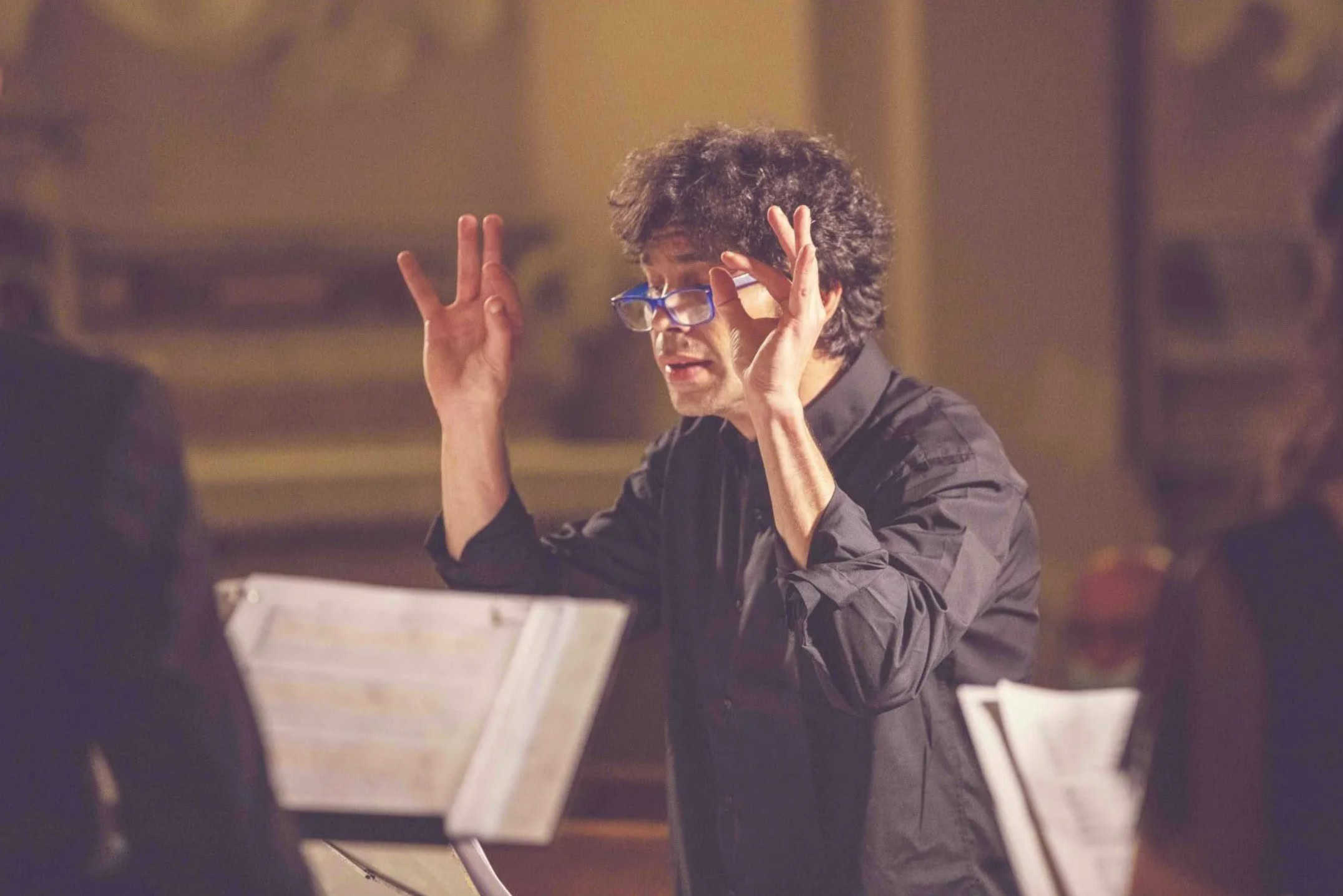
Giulio San Pietro del Negro (1565-1620) is a late Renaissance composer. For a long time he was merely a name but now thanks to the research of Maria Giovanna Brindisino (Conservatorio di Lecce) and Sarah Marianna Iacono (Università Del Salento) more is known about this composer. This is reflected, among other things, in the premiere recordings of his motets performed by Schola Cantorum Barensis under the direction of Gilberto Scordari.
This late-Renaissance composer was born in the Lecce region of the Salento area, better known as the heel of the Italian peninsula. The young Del Negro was born into a Genoese military family. He was the third of four sons. The oldest two Pasquale and Giovanni Battista excelled in both dueling and music-making. The two youngest Giulio and Agostino are described in the writings for each one of these activities. Agostino for his military art and Giulio for his music.
Giulio presumably followed the example of his older brother Giovanni Battista and apprenticed under maestro di cappella Francesco Antonio Baseo. Giulio San Pietro Del Negro began as a composer in his native region but in the first decade of the 17th century he moved 1,035 km north-west. He moved to Lombardy to further build his career there. His name appears in cultural hubs such as Milan and Pavia.
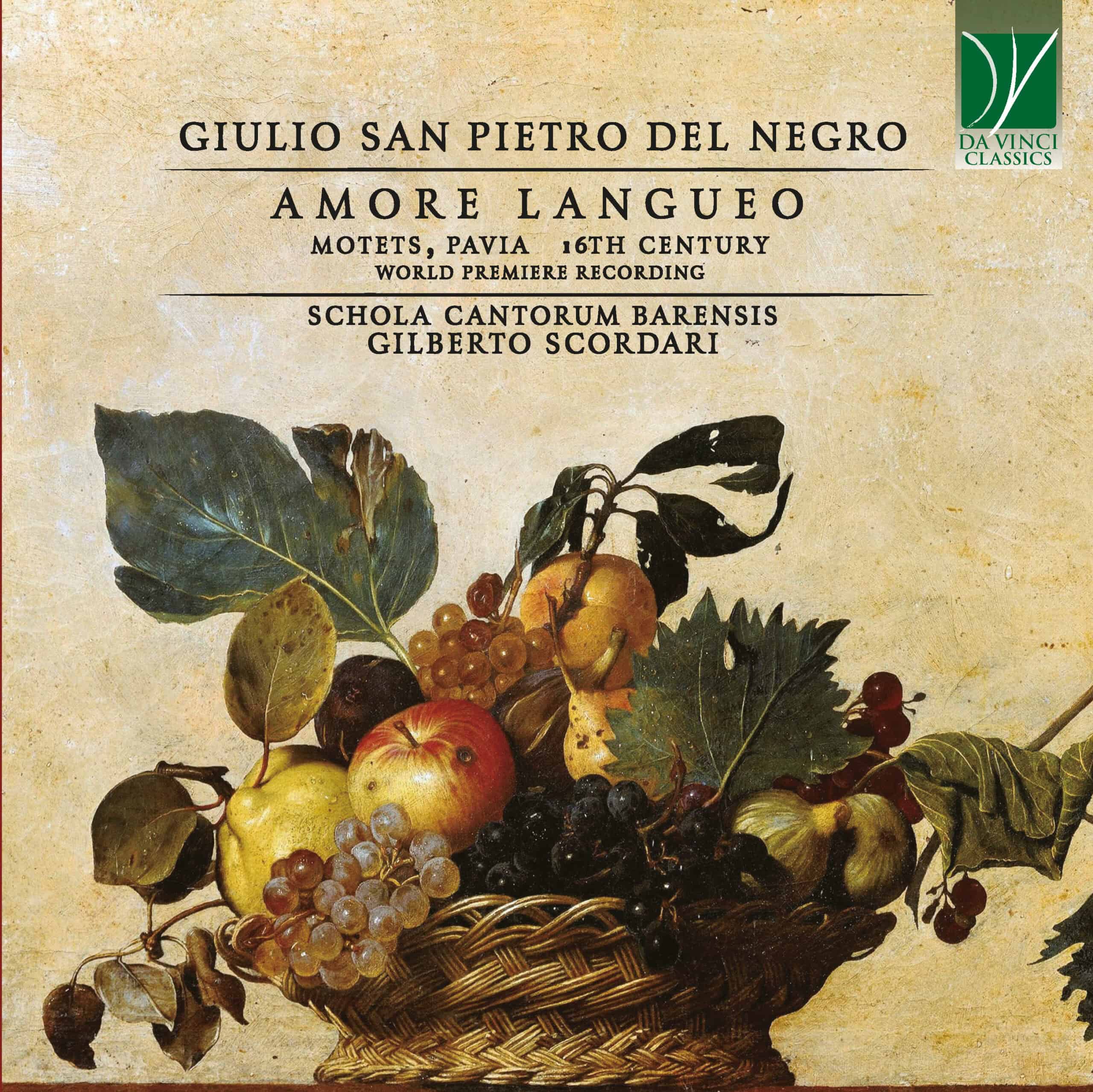
The album Amore Langueo reveals the link between Salento and Lombardy. Through 15 motets, the transition from prima prattica to seconda prattica, the transition from Renaissance to Baroque, becomes audible. The selected works come from the motet collection Amore langueo (1624). The album title Giulio San Pietro del Negro: Amore Langueo, Motets, Pavia, 16th Century immediately reveals what repertoire they perform. The early seconda prattica will be central.
Schola Cantorum Barensis under the direction of Gilberto Scordari opens with the two-voice Veniat dilectus meus. This work forms a bridge between polyphony and the Baroque motet. Imitation is still an important structural and dramatic element here. From Descendi in hortum meum [track 02] the seconda prattica is more clearly present. The instrumental accompaniment now also sounds like a true basso continuo. A beautiful and appropriate development of this repertoire.
The balance between the different members of Schola Cantorum Barensis, which consists of 6 singers, organ and cello, is clearly specifically chosen. The vocal voices are in the foreground. The continuo part is much softer. Almost as if you hear it from a distance. Often this provides a gentle support (as in Dulcis amor Iesu [track 12]) but sometimes this part is so quiet that you wonder if it is not superfluous. This is the case in Amore langueo [track 11]. This composition is sung by Valentina Varialle and often the organ simply doubles her part. Between the sections a small musical intermezzo sounds but due to the dynamic difference between vocal and instrumental it feels somewhat unnatural. What an unfortunate choice that this happens to be in the title track because in the other compositions this is not or less present.
3/5
- WHO: Schola Cantorum Barensis conducted by Gilberto Scordari
- WHAT: Giulio San Pietro del Negro: Amore Langueo, Motets, Pavia, 16th Century
- LABEL: Davinci Edition C00658
- ORDER: JPC