
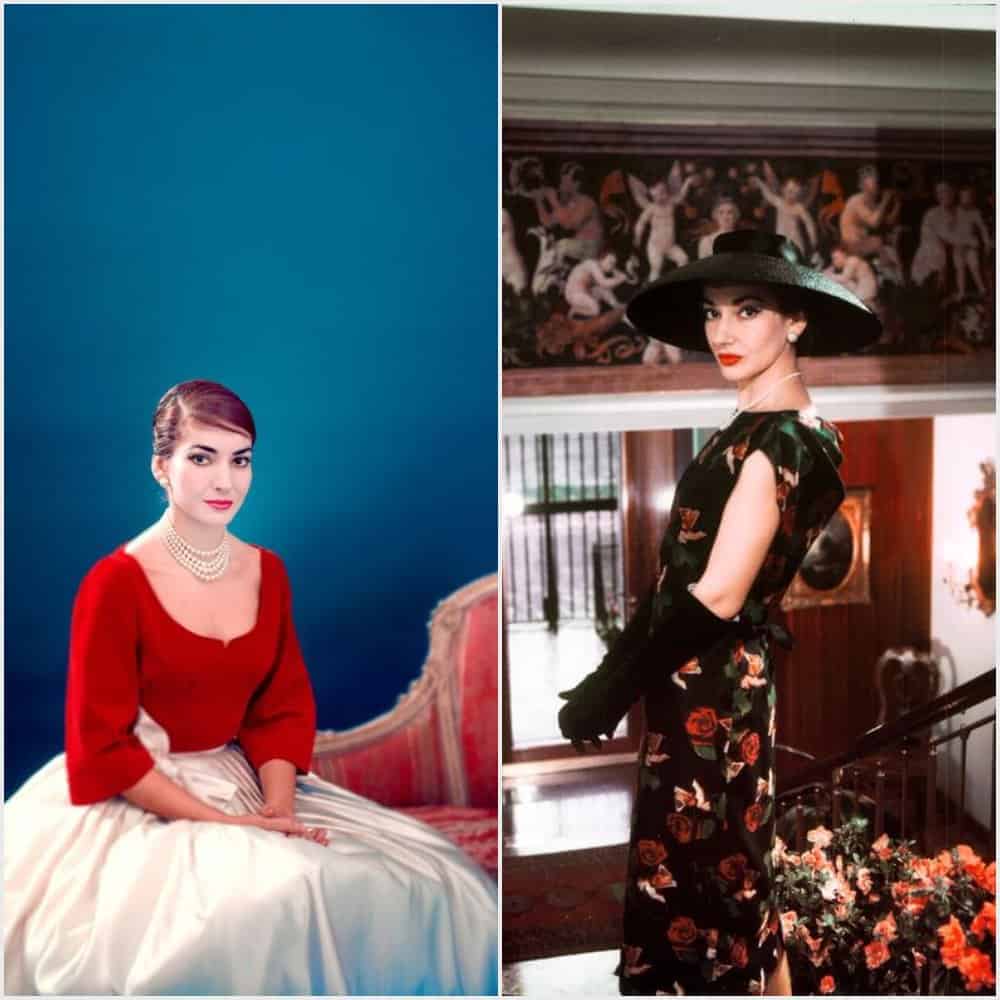
The documentary Maria by Callas which has been showing in cinemas this week presents a twofold picture of the singer in just under two hours. First and foremost the diva, a woman who feels like a fish in water in the world of glitter and glamour. At the same time, beneath that worldly surface we also see the vulnerable woman, who found fulfillment above all in her art, rather than in her personal life.
The film begins with an interview fragment in which Callas says there are two women in her, Maria as a person and the star singer. Her goal is to reconcile both as much as possible. In that sense, this documentary connects beautifully with the opening line of my review (October 2017) of the 45-part box Remastered live recordings 1949-1964 released by Warner Classics: "Everything you want to know about me is in my music". The interview is woven in pieces throughout the entire film and each time provides a very personal "touch". It demonstrates the intelligent and almost wise way in which Callas experiences and contextualizes the often turbulent events in her life. These interview passages are the most memorable and most sincere fragments in the documentary. The serene and sober way in which Callas is presented in these scenes contributes to the moving aspect of the film.
Furthermore, the film provides a biographical overview of Maria Callas from her childhood in New York through her great triumphs as an opera singer in Milan, London, New York, Dallas, her crisis and comeback, and her life in the intimacy of her Parisian apartment where she died in 1977. I think it is more compelling for those familiar with Callas as an opera diva than for those who do not know her. Her evolution from ugly duckling to attractive slender swan is passed over. For opera enthusiasts, the other interviews are also fascinating, with her teacher Elvira Hidalgo and with Rudolf Bing, for example.
Moving
The film dwells rather too often on the commotion at airport or theater arrivals, with the swarm of paparazzi around her each time. They certainly give an image of the singer's popularity and of her place in the world of celebrities of her time. The meeting and relationship with Aristoteles Onassis provides rich film material, while her marriage to Meneghini is treated very marginally and is mentioned almost only in connection with divorce problems. The incidents in Rome (where she was booed after stopping a Norma – a fragment shown to the music of the overture La Forza del destino!) and New York, where superintendent Rudolf Bing turns her away at the door, are extensively documented. As is her return to the Metropolitan with footage of spectators camping at the opera house to secure a ticket! Moving is the ending of the documentary in the apartment in Paris, where Callas finally feels safe and not pursued by a crowd of fans.
We of course also see footage of her performances, whereby the passages that show her backstage give an extra dimension to her life as a singer. The finest opera fragment in the film is undoubtedly the recording (in color!) of her Tosca in London.
Maria by Callas offers a wealth of images and testimonies from the life of the artist and woman Maria Callas. Enormous research went into it beforehand and an enormous number of people contributed to it – including artists who do not necessarily appear in the film. Fanny Ardant is an excellent interpreter of the testimonies in French, as the "alter ego" of Maria Callas. One weakness I find is that the film is rather chaotically edited, and jumps from interview to opera performance, to news footage, without smooth transitions. But this is certainly no reason not to go see the documentary!
- WHAT: Maria by Callas
- DIRECTOR: Tom Volf
- WHEN: now in cinemas …
- PHOTO CREDITS: © Fonds de Dotation Maria Callas