
Under the title Double Concerto, three compositions sounded on December 16 in the Antwerp Koningin Elisabethzaal: a contemporary piece and two major Romantic works. The evening opened with the most recent work composed by Jörg Widmann (°1973).
This German composer is one of the most performed contemporary composers. Many will still know the man and his style from the compulsory work of last year's Elisabethwedstrijd cello. The entire overture Con Brio from 2008 is built from a few short motifs, vital and inventive. A nod to Beethoven, whose birthday we celebrate on the same day (December 16).
Violist Pinchas Zukerman is one of the great names invited to the Elisabethzaal this season. Together with cellist Amanda Forsyth he plays the double concerto by Brahms. After Zukerman's long career I am curious to hear him live once more at seventy-four. As a violin student, Zukerman was one of my great idols. The man had a penetrating tone that I found nowhere else. He still has that powerful tone. After sixty years on stage, there is hardly any wear on his energetic violin playing.
Like other concerti for multiple soloists, Brahms' is also played less often than the solo concerti from the Romantic repertoire. There are historical recordings with both famous violinists and cellists. For instance, Zukerman has even played this double concerto with the legendary Jacqueline Dupré. The performance with Forsyth and the Antwerp Symphony was also a beautiful performance in an interesting interpretation.
The double concerto for violin, cello and orchestra is Brahms' last orchestral work. The first movement was played in a somewhat dragging tempo, in the good sense of the word, like an old man shuffling through the room in his slippers. Cellist Amanda Forsyth drew attention by her appearance. Because she had no score in front of her, while Zukerman did, it seemed like a cello concerto with accompanying solo violin. In real life too, both have been a couple for many years, which usually benefits the ensemble playing, explains the glances at each other and why they play this concerto more often.
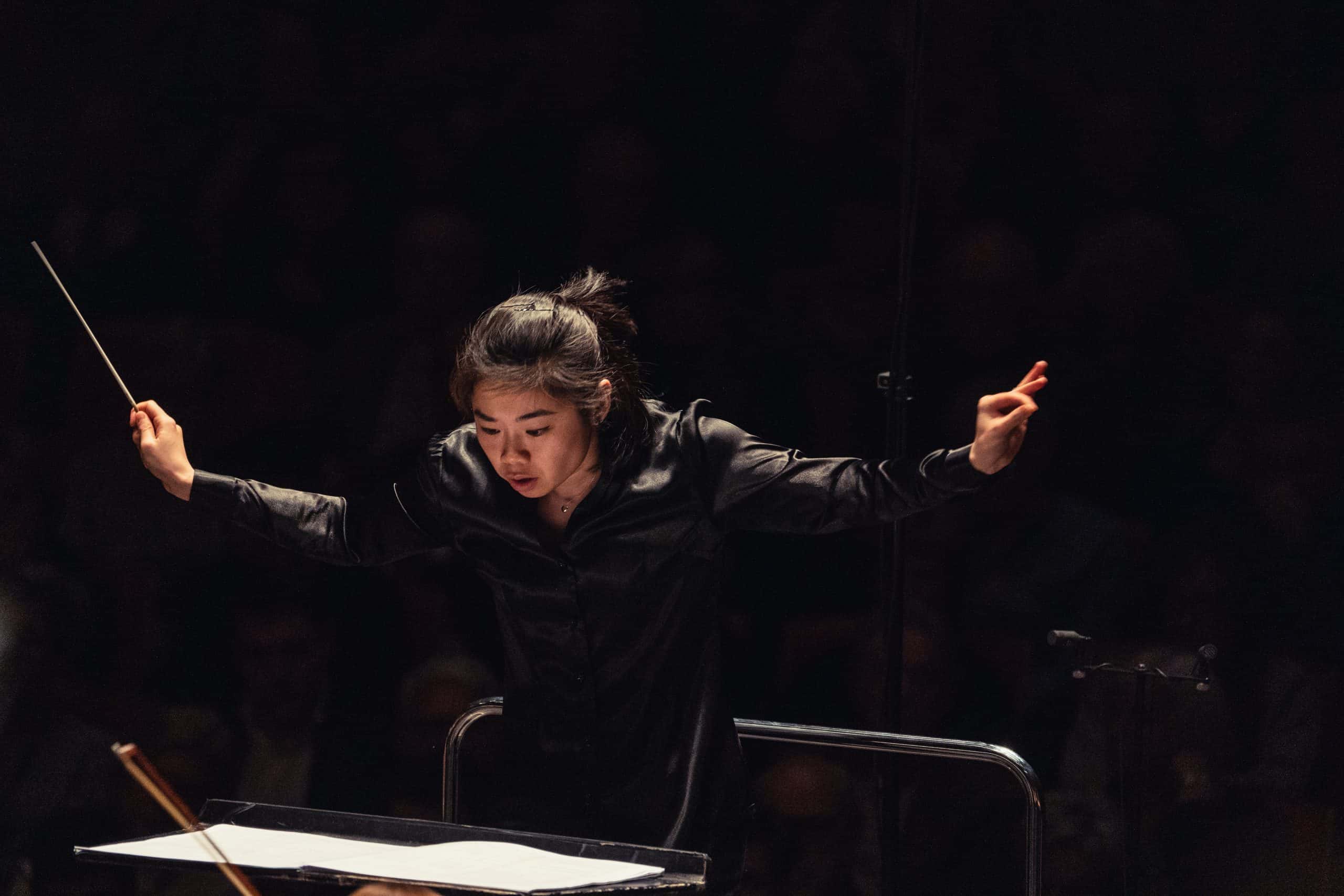
After the profound Brahms, after the intermission came the fourth symphony, nicknamed the "Italian", by Mendelssohn. Radiant and sparkling but also fiendishly difficult for the strings because of the fast passages. As a result, the first movement can sound somewhat rushed with quick notes that disappear too quickly at the end of a musical phrase. It was not flawless ensemble playing, but thanks to conductor Elim Chan it formed a musically coherent whole.
The Elisabethzaal is a sound chamber with wonderful acoustics. It is a pleasure for our ears. It is a pity that the winds behind the strings are not sitting higher and more visibly, as is usually the case with other orchestras. Now you see a head here and there behind the strings, a bassoon or a gleaming horn. Some wind players are barely visible, despite being the soloists in the orchestra. A top-class orchestra like the Antwerp Symphony deserves better.
WHO: Pinchas Zukerman [violin], Amanda Forsyth [cello], Antwerp Symphony Orchestra conducted by Elim Chan
WHAT: Widmann - Con brio, Brahms - Double Concerto for Violin and Cello in A, opus 102, Mendelssohn - Symphony No. 4 in A, opus 90, 'Italienische'
WHERE: Koningin Elisabethzaal (Antwerpen)
WHEN: Friday 16.12.2022 - 20:00