
On Friday afternoon, July 4, a concert unfolded in the Jezuïetenkerk in Heverlee – despite the beautiful weather, well-attended – that the listener did not regard as a mere chance occurrence, but rather as a profound experience, a spiritual journey of transcendence. Under the inspiring leadership of chief conductor Bart Van Reyn, the Vlaams Radio Koor (VRK) performed two of the most beautiful masterworks of 20th-century choral music: Frank Martin's Messe pour double choeur and Maurice Duruflé's Requiem.
Vlaams Radio Koor bares the soul of Martin's Mass for Double Choir
In the world of a capella music, Frank Martin's Messe pour double choeur ranks among the most intriguing and profound compositions ever written. This mass setting continues to astonish listeners with its unprecedented beauty and spiritual power, which in no way shrinks from the depth of the human soul. The VRK proved once again today why it ranks among the absolute top of international choirs. What we heard was not a simple performance, but a spiritual journey that took us to the most remote corners of human existence.
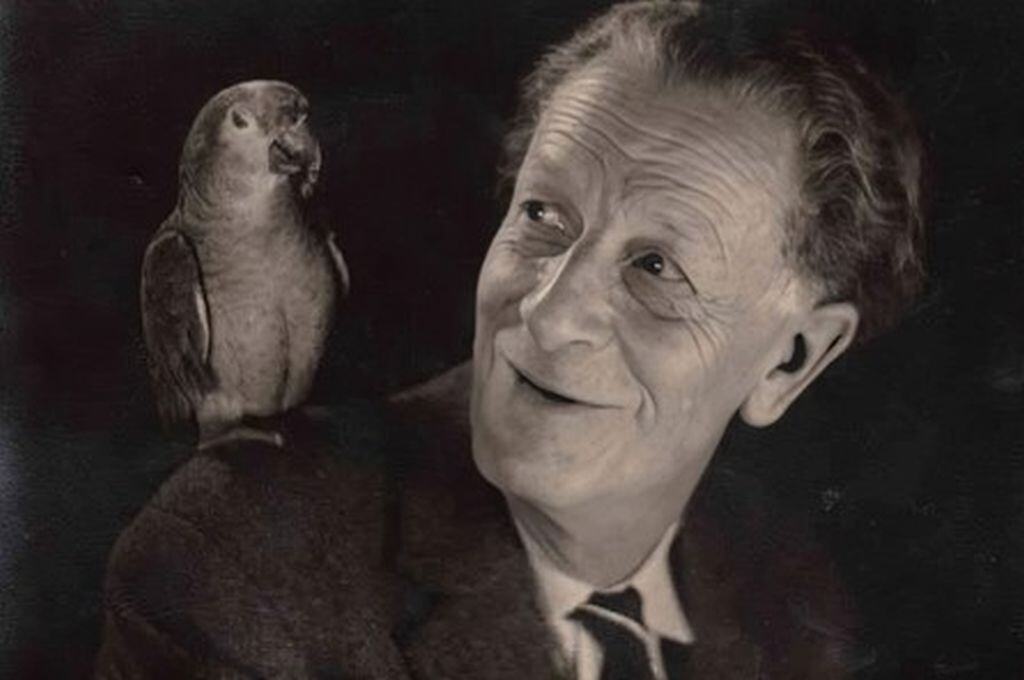 Frank Martin (1890-1974), a composer who struggled his entire life with the relationship between his music and his deeply rooted Christian convictions, kept his Messe pour double choeur hidden for years. It was a work that represented something intimate for him, something sacred – an expression of his faith that was not intended to be shown to the general public. Only in 1963 did this work first come to light, and its impact was immediately felt. In this Messe, human vulnerability and the longing for the divine come together in an unprecedented way.
Under the direction of Bart Van Reyn, we received a performance that fully emphasized the subtlety and depth of Martin's music. The two choirs, with their complementary roles, intertwined in a harmonious play that perfectly conveyed the serene power and intense emotions of the work.
The Kyrie, which opened with a serene alto melody, was sublimely sustained by the voices of the choir. The VRK managed to find the delicate balance in this spiritual prayer that sometimes resonated as a vehement plea, and at other times awakened intense longing.
In the Gloria, a dynamic palette of sounds unfolded, in which the wonders of faith were reflected. The choir played with rich expression and complex rhythms, with the tension between calm and exuberance coming beautifully to the fore. The VRK engaged with full dedication in the rhythmic complexity, yet always remained in control, so that the listener never lost the thread.
The Credo, the beating heart of the composition, was performed with unmistakable spiritual intensity. It remains remarkable that a Calvinist like Martin set this Catholic profession of faith to music. The words "et incarnatus est" were sung with a tenderness that reflected the mystery of the incarnation, but also Martin's own deep connection to this moment of faith. The poignant passages with "crucifixus" and "passus" were delivered by the choir with great force; the "et resurrexit" sounded like an echo of the Easter bells reminding us of the power of the resurrection.
The Sanctus revealed a world of restrained devotion, in which the polyphonic lines intertwined like meditative prayers into a transparent, almost otherworldly fabric. The double choir structure was not employed here for effect, but for an inner dialogue that sublimely underscored the festive character of the work. For a moment, we felt we were dwelling in another, better world.
Initially, Martin ended his Messe with the sumptuous spiritual jubilant sounds of the Sanctus, but four years later, in 1926, he added a performance of the Agnus Dei, which ended the work on a more ambiguous, questioning note. For this reason, this piece is the emotional climax of the Messe for me. The two choirs, first separate but later together, created that sublime harmony that seems to leave the longing for peace and redemption hanging in the air. The closing "Dona nobis pacem" sounded extremely fragile, as if Martin already knew while composing it that mankind does not learn from its mistakes…
Frank Martin held the conviction that the true artist fulfills his highest calling by bestowing beauty upon his fellow man. He saw it as his task not to capture the prevailing spirit of the times, but rather to represent the eternal, the imperishable. In his Messe, a work that does not submit to the whims of fashion or transience, he has masterfully fulfilled this requirement he imposed upon himself.
This afternoon we heard no ordinary performance. The VRK has not only delivered a technical tour de force (what basses!), but above all has laid bare the heart of the work. It was a performance that, through its refinement and purity, captured the spirit of Martin's music in all its complexity and beauty. The performance was a true feast for the ears, a moment of transcendence in which the music, as it were, stepped outside time and space.
Between the two masterworks by Martin and Duruflé, a touch of organ music echoed: the "Scherzo" (Fiat Lux) by Theodore Dubois (1837-1924). The playful work provided a brief respite between the profound emotions.
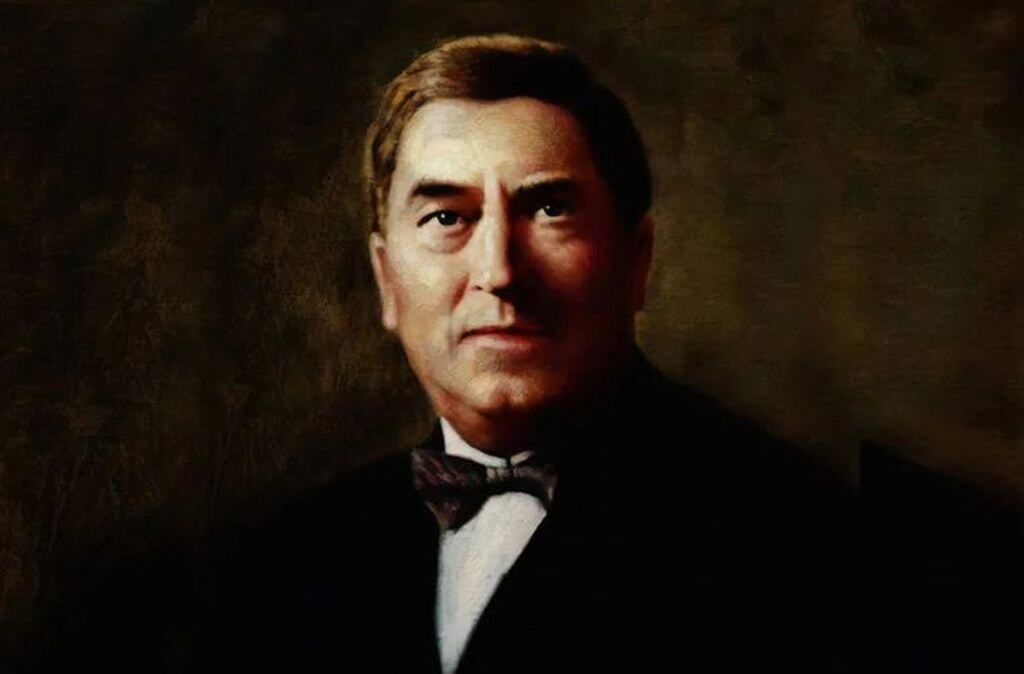 Requiem Maurice Duruflé Vlaams Radio Koor: rare enchantment
The performance of the Requiem by Maurice Duruflé (1902-1986) by the Vlaams Radio Koor, conducted by Bart Van Reyn, was far more than a musical interpretation – it was a spiritual experience that touched the listener in their deepest being. This work, composed in 1947, is renowned for its subtle blend of liturgical serenity in the tones of Gregorian chant and intense drama. The VRK succeeded in striking that delicate balance with unprecedented sensitivity and control.
In this performance, the choice was made for the intimate version with organ and cello solo (performed by Amy Norrington), which further reinforced the sacred character of Duruflé's music, without compromising the grandeur inherent in the composition. As an organist himself, Duruflé had deep roots in the church tradition, and his musical past was evident throughout this work.
The choir brought the music with sensitive lightness, honoring the liturgical character without diminishing emotional power. The subtle and deeply felt organ playing of Ignace Michiels filled the space of the Leuven Jesuit church with a warm yet never excessive sound, providing the singers with perfect support without overshadowing them.
The choir's performance was a model of refinement. The dynamic shifts between whispered silence and great dramatic outbursts, such as in the Kyrie and the fiery Sanctus, were perfectly timed and shone with unmistakable harmony. Particularly the slow, stately Pie Jesu, one of the most poignant moments in the work, received an almost ethereal quality thanks to mezzo-soprano Eva Zaïck, who performed the piece with serene depth. With her voice, full of depth and warmth, she reminded me of the Smiling Angel as you see it in the portal of Reims Cathedral.
The baritone solo by James Newby added an element of gravitas to the performance, and his voice brought the emotional charge of the work to life.
Bart Van Reyn gave the choir the space to explore the deepest nuances of Duruflé's composition. His interpretation was not merely technical, but a quest for the soul of the music itself. Van Reyn proved once again that he effortlessly steered the choir's flexibility: his hands gave the choir room to breathe in the more restrained moments, while they skillfully increased the tension at the right moments. The balance between the sacred serenity and the dramatic intensity of the work was struck perfectly by Van Reyn.
With this performance, the VRK has not merely interpreted the Requiem, but brought it to life. The choice for an intimate performance with organ and the powerful sound of the cello solo, the use of the architectural space in the Leuven Jesuit Church, and the control of the musical dynamics made this performance a true enchantment.
As an encore, a very different work was presented: The Dying Soldier, a traditional piece in an arrangement by Nigel Short (Tenebrae). James Newby shone as soloist, while the choir provided an atmospheric frame. It was a perfect conclusion, a critical reflection on the celebration of the 4th of July, which invited the listener once again to reflection.
In an age where technical perfection often takes precedence, the VRK succeeded not only in capturing the technique, but especially the emotional essence of these works. The performance was not merely a moment of musical beauty, but a spiritual journey, an invitation to pause and reflect on life's deeper questions. It was a moment of transcendence, in which the listener asked themselves within the Ignatian tradition a number of essential questions: Who am I? Where do I come from? And where am I going?