
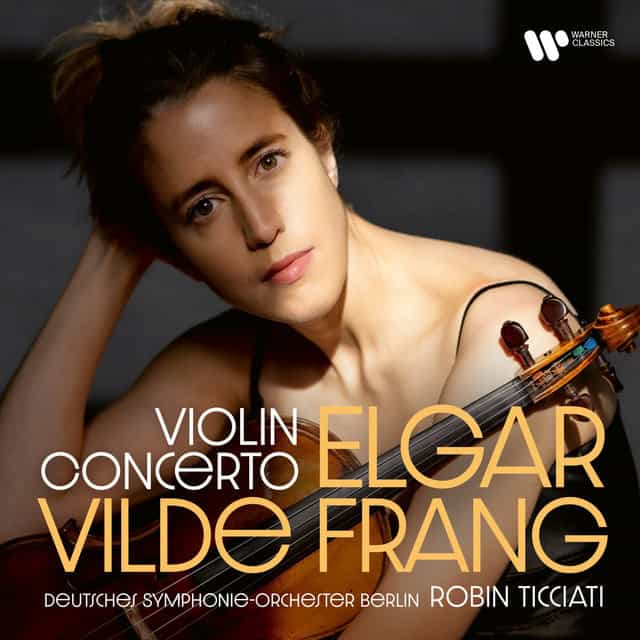
This is one of the best performances of Elgar's romantic Violin Concerto and that says a lot amidst the well-filled discography. More than forty years ago I first became acquainted with this masterwork thanks to Itzhak Perlman and the Chicago Symphony under Daniel Barenboim (on Deutsche Grammophon). Since then my admiration for this grandly conceived work, taking up just over three-quarters of an hour, has only grown.
The composer himself was quite pleased with it, as evidenced by his well-known remark 'It's good! Awfully emotional, too emotional, but I love it!' And that 'love' he shared then and continues to share to this day with a large number of admirers and enthusiasts. This concerto really contains everything, moving from the majestic to the lyrical, from the melancholic to the uplifting, with besides much attention to the 'nobilmente', typical characteristics we encounter in many works by this great Brit. As far as I know, this was also the first and only violin concerto in which soloist and orchestra in the finale must traverse the paths worked out by Elgar as a cadenza in which all previous themes come to the fore once more in a kind of reflection, as a retrospective. Like a fervent meditation on the many beautiful things that have passed in review.
The collaboration between soloist and orchestra may be called ideal, with chief conductor Robin Ticciati not only confining himself to a purely accompanying function, but truly giving substance to the richly expressive character of this so beneficent score; and in which he has managed to take the ensemble along in the smallest details. Certainly for those who follow this performance with the score will soon realize how ingeniously the musicians operate in this enchanting field of forces. The short, but charming Carissima for violin and piano, with Thomas Hoppe as pianist alongside Vilde Frang, is a welcome addition to this also technically very successful album. Given the duration, there could certainly have been some encores added, but that aside, for these interpretations really make everything right.